Biofuels
-
Biomass to biofuel, or biomass for burial?
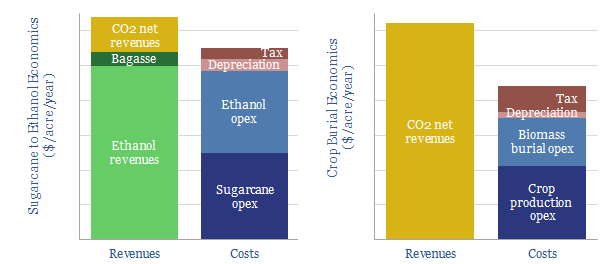
Greater decarbonization at a lower cost is achievable by burying biomass (such as corn or sugarcane) rather than converting it into bio-ethanol. This model captures the economics. Detailed costs and CO2 comparisons are shown under different iterations.
-
US ethanol plants: what CO2 intensity?
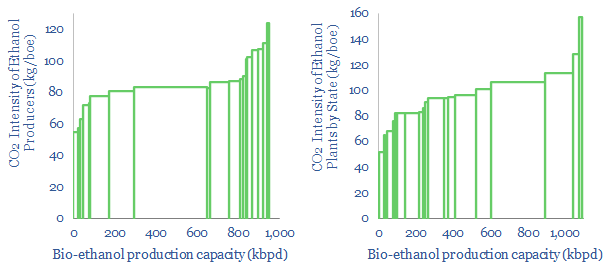
US bioethanol plants produce 1Mbpd of liquid fuels, with an average CO2 intensity of 85kg/boe. Overall, corn-based bioethanol has c40% lower CO2 than oil products. We screened the leaders and laggards by CO2-intensity, covering Poet, Valero, Great Plains, Koch, Marathon and White Energy.
-
Biofuel, green diesel, renewable diesel: where’s the IP?
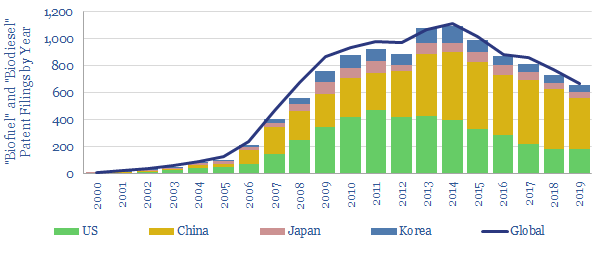
This data-file tracks 5,000 patents filed into biofuels: by geography, by company and particularly in 2017-20. The pace of research activity has been waning since 2014. Sinopec screens as the technology leader. The data-file also identifies the ‘Top Ten’ Western companies, ranked by recent patent filings.
-
Carbon Offsets vs Renewable Diesel?
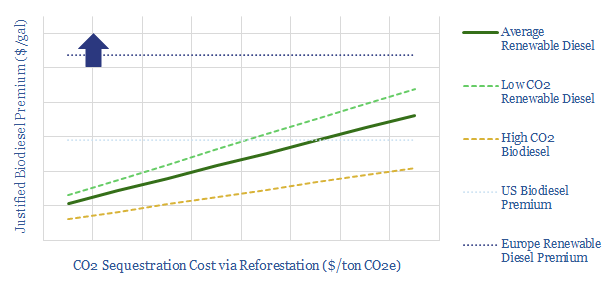
Could the rise of reforestation initiatives erode the value of renewable diesel? This data-file calculates purchasing CO2-credits to decarbonise diesel could cost 60-90% less than purchasing renewable diesel, at current pricing. Economically justified premia for biofuels are calculated.
Content by Category
- Batteries (95)
- Biofuels (44)
- Carbon Intensity (48)
- CCS (64)
- CO2 Removals (9)
- Coal (41)
- Commentary (65)
- Company Diligence (104)
- Data Models (920)
- Decarbonization (162)
- Demand (129)
- Digital (86)
- Downstream (47)
- Economic Model (220)
- Energy Efficiency (76)
- Hydrogen (63)
- Industry Data (308)
- LNG (56)
- Materials (86)
- Metals (88)
- Midstream (45)
- Natural Gas (161)
- Nature (76)
- Nuclear (28)
- Oil (175)
- Patents (39)
- Plastics (44)
- Power Grids (155)
- Renewables (153)
- Screen (136)
- Semiconductors (35)
- Shale (58)
- Solar (72)
- Supply-Demand (53)
- Vehicles (95)
- Video (24)
- Wind (47)
- Written Research (405)