CCS
-
NET Power: gas-fired power with inherent CO2 capture?
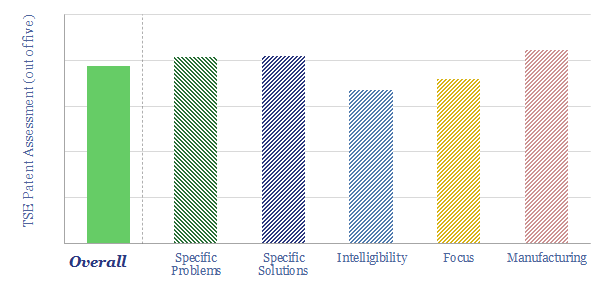
Our NET Power technology review shows over ten years of progress, refining the design of efficient power generation cycles using CO2 as the working fluid. The patents show a moat around several aspects of the technology. And six challenges at varying stages of de-risking.
-
Decarbonized gas: ship LNG out, take CO2 back?
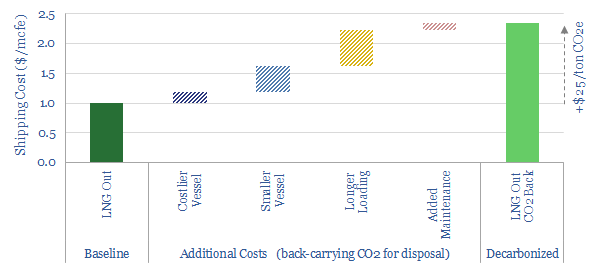
This note explores an option to decarbonize global LNG: (i) capture the CO2 from combusting natural gas (ii) liquefy it, including heat exchange with the LNG regas stream, then (iii) then send the liquid CO2 back for disposal in the return journey of the LNG tanker. There are some logistical headaches, but no technical show-stoppers.…
-
Svante: CCS breakthrough?
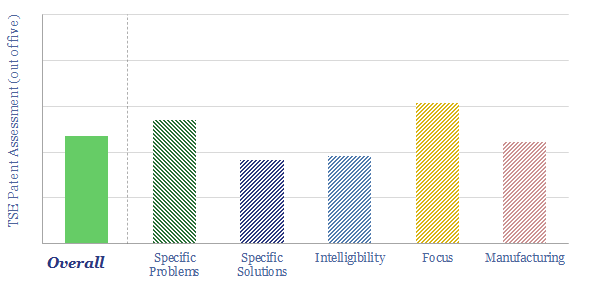
Svante is suggesting its technology can absorb 90% of CO2 in a 60-second cycle that costs 50% less than conventional CCS. It has attracted an amazing list of investors and partners. Agonizingly we could not de-risk the technology based on our usual patent review.
-
CarbonCure: concrete breakthrough?
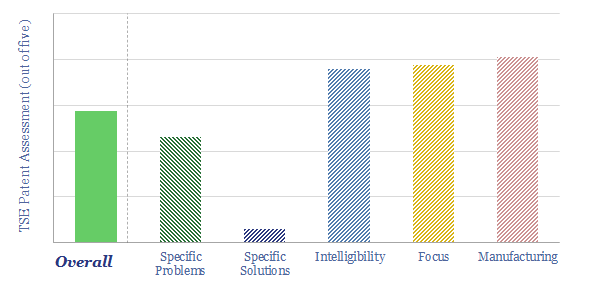
CarbonCure injects CO2 into concrete during the mixing process, where it mineralizes. The resultant product can most likely save 4-6% of the CO2 intensity of finished concrete. Question marks are explored in the data-file.
-
Small-scale CCS: transport liquid CO2?
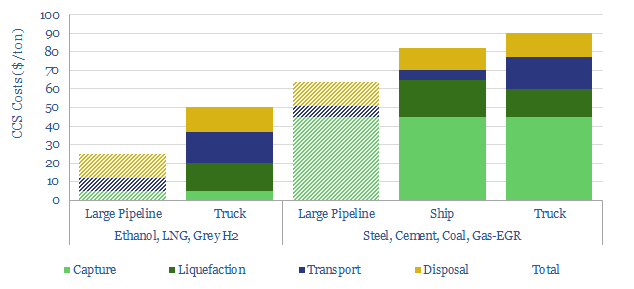
CO2 has unusual physical properties, which make small-scale liquefaction and transport much more viable than we had expected. The energy burden is 70% less than other industrial gases. Total CCS costs are $50-90/ton for leading examples. This 15-page note outlines the opportunity.
-
CO2 liquefaction: the economics?
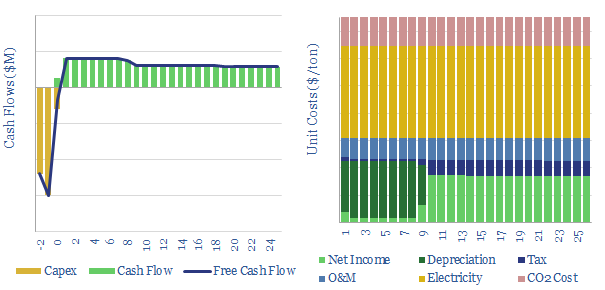
This data-file captures the costs of liquefying CO2 for transportation in a ship, rail car or truck, to promote smaller-scale CCS. Our baseline is a cost of $15/ton, using c100kWh of energy per ton of CO2, which is approximately equivalent to a c3% energy penalty. There is scope for optimization.
-
Pressure ratings: industrial and energy processes?
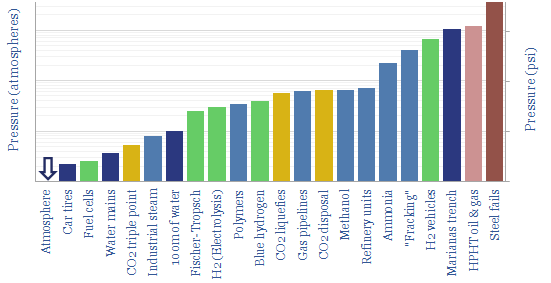
The purpose of this data-file is to chart the typical pressures of industrial processes and energy processes, as a useful reference. We are all used to 1 atmosphere of pressure, which is 1.0125 bar, 0.10125 MPa and 14.7 psi. But what pressures do industrial processes use?
-
Carbon capture: how big is the opportunity?
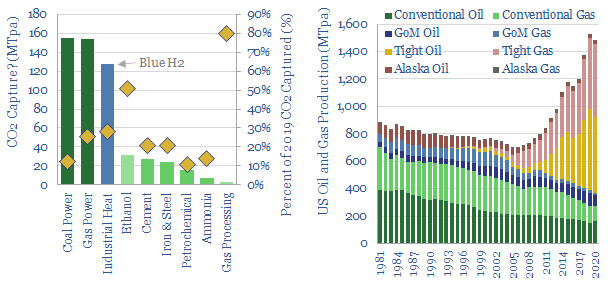
This 13-page note quantifies the upside case for CCS in the United States, using top-down and bottom-up calculations. Our conclusion is that a clear, $100/ton incentive could help CCS scale by c25x, accelerating over 500MTpa of projects in the next decade, cutting US CO2 by 10%.
-
US CCS: market sizing?
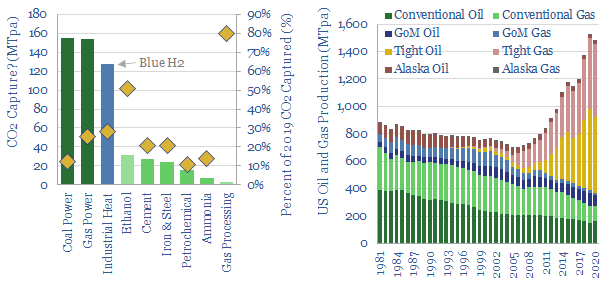
This data-file aims to bound the potential market-size for CCS in the US, which is around 500MTpa. Our bottom up calculations look industry-by-industry. To put this in perspective, we also quantified how many million tons of oil and gas have been extracted out of subsurface reservoirs in the US over the past 40-years.
-
Carbon capture on ships: raising a sail?
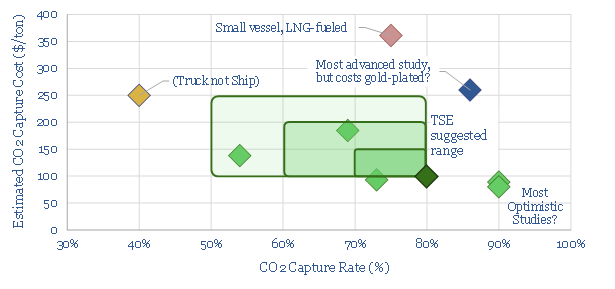
CCS is adapting to ‘go to sea’. 80% of some ships’ CO2 emissions could be captured for a cost of c$100/ton and an energy penalty of just 5%, albeit this is the best case within a broad range. This 15-page note explores the opportunity, challenges, progress and who might benefit.
Content by Category
- Batteries (96)
- Biofuels (44)
- Carbon Intensity (48)
- CCS (64)
- CO2 Removals (9)
- Coal (44)
- Commentary (65)
- Company Diligence (105)
- Data Models (927)
- Decarbonization (162)
- Demand (131)
- Digital (89)
- Downstream (47)
- Economic Model (222)
- Energy Efficiency (76)
- Hydrogen (63)
- Industry Data (310)
- LNG (56)
- Materials (86)
- Metals (89)
- Midstream (45)
- Natural Gas (163)
- Nature (76)
- Nuclear (28)
- Oil (178)
- Patents (39)
- Plastics (44)
- Power Grids (156)
- Renewables (153)
- Screen (138)
- Semiconductors (35)
- Shale (58)
- Solar (72)
- Supply-Demand (53)
- Vehicles (94)
- Video (24)
- Wind (46)
- Written Research (409)