Company Diligence
-
Lilac solutions: lithium breakthrough?
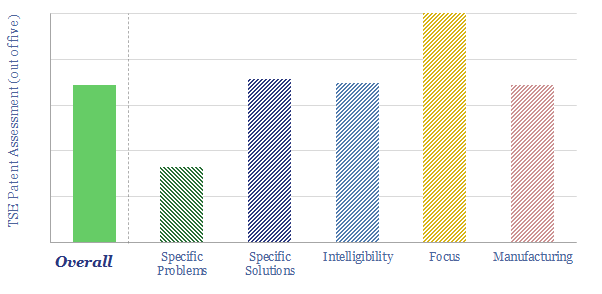
Lilac Solutions aims to commercialize a lithium ion exchange technology, which can extract lithium from dilute brine solutions, rapidly, economically and scalably. Overall Lilac’s patents look promising to us. They contain some excellent, precise and intelligible details on making ion exchange materials.
-
Siemens Gamesa: giant wind turbine breakthroughs?
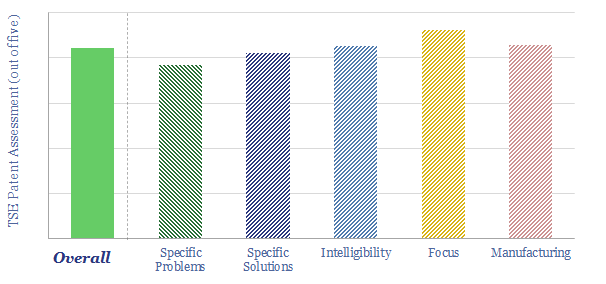
Siemens Gamesa is a leader in offshore wind, pushing the boundaries towards a 14MW turbine with an incredible 222m rotor diameter. Our main debate from reviewing its patents is whether the engineering challenges of large turbines is consistent with deflation expectations.
-
Stem: grid-scale battery breakthrough?
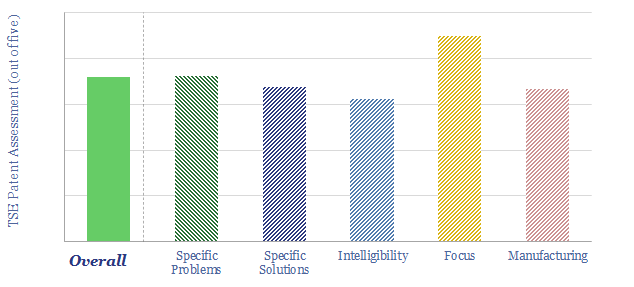
Stem Inc. went public via SPAC in April-2021, supporting grid-scale batteries with optimization software, which can lower energy bills by 10-30% in the energy transition. Its patents scored reasonably well on our usual framework. Managing short-term renewables volatility was a crucial focus.
-
Array Technologies: solar tracking breakthrough?
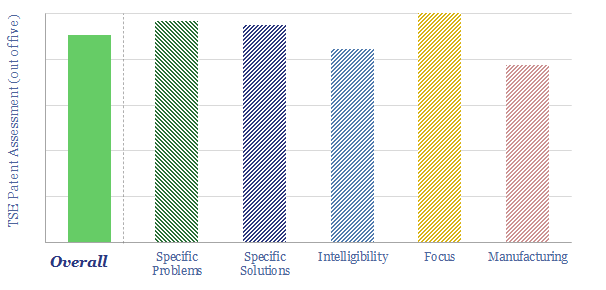
Array Technologies IPO-ed in October-2020. It manufactures solar tracking systems, supporting 25% of US solar modules installed to date. Its systems can uplift solar generation by 5-25%. we found clear, specific, intelligible patents, back-stopping six out of seven key strengths that have been cited by the company.
-
Carbios: plastic recycling breakthrough?
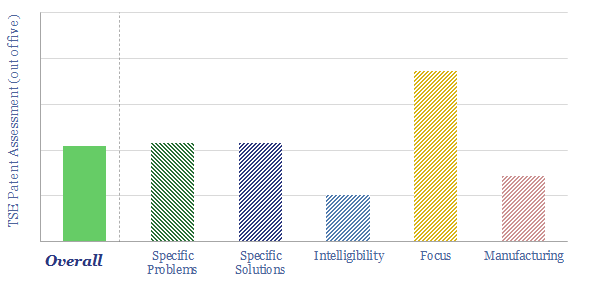
Carbios has developed an enyzmatic process to recycle 90% of PET within 10-hours, which has been described in Nature. “This highly efficient, optimized enzyme outperforms all PET hydrolases reported so far”. Economics and CO2 savings can be very exciting. But our work identifies four challenges, which were hard to re-risk.
-
Climeworks: direct air capture breakthrough?
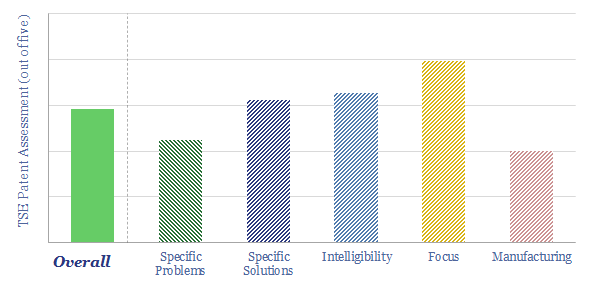
Climeworks is a Swiss company, founded in 2009, commercializing a direct air capture technology. The main innovation in its patents optimizes air flow, to avoid steep pressure drops, which can otherwise de-rail DAC economics. But we are still unable to de-risk sub-$200/ton CO2 costs based on reviewing the patents.
-
Danimer: bio-plastics breakthrough?
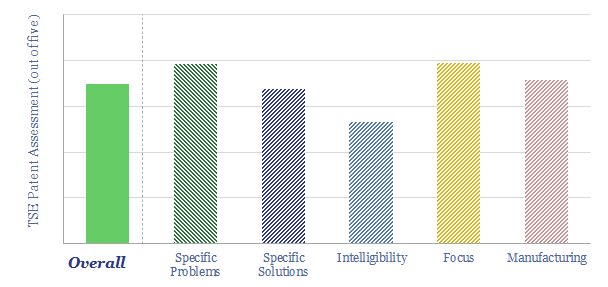
Danimer Scientific is a producer of PHA, a biodegradable plastic feedstock. PHA still has commercial challenges in its processing, mechanical properties and 4-5x higher costs than conventional plastics. Yet our patent review finds Danimer has made some specific, intelligible innovations, earning a solid score of 3.5 on our technology framework.
-
Nio: EV-charging breakthrough?
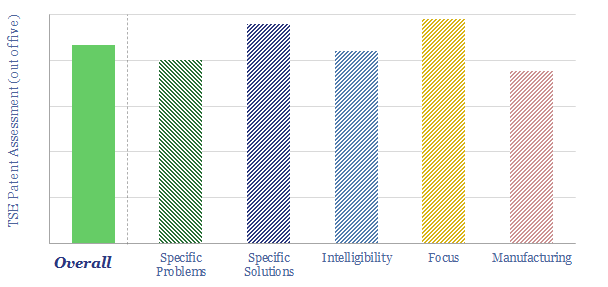
Nio is a listed, electric vehicle manufacturer, headquartered in Shanghai. It operates over 200 “battery swap” stations, and the 2-millionth battery swap was completed in March-2021, with swap times soon falling to 3-minutes. Our patent analysis suggests a genuine moat in swappable batteries, which could only have been built up by an auto-maker.
-
LanzaTech: biofuels breakthrough?
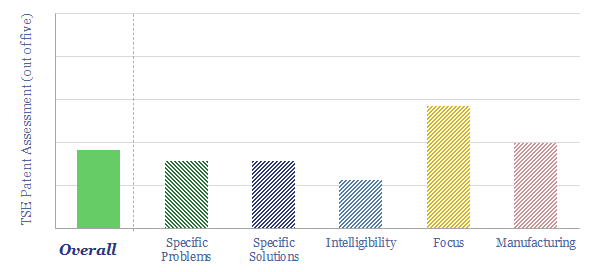
LanzaTech aspires to “take waste carbon emissions and convert them” into sustainable fuels (and bio-plastics) with a >70% CO2 reduction. We have assessed its patents but concluded we cannot yet de-risk the CO2-to-fuels pathway in our energy transition models.
-
Origin Materials: bio-plastics breakthrough?
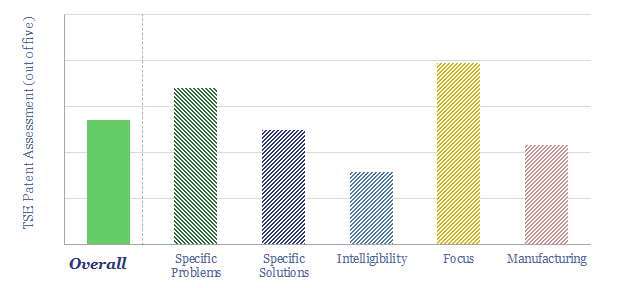
Origin Materials went public via SPAC in February-2021, as it was acquired by Artius Acquisition Inc at a valuation of $1.8bn. Its ambition is to use wood residues to create carbon-negative plastics, cost-competitively with petroleum products. This data-file outlines our conclusions from reviewing patents.
Content by Category
- Batteries (96)
- Biofuels (44)
- Carbon Intensity (48)
- CCS (64)
- CO2 Removals (9)
- Coal (41)
- Commentary (65)
- Company Diligence (104)
- Data Models (922)
- Decarbonization (162)
- Demand (129)
- Digital (86)
- Downstream (47)
- Economic Model (221)
- Energy Efficiency (76)
- Hydrogen (63)
- Industry Data (308)
- LNG (56)
- Materials (86)
- Metals (88)
- Midstream (45)
- Natural Gas (161)
- Nature (76)
- Nuclear (28)
- Oil (176)
- Patents (39)
- Plastics (44)
- Power Grids (156)
- Renewables (153)
- Screen (137)
- Semiconductors (35)
- Shale (58)
- Solar (72)
- Supply-Demand (53)
- Vehicles (95)
- Video (24)
- Wind (47)
- Written Research (407)