Nature
-
Conservation agriculture: farming carbon into soils?
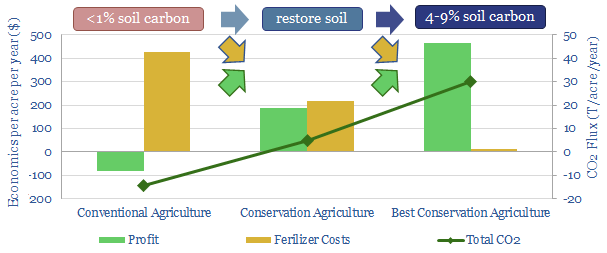
Conservation agriculture builds up carbon in soil. It can sequester 3-15 bn tons of CO2 per year, generating carbon credits, while restoring loss-making farmlands to exceptional profitability. Fertilizer demand would be decimated. This 17-page report outlines the opportunity, costs, CO2-removal, winners and losers.
-
Restoring soil carbon: the economics?
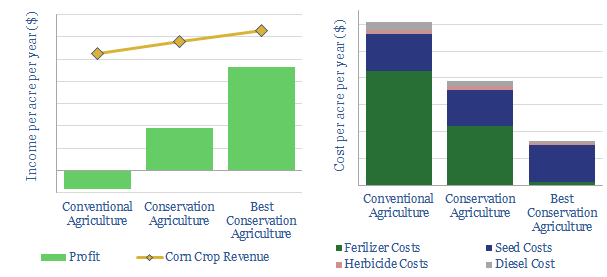
We model the economics for conservation agriculture to restore soil carbon. 5-30T of CO2 can be sequestered per acre per year, while deflating farm costs by 36-73% and raising yields 10-20%. This would transform crop-growing economics from marginal to material.
-
How to structure a decarbonized gas value chain?
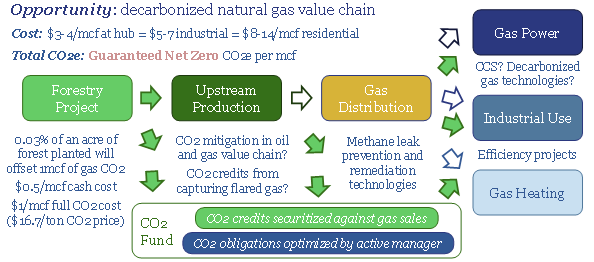
Gas value chains are the largest and lowest cost decarbonization opportunity on the planet, commercialising zero carbon energy for an incremental cost below $1/mcfe ($17/ton of CO2). This compares with end gas prices of $4-14/mcf and other CO2 mitigation options up to $800/ton. This 15-page note outlines how to structure a decarbonized gas value chain,…
-
Carbon Funds to Decarbonize Natural Gas
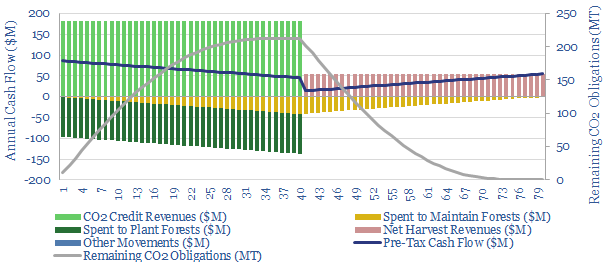
Natural gas can be decarbonized for a $1/mcf premium, which is used to seed new forests. Attractive cash flows and economics are modelled here. c50% of the carbon premia are dedicated to a carbon fund. It guarantees future CO2 obligations, optimizes emissions reductions, and finally disburses remaining funds.
-
Should fuel retail stations sell carbon credits: the economics?
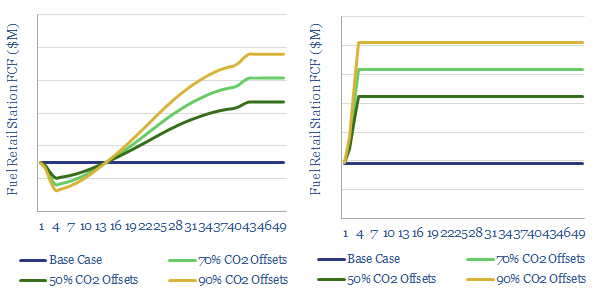
A fuel-retail station can uplift its FCF and valuation by c15-25% by offering CO2-offsets at the point of sale, alongside selling fuel. Gross profits from selling $50/ton carbon credits may be around 3x the typical EBIT margins of retail stations, hence we explore a particular sales model that can double fuel retail NPVs.
-
Carbon Offsets vs Renewable Diesel?
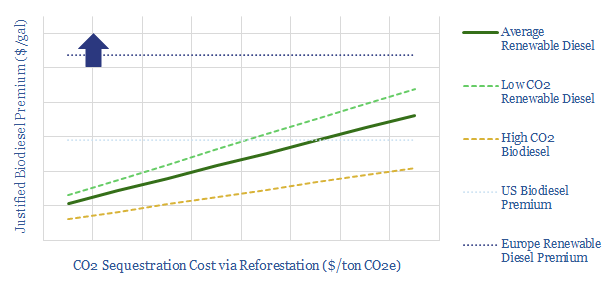
Could the rise of reforestation initiatives erode the value of renewable diesel? This data-file calculates purchasing CO2-credits to decarbonise diesel could cost 60-90% less than purchasing renewable diesel, at current pricing. Economically justified premia for biofuels are calculated.
Content by Category
- Batteries (95)
- Biofuels (44)
- Carbon Intensity (48)
- CCS (64)
- CO2 Removals (9)
- Coal (41)
- Commentary (65)
- Company Diligence (104)
- Data Models (920)
- Decarbonization (162)
- Demand (129)
- Digital (86)
- Downstream (47)
- Economic Model (220)
- Energy Efficiency (76)
- Hydrogen (63)
- Industry Data (308)
- LNG (56)
- Materials (86)
- Metals (88)
- Midstream (45)
- Natural Gas (161)
- Nature (76)
- Nuclear (28)
- Oil (175)
- Patents (39)
- Plastics (44)
- Power Grids (155)
- Renewables (153)
- Screen (136)
- Semiconductors (35)
- Shale (58)
- Solar (72)
- Supply-Demand (53)
- Vehicles (95)
- Video (24)
- Wind (47)
- Written Research (405)