-
Inflow Control: Our Top 20 Papers from 2019
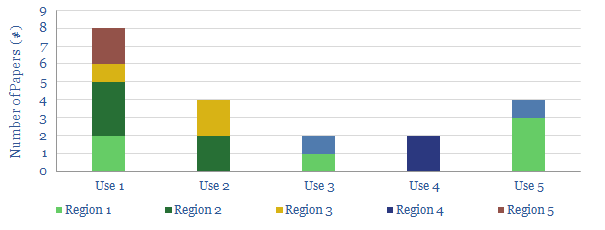
This data-file summarises twenty recent papers using inflow control devices: an exciting digital technology to optimise horizontal wells by limiting production from zones that are susceptible to flowing water or gas. Each paper is categorized by company, country, field and focus. Also included are our ‘Top 10’ facts from the technical literature.
-
Shale: Upgrade to Fiber?
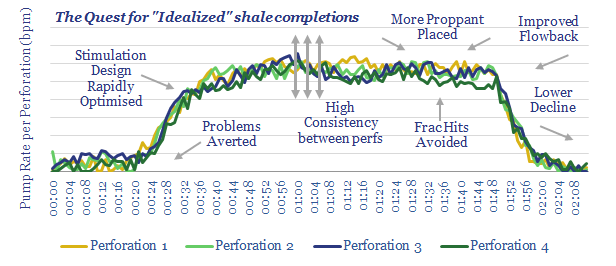
This note focuses on the most exciting new data methodology we have seen across the entire shale space: distributed acoustic sensing (DAS) using fiber-optic cables. It has now reached critical mass.
-
Leading Companies in DAS?
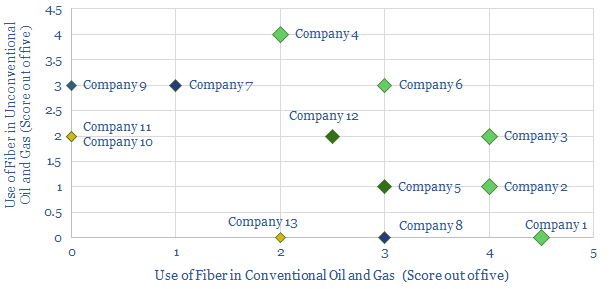
This data-file quantifies the leading companies in Distributed Acoustic Sensing (DAS), the game-changing technology for enhancing shale and conventional oil industry productivity. Operators are screened from their patents and technical papers. Services are screened based on their size and their technology.
-
DAS. At the cutting edge in shale?
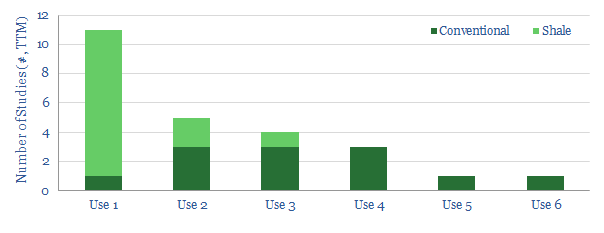
This data-file summarises 25 of the most recent technical papers around the industry, using fiber-optic cables for Distributed Acoustic Sensing (DAS). The technology is now hitting critical mass to spur shale productivity upwards.
-
De-Manning Deepwater?
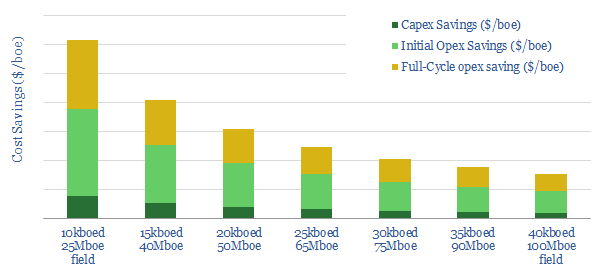
We estimate a typical deepwater oilfield could save $15-20/bbl by “de-manning”, if implemented correctly. This data-file contains our workings, across 15 cost lines, based on recent design work from Technip-FMC.
-
China’s Shale Challenge?
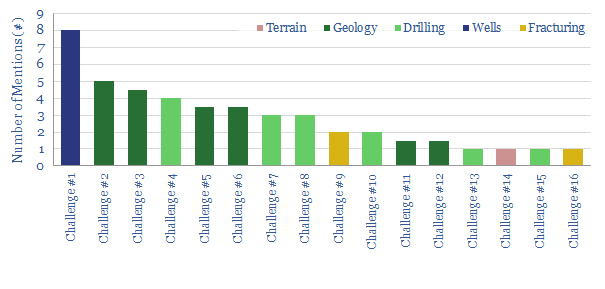
This data-file quantifies the most-discussed challenges for developing Chinese shale gas, after a review of the technical literature, as well as the solutions suggested to combat them, and our “top ten conclusions” on Chinese shale.
-
Shale Productivity: Our “Top 50” Improvements
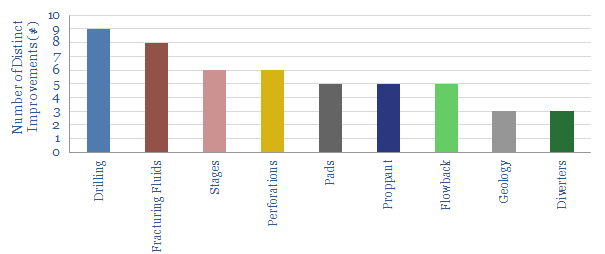
Critics still downplay shale productivity. This simple data-file compiles fifty examples of genuine improvements across the industry since 2015. A “one line” summary is provided for each one.
-
Hydrogen Cars: how economic?
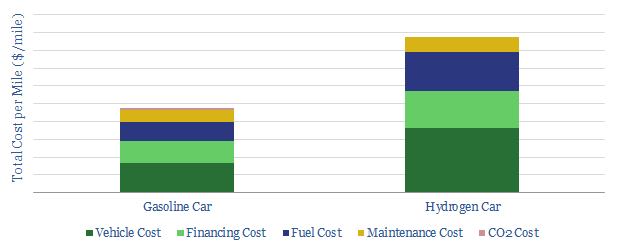
We model the relative economics of hydrogen cars, which are c85% costlier than US gasoline in our base case. In Europe, c20% cost-deflation could bring hydrogen cars close to competitiveness.
-
LNG Ships: a new record-setter?
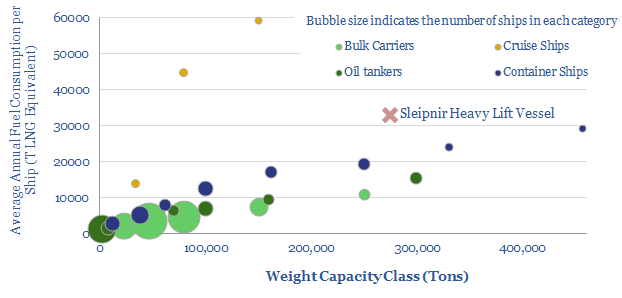
Multiple records have just been broken for an LNG-powered ship, as construction completed at Heerema’s “Sleipnir” crane-lift vessel. It is a remarkable, LNG-powered machine, substantiating the 40-60MTpa upside we see for LNG demand, from fuel-intensive ships, after IMO 2020.
-
Aerial Vehicles: why flying cars fly
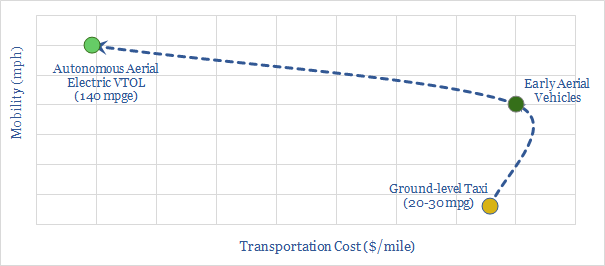
Aerial vehicles will do in the 2020s what electric vehicles did in the 2010s. They will go from a niche technology, to a global mega-trend that no forecaster can ignore. These conclusions stem from a deep-dive analysis into the technology, the fuel economies and the costs, all of which will be transformational.
Content by Category
- Batteries (95)
- Biofuels (44)
- Carbon Intensity (48)
- CCS (64)
- CO2 Removals (9)
- Coal (41)
- Commentary (65)
- Company Diligence (104)
- Data Models (920)
- Decarbonization (162)
- Demand (129)
- Digital (86)
- Downstream (47)
- Economic Model (220)
- Energy Efficiency (76)
- Hydrogen (63)
- Industry Data (308)
- LNG (56)
- Materials (86)
- Metals (88)
- Midstream (45)
- Natural Gas (161)
- Nature (76)
- Nuclear (28)
- Oil (175)
- Patents (39)
- Plastics (44)
- Power Grids (155)
- Renewables (153)
- Screen (136)
- Semiconductors (35)
- Shale (58)
- Solar (72)
- Supply-Demand (53)
- Vehicles (95)
- Video (24)
- Wind (47)
- Written Research (405)