-
Fast-charge the electric vehicles with gas?
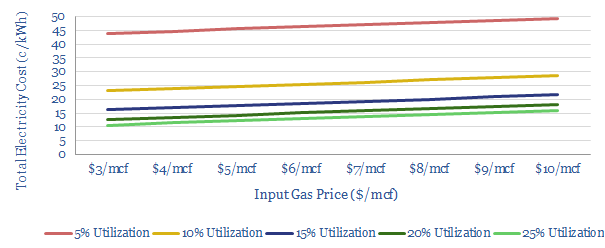
There is upside for natural gas, as EV penetration rises: we model that gas turbines can economically power fast-chargers for 13c/kWh. Carbon emissions are lowered by c70% compared with oil. And the grid is spared from power demand surges. Download our data-file to stress-test the sensitivities.
-
Can technology revive offshore oil?
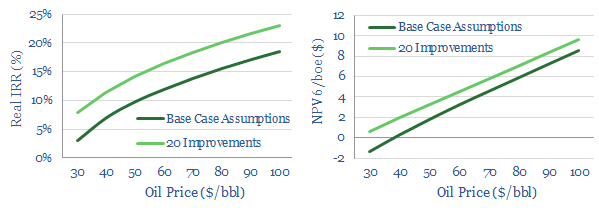
Can technology revive offshore and deep-water? This note outlines our ‘top twenty’ opportunities. They can double deep-water NPVs, add c4-5% to IRRs and improve oil price break-evens by $15-20/bbl.
-
Offshore Economics: the Impact of Technology
This data-file quantifies the impact that technology can have on offshore economics. A typical offshore oilfield is modelled across 250 lines. The project is then re-modelled capturing our “top twenty” offshore technologies, to quantify the potential improvement: a doubling of NPV6, and a c4-5% improvement in IRR.
-
Thermo-Plastic Composite: The Future of Risers?
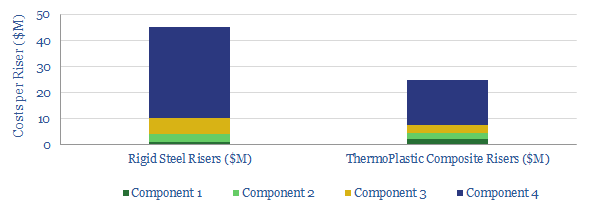
We estimate thermo-plastic composite riser costs line-by-line. Savings should reach 45%. The file also includes a complete history of TCP installations to-date, as this technology’s adoption continues.
-
Wind: aim higher?
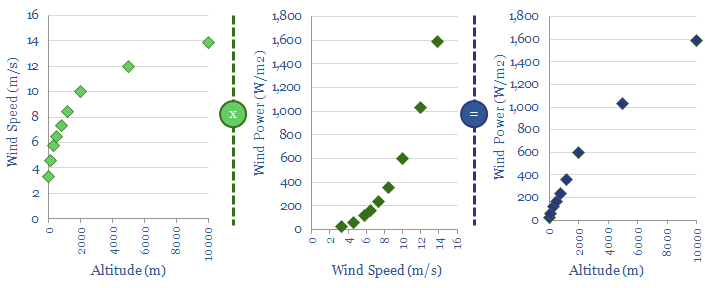
This data-file contains a simple model for how wind speeds and wind power co-vary with altitude. 2x greater power could likely be harnessed by a kite at 300m than a similar-sized turbine at 80m.
-
Two Majors’ Secret Race for the Future of Offshore Wind?
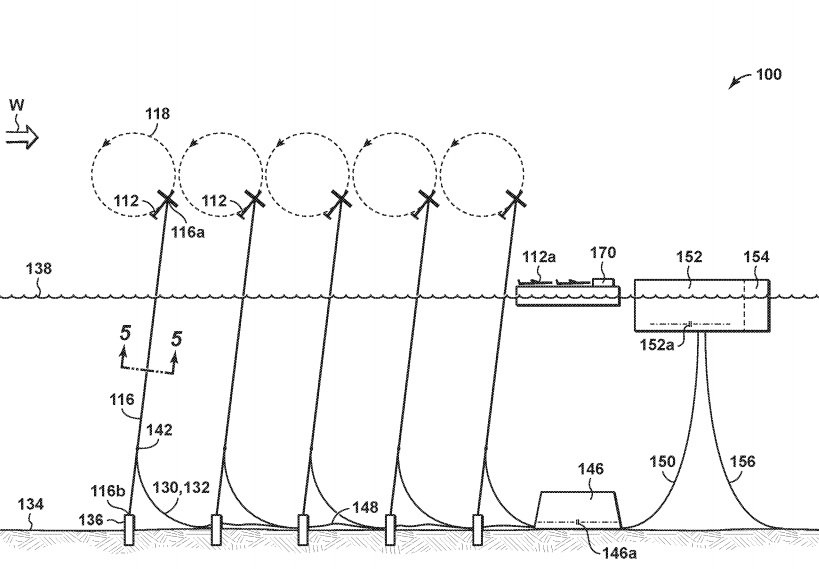
Tethered kites access 2-4x more wind-power at 50-90% lower costs than turbines. Intriguingly, Exxon and Shell are now at the forefront of the new opportunity.
-
EOG’s Completions: Plugged-In?
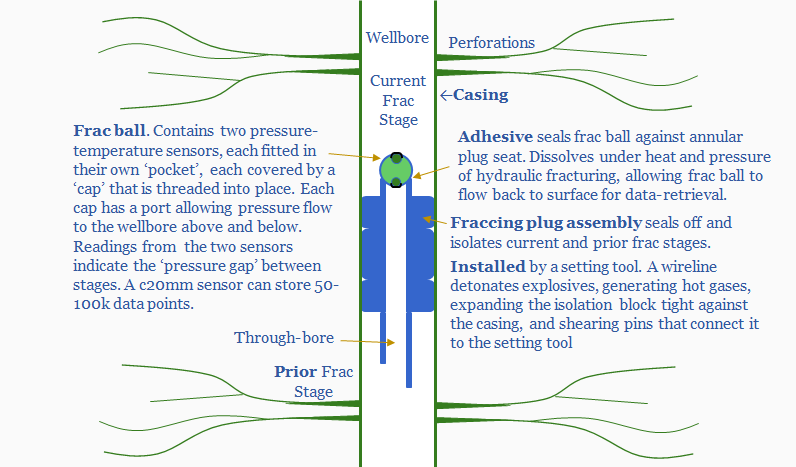
EOG has patented a system to run pressure and temperature sensors in its frac plugs, which are then retrieved at the surface, providing low cost data on each frac stage. The data improve subsequent stages. We estimate the NPV uplifts at $1M/well.
-
Do “digital” completions lift Permian IRRs?
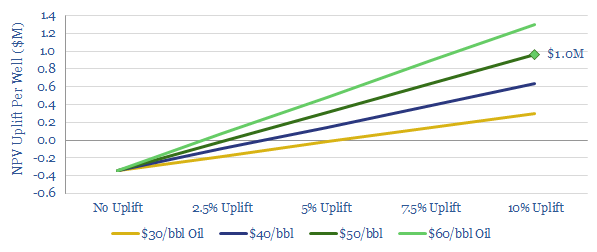
We have modelled the economic uplift of extra digital instrumentation on a typical Permian well. At $50/bbl oil, c$0.4M of extra instrumentation costs, which add 10% to well-productivity, will raise overall NPV by $1M and IRR by 5pp per well.
-
Eni Slurry Technology. A leader for IMO 2020?
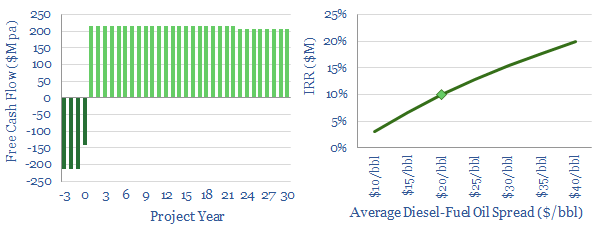
This data-file models the economics of Eni’s Slurry Technology, for hydro-converting heavy crudes and fuel oils into light products. It is among the top technologies we have reviewed for the arrival of IMO 2020 sulfur regulation, achieving >97% conversion of heavy fractions.
-
Costs of an LNG fuelling station
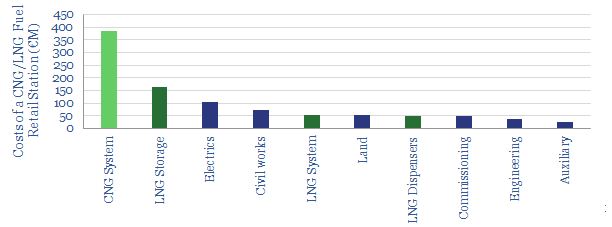
We have tabulated the costs of constructing an LNG-fuelling station across 55 cost lines, totalling €1M/site. c$10/mcf may be added to the cost of gas as a fuel.
Content by Category
- Batteries (95)
- Biofuels (44)
- Carbon Intensity (48)
- CCS (64)
- CO2 Removals (9)
- Coal (41)
- Commentary (65)
- Company Diligence (104)
- Data Models (920)
- Decarbonization (162)
- Demand (129)
- Digital (86)
- Downstream (47)
- Economic Model (220)
- Energy Efficiency (76)
- Hydrogen (63)
- Industry Data (308)
- LNG (56)
- Materials (86)
- Metals (88)
- Midstream (45)
- Natural Gas (161)
- Nature (76)
- Nuclear (28)
- Oil (175)
- Patents (39)
- Plastics (44)
- Power Grids (155)
- Renewables (153)
- Screen (136)
- Semiconductors (35)
- Shale (58)
- Solar (72)
- Supply-Demand (53)
- Vehicles (95)
- Video (24)
- Wind (47)
- Written Research (405)