Biofuels
-
Wood use: what CO2 credentials?
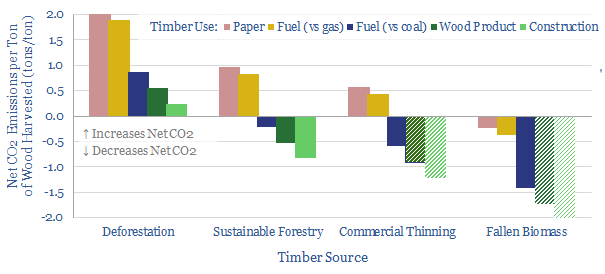
The carbon credentials of wood are not black-and-white. They depend on context. This 13-page note draws out the numbers and five key conclusions. They count against deforestation, in favor of using waste wood, in favor of wood materials (with some debate around paper) and strongly in favor of natural gas.
-
Landfill gas: rags to riches?
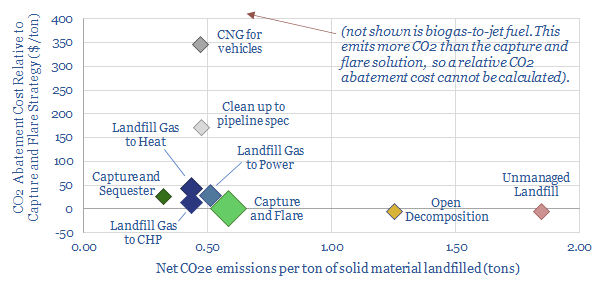
Methane emissions from landfills account for 2% of global CO2e. c70% of these emissions could easily be abated for c$5/ton, simply by capturing and flaring the methane. Going further, low cost uses of landfill gas in heat and power can also make good sense. But vast subsidies for landfill gas upgrading or RNG vehicles may…
-
Landfill gas: the economics?
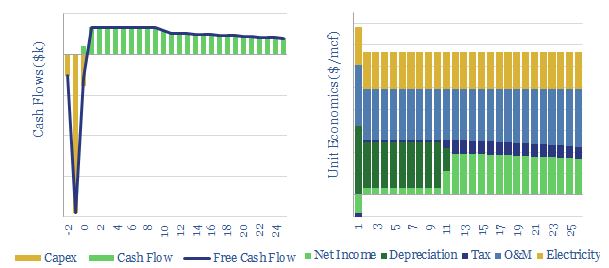
We estimate that a typical landfill facility may be able to capture and abate 70% of its methane leaks for a CO2-equivalent cost of $5/ton. Other landfill gas pathways get more complex and expensive. Raw and unprocessed landfill gas can be economical to commercialize at a cost of $2-4/mcfe.
-
Danimer: bio-plastics breakthrough?
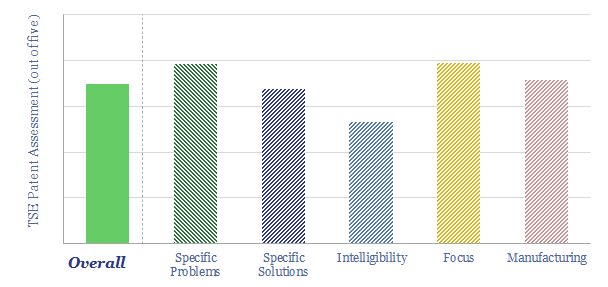
Danimer Scientific is a producer of PHA, a biodegradable plastic feedstock. PHA still has commercial challenges in its processing, mechanical properties and 4-5x higher costs than conventional plastics. Yet our patent review finds Danimer has made some specific, intelligible innovations, earning a solid score of 3.5 on our technology framework.
-
LanzaTech: biofuels breakthrough?
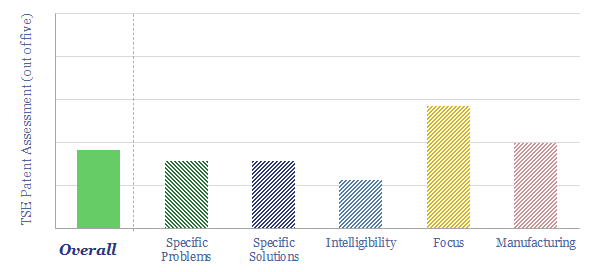
LanzaTech aspires to “take waste carbon emissions and convert them” into sustainable fuels (and bio-plastics) with a >70% CO2 reduction. We have assessed its patents but concluded we cannot yet de-risk the CO2-to-fuels pathway in our energy transition models.
-
Origin Materials: bio-plastics breakthrough?
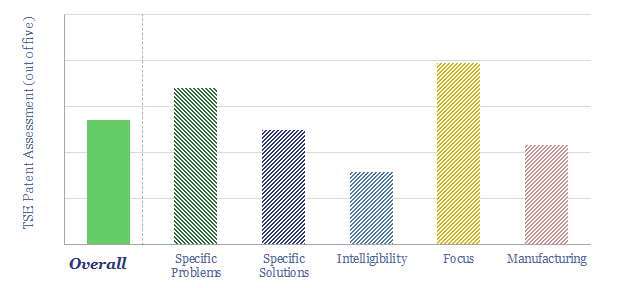
Origin Materials went public via SPAC in February-2021, as it was acquired by Artius Acquisition Inc at a valuation of $1.8bn. Its ambition is to use wood residues to create carbon-negative plastics, cost-competitively with petroleum products. This data-file outlines our conclusions from reviewing patents.
-
Ethanol: hangover cures?
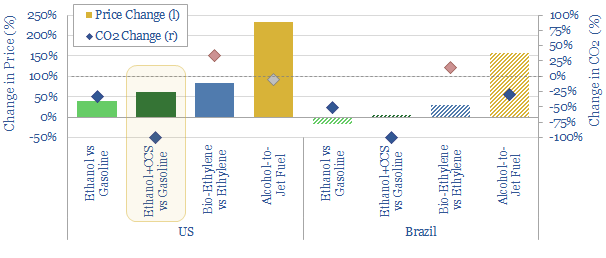
Could new technologies reinvigorate corn-based ethanol? This 12-page note assesses three options. We are constructive on combining CCS or CO2-EOR with an ethanol plant, which yields a carbon-negative fuel. But costs and CO2 credentials look more challenging for bio-plastics or alcohol-to-jet fuels.
-
Ethanol-to-ethylene: the economics?
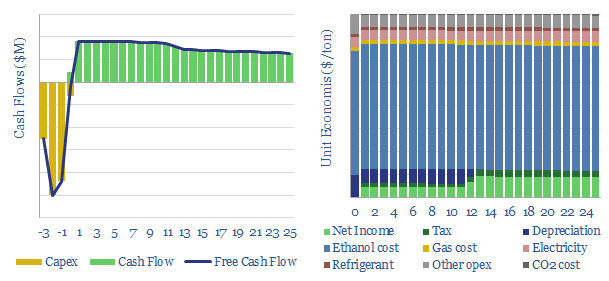
This data-file captures the economics of producing bio-ethylene by dehydration of ethanol. We estimate an ethylene price of $1,600/Tpa is required for a 10% IRR, which is almost 2x higher than a conventional ethane cracker. In a best case scenario, costs could fall below $1,000/ton.
-
Ethanol: getting wasted?
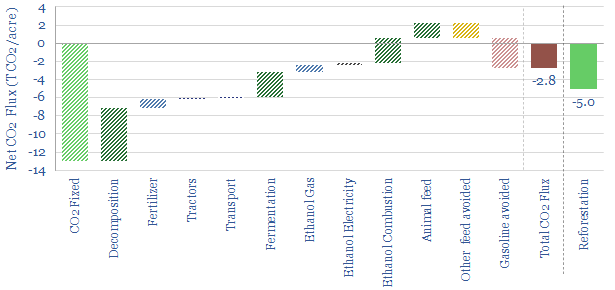
30M acres of US croplands are used to grow corn for ethanol, with a CO2 abatement cost of $200/ton. However, if these same acres were reforested, they could absorb 2x more CO2, while farmers in the mid-West could have higher earnings. Hence could US biofuels be disrupted?
-
Ethanol from corn: the economics?
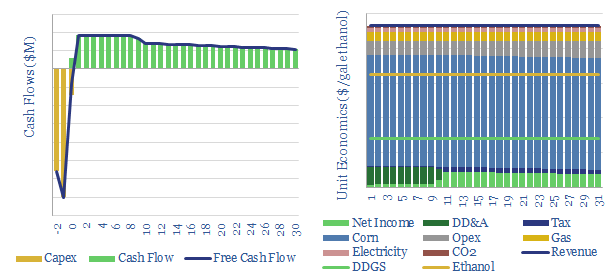
This data-file captures the economics of producing ethanol from corn. Our base case requires a price of $1.6/gallon of ethanol for a 10% IRR on a new greenfield plant, equivalent to $2.4/gallon gasoline. 40% of the US corn crop is diverted into biofuels, but the rationale is marginal.
Content by Category
- Batteries (96)
- Biofuels (44)
- Carbon Intensity (48)
- CCS (64)
- CO2 Removals (9)
- Coal (41)
- Commentary (65)
- Company Diligence (104)
- Data Models (921)
- Decarbonization (162)
- Demand (129)
- Digital (86)
- Downstream (47)
- Economic Model (220)
- Energy Efficiency (76)
- Hydrogen (63)
- Industry Data (308)
- LNG (56)
- Materials (86)
- Metals (88)
- Midstream (45)
- Natural Gas (161)
- Nature (76)
- Nuclear (28)
- Oil (175)
- Patents (39)
- Plastics (44)
- Power Grids (155)
- Renewables (153)
- Screen (137)
- Semiconductors (35)
- Shale (58)
- Solar (72)
- Supply-Demand (53)
- Vehicles (95)
- Video (24)
- Wind (47)
- Written Research (406)