Power Grids
-
Power transmission: raising electrical potential?
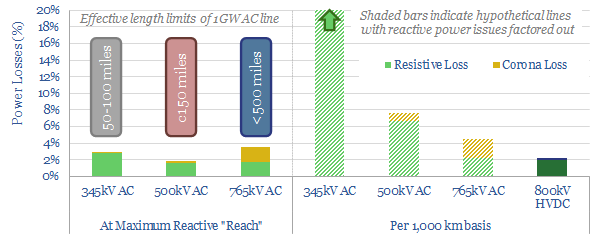
Electricity transmission matters in the energy transition, integrating dispersed renewables over long distances to reach growing demand centers. This 15-page note argues future transmission needs will favor large HVDCs, costing 2-3c/kWh per 1,000km, which are materially lower-cost and more efficient than other alternatives.
-
High voltage transmission cables: power parameters?
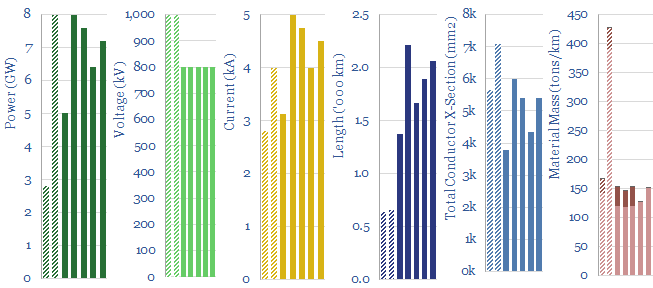
This data-file aggregates technical parameters of ultra high-voltage power lines. The average one transmits 6.5GW, at 800-1,000kV and 4,000 Amps, over a distance of 1,500 km. Every 500 meters, there is a 70m tall tower. The power lines have total mass of 200 tons/km, 2-3% losses per 1,000km and c$3M/mile costs.
-
EV fast charging: opening the electric floodgates?
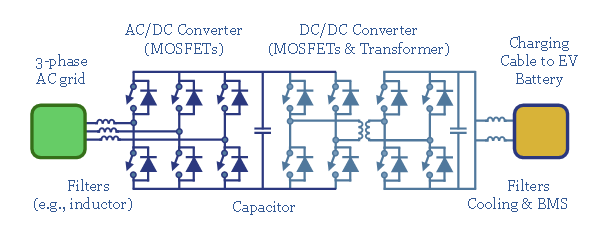
This 14-page note explains the crucial power-electronics in an electric vehicle fast-charging station, running at 150-350kW. Most important are power-MOSFETs, comprising c5-10% of charger costs. The market trebles by the late 2020s.
-
Electric vehicles: chargers of the light brigade?
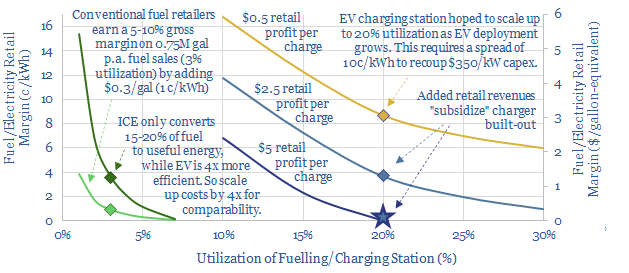
This 14-page note compares the economics of EV charging stations with conventional fuel retail stations. Our main question is whether EV chargers will ultimately get over-built. Hence prospects may be best for charging equipment and component manufacturers.
-
Power plants: cold starts and ramp rates?
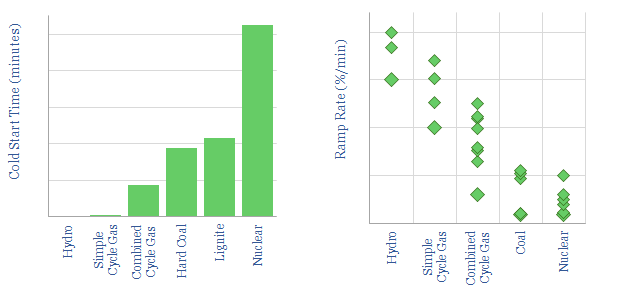
This data-file aggregates the ramp-up rates of power generation sources, as they start up from “cold”, and then as they ramp up (in MW per minute). Hydro and simple cycle gas turbines are fastest, followed by CCGTS, coal and nuclear.
-
Electric motors: variable star?
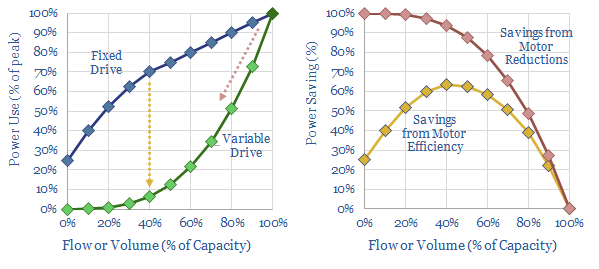
Variable frequency drives precisely control motors. Amazingly they could reduce global electricity demand by c10%. We expect a sharp acceleration due to sustained energy shortages, increasingly renewable-heavy grids and excellent 20-50% IRRs. Hence this 14-page note reviews the opportunity and who benefits.
-
Variable frequency drives: the economics?
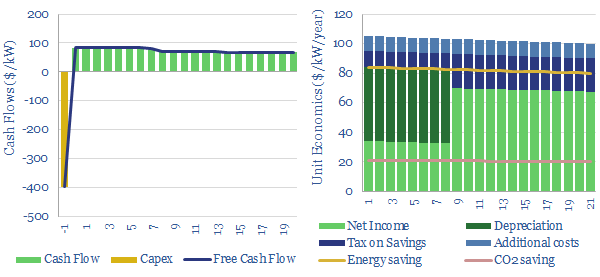
Variable frequency drives optimize the operating speeds of electric motors. Average energy saving are 34% and average costs are $250/kW. Hence our modelling calculates >15% IRRs installing a VFD at a typical industrial motor. This data-file captures the economics.
-
Variable frequency drives: leading companies?
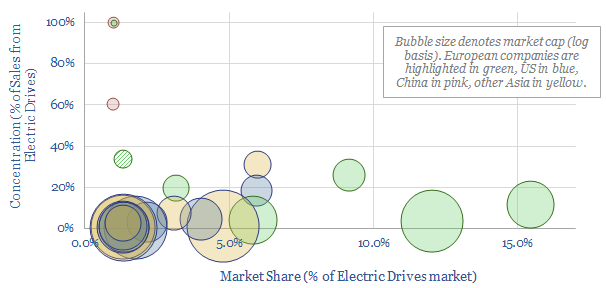
This data-file outlines the top twenty companies producing variable frequency drives to precisely control electric motors. The top three companies are European capital goods players. High-quality VFDs may protect against growing competition from China.
-
Grid volatility: are batteries finally in the money?
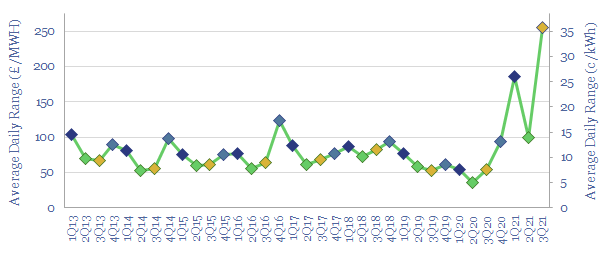
UK power price volatility has exploded in 2021. The average daily range has risen 4x from 2019-20, to 35c/kWh in 3Q21. At this level, grid-scale batteries are strongly ‘in the money’. So will the high volatility persist? This is the question in today’s 6-page note.
-
Synchronous condensers: the economics?
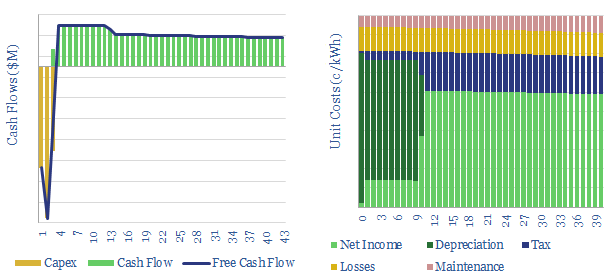
This data-file captures the costs of installing a synchronous condenser, downstream of a renewable power facility, to emulate the inertia, reactive power and short circuit power from conventional generators. 1.0 – 2.5 c/kWh of costs may be added to the power supplies flowing out of the SC.
Content by Category
- Batteries (96)
- Biofuels (44)
- Carbon Intensity (48)
- CCS (64)
- CO2 Removals (9)
- Coal (41)
- Commentary (65)
- Company Diligence (104)
- Data Models (922)
- Decarbonization (162)
- Demand (129)
- Digital (86)
- Downstream (47)
- Economic Model (221)
- Energy Efficiency (76)
- Hydrogen (63)
- Industry Data (308)
- LNG (56)
- Materials (86)
- Metals (88)
- Midstream (45)
- Natural Gas (161)
- Nature (76)
- Nuclear (28)
- Oil (176)
- Patents (39)
- Plastics (44)
- Power Grids (156)
- Renewables (153)
- Screen (137)
- Semiconductors (35)
- Shale (58)
- Solar (72)
- Supply-Demand (53)
- Vehicles (95)
- Video (24)
- Wind (47)
- Written Research (407)