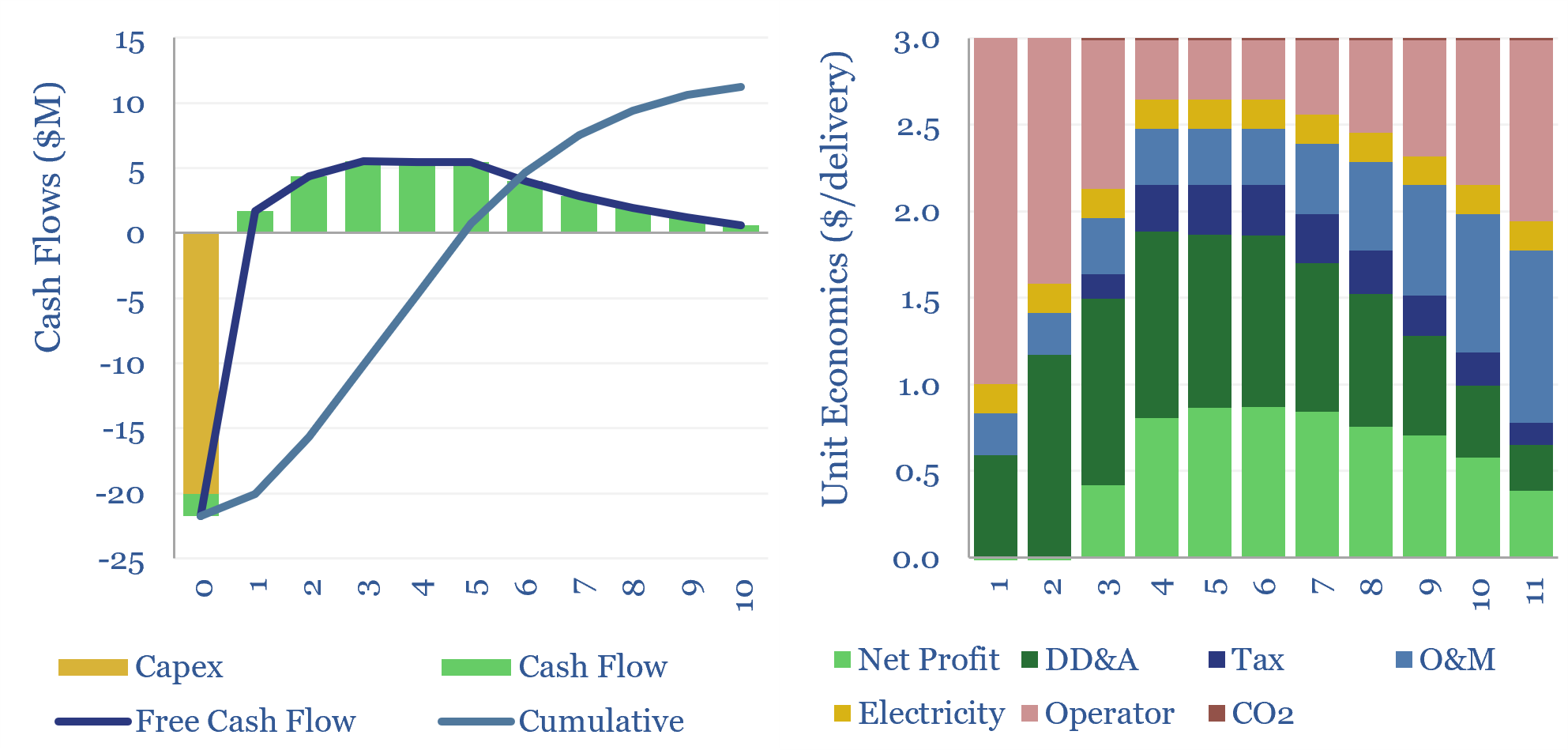
The energy economics of delivery drones, which can travel autonomously, over 30km at 100kmph, are captured in this data-file. In our base case, a delivery drone that costs $20k, and makes 8 deliveries per day, must charge a fee of $3/delivery to generate a 10% IRR. Costs, speeds and energy use can be 5-20x superior to delivery couriers.
Autonomous delivery drones are gaining traction for delivering small cargoes (less than 4kg) in urban and suburban settings. Notable newsflow comes from Amazon, Google’s Wing and specialist company Zipline, whose patents we have screened here.
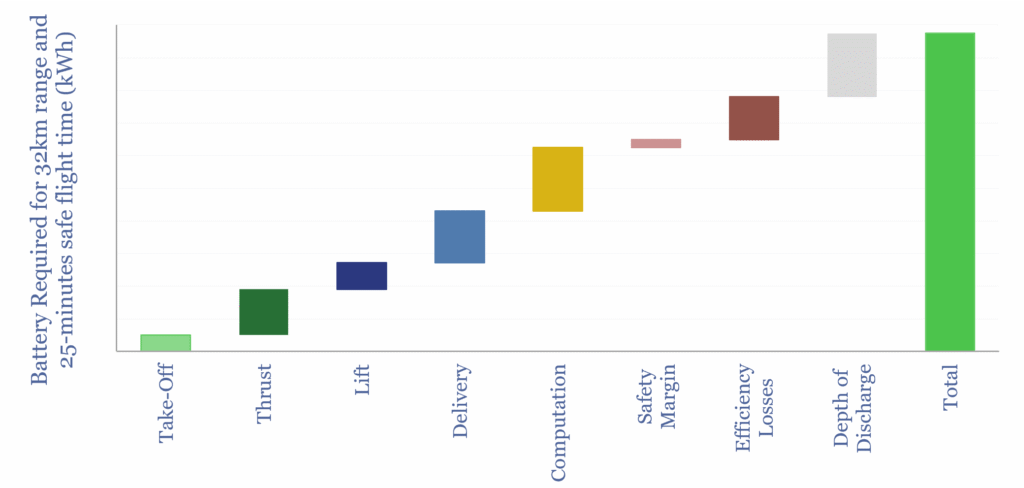
But what are the costs of drone deliveries? This model builds up the energy economics of delivery drones from first principles, starting with the equations of flight, the energy intensity of compute, estimating that a typical delivery drone might require a battery up to 2kWh in size (chart below).
Accordingly, a delivery drone that costs $20k and makes 8 deliveries per day needs to charge $3/delivery in order to generate a 10% IRR. Electricity is only 6% of the total cost. The two largest cost contributors are the amortization of the up-front capex and the reliance on a tele-operator to monitor 10-1,000 drones from a control room, in case of an issue.
Ultimately drone delivery costs can fall below $1 per delivery, we model, if requisite scale is achieved in both the number of deliveries made per drone per day, and in the deflation of drone costs, through the mass production of drones.
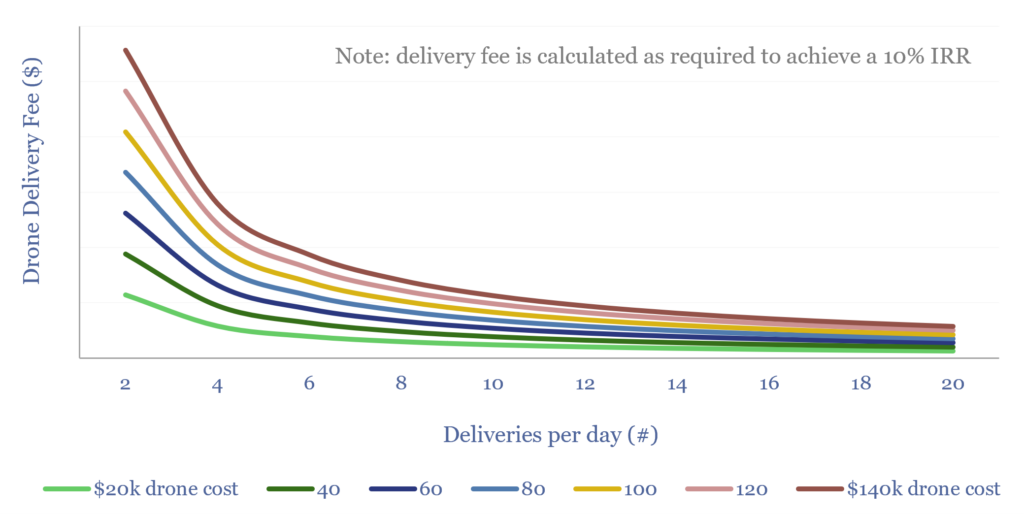
This would be remarkable because courier delivery typically costs $5-20. Drones may use 90-95% less energy than delivery couriers. And they may also be 5-10x faster.
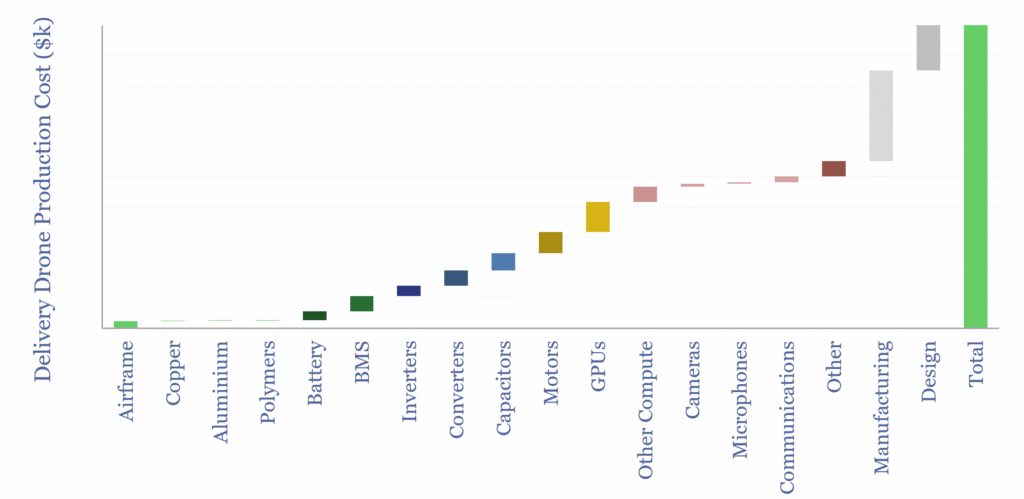
A build-up for the capex costs of delivery drones is broken out from first principles, drawing on our separate models into material costs, batteries, motors, inverters, DC-DC converters, auto manufacturing and other typical vehicle component costs.
Please download the data-file to stress test the energy economics of drone deliveries, and underlying input assumptions, including for capex, opex, electricity, O&M, utilization and taxes.