-
Value in Use: CO2 intensities of household items?
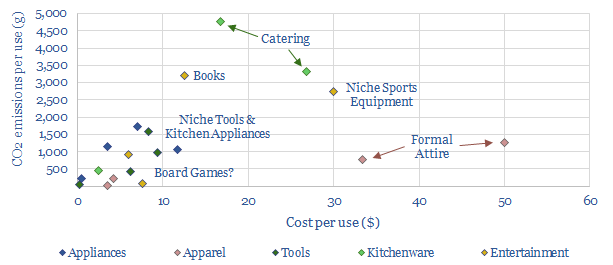
More extensive “sharing” will be enabled by drone delivery technologies and could save $1trn of costs and 100MTpa of CO2 emissions across the entire US. These numbers are illustrated by tabulating the data for 20 common household items, which we estimate are currently used just 20 times in their entire useful lives, thus costing $13…
-
Distribution Costs: Ships, Trucks, Trains and Delivery Vans?
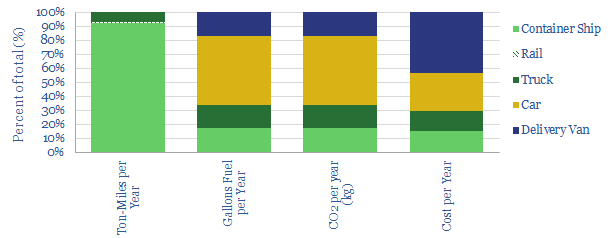
Distributing goods to the typical US consumer costs 1.5bbls of fuel, 600kg of CO2 and $1,000 per annum. The costs will increase 20-40% in the next decade, as the share of online retail doubles to c20%, hence new technologies are needed in last-mile delivery. This data-file provides a full breakdown of the numbers, across container-ships,…
-
CO2 intensity of natural gas value chains?
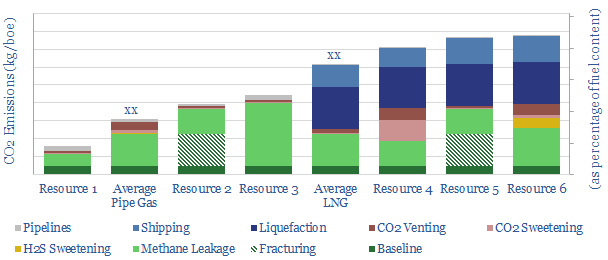
We have constructed a simple model to estimate full-cycle CO2 emissions of a gas resource, as a function of its production efficiency, contaminants (CO2 and H2S), and commercialisation (LNG or pipelines) . Compared with the life-cycle emissions of oil, CO2 per boe is seen to be c0-20% lower for LNG and c50-75% lower for piped…
-
Disrupting Agriculture: Energy Opportunities?
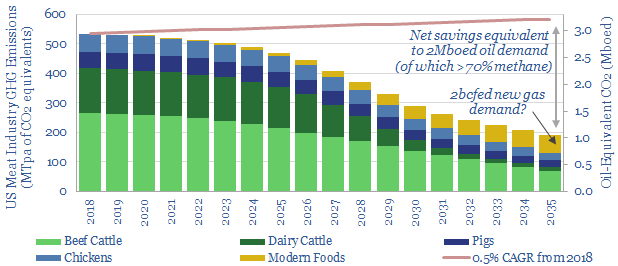
Precision-engineered proteins are on the cusp of disrupting the agriculture industry. The science is improving rapidly, to create meat-substitutes with vastly superior nutrition, taste and costs. We explore the energy consequences of “replacing cows”, with potential for 2bcfd upside to US gas demand, to offset the CO2 of all US oil demand, increase US biofuels…
-
At the cutting edge of EOR?
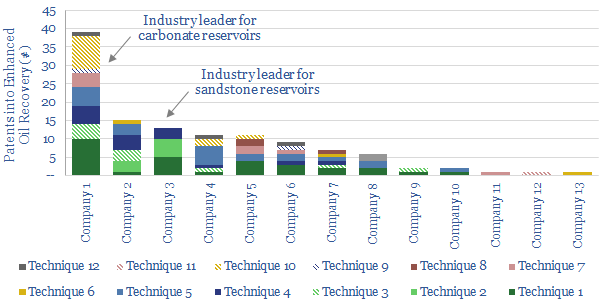
This data-file summarises 120 patents into Enhanced Oil Recovery, filed by the leading Oil Majors in 2018. Hence, we can identify clear leaders in EOR technology, and what they are doing at the cutting edge, to improve recovery and lower decline rates. As the world’s oilfields age, leading EOR technology will help avoid the higher…
-
Drone Attacks on Energy Assets?
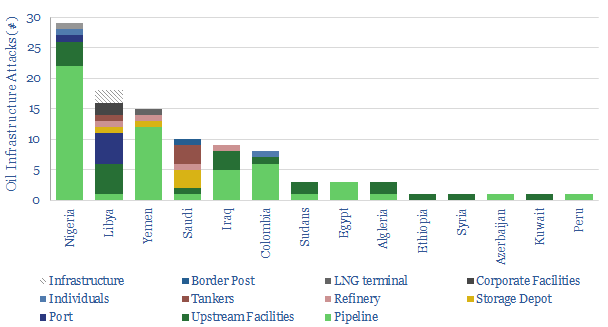
A devastating new wave of drone technologies could place the world’s largest and most vulnerable energy infrastructure into the firing line of aggressors. This short note reviews the ten facets of drone swarms that make them so dangerous. Hence we are increasingly concerned over supply disruptions in the 2020s.
-
2050 oil markets: opportunities in peak demand?
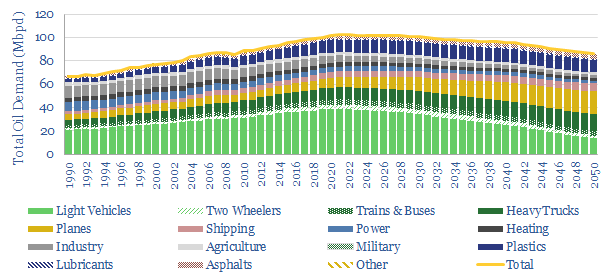
Seven technology themes can save 45Mbpd of long-term oil demand. They make the difference between 2050 oil consumption surpassing 130Mbpd and our own forecasts: for a plateau in the 2020s, then a gradual descent to 87Mbpd in 2050.
-
Do refineries become bio-refineries?
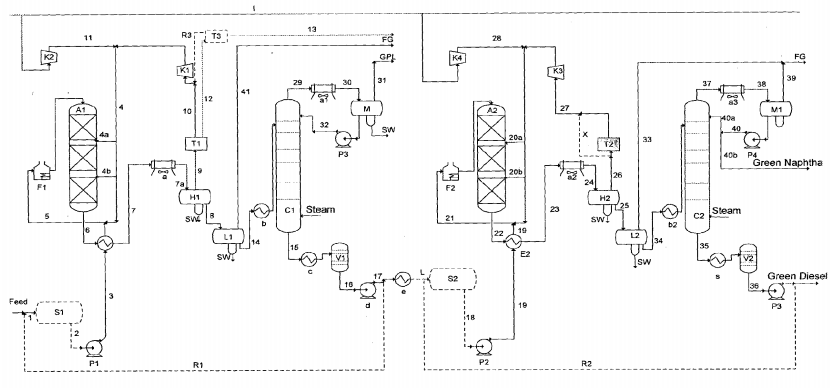
What will happen to oil refineries during the energy transition? On our numbers, liquid oil products will be needed past 2100, long after demand plateaus in the 2020s. Cleaner, more efficient technologies are therefore required in the downstream sector. This note considers whether refineries could increasingly be converted to bio-refineries.
-
Lubricant Leaders: our top five conclusions
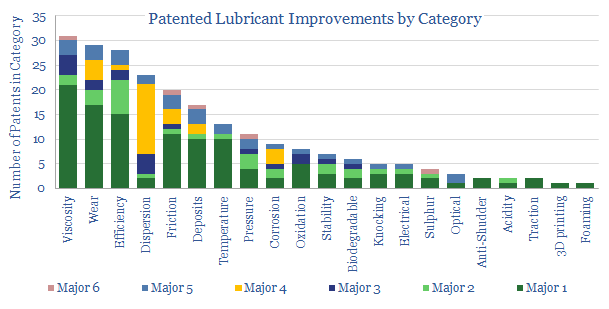
We present our “top five” conclusions on the lubricants industry, after reviewing 240 patents, filed by Oil Majors in 2018. We are most impressed by the intense pace of activity to improve engine efficiencies. Technology will drive margins and market shares, hence three clear market leaders are identified. The relative number of patents into Electric…
-
Drones attack military fuel economy?
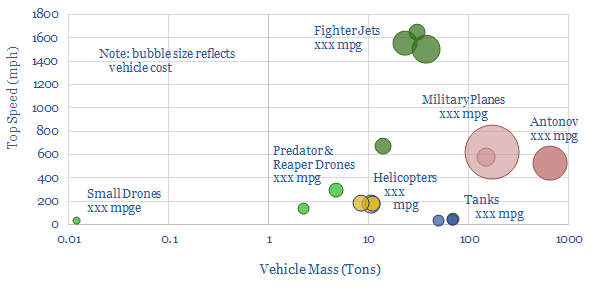
Swarms of drones are emerging as the most devastating military weapon of the 21st century. This was evidenced by the recent attack on Saudi oil infrastructure. But drones’ impact on 0.7Mbpd of global military oil demand could be even more devastating. This data-file quantifies their fuel economy at >1,000 mpge compared to today’s fighter jets,…
Content by Category
- Batteries (95)
- Biofuels (44)
- Carbon Intensity (48)
- CCS (64)
- CO2 Removals (9)
- Coal (41)
- Commentary (65)
- Company Diligence (104)
- Data Models (920)
- Decarbonization (162)
- Demand (129)
- Digital (86)
- Downstream (47)
- Economic Model (220)
- Energy Efficiency (76)
- Hydrogen (63)
- Industry Data (308)
- LNG (56)
- Materials (86)
- Metals (88)
- Midstream (45)
- Natural Gas (161)
- Nature (76)
- Nuclear (28)
- Oil (175)
- Patents (39)
- Plastics (44)
- Power Grids (155)
- Renewables (153)
- Screen (136)
- Semiconductors (35)
- Shale (58)
- Solar (72)
- Supply-Demand (53)
- Vehicles (95)
- Video (24)
- Wind (47)
- Written Research (405)