-
Aerial Vehicles: Which Ones Fly?
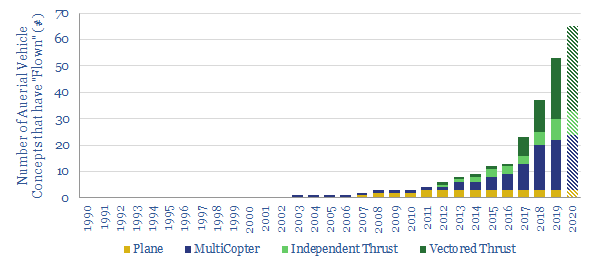
We have updated our database of over 100 companies, which have already flown c50 aerial vehicles (aka “flying cars”), to identify the leading contenders. We categorize each vehicle by fuel type, speed, range, fuel economy and credibility. The data strongly imply aerial vehicles taking off in the 2020s.
-
Fuel Cell Patents: twenty years of progress?
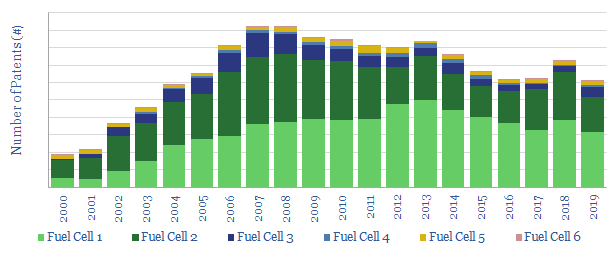
This data-file tabulates the numbers of patents filed into different types of fuel-cells, from 2000-2020, globally and in key geographies: China, Japan, Korea and the US. Research activity peaked in 2008 and has since fallen by 30%. Japanese research has collapsed, while China’s has ascended.
-
CO2 Emissions from Working?
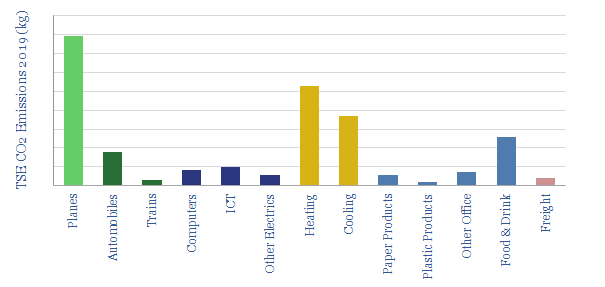
This model helps you estimate the CO2 emissions associated with working, as a function of 30 input variables. The average CO2 footprint is estimated at 10T per person per year (which could currently be offset for c$150) within a possible range of c5-50T.
-
Thunder Said Energy: CO2 Neutrality in 2019
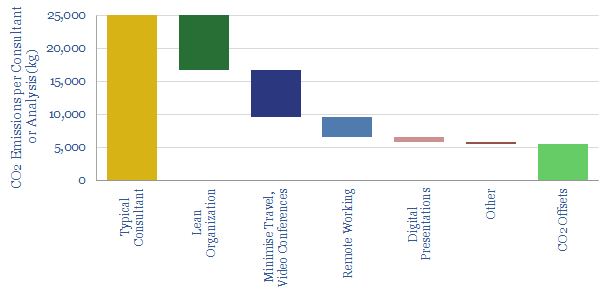
It is important for us to practice what we preach. Hence in 2019, we reduced our CO2 by 78% compared with a typical research/consulting firm, and purchased CO2-offsets for the remaining 5.6 tons. This note contains granular data on professional service firms’ emissions and opportunities to reduce them.
-
Subsea Services: Patent Leaders?
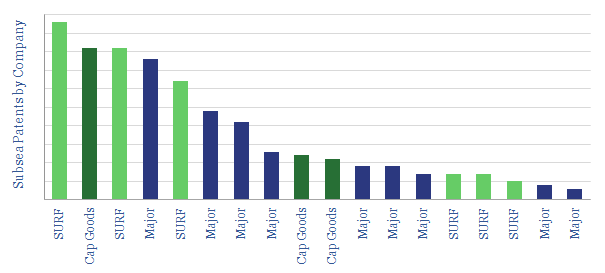
This data-file captures all the subsea patents from ten of the largest service providers. Priorities have shifted since the oil downturn. The data show who is most innovative and who is best placed, by category. Clear leadership is seen in subsea pumps, wellheads, or umbilicals. Other areas are more competitive.
-
Offshore Wind: Tracking Turbines with Satellites and Machine Learning?
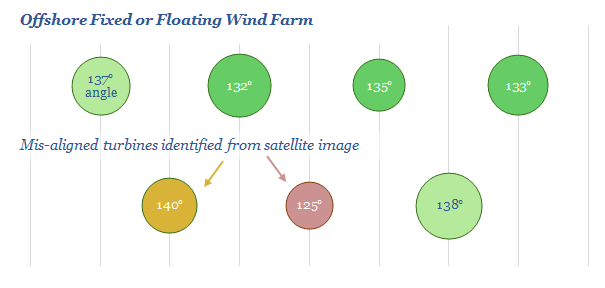
Equinor has patented a machine learning method to optimise offshore wind farms using satellite imagery or pictures from drones. We estimate a 0.5% IRR uplift on offshore wind projects. As Oil Majors move into renewables, it is important to be leaders not followers.
-
Shell: the future of LNG plants?
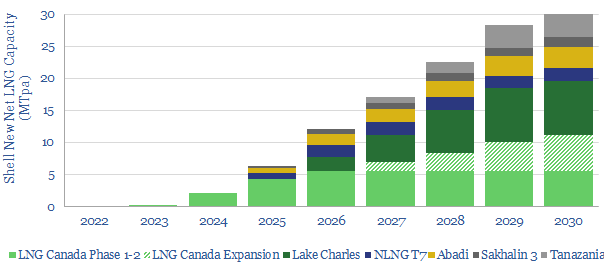
Shell is revolutionizing LNG project design, based on reviewing 40 of the company’s gas-focused patents from 2019. The innovations can lower LNG facilities’ capex by 70% and opex by 50%; conferring a $4bn NPV and 4% IRR advantage over industry standard greenfields. Smaller-scale LNG, modular LNG and highly digitized facilities are particularly abetted. This note…
-
The Most Powerful Force in the Universe?
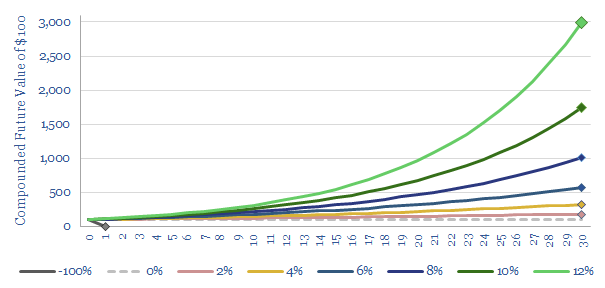
Investors may suffer if they do not consider the energy transition. But they may suffer much more if they consider it, and get the answer wrong. The best way to drive the energy transition will be to maximise carbon-adjusted investment returns.
-
Plastic Recycling Companies: pyrolysis and next-generation recycling?
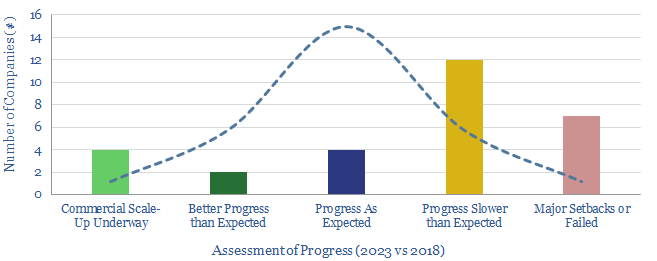
This data-file assesses the outlook for 30 plastic pyrolysis companies, operating (or constructing) 100 plants around the world, which use chemical processes to turn waste plastic back into oil. The data-file has been updated in 2023, concluding that the theme is ‘on track’, but segmented between leaders and setbacks.
-
Oil Sands CO2 Intensity
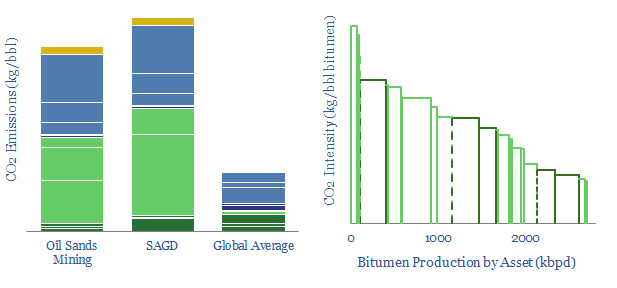
This data-file quantifies the CO2 intensity of oil sands mining and SAGD, line by line, based on real-world data. We also derive a CO2 curve ranking c2.5Mbpd of production across Alberta, to compare different operators. Steam-oil-ratios explain c60% of the variance in SAGD assets’ emissions.
Content by Category
- Batteries (96)
- Biofuels (44)
- Carbon Intensity (48)
- CCS (64)
- CO2 Removals (9)
- Coal (41)
- Commentary (65)
- Company Diligence (104)
- Data Models (922)
- Decarbonization (162)
- Demand (129)
- Digital (86)
- Downstream (47)
- Economic Model (221)
- Energy Efficiency (76)
- Hydrogen (63)
- Industry Data (308)
- LNG (56)
- Materials (86)
- Metals (88)
- Midstream (45)
- Natural Gas (161)
- Nature (76)
- Nuclear (28)
- Oil (176)
- Patents (39)
- Plastics (44)
- Power Grids (156)
- Renewables (153)
- Screen (137)
- Semiconductors (35)
- Shale (58)
- Solar (72)
- Supply-Demand (53)
- Vehicles (95)
- Video (24)
- Wind (47)
- Written Research (407)