-
Energy Transition: Polarized Perspectives?
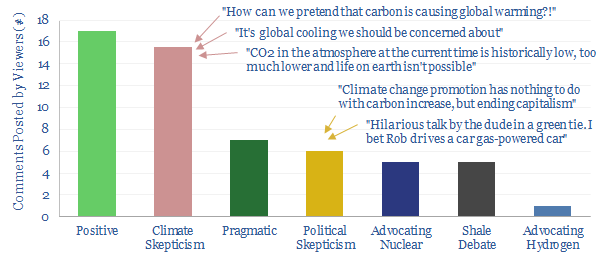
Last year, we appeared on RealVision, advocating economic opportunities that can decarbonize the energy system. The “comments” surprised us, suggesting the topic of energy transition is extremely polarized. Historically, such ideological polarization has not ended well. This re-affirms the need for energy technologies.
-
EOG’s Digitization: Pumped-Up?
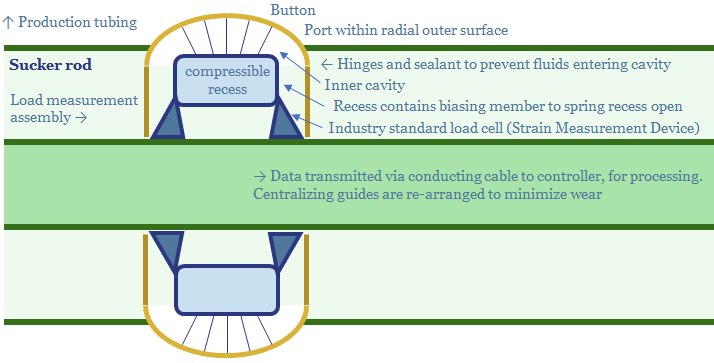
EOG patented a new digital technology in 2019: a load assembly which can be built into its rod pumps: to raise efficiency, lower costs and lower energy consumption (i.e., CO2). This short note reviews the patent, illustrating how EOG is working to further digitize its processes, maximise productivity and minimise CO2 intensity.
-
Variable Power Tariffs Exacerbate Social Inequalities?
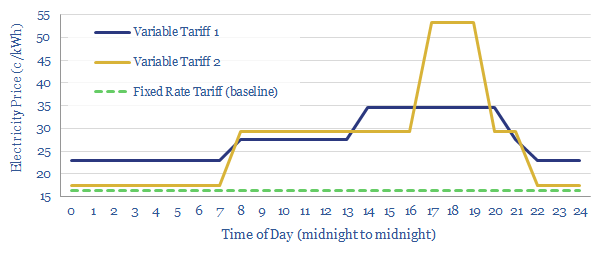
This data-file tabulates the impacts of variable electricity tariffs, after a large-scale US sample. Demand is inelastic, falling just 1% for a 20% price-increase. However, socially “vulnerable” consumers suffered disproportionately, with bills rising 4% more than non-vulnerable consumers.
-
Blockchain in the Oil & Gas Supply Chain
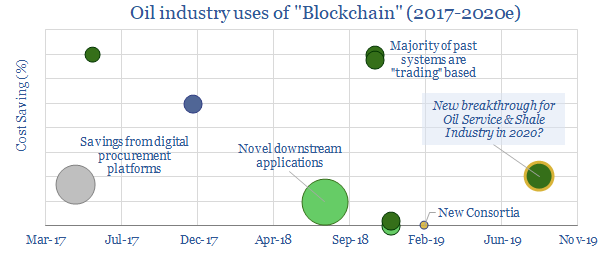
This datafile tabulates ten examples of deploying Blockchain in the oil and gas industry since 2017; including companies and cost savings. Most prior examples are in trading. For 2020, we are particularly excited by the broadening of Blockchain technologies into the procurement industry, which can deflate shale costs.
-
Ten Themes for Energy in 2020
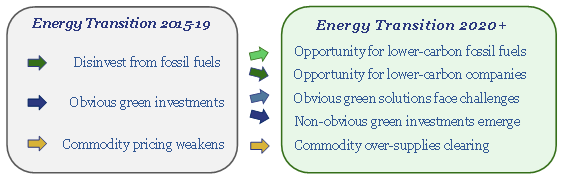
Energy transition is maturing as an investment theme. ‘Obvious’ portfolio tilts are beginning to look over-crowded. Non-obvious ones are looking over-looked. This note outlines the ‘top ten’ themes that excite us most in 2020, among commodities, drivers of the energy transition, market perceptions and corporate strategies.
-
Global gas: catch methane if you can?
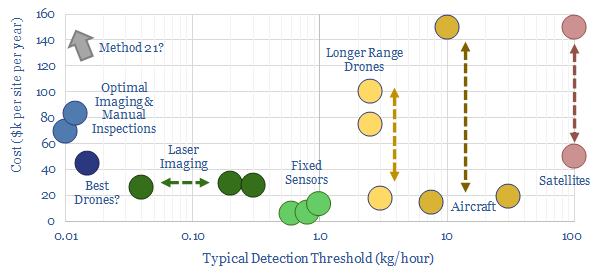
Scaling up natural gas is the largest decarbonisation opportunity on the planet. But this requires minimising methane leaks. Exciting new technologies are emerging. This note ranks producers, positions for new policies and advocates developing more LNG. To seize the opportunity, we also identify early-stage companies in methane measurement and mature public companies in the oilfield…
-
Shale growth: what if the Permian went CO2-neutral?
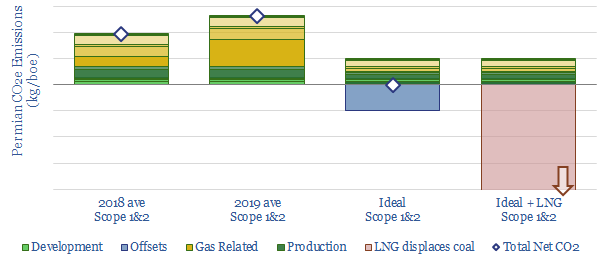
Shale growth is slowing due to fears over the energy transition, as Permian upstream CO2 emissions reached a new high this year. We have disaggregated the CO2 across 14 causes. It could be eliminated by improved technologies and operations: making Permian production carbon neutral, uplifting NPVs by c$4-7/boe, re-attracting a vast wave of capital and…
-
Heliogen: concentrated solar breakthrough?
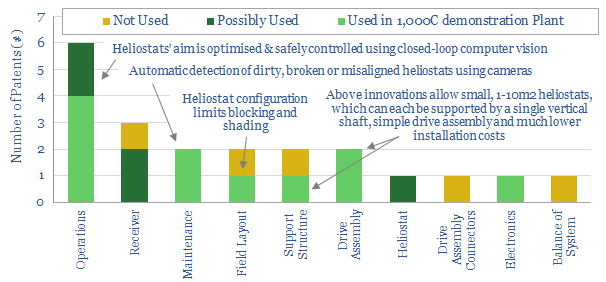
Heliogen has set a new record for concentrated solar power in 2019, generating >1,000C temperatures from an array of c370 hexagonal mirrors, which are precisely controlled using computer vision. This is almost 2x traditional CSP plants. Hence this data-file reviews 21 of Heliogen’s patents, finding impressive innovations and ultimate costs.
-
Methane Leaks from Downstream Gas Distribution
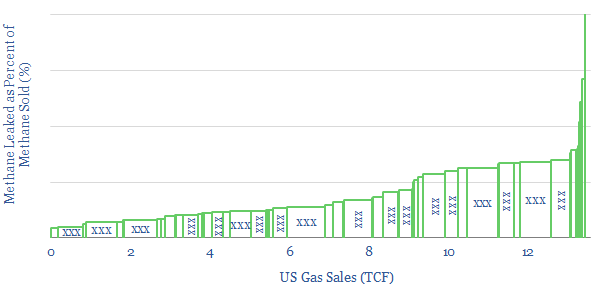
Methane leakages average 0.2% when distributing natural gas to end-customers, across the US’s 160 retail gas networks. Leakages are most correlated with the share of sales to smaller customers. 80 distinct gas companies are ranked in this data-file. State-owned utilities appear to have 2x higher leakage rates versus public companies.
-
CO2 intensity of shale: breakdown by category?
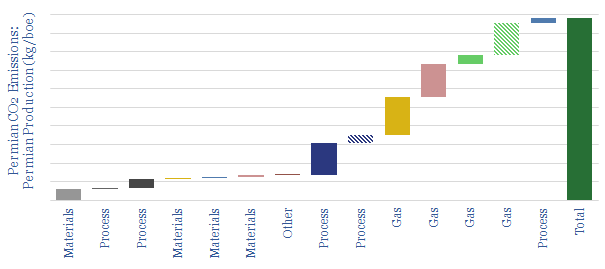
This model disaggregates the CO2 emissions of producing shale oil, across 14 different contributors: such as materials, drilling, fracturing, supply chain, lifting, processing, methane leaks and flaring. CO2 intensity can be flexed by changing the input assumptions. Our ‘idealized shale’ scenario follows in a separate tab, showing how Permian shale production could become ‘carbon neutral’.
Content by Category
- Batteries (96)
- Biofuels (44)
- Carbon Intensity (48)
- CCS (64)
- CO2 Removals (9)
- Coal (41)
- Commentary (65)
- Company Diligence (104)
- Data Models (922)
- Decarbonization (162)
- Demand (129)
- Digital (86)
- Downstream (47)
- Economic Model (221)
- Energy Efficiency (76)
- Hydrogen (63)
- Industry Data (308)
- LNG (56)
- Materials (86)
- Metals (88)
- Midstream (45)
- Natural Gas (161)
- Nature (76)
- Nuclear (28)
- Oil (176)
- Patents (39)
- Plastics (44)
- Power Grids (156)
- Renewables (153)
- Screen (137)
- Semiconductors (35)
- Shale (58)
- Solar (72)
- Supply-Demand (53)
- Vehicles (95)
- Video (24)
- Wind (47)
- Written Research (407)