ANYbotics’ quadrupedal inspection robot, ANYmal, has been ruggedized for industrial inspections. We reviewed ANYbotics’ patents and case studies, which suggest growing applications, a moat around the technology, and great upside for robots across energy, mining and manufacturing. Details are in this data-file.
ANYbotics is a private company, founded in 2016, headquartered in Switzerland as a spin-off from ETH Zurich. The company has c200 employees and has raised $150M, to bring a quadrupedal inspection robot to market, called ANYmal.
ANYmal is an inspection robot designed for use in “complex and dynamic environments”, with the ability to traverse rough/challenging terrains, omnidirectionally. The robot contains 14 motors, 12 joints, 10 optical sensors, 2 microphones, 2 gas detectors and a thermal imaging camera.
ANYmal’s energy use is estimated in the data-file, and can be compared with the energy use of robots (in kW) and the energy use of EVs (in kWh/km).
We have argued that AI/autonomy are like letting a genie out of the bottle, and many industries will see transformative impacts from autonomous robotics.
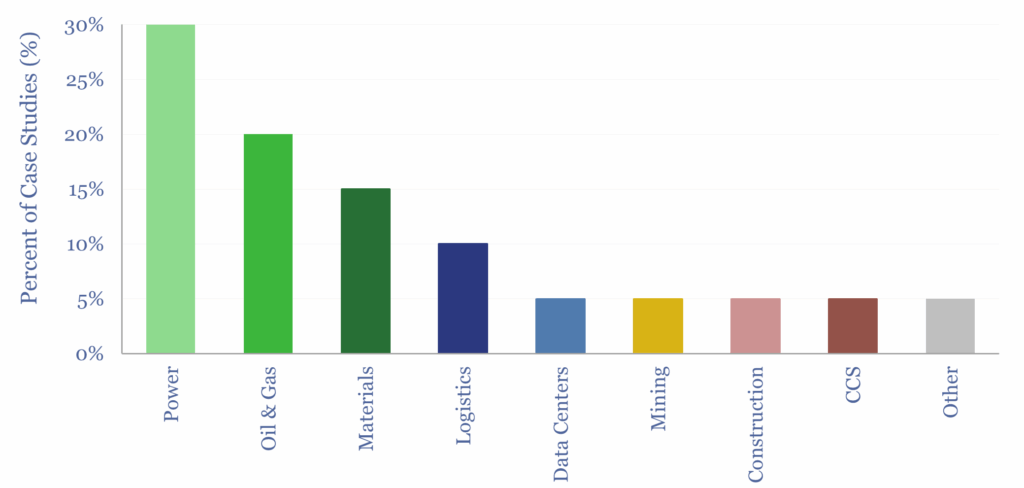
By YE25, ANYbotics had deployed around 200 of its ANYmal robots industrially. These units are performing “thousands of inspections per week”, across power, oil, gas, mining, utilities and industry. In this data-file, we collated the key details and achievements across 20 case studies, to see how inspection robots are being used.
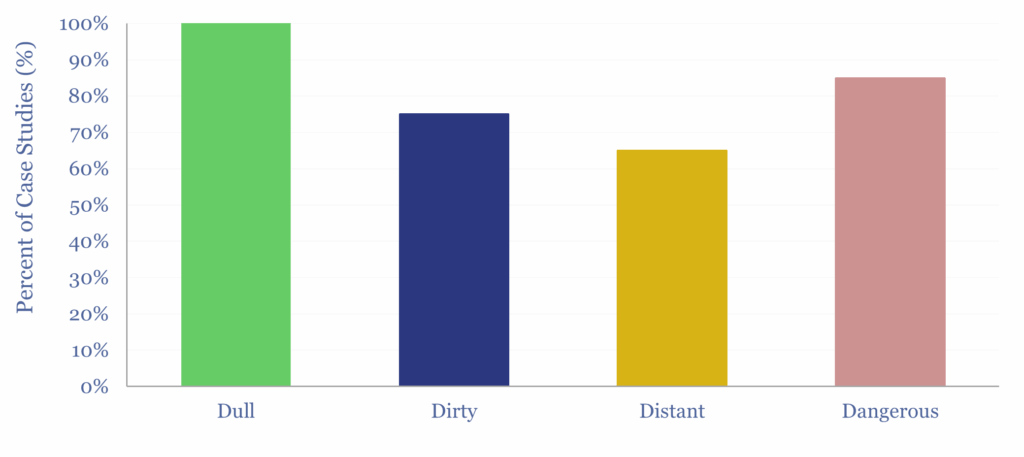
Equinor, which has deployed ANYmal on a normally not manned (NNM) offshore platform (at Northern Lights CCS project), and saved $130M last year from AI, has highlighted a “4D” framework for where it aims to deploy robots: for tasks that are dull, dirty, distant and/or dangerous.
Using this framework, we estimate that 100% of ANYmal deployments to-date have been in contexts that are quite dull for human operators, 75% are dirty, 65% are distant and 85% are somewhat dangerous.
Achievements across our case studies include 40% reductions in reactive maintenance costs, +1.5% increase in uptime at a chemicals plant, helping a steel producer reduce incident frequency from 8.7 to 1.5 per million working hours via mitigating exposure to hazardous environments by up to 80%.
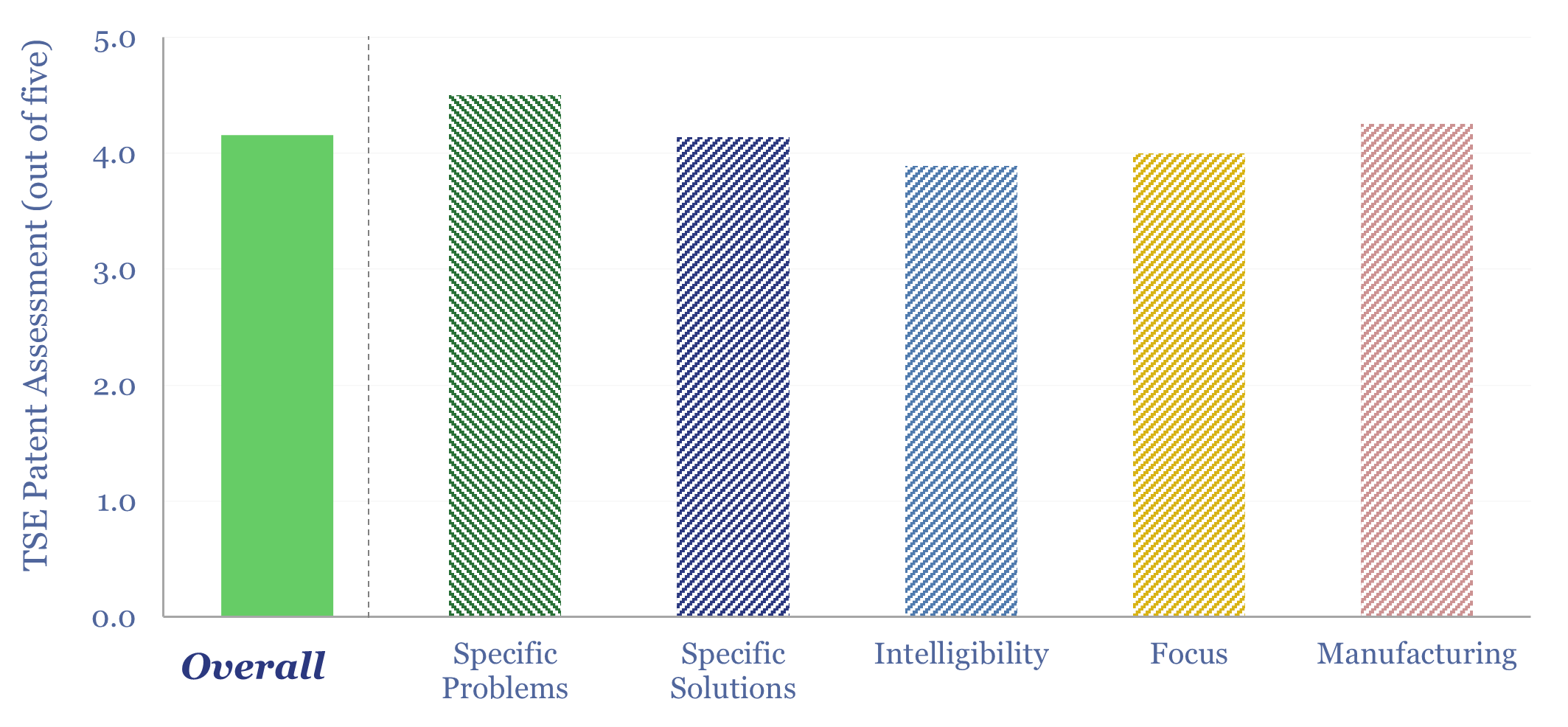
We also reviewed 9 patent families from ANYbotics, scored on our usual patent assessment framework. All are focused on improving the ruggedness of specific, quadrupedal robots, helping to de-risk a moat. Full details are in the data-file.