Digital
-
What is the energy consumption of the internet?
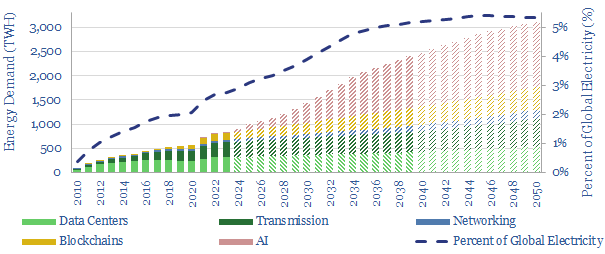
Powering the internet consumed 800 TWH of electricity in 2022, as 5bn users generated 4.7 Zettabytes of traffic. Our guess is that the internet’s energy demands double by 2030, including due to AI (e.g., ChatGPT), adding 1% upside to global energy and 2.5% to global electricity demand. This 13-page note aims to break down the…
-
Energy intensity of fiber optic cables?
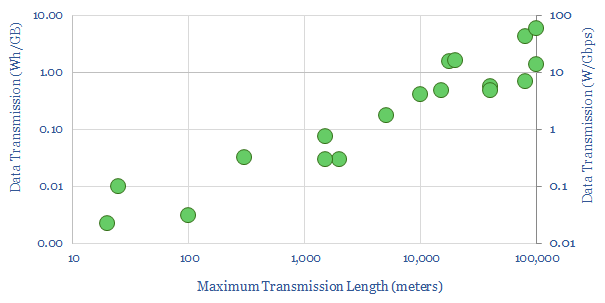
What is the energy intensity of fiber optic cables? Our best estimate is that moving each GB of internet traffic through the fixed network requires 40Wh/GB of energy, across 20 hops, spanning 800km and requiring an average of 0.05 Wh/GB/km. Generally, long-distance transmission is 1-2 orders of magnitude more energy efficient than short-distance.
-
Sentient Energy: smart grid breakthrough?
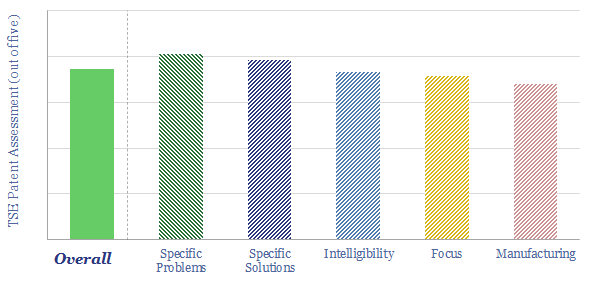
This data-file is a technology review for Sentient Energy, assessing innovations in smart grids. Its technology can achieve energy savings via a combination of “Conservation Voltage Reduction” and “Volt-VAR optimization at the grid edge”. This also helps to integrate more solar and EV charging into power grids. We explain the technology.
-
Blockchain: why so energy intensive?
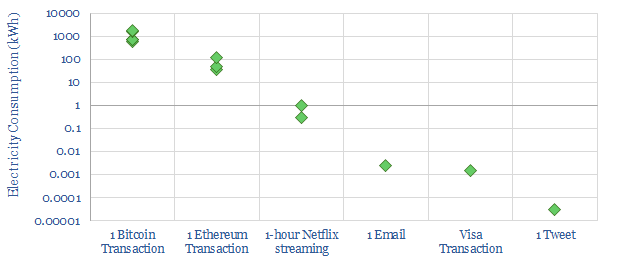
A single Bitcoin transaction currently uses c1,000kWh of electricity, 1 million times more than a traditional payment. Hence this note aims to explain how blockchain works, why it has been so energy intensive in the past, and how the energy multiplier could be reduced to maybe 100 – 1,000x.
-
Inspection costs: drones versus traditional quality control?
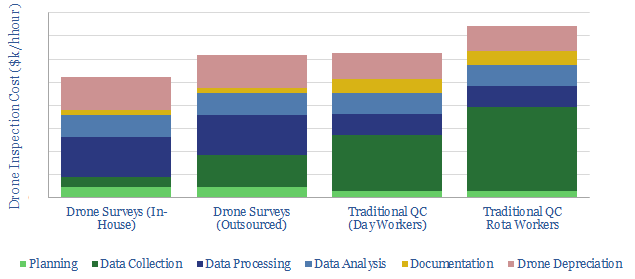
This data-file estimates the costs of drone inspections, for the construction and resources industries, using bottom-up numbers from technical papers. Costs per hour can be 30% lower than for traditional quality control. A single drone, including software licenses likely costs c$30k.
-
Smart Energy: technology leaders?
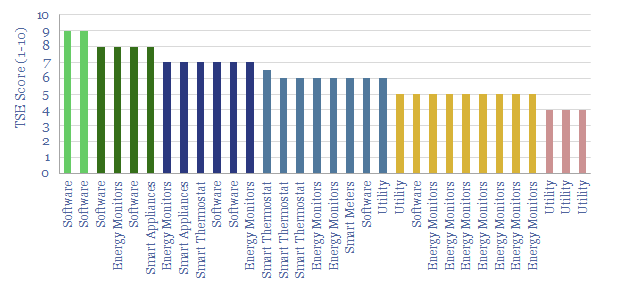
Smart meters and smart devices are capable of transmitting and receiving real-time consumption data and instructions. This data-file tracks 40 leading companies, mostly at the venture and growth stages. They help lower demand, smooth grid volatility and encourage appliance upgrades.
-
The ascent of drones?
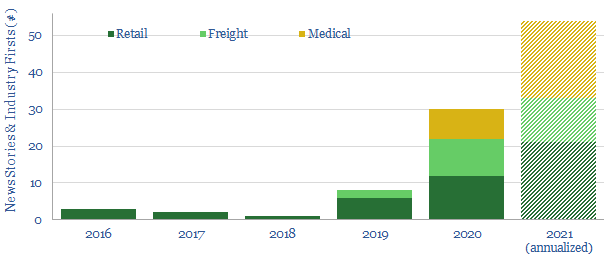
In 2019, we argued drones would be the single most disruptive technology to gain share in the 2020s, with potential to save over 500MTpa of CO2 emissions, while re-shaping urban consumption, retail and manufacturing. This data-file aims to tabulate key news flow and data-points.
-
Technology transitions: thinking fast and slow?
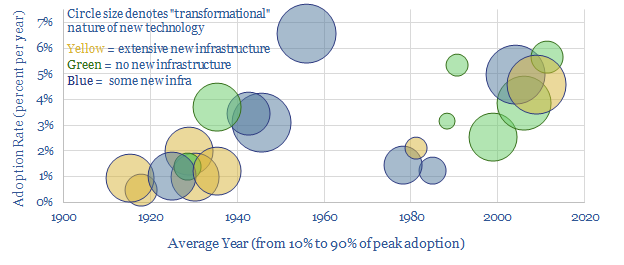
It takes 15-100 years for a new technology to ramp from 10% to 90% of its peak adoption rate. But what determines the pace? This 15-page note finds answers by evaluating 20 examples that changed the world from 1870 to 2020. We derive four rules of thumb, in order to quantify the pace at which different…
-
Ventures for an Energy Transition?
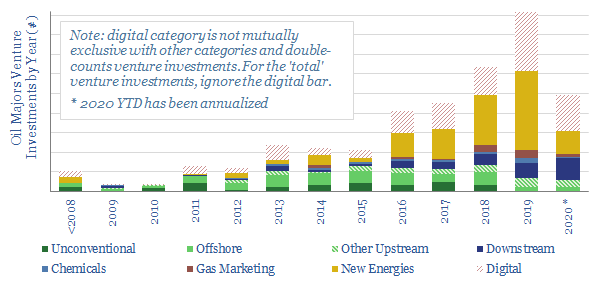
This database tabulates c300 venture investments, made by 9 of the leading Oil Majors. Their strategy is increasingly geared to advancing new energies, digital technologies and improving mobility. Different companies are compared and contrasted, including the full list of venture investments over time.
-
Energy Transition Technologies?
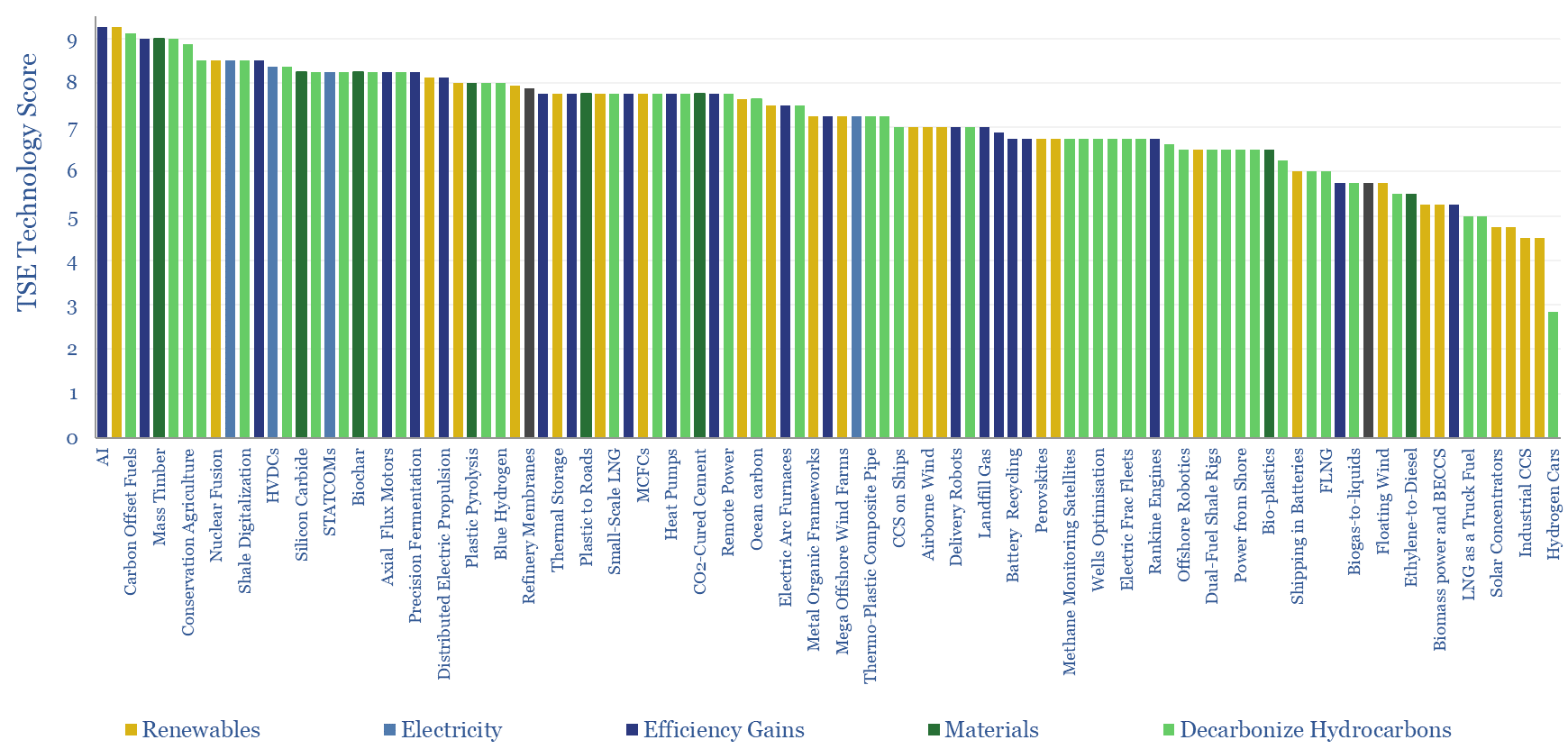
This data-file “scores” the top technologies to transform the global energy industry and the world, as assessed by Thunder Said Energy. Each one is scored based on technical readiness, economic impact and the level of work we have conducted.
Content by Category
- Batteries (96)
- Biofuels (44)
- Carbon Intensity (48)
- CCS (64)
- CO2 Removals (9)
- Coal (41)
- Commentary (65)
- Company Diligence (105)
- Data Models (925)
- Decarbonization (162)
- Demand (131)
- Digital (89)
- Downstream (47)
- Economic Model (221)
- Energy Efficiency (76)
- Hydrogen (63)
- Industry Data (309)
- LNG (56)
- Materials (86)
- Metals (88)
- Midstream (45)
- Natural Gas (161)
- Nature (76)
- Nuclear (28)
- Oil (176)
- Patents (39)
- Plastics (44)
- Power Grids (156)
- Renewables (153)
- Screen (138)
- Semiconductors (35)
- Shale (58)
- Solar (72)
- Supply-Demand (53)
- Vehicles (94)
- Video (24)
- Wind (46)
- Written Research (408)