Downstream
-
Scope 4 emissions: avoided CO2 has value?
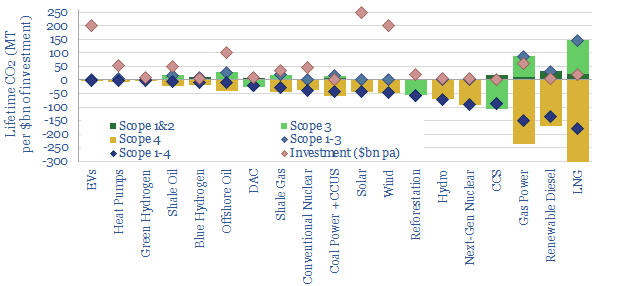
Scope 4 CO2 reflects the CO2 avoided by an activity. This 11-page note argues the metric warrants more attention. It yields an ‘all of the above’ approach to energy transition, shows where each investment dollar achieves most decarbonization and maximizes the impact of renewables.
-
Electric vehicles: chargers of the light brigade?
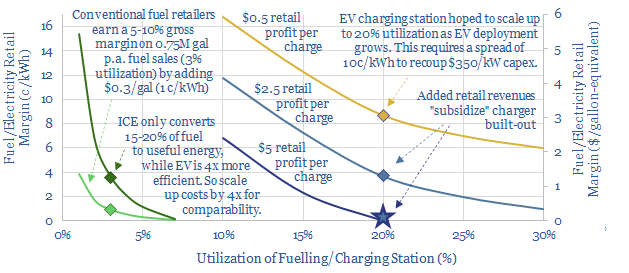
This 14-page note compares the economics of EV charging stations with conventional fuel retail stations. Our main question is whether EV chargers will ultimately get over-built. Hence prospects may be best for charging equipment and component manufacturers.
-
Fuel retail: economics of a petrol station?
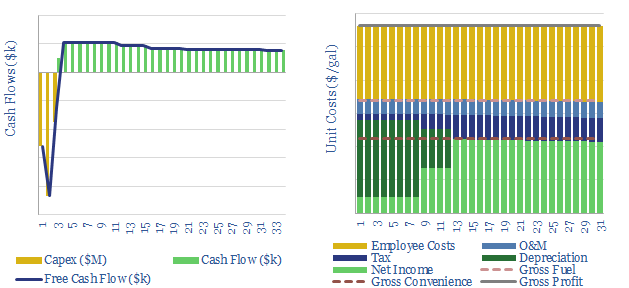
This data-file captures the economics for a fuel-retailing “petrol station” to earn a 10% IRR. A typical EBIT margin is 17c/gallon; with a c6% margin on direct fuel sales; plus 10-20% of revenues from convenience retail at a higher, c25-30% margin.
-
Hydroprocessing: the economics?
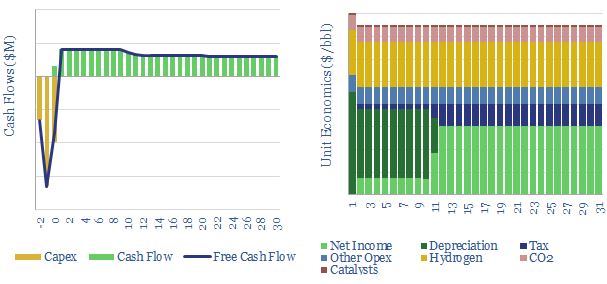
This model requires a $7.5/bbl upgrade spread to earn a 10% IRR across a new hydrocracking or hydrotreating unit. CO2 emissions are around 25kg/bbl. Green hydrogen could be used for decarbonization, but it would require 3x higher upgrading spreads to remain economical.
-
Methanol production: the economics?
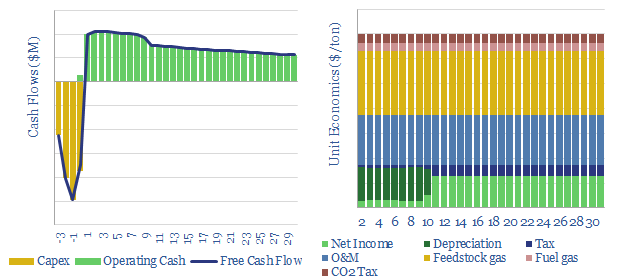
This model captures the economics and CO2 intensity of methanol production in different chemical pathways. We find exciting potential for bio-methanol and blue methanol. These are logistically simple substitutes for oil products, but with lower carbon content. Full cost breakdowns can be stress-tested in the data-file.
-
Methanol: leading companies?
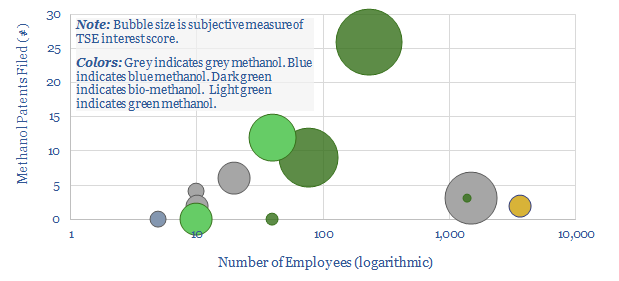
This data-file tabulates details of companies in the methanol value chain. For incumbents, we have quantified market shares. For technology providers, we have simply tabulated the numbers of patents filed. For newer, lower-carbon methanol producers, we have compiled a screen to assess leading options.
-
Low-carbon refining: insane in the membrane?
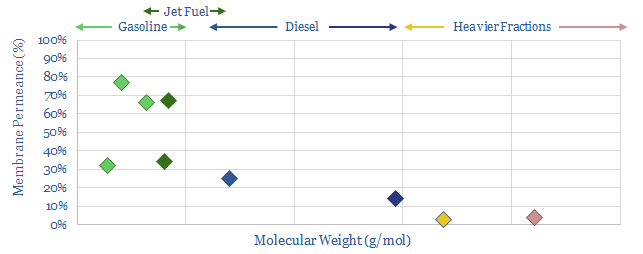
1% of global CO2 comes from distilling crude oil at refineries. An alternative uses precisely engineered polymer membranes to separate crude fractions, eliminating 50-80% of the costs and 97% of the CO2. We reviewed 1,000 patents, including a major breakthrough in 2020. This 14-page note presents the opportunity.
-
Refinery membranes: where’s the IP?
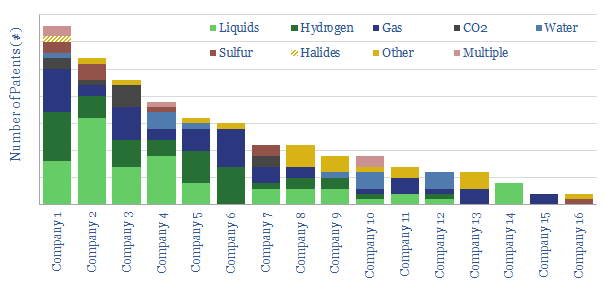
This data-file reviews over 1,000 patents to identify the technology leaders aiming to use membranes instead of other separation processes (e.g., distillation) within refineries. Operational data are also presented for an ExxonMobil breakthrough and Air Products’s hydrogen recovery technology.
-
Pipeline costs: moving oil, products or other liquids?
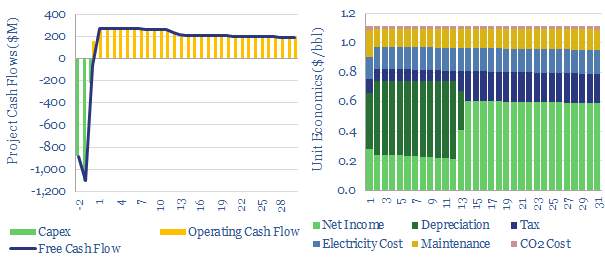
Pipeline costs are modeled in this data-file. $1/bbl is needed to move oil, oil products and other liquid commodities around 500 km at Mbpd scale, and the energy requirements are around 2.1 kWh/bbl, emitting 0.8 kg/bbl of CO2. Economics of scale matter. As a rule of thumb, costs rise by 100% when volumes fall by…
-
Energy Transition Technologies?
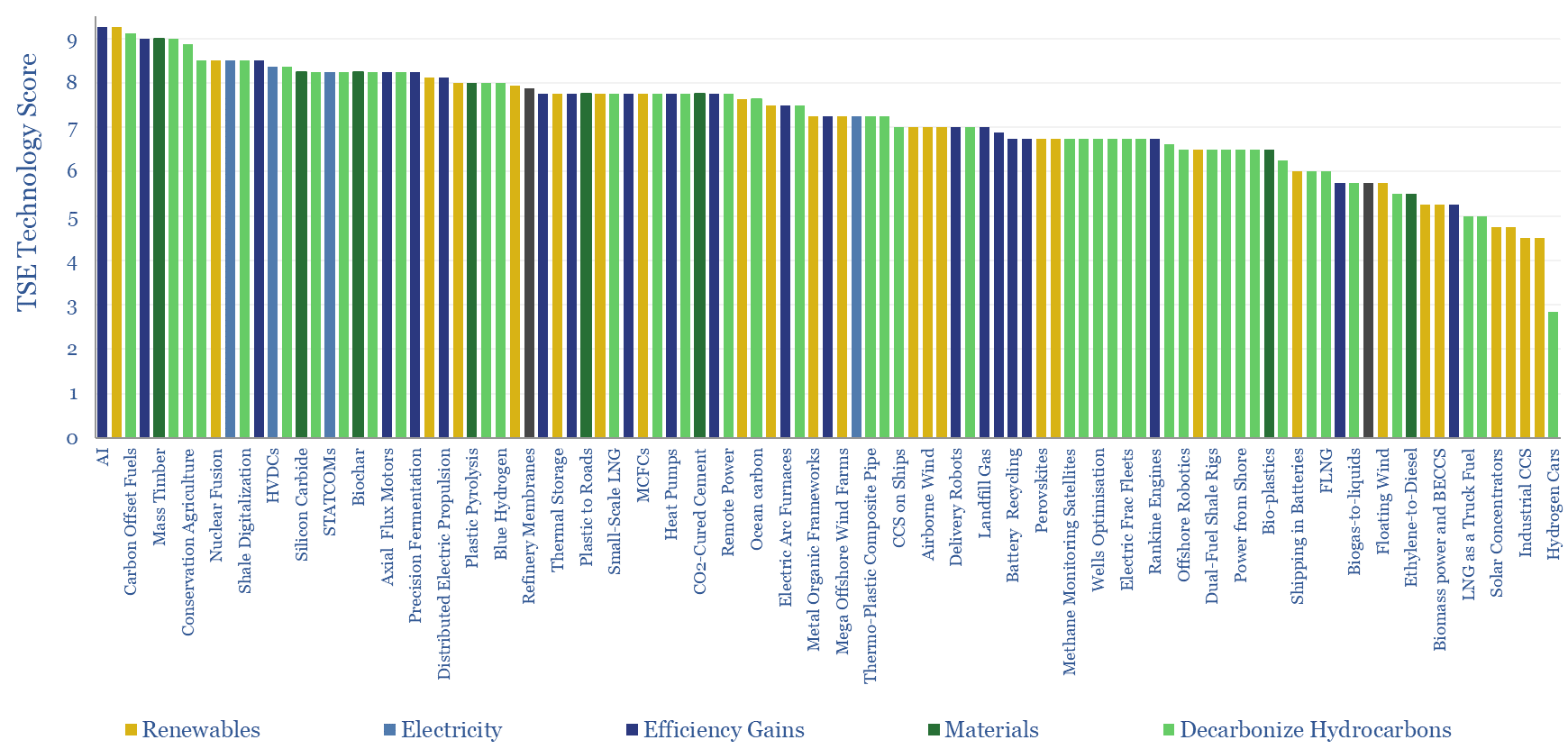
This data-file “scores” the top technologies to transform the global energy industry and the world, as assessed by Thunder Said Energy. Each one is scored based on technical readiness, economic impact and the level of work we have conducted.
Content by Category
- Batteries (95)
- Biofuels (44)
- Carbon Intensity (48)
- CCS (64)
- CO2 Removals (9)
- Coal (41)
- Commentary (65)
- Company Diligence (104)
- Data Models (920)
- Decarbonization (162)
- Demand (129)
- Digital (86)
- Downstream (47)
- Economic Model (220)
- Energy Efficiency (76)
- Hydrogen (63)
- Industry Data (308)
- LNG (56)
- Materials (86)
- Metals (88)
- Midstream (45)
- Natural Gas (161)
- Nature (76)
- Nuclear (28)
- Oil (175)
- Patents (39)
- Plastics (44)
- Power Grids (155)
- Renewables (153)
- Screen (136)
- Semiconductors (35)
- Shale (58)
- Solar (72)
- Supply-Demand (53)
- Vehicles (95)
- Video (24)
- Wind (47)
- Written Research (405)