Energy Efficiency
-
Energy Recovery Inc: pressure exchanger technology?
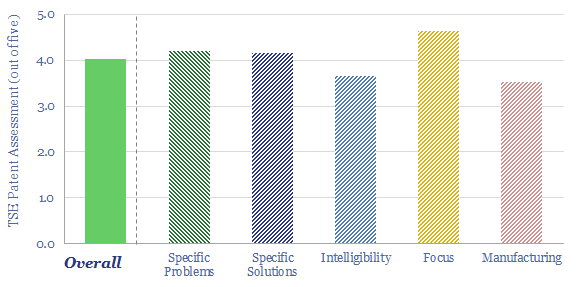
Pressure exchangers transfer energy from a high-pressure fluid stream to a low-pressure fluid stream, and can save up to 60% input energy. Energy Recovery Inc is a leading provider of pressure exchangers, especially for the desalination industry, and increasingly for refrigeration, air conditioners, heat pump and industrial applications. Our technology review finds a moat.
-
LEDs: seeing the light?
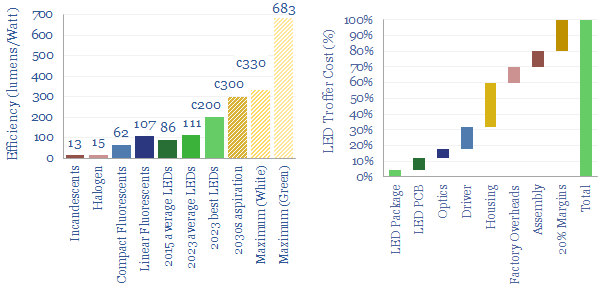
Lighting is 2% of global energy, 6% of electricity, 25% of buildings’ energy. LEDs are 2-20x more efficient than alternatives. Hence this 16-page report is our outlook for LEDs in the energy transition. We think LED market share doubles to c100% in the 2030s, to save energy, especially in solar-heavy grids. But demand is also…
-
LED lighting: leading companies in LEDs?
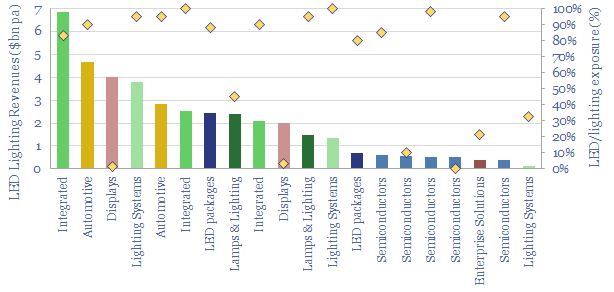
20 leading companies in LED lighting are compared in this data-file, mostly mid-caps with $2-10bn market cap and $1-8bn of lighting revenues, listed in the US, Europe, Japan, Taiwan. Operating margins averaged 8% in 2022, due to high competition, fragmentation and inorganic activity. The value chain ranges from LED semiconductor dyes to service providers installing…
-
AirJoule: Metal Organic Framework HVAC breakthrough?
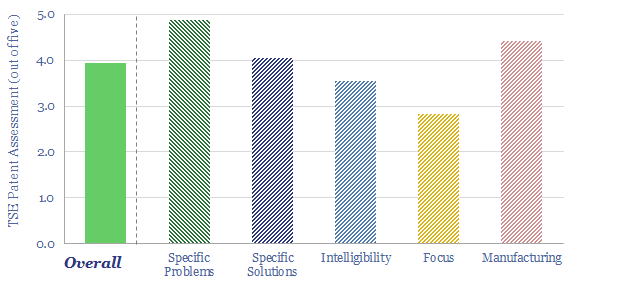
Montana Technologies is developing AirJoule, an HVAC technology that uses metal organic frameworks, to lower the energy costs of air conditioning by 50-75%. The company is going public via SPAC and targeting first revenues in 2024. Our AirJoule technology review finds strong rationale, technical details and challenges.
-
Omniscience: how will AI reshape the energy transition?
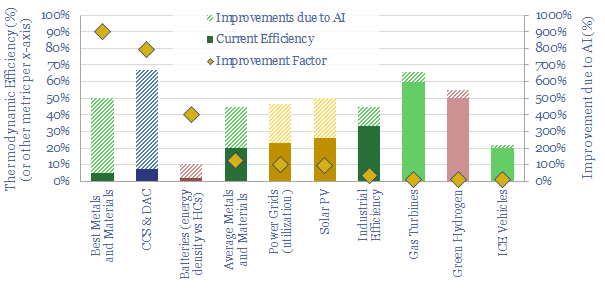
AI will be a game-changer for global energy efficiency, saving 10x more energy than it consumes directly, closing ‘thermodynamic gaps’ where 80-90% of all primary energy is wasted today. Leading corporations will harness AI to lower costs and accelerate decarbonization. This 19-page note explores opportunities.
-
EROEI: energy return on energy invested?
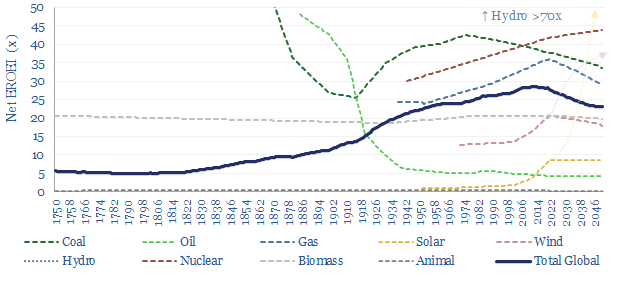
EROEI is the best metric for comparing end-to-end energy efficiencies. Wind and solar currently have EROEIs that are lower and ‘slower’ than today’s global energy mix; stoking upside to energy demand and capex. But future wind and solar EROEIs could improve 2-6x. This 13-page report explores whether this will be the make-or-break factor determining the…
-
Energy efficiency: a riddle, in a mystery, in an enigma?
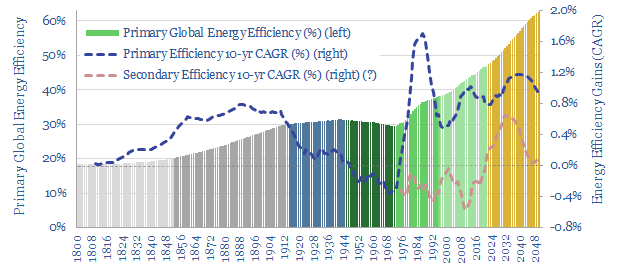
Projections of future global energy demand depend on energy efficiency gains, which are hoped to step up from 1% per year since 1970, to above 3% per year to 2050. But there is a problem. Energy efficiency is vague. And hard to measure. This 17-page note explains why we are worried that global energy demand…
-
Prime movers: efficiency of power generation over time?
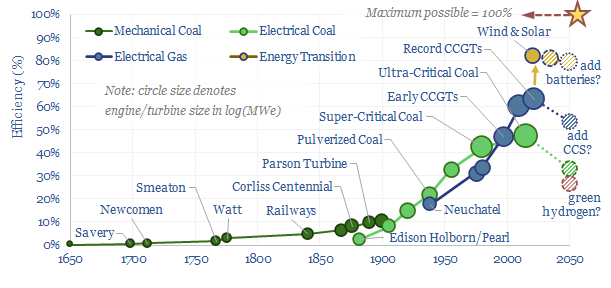
How has the efficiency of prime movers increased across industrial history? This data-file profiles the continued progress in the efficiency of power generation over time, from 1650 to 2050e. As a rule of thumb, the energy system has shifted to become ever more efficient over the past 400-years.
-
Gas turbines: operating parameters?
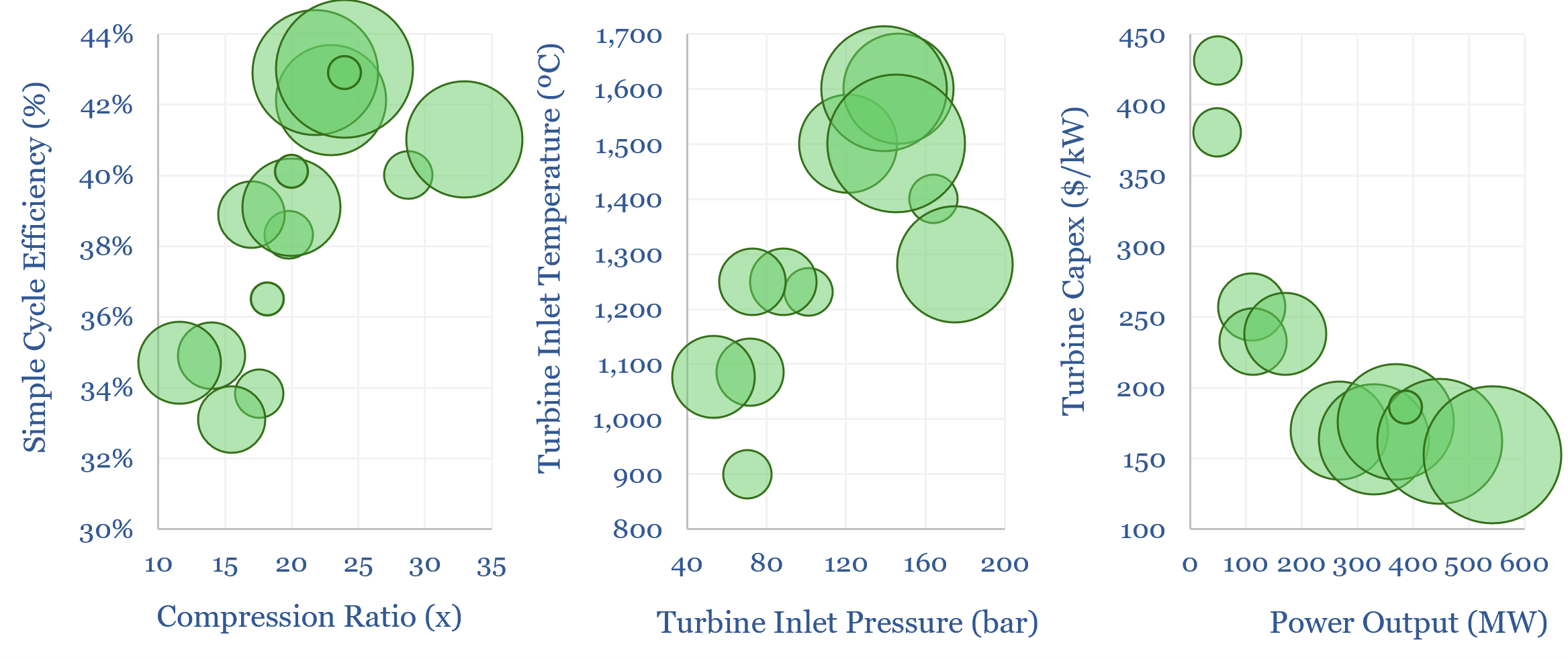
A typical simple-cycle gas turbine is sized at 200MW, and achieves 38% efficiency, as super-heated gases at 1,250ºC temperature and 100-bar pressure expand to drive a turbine. The exhaust gas is still at about 600ºC. In a combined cycle gas plant, this heat can be used to produce steam that drives an additional turbine, adding…
-
Thermodynamics: Carnot, Rankine, Brayton & beyond?
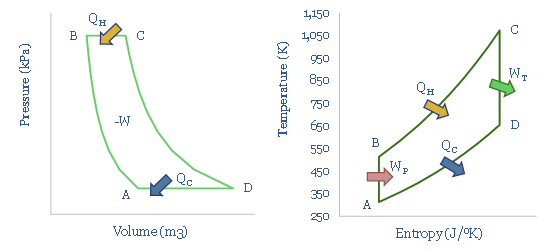
Engines convert heat into work. They are governed by thermodynamics. This note is not a 1,000 page textbook. The goal is to explain different heat engines, simply, in 13-pages, covering what we think decision makers in the energy transition should know. The theory underpins the appeal of electrification, ultra-efficient gas turbines, CHPs, nuclear HTGRs and…
Content by Category
- Batteries (96)
- Biofuels (44)
- Carbon Intensity (48)
- CCS (64)
- CO2 Removals (9)
- Coal (44)
- Commentary (65)
- Company Diligence (105)
- Data Models (929)
- Decarbonization (163)
- Demand (132)
- Digital (92)
- Downstream (47)
- Economic Model (222)
- Energy Efficiency (76)
- Hydrogen (63)
- Industry Data (311)
- LNG (56)
- Materials (86)
- Metals (89)
- Midstream (45)
- Natural Gas (163)
- Nature (76)
- Nuclear (28)
- Oil (178)
- Patents (39)
- Plastics (44)
- Power Grids (157)
- Renewables (153)
- Screen (139)
- Semiconductors (36)
- Shale (58)
- Solar (73)
- Supply-Demand (53)
- Vehicles (94)
- Video (24)
- Wind (46)
- Written Research (410)