Plastics
-
Recycling: a global overview of energy savings?
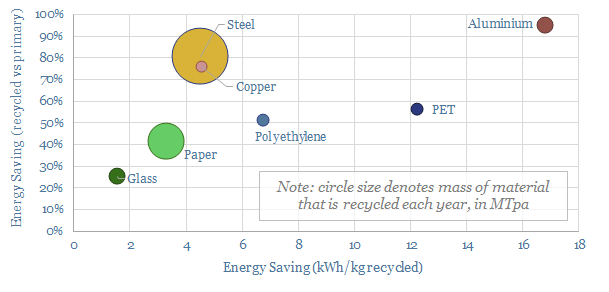
1GTpa of material is recycled globally, across steel, paper, glass, plastics and other metals. On average, 35% of these materials are produced from recycled feeds, saving 70% of the energy and CO2, with upside in the Energy Transition.
-
Stora Enso: next-generation packaging breakthrough?
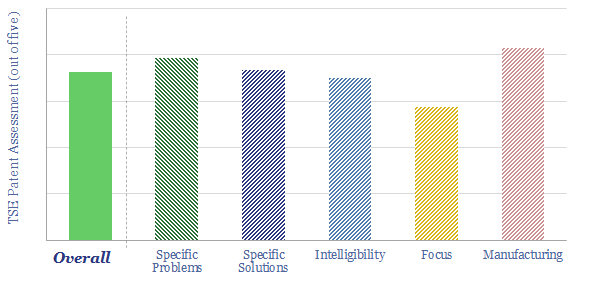
Stora Enso is a pulp, paper and forestry products business, headquartered in Finland, with €10bn per year of revenues. It argues “everything made from fossil-based materials today can be made from a tree tomorrow”. Our patent screen finds a strong focus on sustainable packaging solutions, especially Microfibrillated Cellulose (MFC).
-
Glass fiber: the economics?
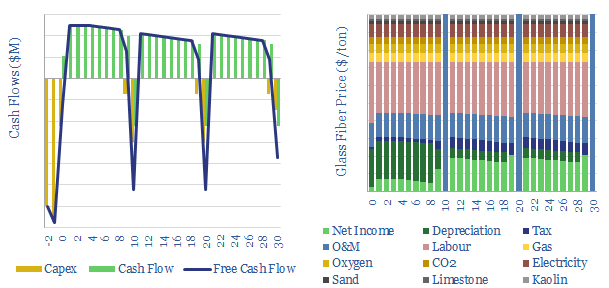
This data-file models the economics of producing glass fiber, the key component in fiberglass for wind turbines; but also a light-weight insulating material. Marginal cost is likely $2,000/ton, with a CO2 intensity of 1.5 tons/ton. Some Chinese product is 50% cheaper but 2x more CO2 intensive.
-
Carbon fiber: energy economics?
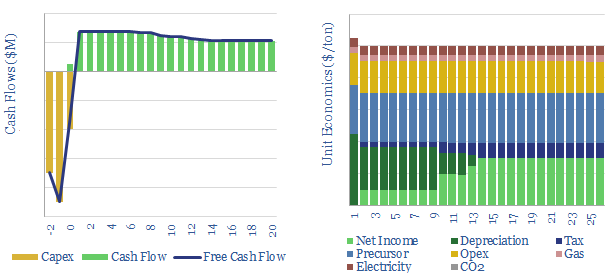
Carbon fiber production costs are estimated at $25/kg in this data-file, in order to generate a 10% IRR at a new world-scale carbon fiber plant. Energy economics are broken down across the value chain. The production process will likely emit 30 tons of CO2 per ton of carbon fiber if powered by a mixture of…
-
Carbios: plastic recycling breakthrough?
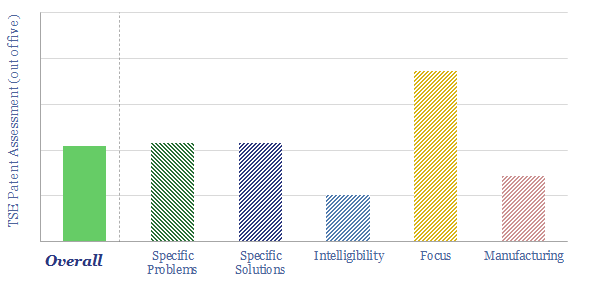
Carbios has developed an enyzmatic process to recycle 90% of PET within 10-hours, which has been described in Nature. “This highly efficient, optimized enzyme outperforms all PET hydrolases reported so far”. Economics and CO2 savings can be very exciting. But our work identifies four challenges, which were hard to re-risk.
-
Danimer: bio-plastics breakthrough?
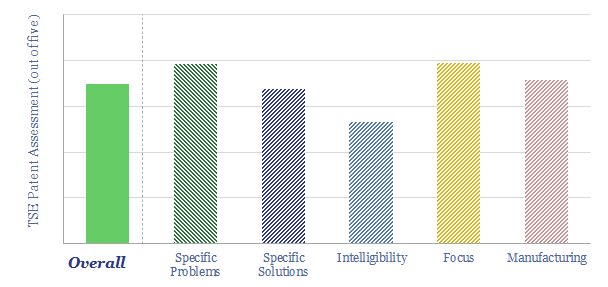
Danimer Scientific is a producer of PHA, a biodegradable plastic feedstock. PHA still has commercial challenges in its processing, mechanical properties and 4-5x higher costs than conventional plastics. Yet our patent review finds Danimer has made some specific, intelligible innovations, earning a solid score of 3.5 on our technology framework.
-
Origin Materials: bio-plastics breakthrough?
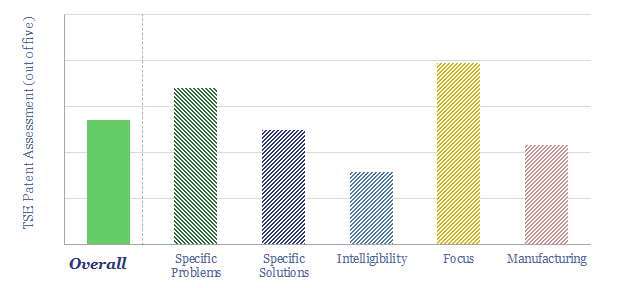
Origin Materials went public via SPAC in February-2021, as it was acquired by Artius Acquisition Inc at a valuation of $1.8bn. Its ambition is to use wood residues to create carbon-negative plastics, cost-competitively with petroleum products. This data-file outlines our conclusions from reviewing patents.
-
Polymers and higher olefins: the economics?
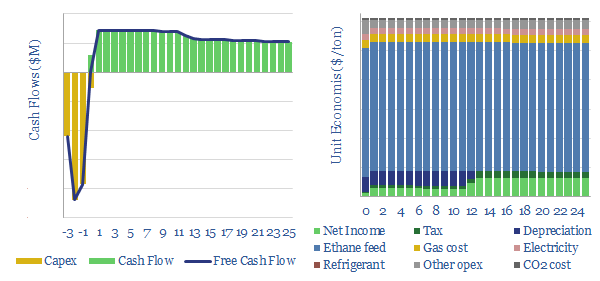
Our base case for producing high density polyethylene (HDPE) from ethylene requires pricing of $1,250/ton for a 10% IRR on a new greenfield plant. CO2 intensity is 0.3 kg/kg. However temperatures and pressures can vary vastly for different polymers, moving energy economics accordingly.
-
Ethanol-to-ethylene: the economics?
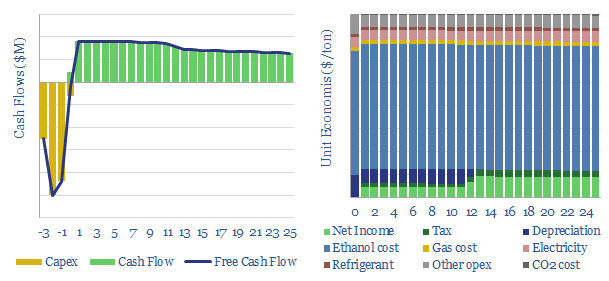
This data-file captures the economics of producing bio-ethylene by dehydration of ethanol. We estimate an ethylene price of $1,600/Tpa is required for a 10% IRR, which is almost 2x higher than a conventional ethane cracker. In a best case scenario, costs could fall below $1,000/ton.
-
Next-generation plastics: bioplastic, biodegradable, recycled?
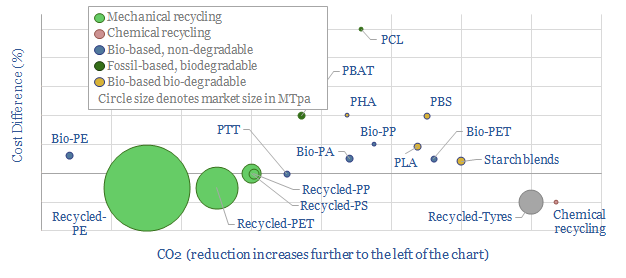
This data-file captures 17 plastic products derived from mechanical recycling, biologically-sourced feedstocks or that is bio-degradable. The ‘greenest” plastics are c30% lower in CO2 than conventional plastics, but around 2x more costly.
Content by Category
- Batteries (95)
- Biofuels (44)
- Carbon Intensity (48)
- CCS (64)
- CO2 Removals (9)
- Coal (41)
- Commentary (65)
- Company Diligence (104)
- Data Models (920)
- Decarbonization (162)
- Demand (129)
- Digital (86)
- Downstream (47)
- Economic Model (220)
- Energy Efficiency (76)
- Hydrogen (63)
- Industry Data (308)
- LNG (56)
- Materials (86)
- Metals (88)
- Midstream (45)
- Natural Gas (161)
- Nature (76)
- Nuclear (28)
- Oil (175)
- Patents (39)
- Plastics (44)
- Power Grids (155)
- Renewables (153)
- Screen (136)
- Semiconductors (35)
- Shale (58)
- Solar (72)
- Supply-Demand (53)
- Vehicles (95)
- Video (24)
- Wind (47)
- Written Research (405)