Plastics
-
Ethane cracking: the economics?
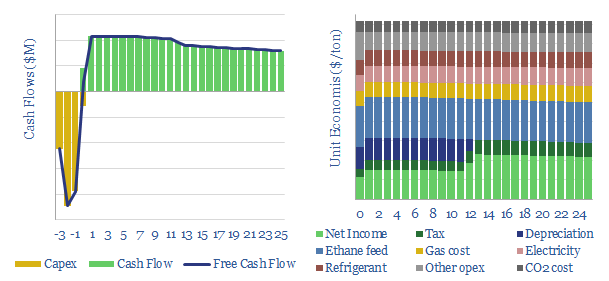
This data-file captures the economics of ethane-cracking to produce ethylene. A typical US Gulf Coast facility could generate 15% IRRs at typical capex cost of $1,135/Tpa. CO2 intensity can be as high as 1.7T of CO2 per ton of ethylene, or potentially much lower depending on the facility’s energy efficiency.
-
Construction materials: a screen of costs and CO2 intensities?
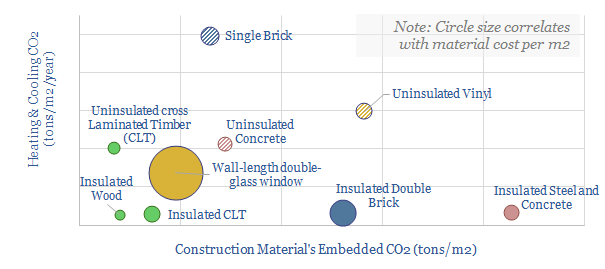
This data-file calculates the costs, the embedded energy and the embedded CO2 of different construction materials, both during their production and for ongoing heating and cooling. Insulated wood and cross-laminated timber have the lowest CO2 intensities and can be extremely cost competitive.
-
CO2 electrolysis: the economics?
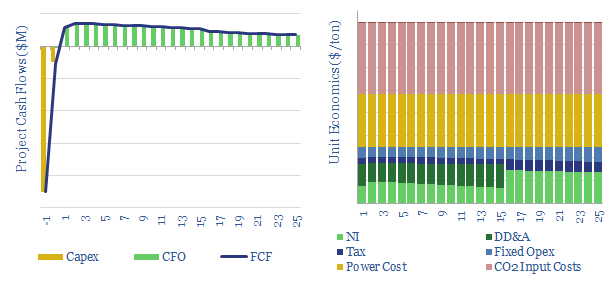
Carbon monoxide is an important chemical input for metals, materials and fuels. Could it be produced by capturing CO2 from the atmosphere or using the amine process, then electrolysing the CO2 into CO and oxygen? We find 10% IRRs could be achievable at $800/ton, competitive with conventional syngas.
-
Energy Transition Technologies?
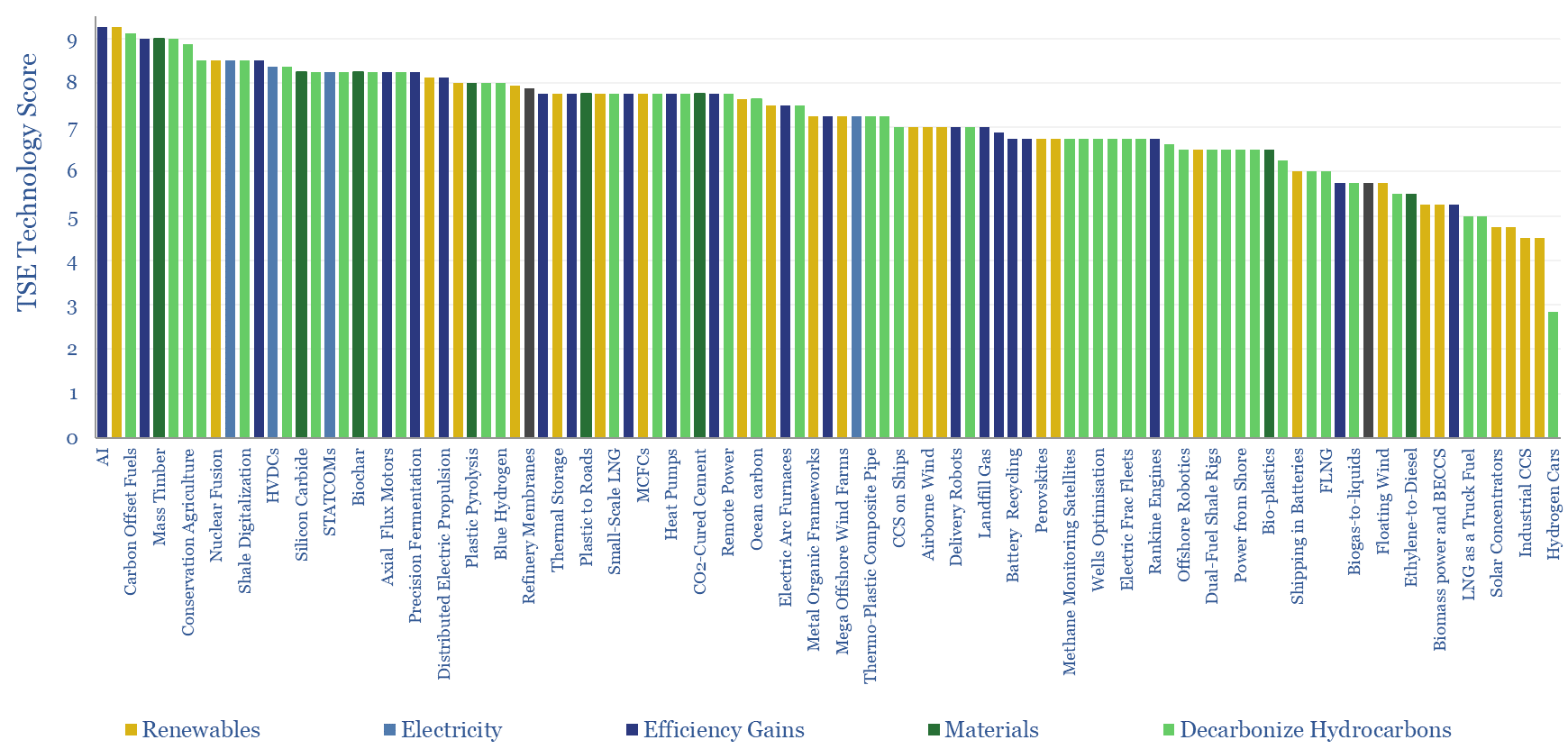
This data-file “scores” the top technologies to transform the global energy industry and the world, as assessed by Thunder Said Energy. Each one is scored based on technical readiness, economic impact and the level of work we have conducted.
-
3D printing an energy transition?
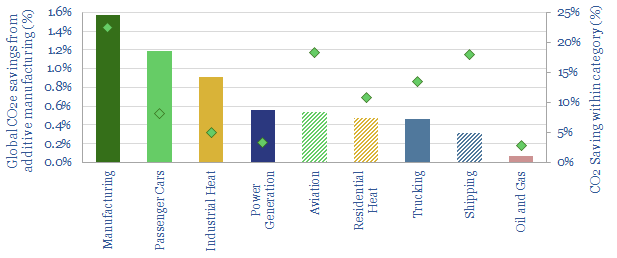
Additive manufacturing (AM) can eliminate 6% of global CO2, across manufacturing, transport, heat and supply chains. We have quantified each opportunity and reviewed 5,500 patents to identify who benefits, among Capital Goods companies, AM Specialists and the Materials sector.
-
Turn the Plastics into Roads?
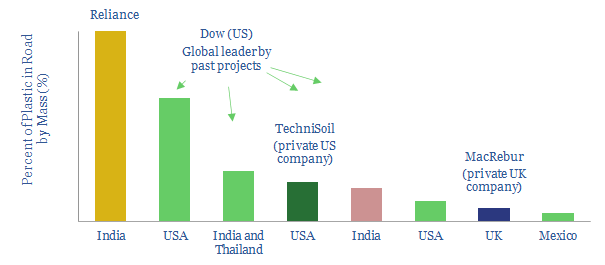
An opportunity is emerging to absorb mixed plastic waste, displacing bitumen from road asphalts. We find strong economics, with net margins of $200/ton of plastic, deflating the materials costs of roads by c4%. The challenge is scaling the opportunity beyond 20MTpa, as unrecycled waste plastics surpass 320MTpa. Leading companies include Dow (US, public) and MacRebur…
-
Plastic Recycling Companies: pyrolysis and next-generation recycling?
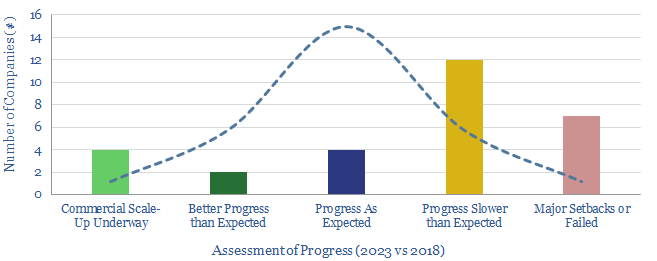
This data-file assesses the outlook for 30 plastic pyrolysis companies, operating (or constructing) 100 plants around the world, which use chemical processes to turn waste plastic back into oil. The data-file has been updated in 2023, concluding that the theme is ‘on track’, but segmented between leaders and setbacks.
-
Value in Use: CO2 intensities of household items?
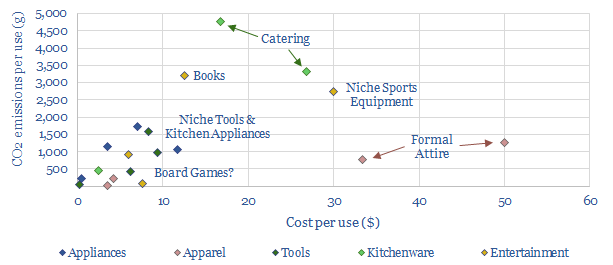
More extensive “sharing” will be enabled by drone delivery technologies and could save $1trn of costs and 100MTpa of CO2 emissions across the entire US. These numbers are illustrated by tabulating the data for 20 common household items, which we estimate are currently used just 20 times in their entire useful lives, thus costing $13…
-
Make CO2 into valuable products?
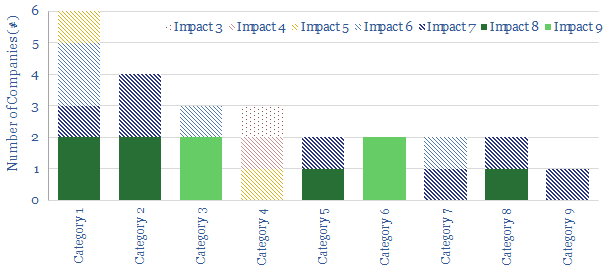
What if CO2 was not a waste product, but a valuable commercial feedstock? We have assessed the top 27 companies at the cutting edge, commercialising CO2 into next-generation plastics, foams, concretes, specialty chemicals and agricultural products. Each company is assessed in detail. 13 are particularly exciting. 21 are start-ups. Aramco, Chevron, Repsol also screen well.
-
TOTAL’s Plastic-Recycling Progress?
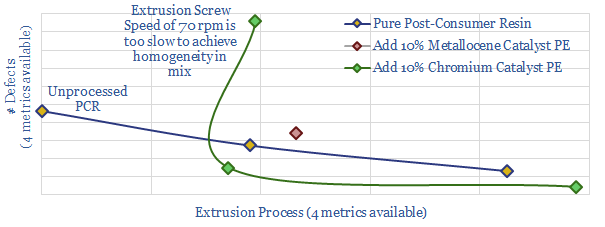
TOTAL is currently pioneering the greatest advances in plastic-recycling technologies among the Majors, based on our database of 3,000 patents. This data-file covers its comprehensive inter-mixing of chromium-catalysed polyethylene, to reduce defects and increase the strength of post-consumer resins. In turn, this extends their use to films, containers and pipes.
Content by Category
- Batteries (95)
- Biofuels (44)
- Carbon Intensity (48)
- CCS (64)
- CO2 Removals (9)
- Coal (41)
- Commentary (65)
- Company Diligence (104)
- Data Models (920)
- Decarbonization (162)
- Demand (129)
- Digital (86)
- Downstream (47)
- Economic Model (220)
- Energy Efficiency (76)
- Hydrogen (63)
- Industry Data (308)
- LNG (56)
- Materials (86)
- Metals (88)
- Midstream (45)
- Natural Gas (161)
- Nature (76)
- Nuclear (28)
- Oil (175)
- Patents (39)
- Plastics (44)
- Power Grids (155)
- Renewables (153)
- Screen (136)
- Semiconductors (35)
- Shale (58)
- Solar (72)
- Supply-Demand (53)
- Vehicles (95)
- Video (24)
- Wind (47)
- Written Research (405)