Shale
-
The cutting edge of shale technology?
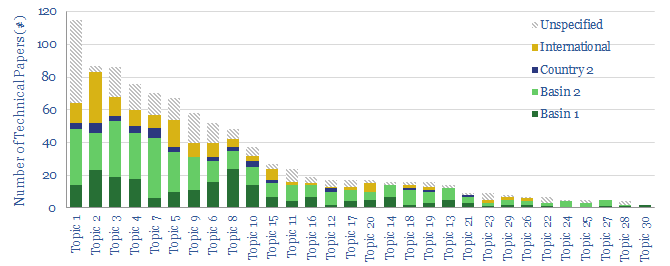
This data-file reviews 950 technical papers from the shale industry in 2018-2020, to identify the cutting edge of shale technology. The trends show an incredible uptick in completion design, frac fluids, EOR and machine learning. Each paper is summarized and categorized. The file also shows which companies and services have a technology edge.
-
CO2-EOR in Shale: the economics
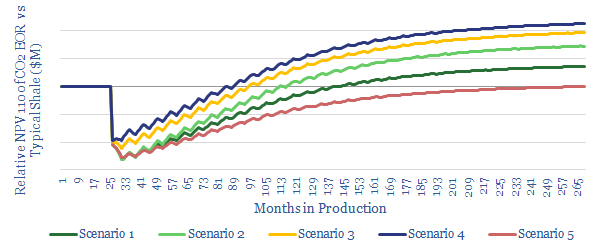
We model the economics for CO2-EOR in shales, after interest in this topic spiked 2.3x YoY in the 2019 technical literature. We see 15% IRRs in our base case, creating $1.6M of incremental value per well, uplifting type curves by 1.75x. Greater upside is readily possible. Most exciting is the prospect for Permian EOR to…
-
Permian Pipeline Bottlenecks?
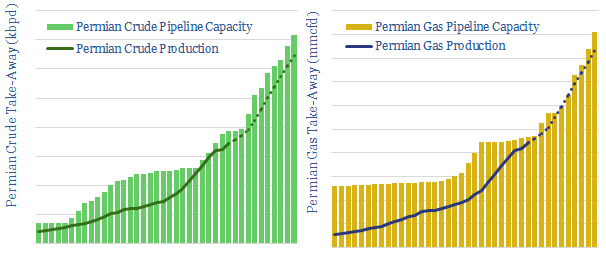
This data-file tracks 50 oil and gas pipelines in the Permian basin — their route, their capacity and their construction progress — in order to assess the severity of pipeline bottlenecks. Oil bottlenecks are moderate, but will ease into 2020. Gas bottlenecks are more severe and remain so.
-
Dreaming of Electric Frac Fleets?
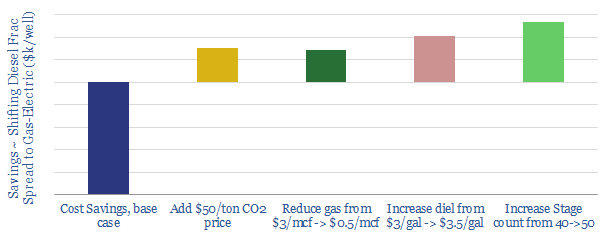
In 2019, the virtues of switching diesel-powered frac fleets to gas-powered electric have been extolled by companies such as EOG, Shell, Baker Hughes, Halliburton, Evolution and US Well Services.
-
Shale: Upgrade to Fiber?
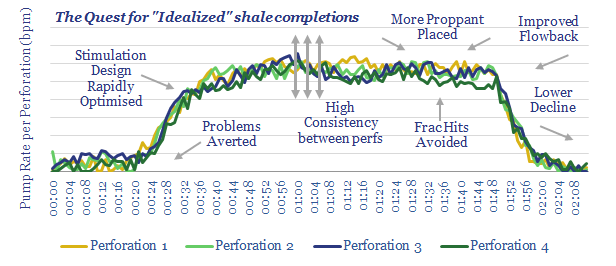
This note focuses on the most exciting new data methodology we have seen across the entire shale space: distributed acoustic sensing (DAS) using fiber-optic cables. It has now reached critical mass.
-
Leading Companies in DAS?
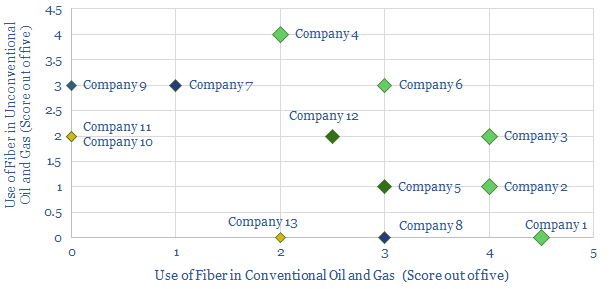
This data-file quantifies the leading companies in Distributed Acoustic Sensing (DAS), the game-changing technology for enhancing shale and conventional oil industry productivity. Operators are screened from their patents and technical papers. Services are screened based on their size and their technology.
-
DAS. At the cutting edge in shale?
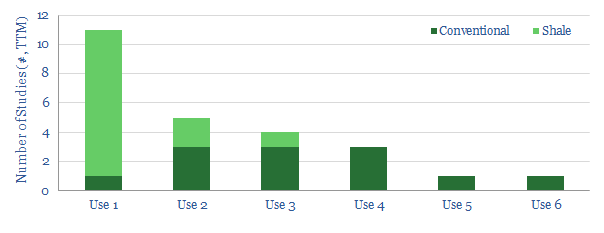
This data-file summarises 25 of the most recent technical papers around the industry, using fiber-optic cables for Distributed Acoustic Sensing (DAS). The technology is now hitting critical mass to spur shale productivity upwards.
-
China’s Shale Challenge?
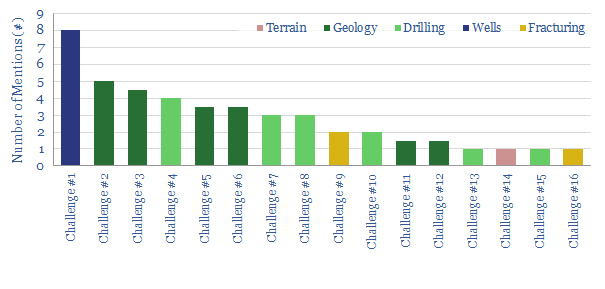
This data-file quantifies the most-discussed challenges for developing Chinese shale gas, after a review of the technical literature, as well as the solutions suggested to combat them, and our “top ten conclusions” on Chinese shale.
-
Shale Productivity: Our “Top 50” Improvements
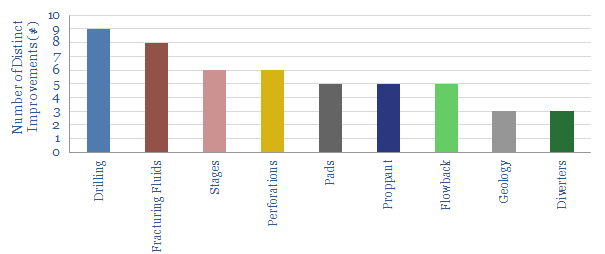
Critics still downplay shale productivity. This simple data-file compiles fifty examples of genuine improvements across the industry since 2015. A “one line” summary is provided for each one.
-
Explaining Shale: Can Machine Learning Capture Complexity?
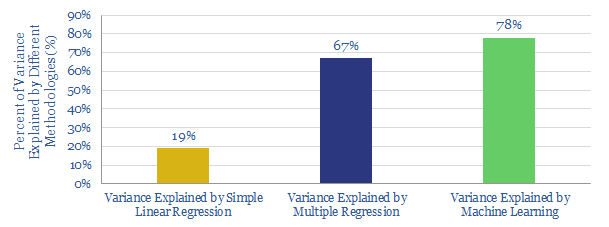
Machine learning predicts 78% of the variance in shale well productivity, suggesting $1M/well savings and 19-97% resource uplifts. This data-file presents the correlation matrix between 22 inter-related variables which co-vary with well productivity. The complexity requires “big data” approaches. We see upside from Machine Learning in shale.
Content by Category
- Batteries (96)
- Biofuels (44)
- Carbon Intensity (48)
- CCS (64)
- CO2 Removals (9)
- Coal (41)
- Commentary (65)
- Company Diligence (104)
- Data Models (922)
- Decarbonization (162)
- Demand (129)
- Digital (86)
- Downstream (47)
- Economic Model (221)
- Energy Efficiency (76)
- Hydrogen (63)
- Industry Data (308)
- LNG (56)
- Materials (86)
- Metals (88)
- Midstream (45)
- Natural Gas (161)
- Nature (76)
- Nuclear (28)
- Oil (176)
- Patents (39)
- Plastics (44)
- Power Grids (156)
- Renewables (153)
- Screen (137)
- Semiconductors (35)
- Shale (58)
- Solar (72)
- Supply-Demand (53)
- Vehicles (95)
- Video (24)
- Wind (47)
- Written Research (407)