-
Chemical Looping Progress?
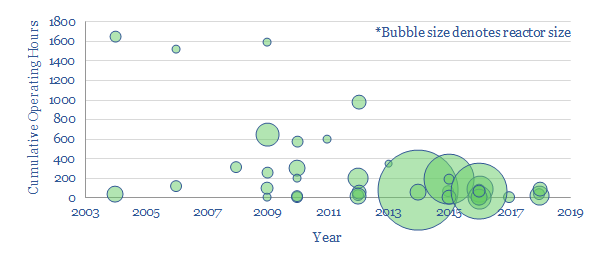
Chemical Looping Combustion could clean up future coal or gas-fired power. But will it work? We have tabulated data from the technical literature on 40 chemical looping combustion pilots. They have run collectively for 10,000 hours. They promise 38% energy efficiencies for zero carbon emissions.
-
Vehicles: fuel economy and energy efficiency?
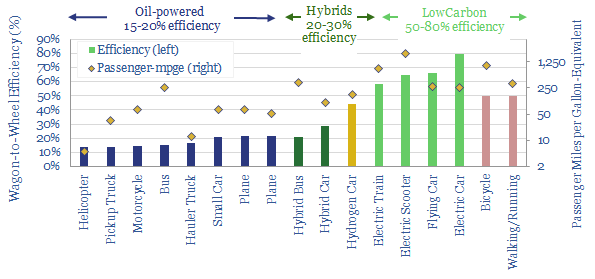
We have quantified the energy efficiency of 14 different transportation technologies, using real-world data and mechanics equations. Electrification raises auto efficiency 4x, from c15-20% to c60-80%. Novel electric technologies are also unlocking unprecedented fuel economies per passenger mile.
-
Explaining Shale: Can Machine Learning Capture Complexity?
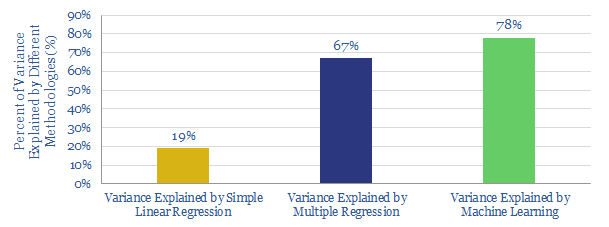
Machine learning predicts 78% of the variance in shale well productivity, suggesting $1M/well savings and 19-97% resource uplifts. This data-file presents the correlation matrix between 22 inter-related variables which co-vary with well productivity. The complexity requires “big data” approaches. We see upside from Machine Learning in shale.
-
Shale EOR: the economics
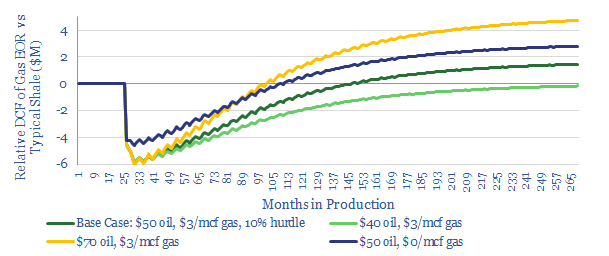
This model assesses shale-EOR economics, as a function of oil prices, gas prices, production-profiles and capex costs. 15-20% IRRs are attainable in our base case. Economics are getting increasingly exciting, as the technology is de-risked and more gas is stranded in key shale basins.
-
Shale EOR: Container Class
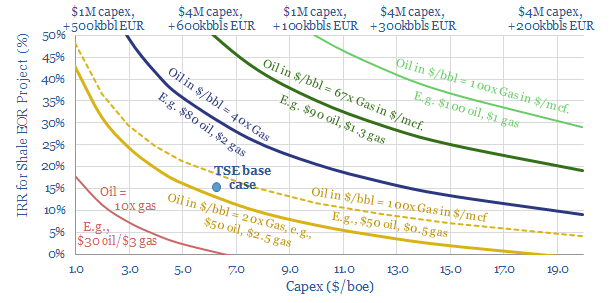
Is Shale-EOR the next wave of unconventional upside? The topic jumped into the ‘Top 10’ most researched shale themes last year. Stranded in-basin gas will improve the economics. Production per well can rise by 1.5-2x. The theme could add 2.5Mbpd to YE25 output.
-
The World’s Great Gas Fields and Their CO2
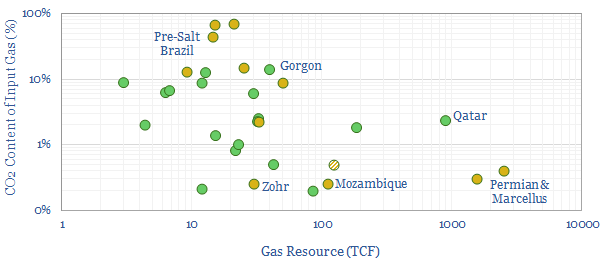
This data-file tabulates 30 major gas resources around the world, their volumes, their CO2 content and how the CO2 is handled. This matters because higher CO2 gas fields are more costly to develop into LNG, while CO2 venting is no longer acceptable without CCS. Permian & Marcellus LNG are best positioned.
-
Machine Learning to Optimise Rod Pumps
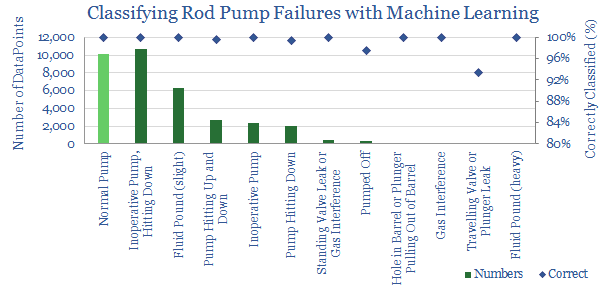
This data-file summarises progress using machine learning to maximise production from mature wells, by detecting errors and optimising production. There is potential to lower global decline rates by c100kbpd per annum for over a decade, and increase each well’s NPV by $0.1M.
-
Our Top Technologies for IMO 2020
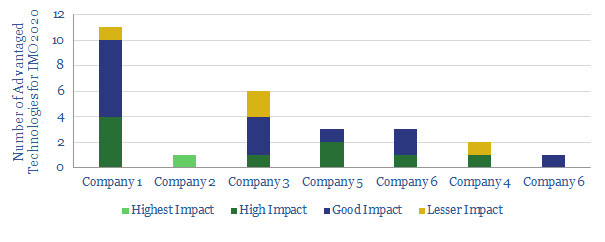
We review the top, proprietary technologies that we have seen from analysing patents and technical papers, to capitalise on IMO 2020 sulphur regulation, across the world’s leading integrated oil companies.
-
Small-Scale LNG liquefaction Costs: New Opportunities?
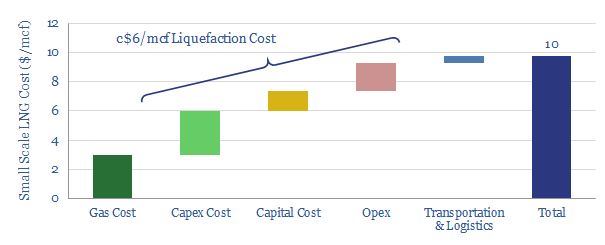
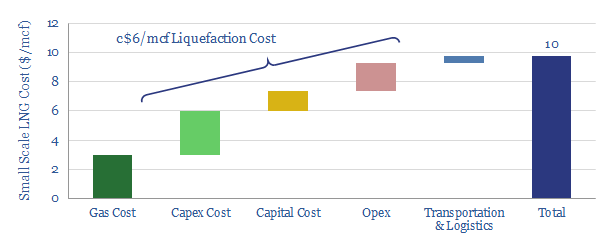
Small-scale LNG technologies can be economic at $10/mcf, generating 15% pre-tax IRRs, off $3/mcf input gas. This data-file tabulates the line-by-line costs of typical small-scale LNG technologies (SMRs, N2 expansion). Against this baseline, we model a more cutting-edge technology, which preserves strong economics at c25x smaller scale.
-
LNG in transport: scaling up by scaling down?
Next-generation technology in small-scale LNG has potential to reshape the global shipping-fuels industry. Especially after IMO 2020 sulphur regulations, LNG should compete with diesel. This note outlines the technologies, economics and opportunities for LNG as a transport fuel.
Content by Category
- Batteries (96)
- Biofuels (44)
- Carbon Intensity (48)
- CCS (64)
- CO2 Removals (9)
- Coal (41)
- Commentary (65)
- Company Diligence (104)
- Data Models (922)
- Decarbonization (162)
- Demand (129)
- Digital (86)
- Downstream (47)
- Economic Model (221)
- Energy Efficiency (76)
- Hydrogen (63)
- Industry Data (308)
- LNG (56)
- Materials (86)
- Metals (88)
- Midstream (45)
- Natural Gas (161)
- Nature (76)
- Nuclear (28)
- Oil (176)
- Patents (39)
- Plastics (44)
- Power Grids (156)
- Renewables (153)
- Screen (137)
- Semiconductors (35)
- Shale (58)
- Solar (72)
- Supply-Demand (53)
- Vehicles (95)
- Video (24)
- Wind (47)
- Written Research (407)