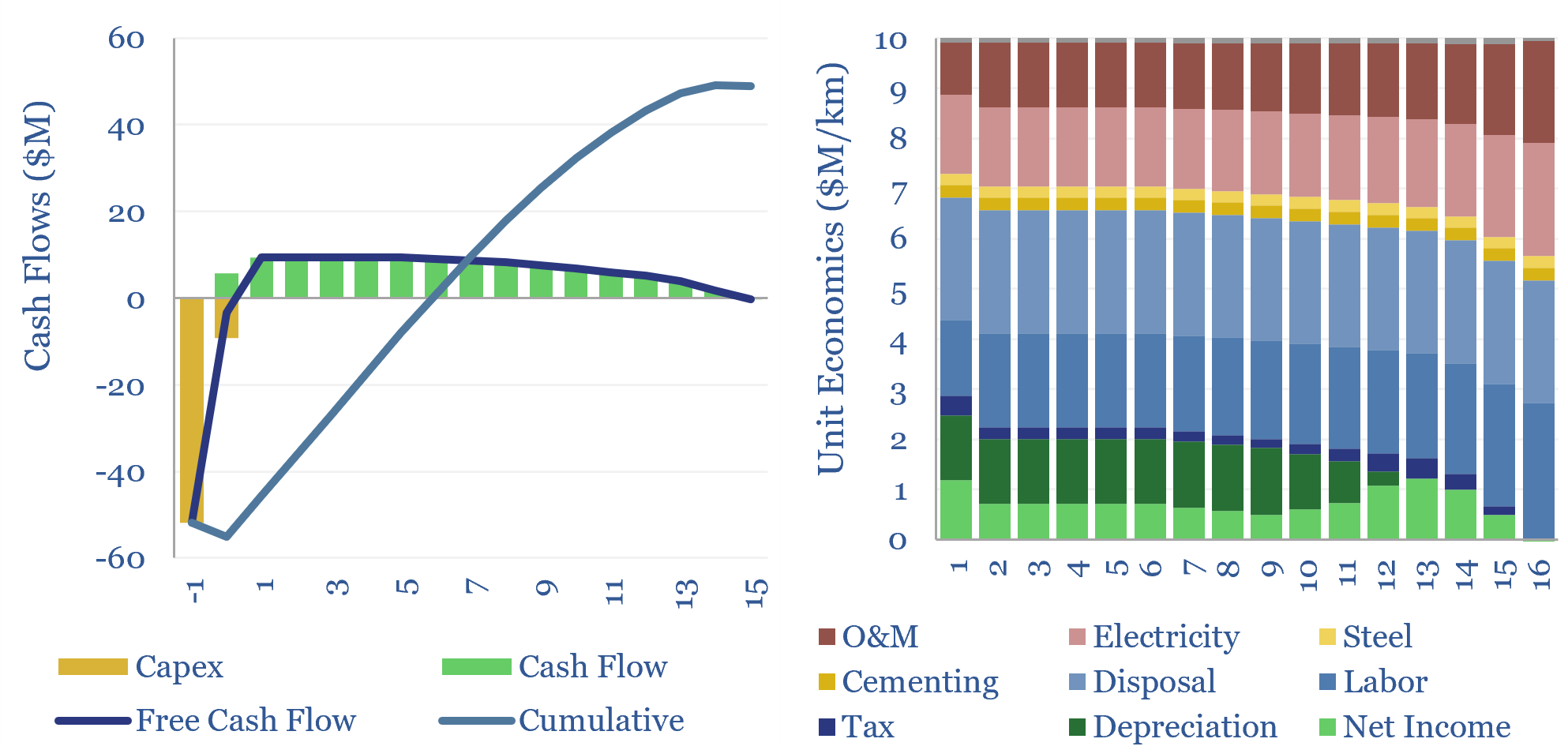
The global market for tunnel boring machines has been estimated at $7.5bn pa. But what are the costs of tunnel boring? This data-file models tunnel boring economics, estimated at $10M/km for civil infrastructure projects today, $30M/km for deep mine shafts, but will cheap solar and autonomous robots deflate costs?
In civil infrastructure projects, tunnel boring is used, as a first step, before constructing roads or railways through geological obstacles, or underground. These tunnels can be 10-20 metes in diameter.
In hydro power projects, conduits for water may be drilled through through rocks. And in large-scale power projects, pipelines and cables may also be run through underground tunnel networks.
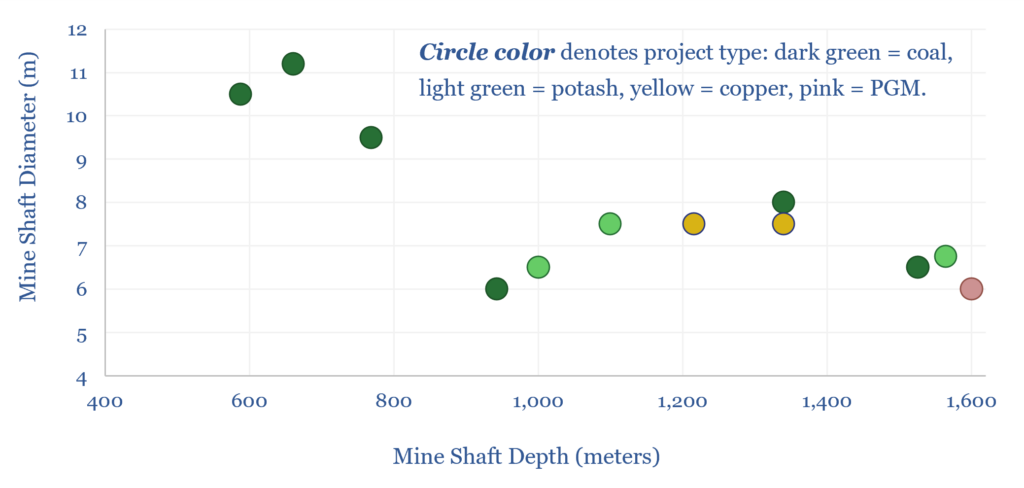
In underground mining, vertical shafts need to be drilled down towards the mine face. These are typically 6-12 meters in diameter, and can run 1-3km underground. The Mponeng Gold Mine in South Africa runs 4km deep. The top sections of these holes may be formed by drilling and blasting, but mechanical boring is faster and safer, especially in deeper holes.
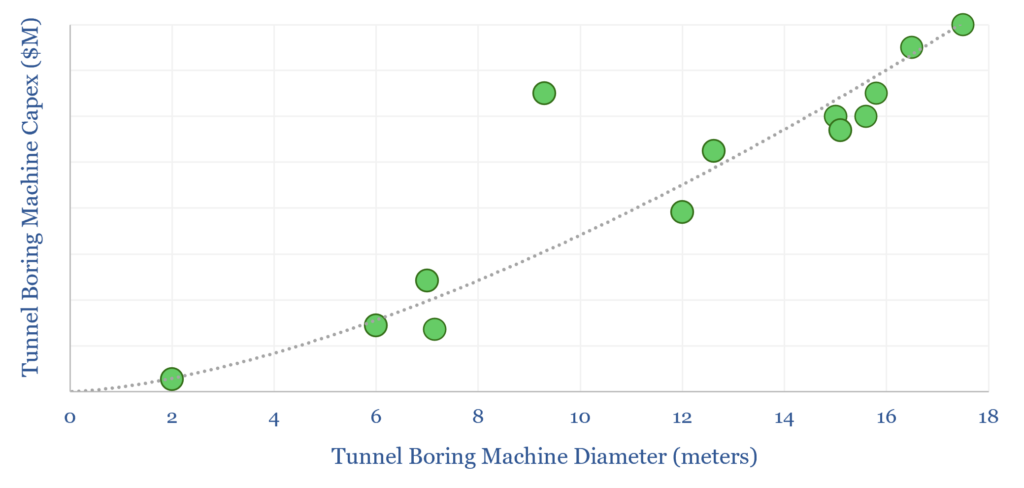
Tunnel boring economics are captured in this data-file, capturing the costs of large tunnel boring machines, with 2-20 meters diameter, using 2-20MW of power, progressing at 2-20 meters per day, and costing $5-100M in capex.
The costs of tunnel boring for a civil infrastructure project are estimated at $10M/km, assuming no problem or delays. Key costs include labor for a crew of c80-100 support workers, disposal of excavated materials, electricity, maintenance and part replacements on the tunnel boring machine, and casing the hole behind the machine with steel and cement.
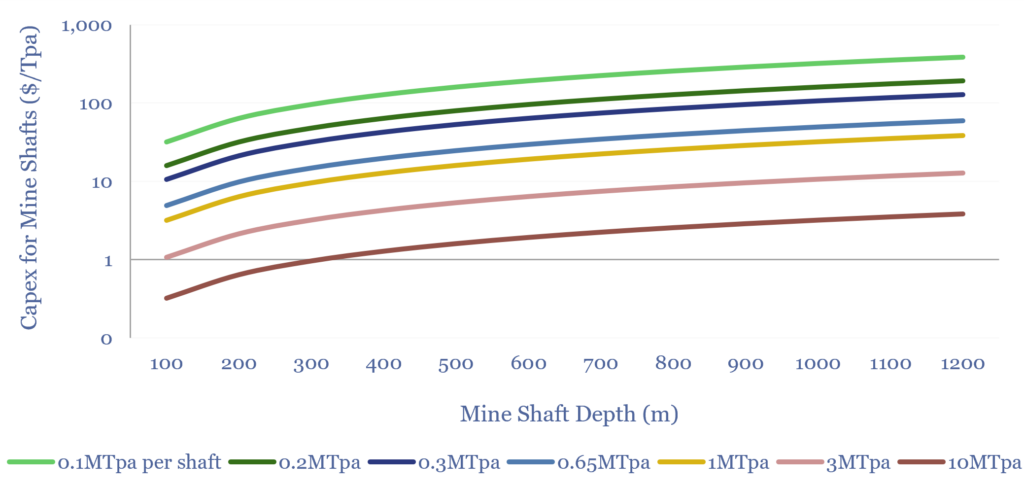
The costs of mine shaft boring are estimated to be higher, at $30M/km, which is mainly because these boring machines run more slowly, as they drill vertically into the Earth. Hence a 1km deep coal mine will likely spend $30M on each mine shaft, which adds to the capex costs of the underground mine (chart below).
We have a kind of futuristic fantasy that as human civilization taps near-infinite solar energy, and develops increasing levels of autonomy, then it would be possible to bore holes under cities and move large swaths of traffic underground. This is similar to the Hyperloop concept from the Boring company. Our model also allows this kind of scenario to be stress-tested.