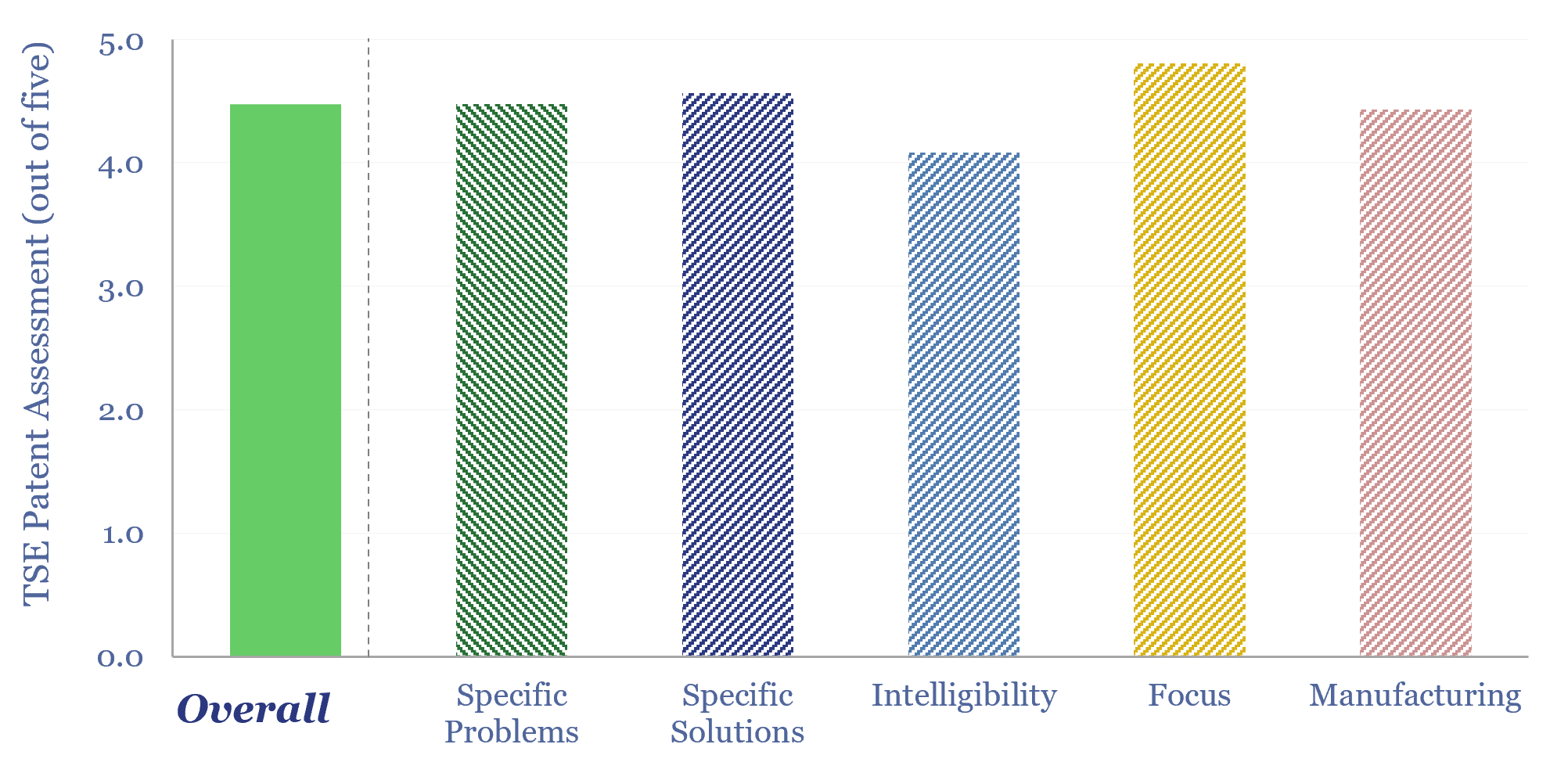
Scandium production started up at 3Tpa at Sorel Tracy in Quebec in 2022, and is being ramped up to 9-12 Tpa. We evaluated the patents behind the Rio Tinto scandium production process, and were able to de-risk a surprisingly simple, hydrometallurgical process, which has low cost, low energy use and can be ramped up once demand is firmer.
Rio Tinto is a diversified mining company, producing iron ore (50-70% of group EBITDA), aluminium (15-25%), copper (20%), lithium (<10%) and other minerals. The company generated $58bn of revenue in 2025, for $25bn of underlying EBITDA and $10bn of earnings.
However, in this screen we focus in on the Rio Tinto scandium production process. Rio Tinto Iron and Titanium (RTIT) operates the largest solid ilmenite (FeTiO3) mine in the world, at Tio, in Quebec. Ore is processed at Sorel Tracy, into titanium billets and titanium dioxide. Further details are in our data-file.
Scandium features in the chloride waste from Sorel Tracy, as scandium (Element 22) is adjacent to titanium (Element 21) in the periodic table. In 2022, Rio Tinto started a demonstration project to recover 3Tpa of scandium at Sorel Tracy, which will be ramped to 9-12 Tpa. Further details are in our data-file.
Producing 12Tpa of scandium at $4,500/ton scandium prices (see our Rare Earth price-volume overview) would be worth c$50M pa, which is thus probably more matural to others than to Rio Tinto itself. Scandium is the most effective micro-alloying element for strengthening aluminium. Scandium-stabilized zirconia is also used as the matrix for solid oxide fuel cells.
This matters, in turn, as short-sellers have recently argued there is not enough scandium ex-China to sustain a multi-GW ramp-up for Bloom Energy. Although our own analysis reaches somewhat different conclusions. We see <1GW pa demand for fuel cells in our data-center load forecasts. And we only see 30T/GW of scandia loading in Bloom’s fuel cells, which is less than half the amount estimated by the short-sellers.
And finally, the main surprise from this patent review was the simplicity of the Rio Tinto scandium production process, which does not require a giant cascade of mixer-settlers, as we have seen in other Rare Earth production processes, but rather, a simple hydrometallurgical process using ion exchange resins (e.g., from Purolite, a product range from Ecolab) (chart below).
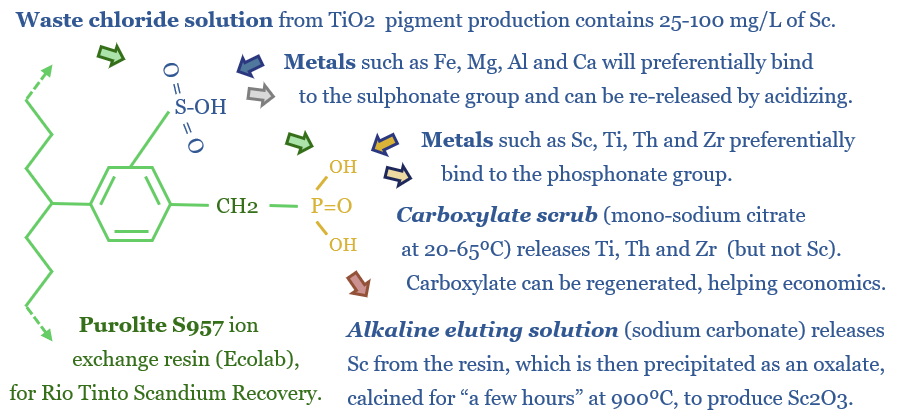
Details on Rio Tinto’s scandium production process, which we could glean from reviewing its patents, and why we think this is a low-cost, easily expandable process, are set out in the data-file. This would suggest much less of a bottleneck for scandium than others have feared, once firm demand materializes.