-
Global wood production: supply by country by year?
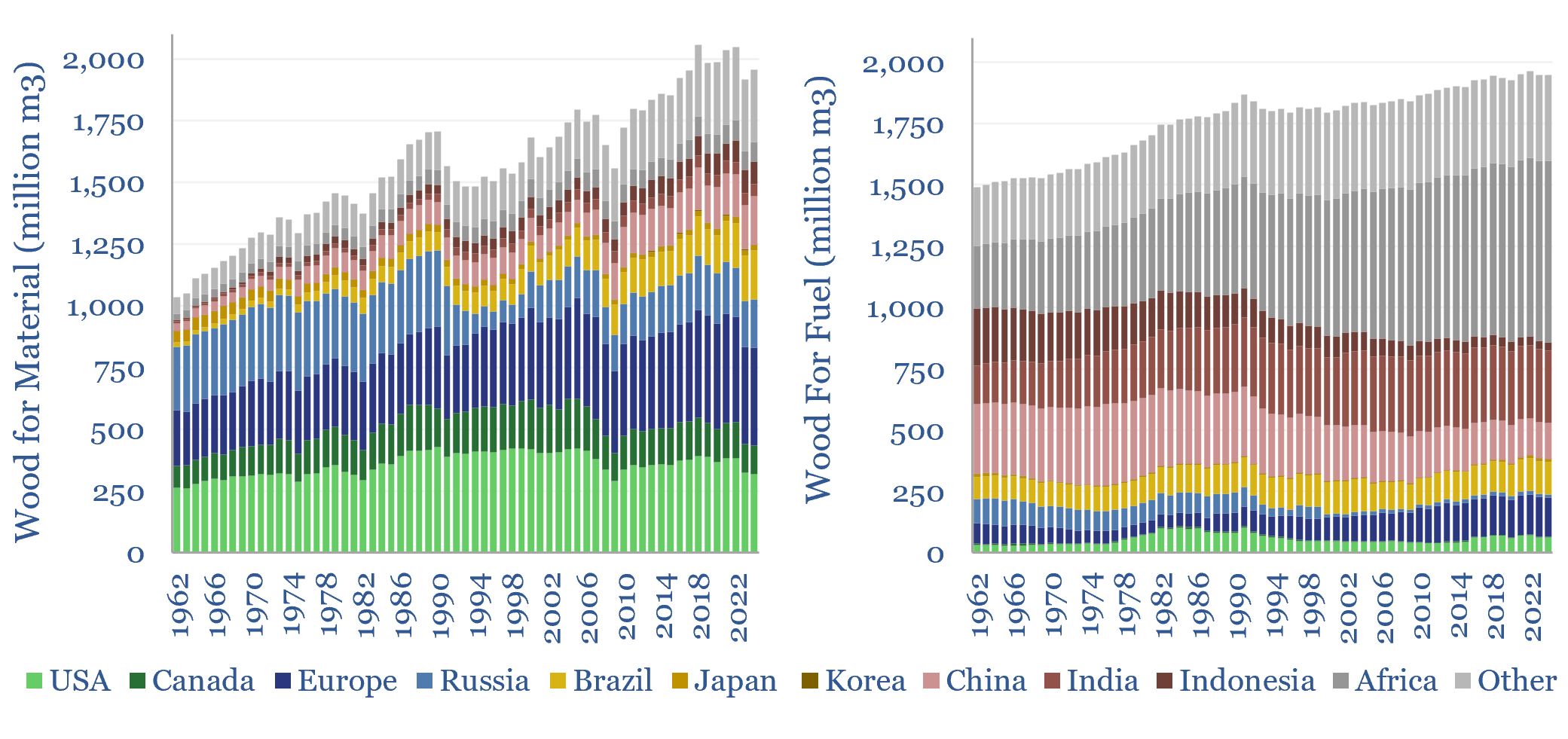
This data-file quantifies global wood production, country-by-country, category-by-category, back to 1960, using granular data from the FAO. 4bn m3 of wood is harvested per year (2GTpa by mass). There is a read-across for how commodities peak. And major upside for LNG.
-
Reciprocating gas engines: leading companies?

This data-file is a screen of leading reciprocating gas engine companies, covering an industry with 15GW pa of manufacturing capacity, EBIT margins averaging 10-20% (and rising), and an overlap with efficient engines used in diesel generators, marine, construction, mining and agricultural industries. Several companies stood out.
-
Helicopter economics: costs of helicopter transport?

This data-file captures helicopter economics. For an Airbus SuperPuma, which can carry c20 passengers, helicopter costs are estimated at $4,000/hour and $30/mile, for a c10% IRR on c$30M of capex costs. Economics can be stress-tested for different helicopter models and operating assumptions.
-
Japan: nuclear restart tracker?
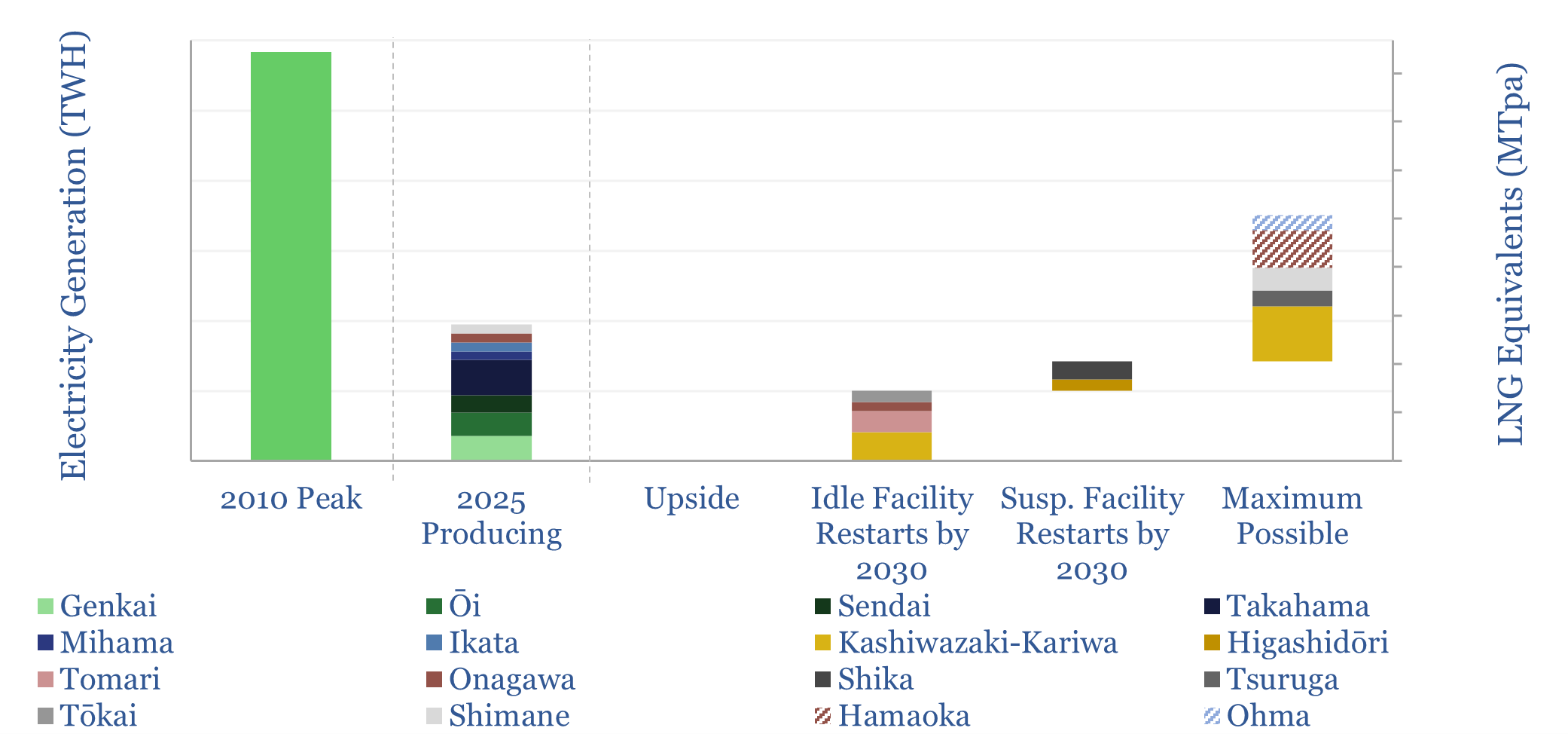
This data-file looks through 17 major nuclear plants in Japan with 45GW of operable capacity, covering the key parameters and restart news on each facility. Japan’s nuclear restart had ramped output back to 97TWH pa by 2025, and may rise by a further 80 TWH by 2030, to meet targets for 20% nuclear in the…
-
Global energy demand: by region and through 2050?

This model captures global energy demand by region through 2050, rising from 80,000 TWH in 2019 to 140,000 MWH in 2050. Population rises 0.6% pa. Energy use per global person rises at 1.1% pa, from 11 MWH pp pa to 15 MWH pp pa. So total demand rises at c2% pa. Meeting the energy needs…
-
Global uranium supply-demand?
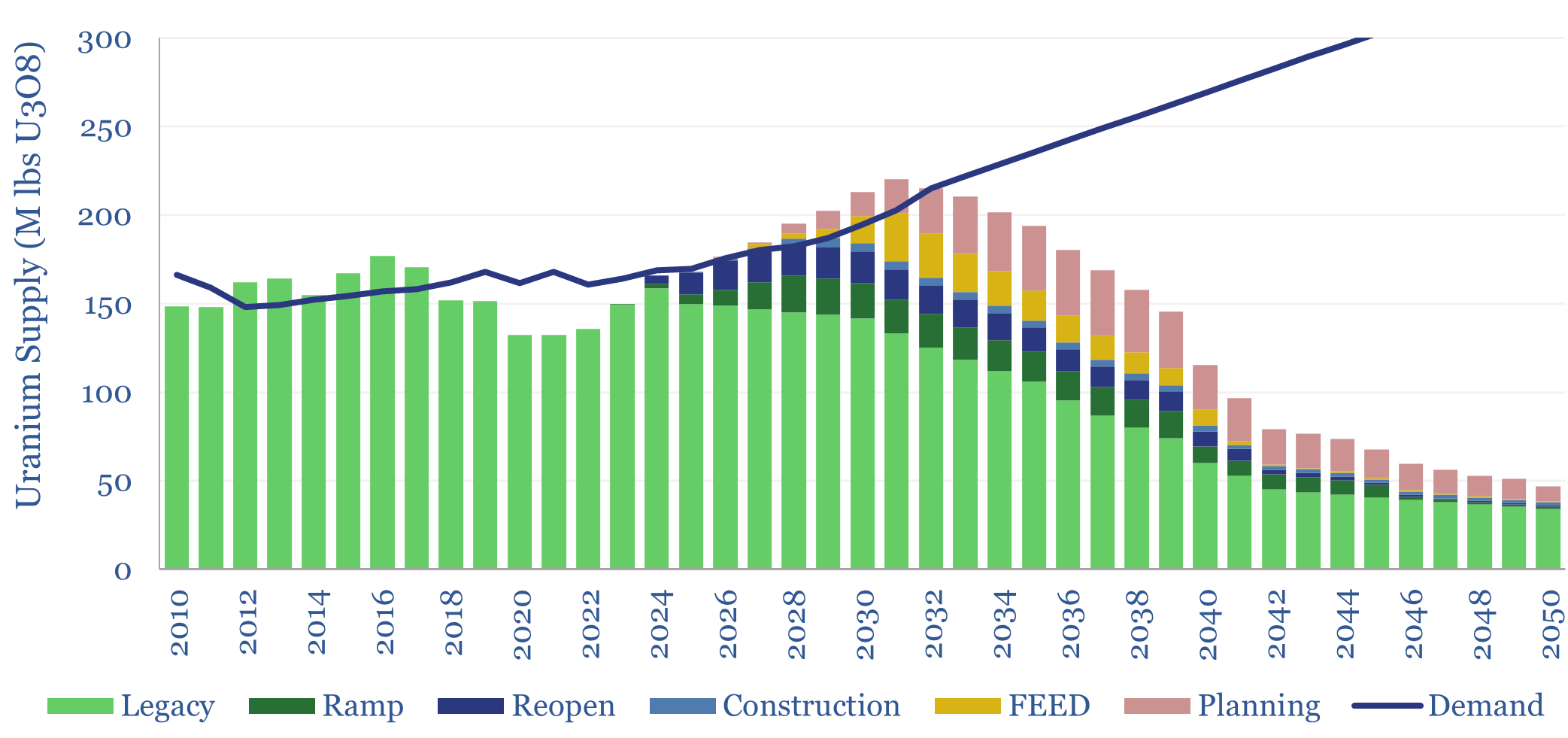
Our global uranium supply-demand model sees the market adequately supplied in 2026-30, even as demand ramps from 170M lbs pa to 210M lbs pa in 2030. However, our project risking is generous and there may be supply disruptions. What implications for broader power markets, decarbonization ambitions, and uranium prices?
-
ANYbotics: quadrupedal inspection robots?
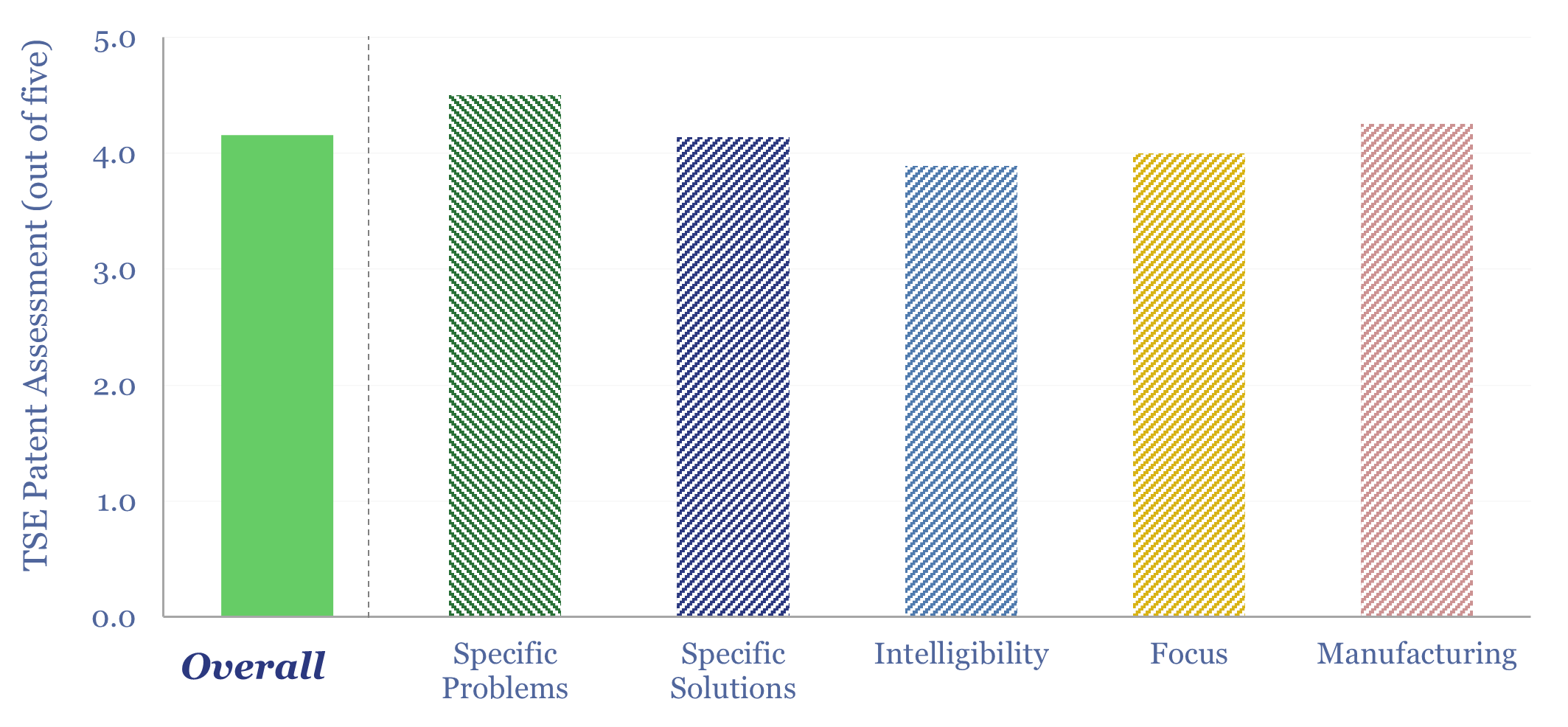
ANYbotics’ quadrupedal inspection robot, ANYmal, has been ruggedized for industrial inspections. We reviewed ANYbotics’ patents and case studies, which suggest growing applications, a moat around the technology, and great upside for robots across energy, mining and manufacturing. Details and conclusions are in this data-file.
-
Global population and GDP breakdown by country?

Global population and GDP are broken down in this data-file, across 10 key regions, with data back to 1960 and projections to 2050, as an input to all of our supply-demand models. Population rises at 0.7% pa from 8.0bn in 2023 to 9.7bn in 2050. Real global GDP rises at 2.5% from $105trn in 2023…
-
Global nuclear capacity: by reactor, by country, over time?
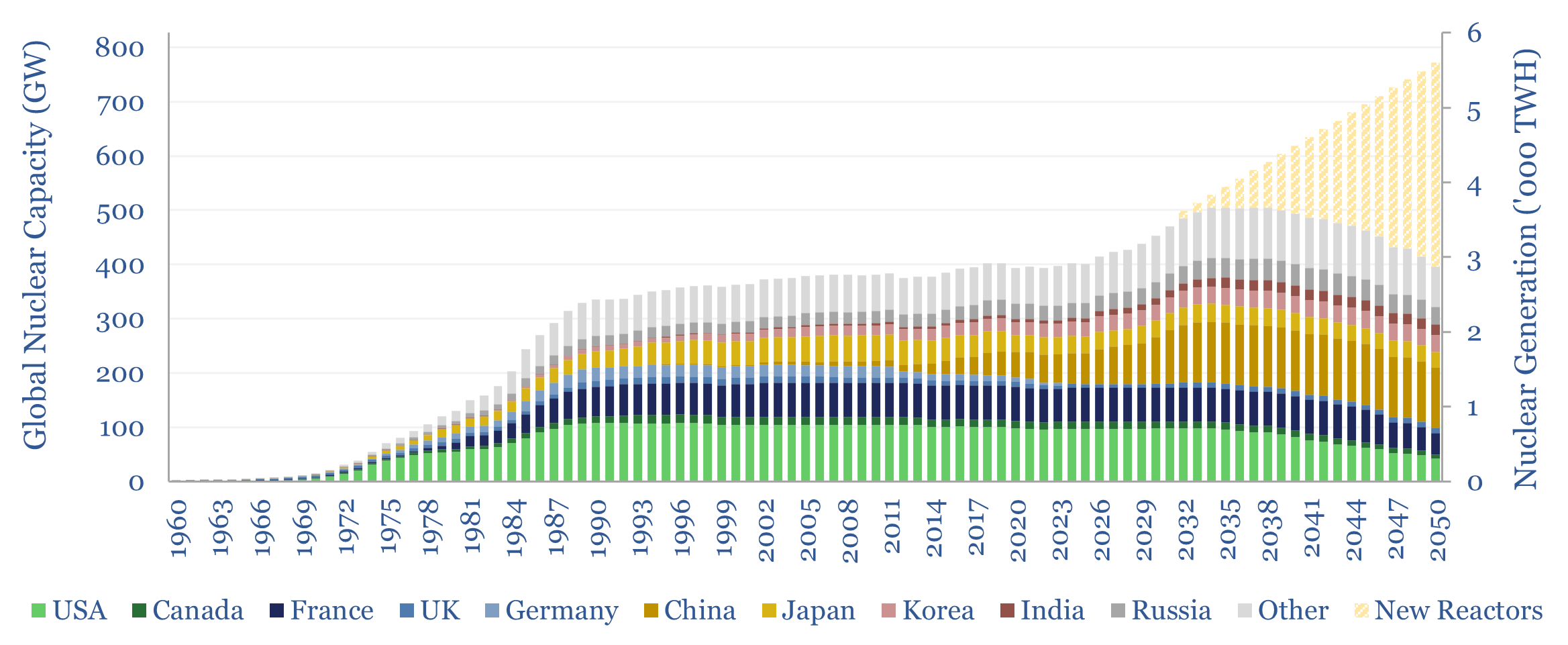
Global nuclear capacity, by reactor, by country, and over time, are built up in this data-file, by reviewing the construction, operation and shutdowns of 800 global nuclear reactors. After running sideways for 20-years, at 2,800 TWH pa, global nuclear generation rises at c3% pa to 2030, and c3% pa to 2050, reaching 5,600 TWH pa.
-
AI power delivery: hit by a bus?

Providing power to AI data centers was a key theme in 2025. But distributing power within them may be just as important for 2026+. More power-dense AI chips require upgrading in-rack buses from 54V to 800V. This 14-page report explores the challenges and opportunities of future AI power delivery architectures.
Content by Category
- Batteries (96)
- Biofuels (44)
- Carbon Intensity (48)
- CCS (64)
- CO2 Removals (9)
- Coal (41)
- Commentary (65)
- Company Diligence (105)
- Data Models (925)
- Decarbonization (162)
- Demand (131)
- Digital (89)
- Downstream (47)
- Economic Model (221)
- Energy Efficiency (76)
- Hydrogen (63)
- Industry Data (309)
- LNG (56)
- Materials (86)
- Metals (88)
- Midstream (45)
- Natural Gas (161)
- Nature (76)
- Nuclear (28)
- Oil (176)
- Patents (39)
- Plastics (44)
- Power Grids (156)
- Renewables (153)
- Screen (138)
- Semiconductors (35)
- Shale (58)
- Solar (72)
- Supply-Demand (53)
- Vehicles (94)
- Video (24)
- Wind (47)
- Written Research (408)