Natural Gas
-
North Field: sharing the weight of the world?
The North Field is now the most important conventional energy asset on the planet. It produces 4% of world energy, 20% of global LNG and aims to ramp another 50MTpa of low-carbon LNG by 2028. But what if Qatar’s exceptional reliability gets disrupted by unforeseen conflict with Iran?
-
Qatar’s North Field: production and productivity?
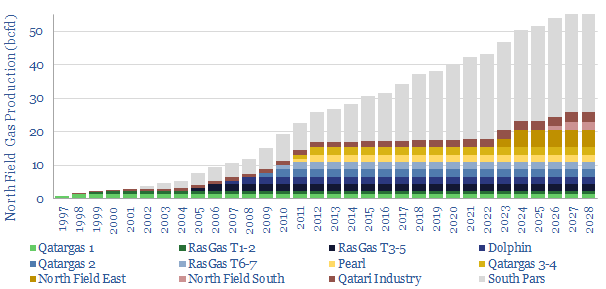
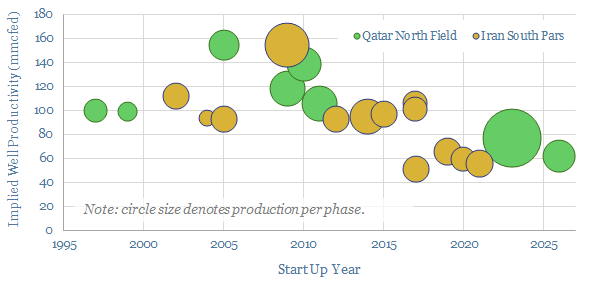
We have aggregated production data from the largest gas fied in the world: Qatar’s North Field, aka Iran’s South Pars field, with 1,260 TCF reserves. Output is running at 43bcfd in 2022, more than doubling in the past decade, which is possibly impacting future well productivity.
-
World’s largest energy assets: by category and risk?
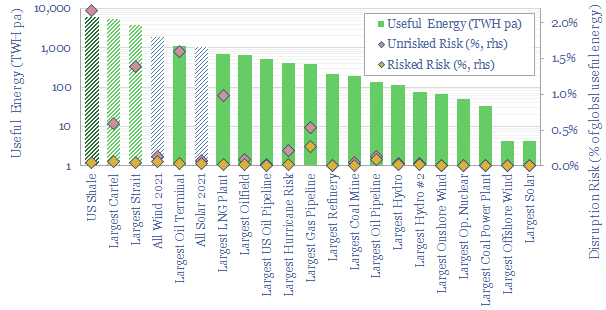
The largest hydrocarbon mega-projects are still 10-25x larger than the world’s largest solar and offshore wind projects. Risks are different in each category. But on a risked basis, global energy supplies may come in c2% lower than base case forecasts
-
Air conditioning: energy demand sensitivity?
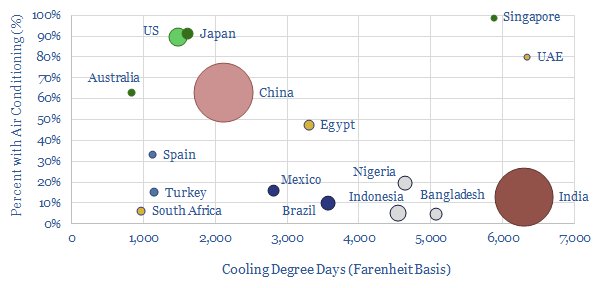
This data-file quantifies air conditioning energy demand. In the US each 100 variation in CDDs adds 26 TWH of electricity (0.6%) demand and 200bcf of gas (0.6%). Air conditioning already consumes 7% of all global electricity and could treble by 2050.
-
European shale: an overview?
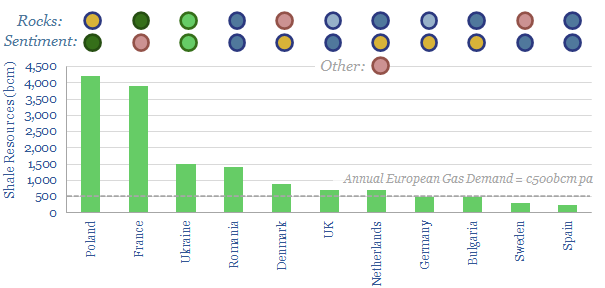
Europe has 15 TCM of technically recoverable shale gas resources. This data-file aims to provide a helpful overview, as we expect exploration to re-accelerate. Ukraine has the best shale in Europe, which may even be a motivation for Russian aggression. Other countries with good potential, held back only by sentiment are Romania, Germany, UK, Bulgaria…
-
Methane emissions from pneumatic devices: by operator, by basin?
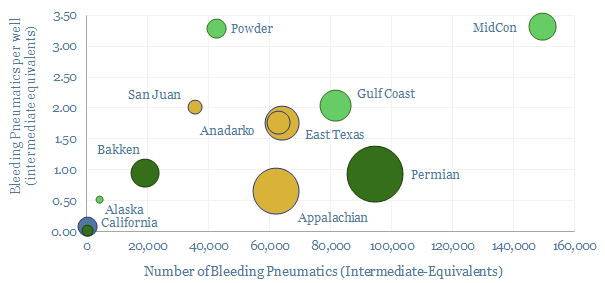
Methane leaks from 1M pneumatic devices across the US onshore oil and gas industry comprise 50% of all US upstream methane leaks and 20% of upstream CO2. This file aggregates the data. Rankings reveal operators with a pressing priority to replace >100,000 medium and high bleed devices, and other best-in-class companies.
-
Natural gas: the EU green taxonomy’s 270g/kWh CO2 target?
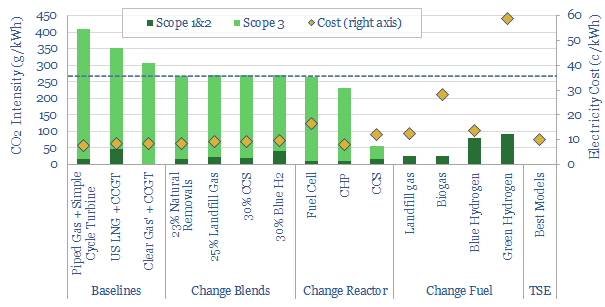
The EU taxonomy is a set of guidelines that label some investments as ‘green’. This includes gas power with a CO2 intensity below 270g/kWh. Most conventional gas projects will not meet this hurdle, but CHPs and 20-30% blends of lower-carbon gas could accelerate.
-
Global energy market model for the energy transition?
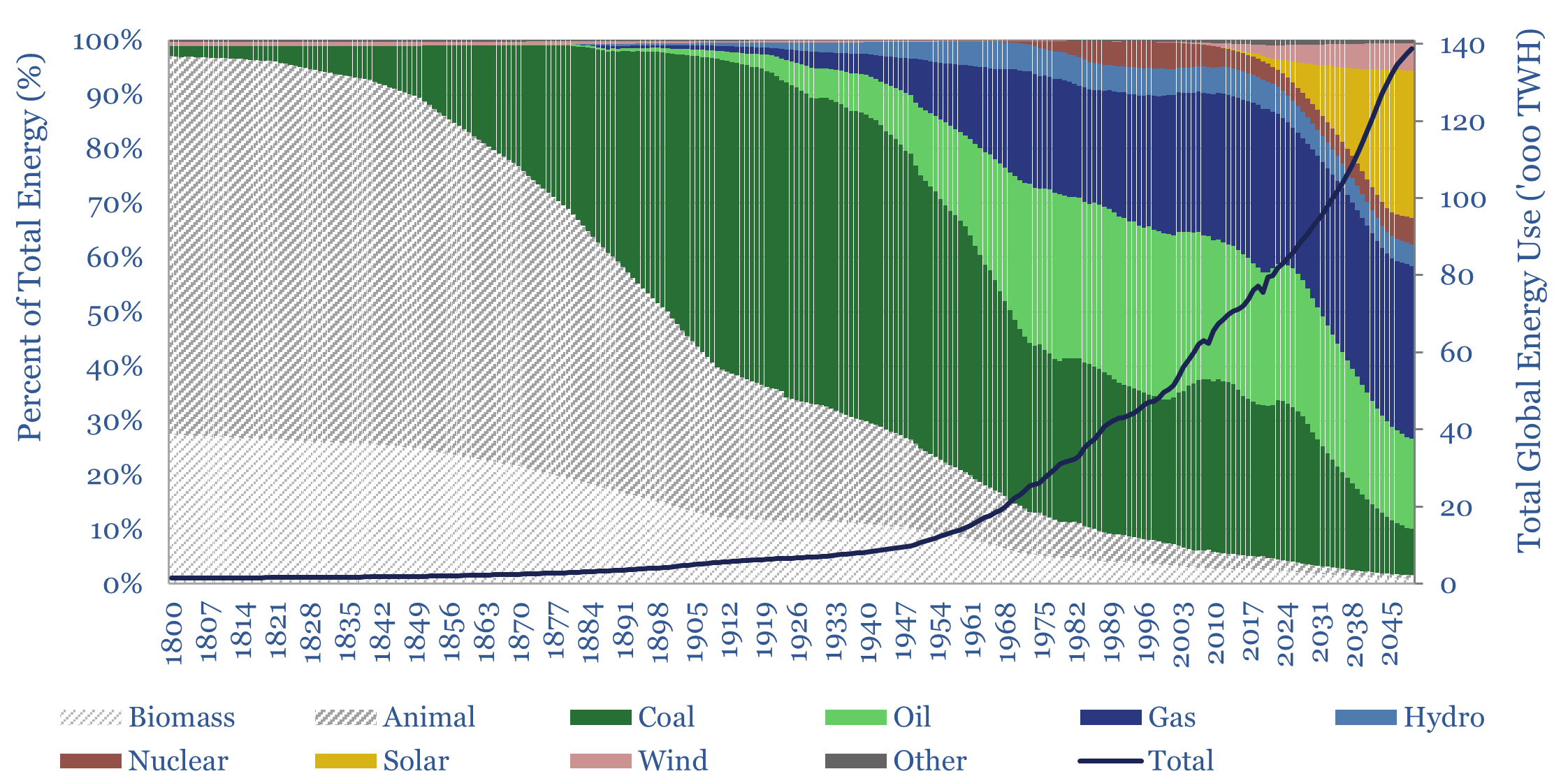
This data-file is a global energy market model for the energy transition. It contains long-term energy supply-demand forecasts by energy source; based on a dozen core input assumptions. Total useful energy consumed by human civilization rises from 80,000 TWH pa to 140,000 TWH pa by 2050. The mix is 30% gas, 30% solar, 15% oil,…
-
Power plants: cold starts and ramp rates?
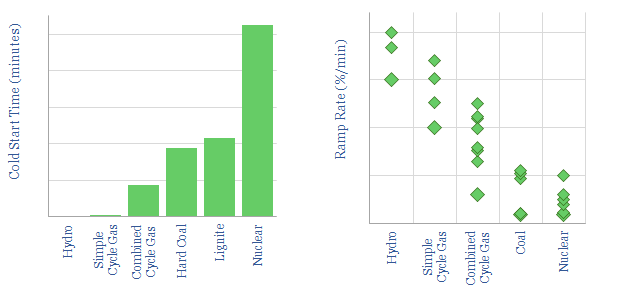
This data-file aggregates the ramp-up rates of power generation sources, as they start up from “cold”, and then as they ramp up (in MW per minute). Hydro and simple cycle gas turbines are fastest, followed by CCGTS, coal and nuclear.
-
Aspen Aerogels: insulation breakthrough?
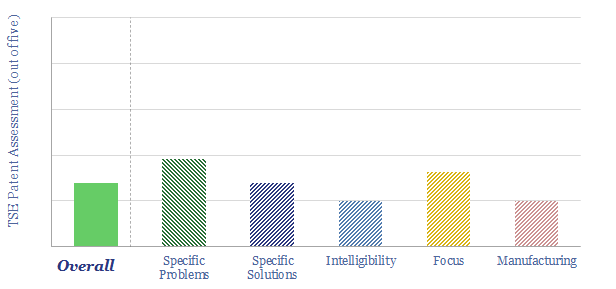
Aerogels have thermal conductivities that are 50-80% below conventional insulators. Target markets include preventing thermal runaway in electric vehicle batteries and cryogenic industrial processes (e.g., LNG). This data-file notes some challenges, using our usual patent review framework.
Content by Category
- Batteries (96)
- Biofuels (44)
- Carbon Intensity (48)
- CCS (64)
- CO2 Removals (9)
- Coal (44)
- Commentary (65)
- Company Diligence (105)
- Data Models (928)
- Decarbonization (163)
- Demand (131)
- Digital (91)
- Downstream (47)
- Economic Model (222)
- Energy Efficiency (76)
- Hydrogen (63)
- Industry Data (311)
- LNG (56)
- Materials (86)
- Metals (89)
- Midstream (45)
- Natural Gas (163)
- Nature (76)
- Nuclear (28)
- Oil (178)
- Patents (39)
- Plastics (44)
- Power Grids (156)
- Renewables (153)
- Screen (139)
- Semiconductors (35)
- Shale (58)
- Solar (72)
- Supply-Demand (53)
- Vehicles (94)
- Video (24)
- Wind (46)
- Written Research (409)