Metals
-
Nickel production: the economics?
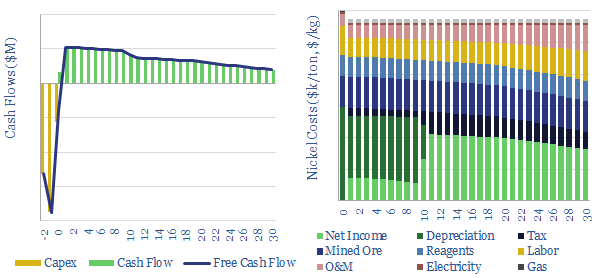
This model captures the economics of producing battery-grade nickel (e.g., Class I, nickel sulphate) at a metallurgical processing facility. Marginal cost is likely around $11,500/ton in order to generate a 10% IRR, in a process emitting 14 tons of CO2 per ton of product. Numbers vary.
-
Global nickel production by company?
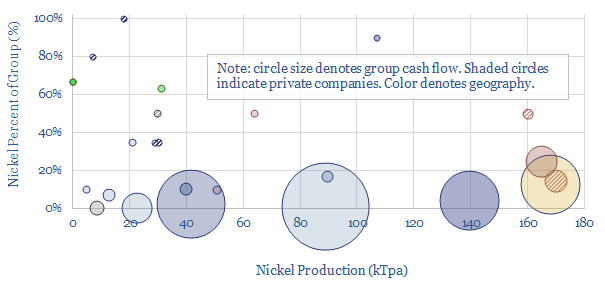
25 companies dominate the world’s nickel production, although the supply chain is heavily split between battery-grade materials, Class I metals, and lower-grade products. Each company is summarized, according to its size and asset base. CO2 intensity varies by a very wide 10x margin, from sub-10 tons/ton nickel to 100 tons/ton.
-
Renewables: can they ramp up faster?
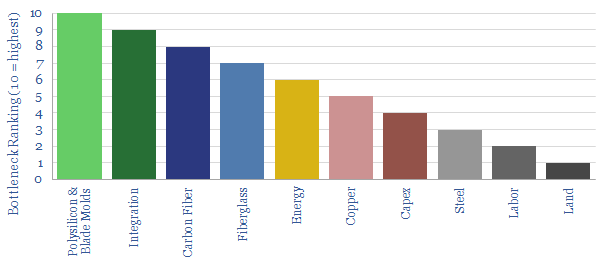
How fast can wind and solar accelerate, especially if energy shortages persist? This 11-page note reviews the top ten bottlenecks. Seven value chains will tighten enormously in the coming years. Paradoxically, however, ramping renewables could exacerbate near-term energy shortages.
-
Green steel: circular reference?
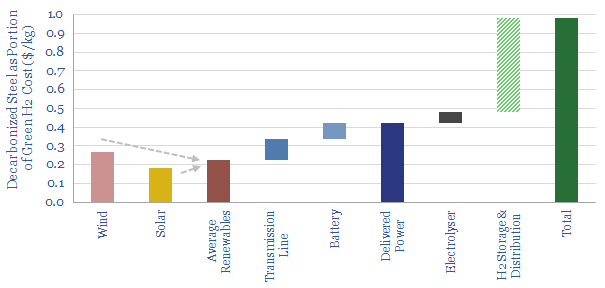
Steel explains almost c10% of global CO2. Hence 2021 has seen the world’s first ‘green steel’ made using green hydrogen. Yet inflation worries us. At $7.5/kg H2, green steel would cost 2x conventional steel. In turn, doubling the global steel price would re-inflate green H2 costs by $0.5/kg. This note explores inflationary feedback loops and…
-
Steel production: costs and energy economics?
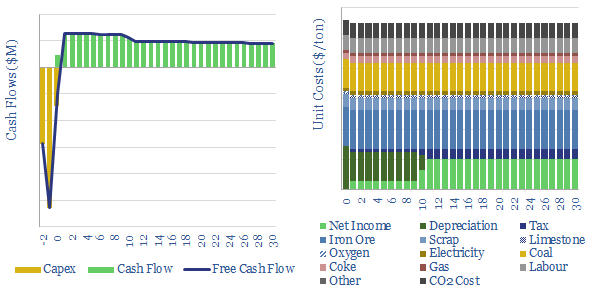
This data-file captures steel production from the reduction of iron ore in a blast furnace and basic oxygen furnace. Our base case is a marginal cost of $550/ton and 2.4 tons/ton of CO2. Decarbonization options such as hydrogen can be stress-tested.
-
Mine trucks: transport economics?
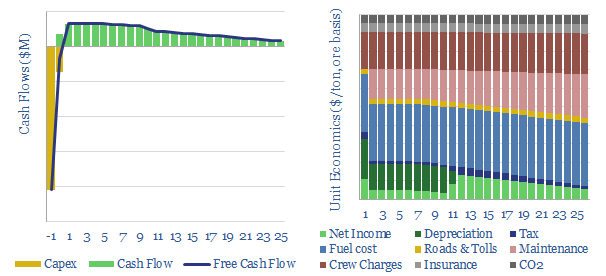
There are around 50,000 giant mining trucks in operation globally. The largest examples are 15m long, 10m wide, 8m high, can carry around 350-450 tons and reach top speeds of 40mph. This data-file captures the economics, costs and inflationary impacts of decarbonization.
-
Cobalt: leading producers?
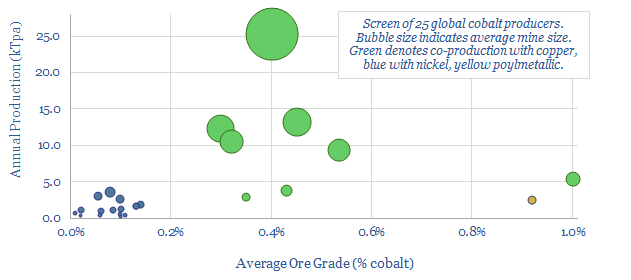
Our global decarbonization models burn through the world’s entirely terrestrial cobalt resources. Hence this data-file reviews c25 mines around the world, and the resultant positions of 25 global cobalt producers. All cobalt is produced alongside copper or nickel, but some companies are more cobalt-exposed.
-
Lilac solutions: lithium breakthrough?
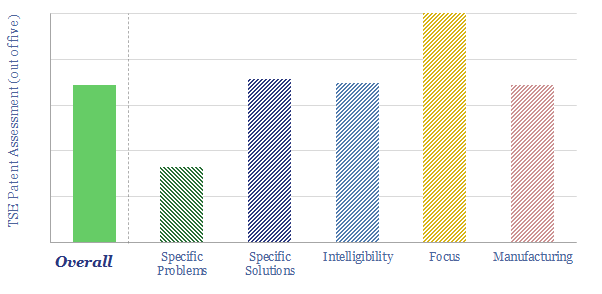
Lilac Solutions aims to commercialize a lithium ion exchange technology, which can extract lithium from dilute brine solutions, rapidly, economically and scalably. Overall Lilac’s patents look promising to us. They contain some excellent, precise and intelligible details on making ion exchange materials.
-
Lithium: reactive?
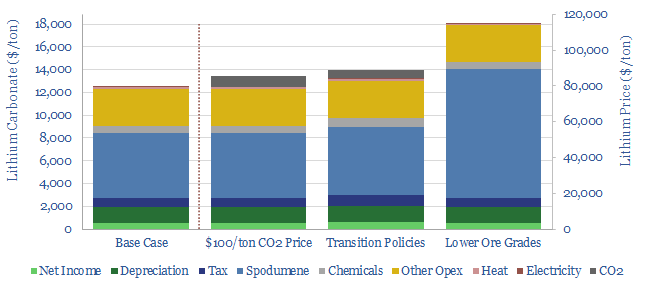
Lithium demand is likely to rise 30x in the energy transition. So this 15-page note reviews the mined lithium supply chain, finding prices will rise too, by 10-50%. The main reason is lower-grade ores. Second is energy intensity. Low-cost lithium brine producers may benefit from steeper cost curves.
-
Lithium producers: leading companies?
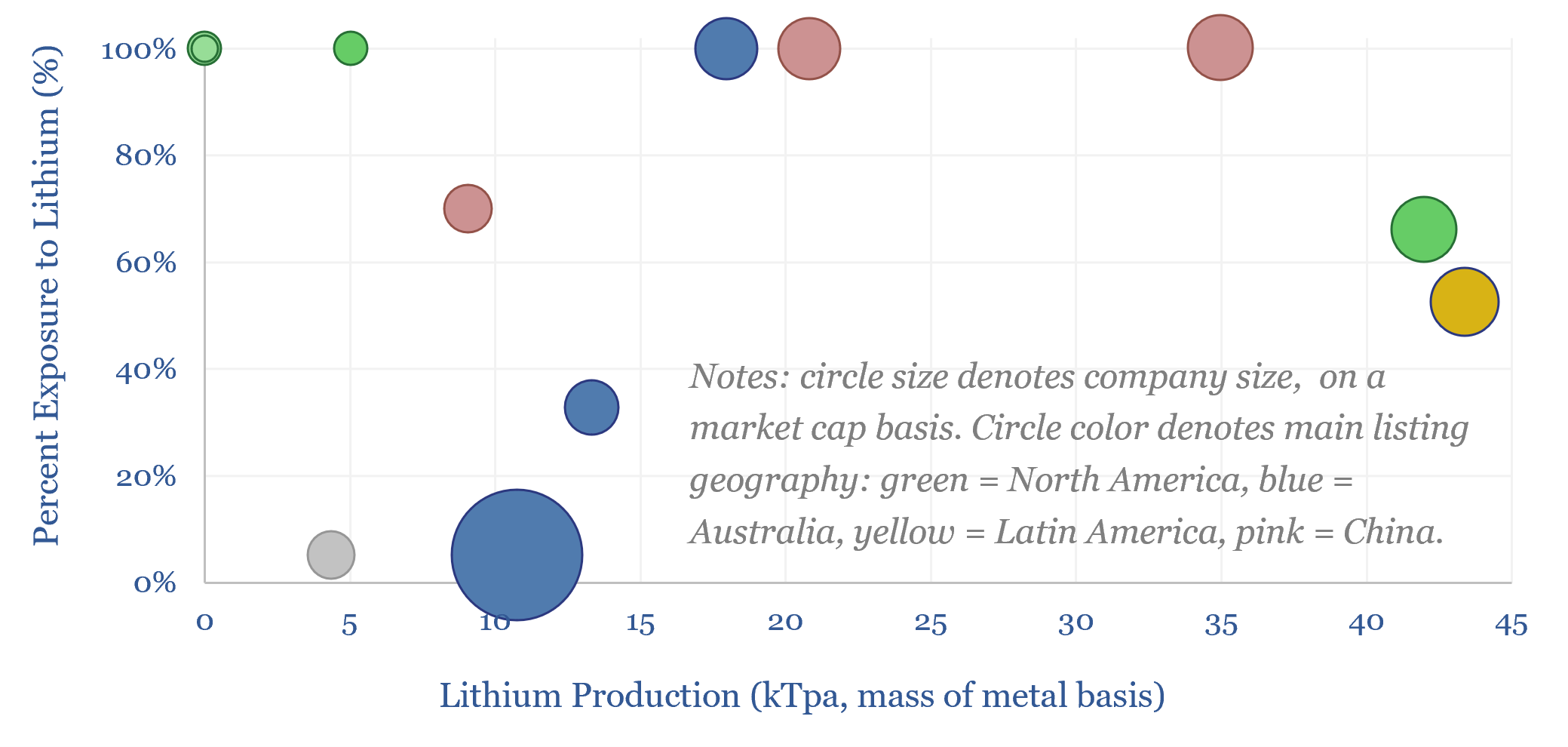
This data-file screens lithium producing companies, their asset bases and financials. Ten companies currently produce almost 80% of the world’s lithium. 65% is from mining assets, 35% from brines and evaporation ponds. What outlook for lithium producers in an AI energy transition?
Content by Category
- Batteries (96)
- Biofuels (44)
- Carbon Intensity (48)
- CCS (64)
- CO2 Removals (9)
- Coal (41)
- Commentary (65)
- Company Diligence (104)
- Data Models (922)
- Decarbonization (162)
- Demand (129)
- Digital (86)
- Downstream (47)
- Economic Model (221)
- Energy Efficiency (76)
- Hydrogen (63)
- Industry Data (308)
- LNG (56)
- Materials (86)
- Metals (88)
- Midstream (45)
- Natural Gas (161)
- Nature (76)
- Nuclear (28)
- Oil (176)
- Patents (39)
- Plastics (44)
- Power Grids (156)
- Renewables (153)
- Screen (137)
- Semiconductors (35)
- Shale (58)
- Solar (72)
- Supply-Demand (53)
- Vehicles (95)
- Video (24)
- Wind (47)
- Written Research (407)