Metals
-
Solar contacts: silver bullet?
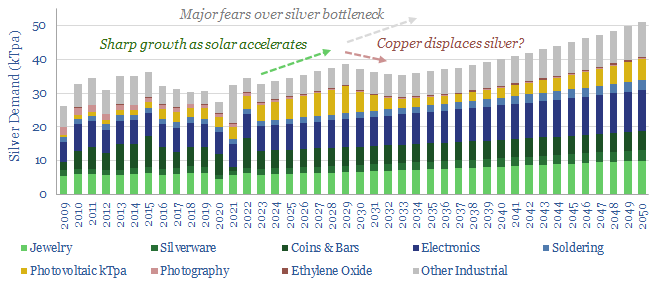
The front contacts in today’s solar cells are made of screen-printed silver, absorbing 11% of 2021’s silver market. Silver can be substituted with copper, but manufacturing is c5x more costly. So we expect a silver spike, then a switch. This 16-page note explains our outlook, and who benefits?
-
Silver demand: upside and substitution?
This data-file is a simple demand outlook for silver in the energy transition. Demand could rise 2.5x from 30kTpa to 85kTpa in 2050, driven by solar and electrification. Although in practice, we think a price spike will displace silver with copper.
-
Aurubis: copper recycling breakthrough?
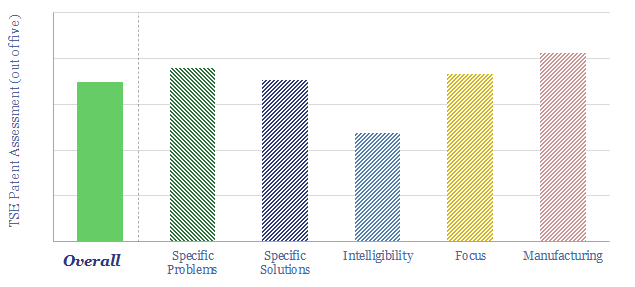
Aurubis produces copper products from 1MTpa of recycled materials and 2.25MTpa of concetrates. Energy use and CO2 emissions are two-thirds lower than primary copper production. Our technology review finds a partial moat.
-
Recycling: a global overview of energy savings?
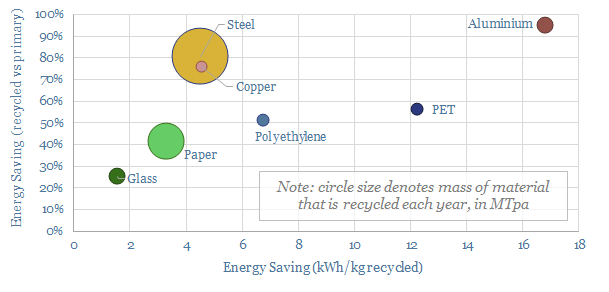
1GTpa of material is recycled globally, across steel, paper, glass, plastics and other metals. On average, 35% of these materials are produced from recycled feeds, saving 70% of the energy and CO2, with upside in the Energy Transition.
-
Silver producers: leading companies?
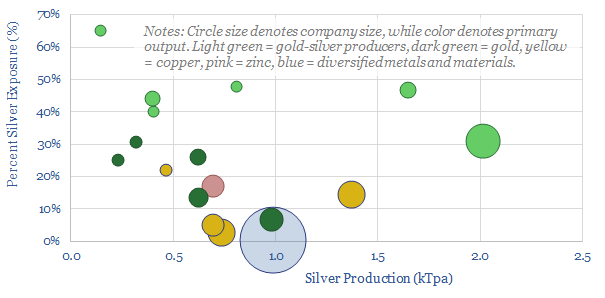
Half of the world’s 28kTpa global silver market is controlled by 17 public companies, with silver output ranging from 0.1 – 2.0 kTpa, and co-producing gold, copper or other metals. This data-file is a screen of silver producers, in order to identify leading companies.
-
Electrical conductivity: energy transition materials?
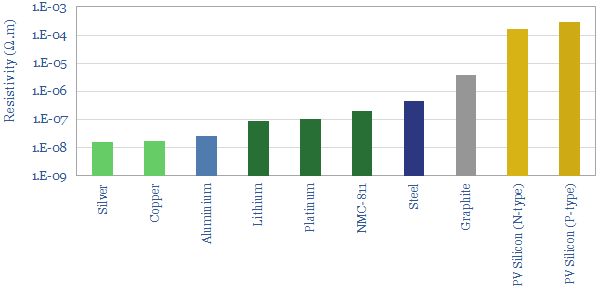
Electrical conductivity of energy transition materials is tabulated in this data-file. ‘The action’ takes place in the range of 10^-8 to 10^-3 Ohm-meters, including silver in solar cells, copper in renewables and EVs, aluminium transmission lines, batteries, and solar semiconductors.
-
Direct lithium extraction: ten grains of salt?
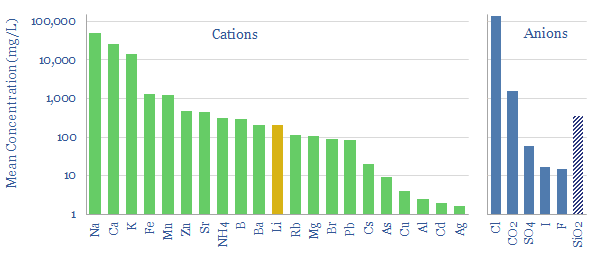
Direct Lithium Extraction from brines could help lithium scale 30x in the Energy Transition; with costs and CO2 intensities 30-70% below mined lithium; while avoiding the 1-2 year time-lags of evaporative salars. This 15-page note reviews the top ten challenges that decision-makers need to de-risk.
-
Ionic radius: comparing cation chemistry?
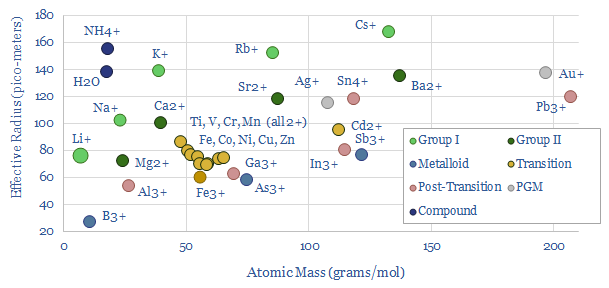
Ionic radius measures the width of ions, in pico-meters (one billionth of a millimeter, one trillionth of a meter), or in angstroms (100 pico-meters). This short note contains our top conclusions on ionic radius, as we find ourselves doing more inorganic chemistry around metals in the energy transition.
-
Lithium from brines: the economics?
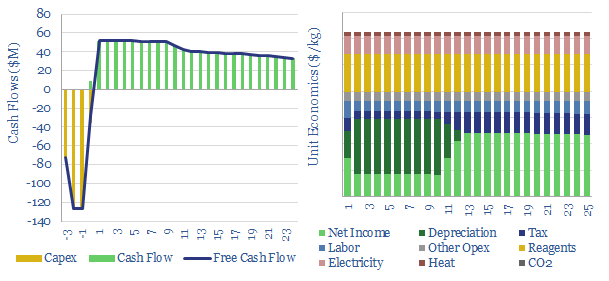
This data-file approximates the costs of battery-grade lithium from brines, via traditional salars the emerging technology of direct lithium extraction. Costs are c40-60% lower than mined lithium in ($/ton of lithium carbonate equivalent). CO2 intensity is 50-80% lower (in kg/kg).
-
Nickel solutions: unblocking a battery bottleneck?
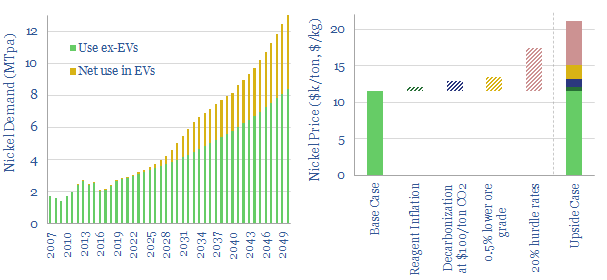
The global nickel market will grow from $30bn pa to $300bn in the energy transition, including a 5x increase in volumes and 2x increase in price. This 15-page note evaluates the nickel supply chain for electric vehicle battery cathodes. Deficits are looming. Hence we end by screening nickel names.
Content by Category
- Batteries (96)
- Biofuels (44)
- Carbon Intensity (48)
- CCS (64)
- CO2 Removals (9)
- Coal (41)
- Commentary (65)
- Company Diligence (104)
- Data Models (922)
- Decarbonization (162)
- Demand (129)
- Digital (86)
- Downstream (47)
- Economic Model (221)
- Energy Efficiency (76)
- Hydrogen (63)
- Industry Data (308)
- LNG (56)
- Materials (86)
- Metals (88)
- Midstream (45)
- Natural Gas (161)
- Nature (76)
- Nuclear (28)
- Oil (176)
- Patents (39)
- Plastics (44)
- Power Grids (156)
- Renewables (153)
- Screen (137)
- Semiconductors (35)
- Shale (58)
- Solar (72)
- Supply-Demand (53)
- Vehicles (95)
- Video (24)
- Wind (47)
- Written Research (407)