Vehicles
-
Hydrogen vehicles and fuelling stations: where’s the IP?
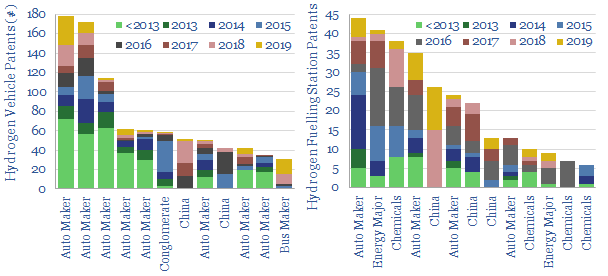
We cleaned 18,600 patents into hydrogen vehicles and vehicle fuelling stations. Technology leaders include large auto-makers, industrial gas companies, Energy Majors and hydrogen specialists. Overall, the patents indicate the array of challenges that must be solved to scale up hydrogen fuel in transport.
-
Energy storage: batteries versus supercapacitors?
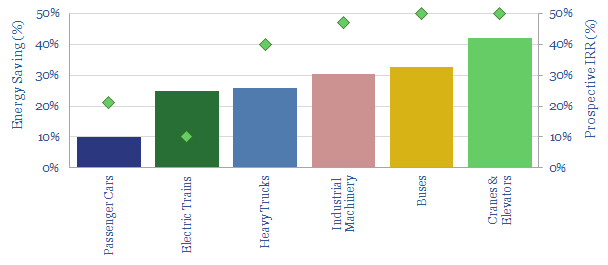
Supercapacitors may eclipse lithium ion batteries in the hybridization of transport and industry. Their energy density is improving. Potential CO2 savings could surpass 1bn tons per year. IRRs of 10-50% can be achieved, even prior to CO2 prices. These are our conclusions after reviewing 2,000 Western patents. We profile the leading companies exposed to the…
-
Energy Transition Technologies?
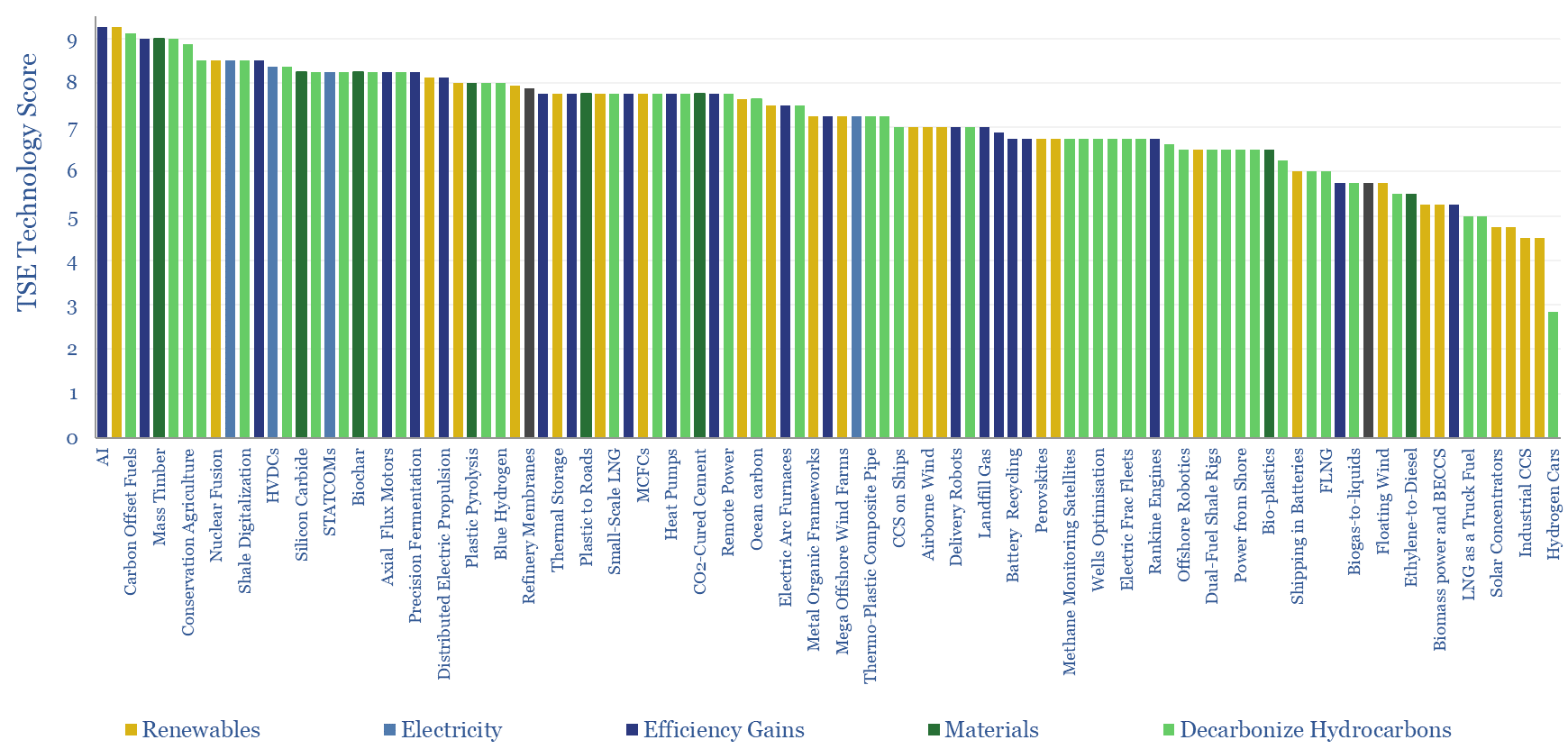
This data-file “scores” the top technologies to transform the global energy industry and the world, as assessed by Thunder Said Energy. Each one is scored based on technical readiness, economic impact and the level of work we have conducted.
-
Autonomous vehicles: where’s the IP?
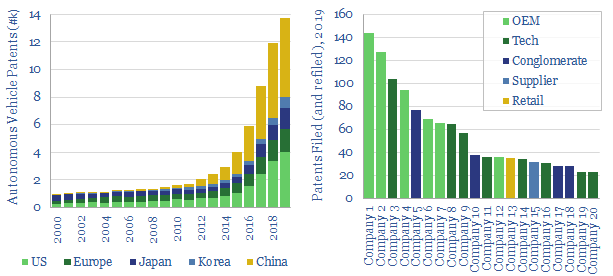
We screen 37,000 patents into autonomous vehicles, which will likely increase total road travel by c10%. The pace of activity has been rising at a rapid, 37% CAGR. Our data-file notes the most active companies, including tech firms (Denso, MobilEye, TuSimple, Uber, Waymo, Zoox) and auto companies (Ford, GM, Honda, Toyota, Volvo et al).
-
Electric Rail Energy Economics?
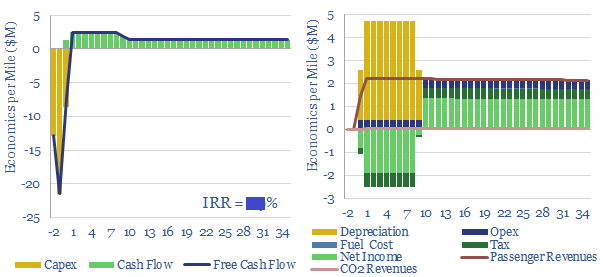
This data-file models the energy economics of constructing new electric rail lines, to displace automobile traffic and accelerate the energy transition. Electric rail saves around 1kT of CO2 per track-mile per year. But capex costs are challenging. Double digit returns may be achievable on large lines, outside the United States. CO2 prices do not materially…
-
Urban Traffic by Time and by Travel Speeds?
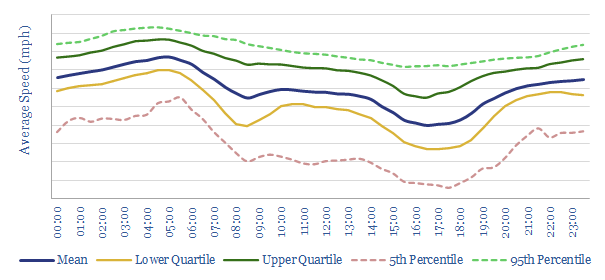
We have quantified the average speed of automobiles on a dozen highways and expressways flowing into New York City. Traffic is most severe at 4-5pm. The data suggest moderate-severe traffic conditions can curtail average vehicle fuel economy by 15-45% on highways leading in a typical city.
-
Reasons for travel: by purpose and mode of transport
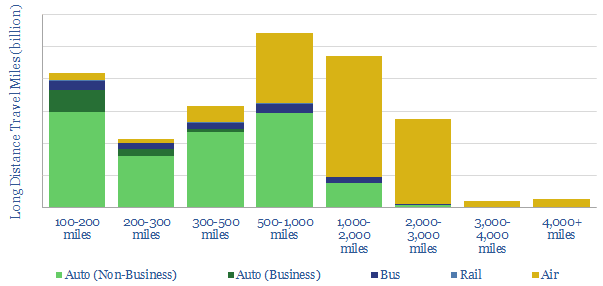
This database disaggregates 1.1trn miles of long-distance travel, by purpose, by transportation type and distance category, as context for COVID-19. c30% of long-distance travel is for business, c10% is commuting and c45% is for leisure. These splits vary markedly across planes, trains and automobiles.
-
Remote possibilities: working from home?
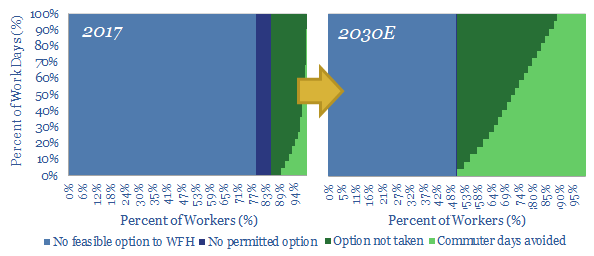
The COVID-19 crisis will structurally accelerate remote working. The opportunity can save 30% of commuter journeys by 2030, avoiding 1bn tons of CO2 per year, for a net economic benefit of $5-16k per employee. This makes remote work materially more impactful than electric vehicles.
-
Working remotely: the economics, the opportunity?
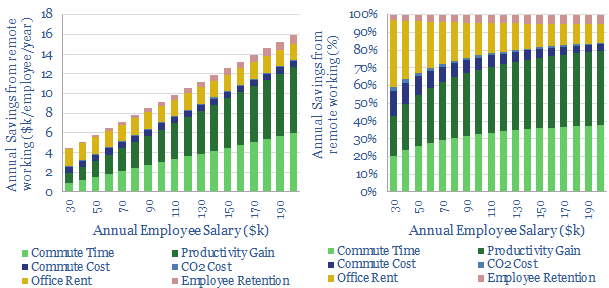
The economic benefits of working remotely are between $5-16k per employee per year, as modelled in shit data-file. Hence we quantify that remote work could step up to displace 30% of all commutes from a typical developed world economy by 2030. The conclusions are substantiated using US data.
-
Electric Vehicles Increase Fossil Fuel Demand?
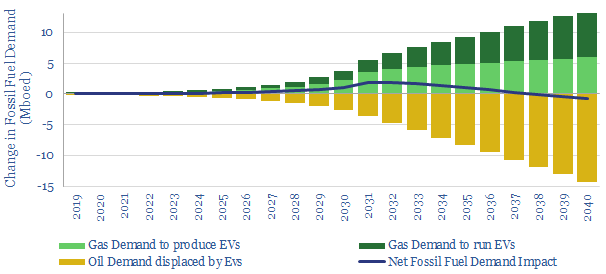
It is widely believed that electric vehicles will destroy fossil fuel demand. We find they will increase it by 0.7Mboed from 2020-35. EVs only start lowering net fossil fuel demand from 2037 onwards. The reason is that 3.7x more energy is consumed to manufacture each EV than the net road fuel it displaces each year;…
Content by Category
- Batteries (95)
- Biofuels (44)
- Carbon Intensity (48)
- CCS (64)
- CO2 Removals (9)
- Coal (41)
- Commentary (65)
- Company Diligence (104)
- Data Models (920)
- Decarbonization (162)
- Demand (129)
- Digital (86)
- Downstream (47)
- Economic Model (220)
- Energy Efficiency (76)
- Hydrogen (63)
- Industry Data (308)
- LNG (56)
- Materials (86)
- Metals (88)
- Midstream (45)
- Natural Gas (161)
- Nature (76)
- Nuclear (28)
- Oil (175)
- Patents (39)
- Plastics (44)
- Power Grids (155)
- Renewables (153)
- Screen (136)
- Semiconductors (35)
- Shale (58)
- Solar (72)
- Supply-Demand (53)
- Vehicles (95)
- Video (24)
- Wind (47)
- Written Research (405)