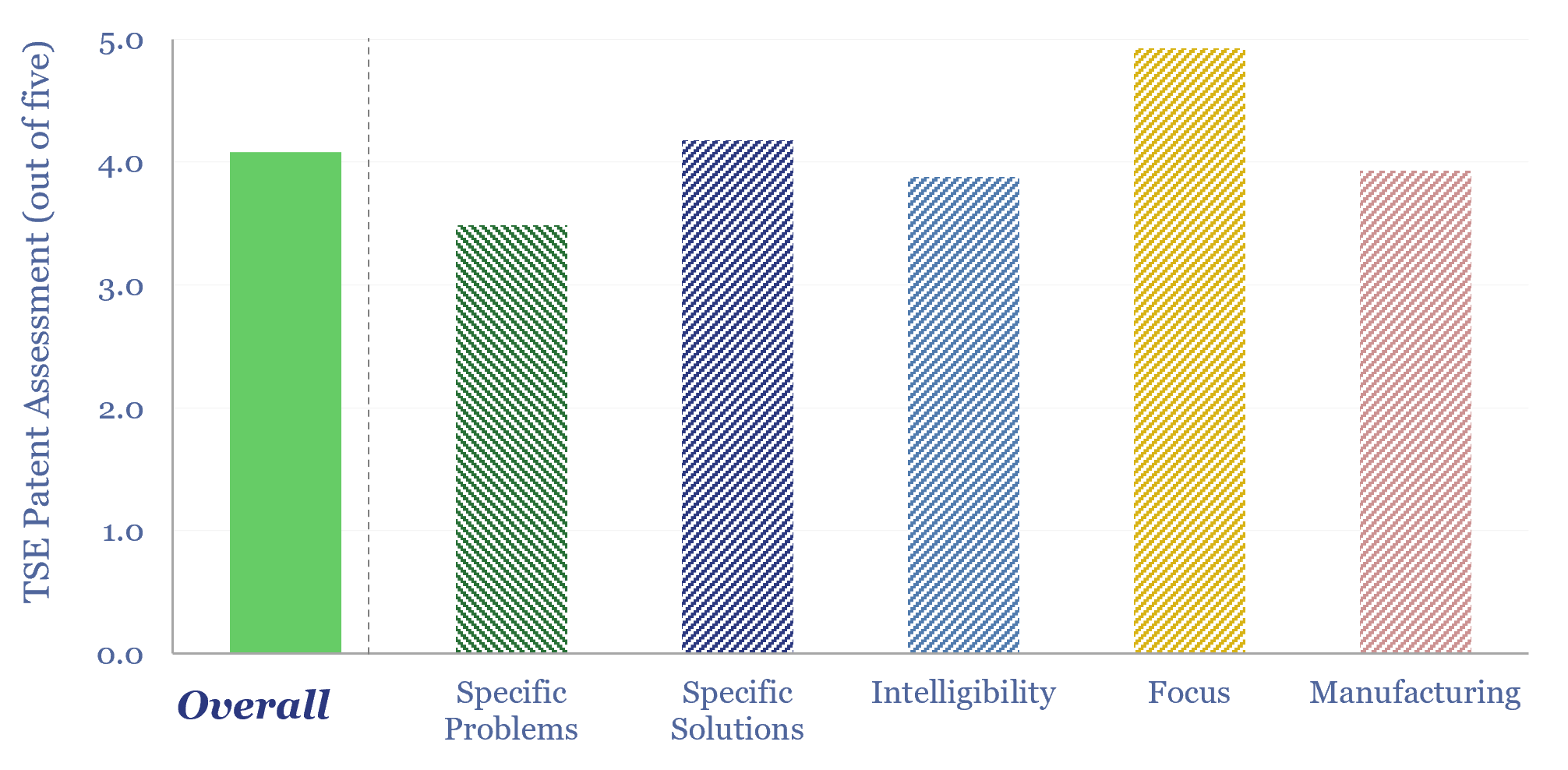
Details of Zipline drone delivery technology are derived in this data-file, based on reviewing over 15 highly detailed patent families from the company. We see a moat around specific hardware innovations, a low cost sensor suite, inherent safety from seven layers of safety protections, and a sophisticated fleet management system.
Zipline currently operates the largest autonomous drone delivery service in the world, competing with Alphabet’s Wing and Amazon’s Prime Air, having delivered over 20M products by mid-2026.
Zipline was founded as a company in 2014, headquartered in California and has 1,700 employees. A $600M capital raise in January-2026 valued the company at $7.6bn.
How does Zipline drone delivery technology work? How are the Ziplines controlled? What sensors do they use? How is safety ensured? How big are Zipline’s batteries?
To answer these questions, we reviewed 15 patent families from the company, which cover the overall UAV, hardware, and innovations in collision avoidance, charging docks, propellers, sensor hardware, fleet management and the Customer UI (chart below).
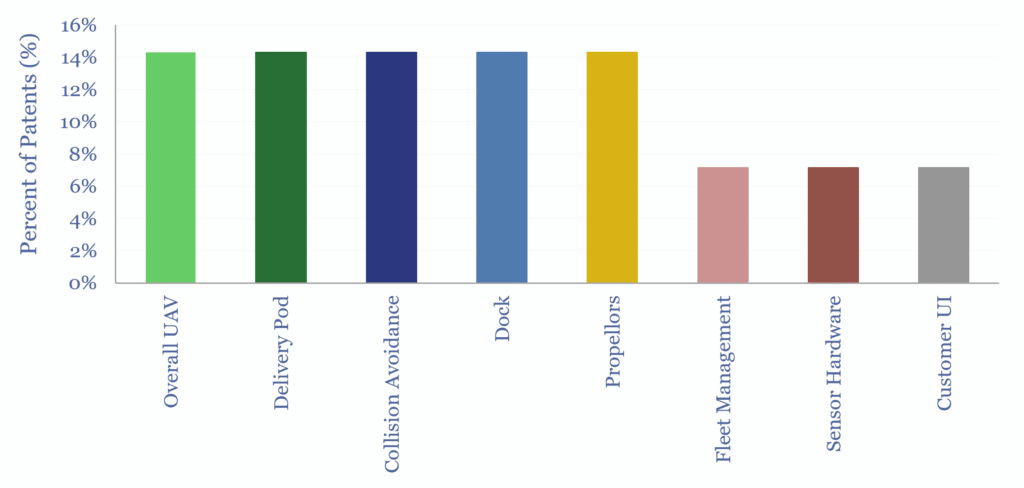
Zipline’s patents are high quality, and detailed, some running to 180-pages, and with over 100 images, most of which are high-quality engineering drawings of specific components, or flow-chart process schematics.
Inherent safety features and a sophisticated fleet management system are also discussed (chart below). Our views around the patent moat and defensibility are discussed in the data-file.
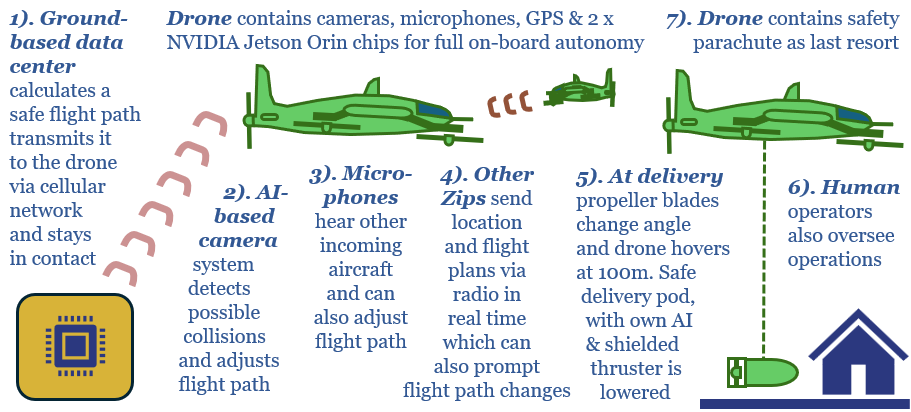
Specifically, the image above shows how safe flight paths of drones are computed in ground-based data-centers, transmitted to drones via the cellular network, while from here, the vehicle can autonomously fly its route, without continued ground contact, due to cameras, microphones, GPS and a 2 x NVIDIA Jetson Orin GPUs.
The drone does not land at the delivery point, but rather lowers a tethered deliverey pod, which is safer as it keeps spinning blades around 50-100 meters off the ground, where they cannot create a safety hazard.
Energy economics have been estimated at $3 per delivery in our breakdown of costs of delivery drones. We are increasingly excited about the trajectory and implications of autonomous drone deliveries.