-
Industrial heat: can heat pumps compete?
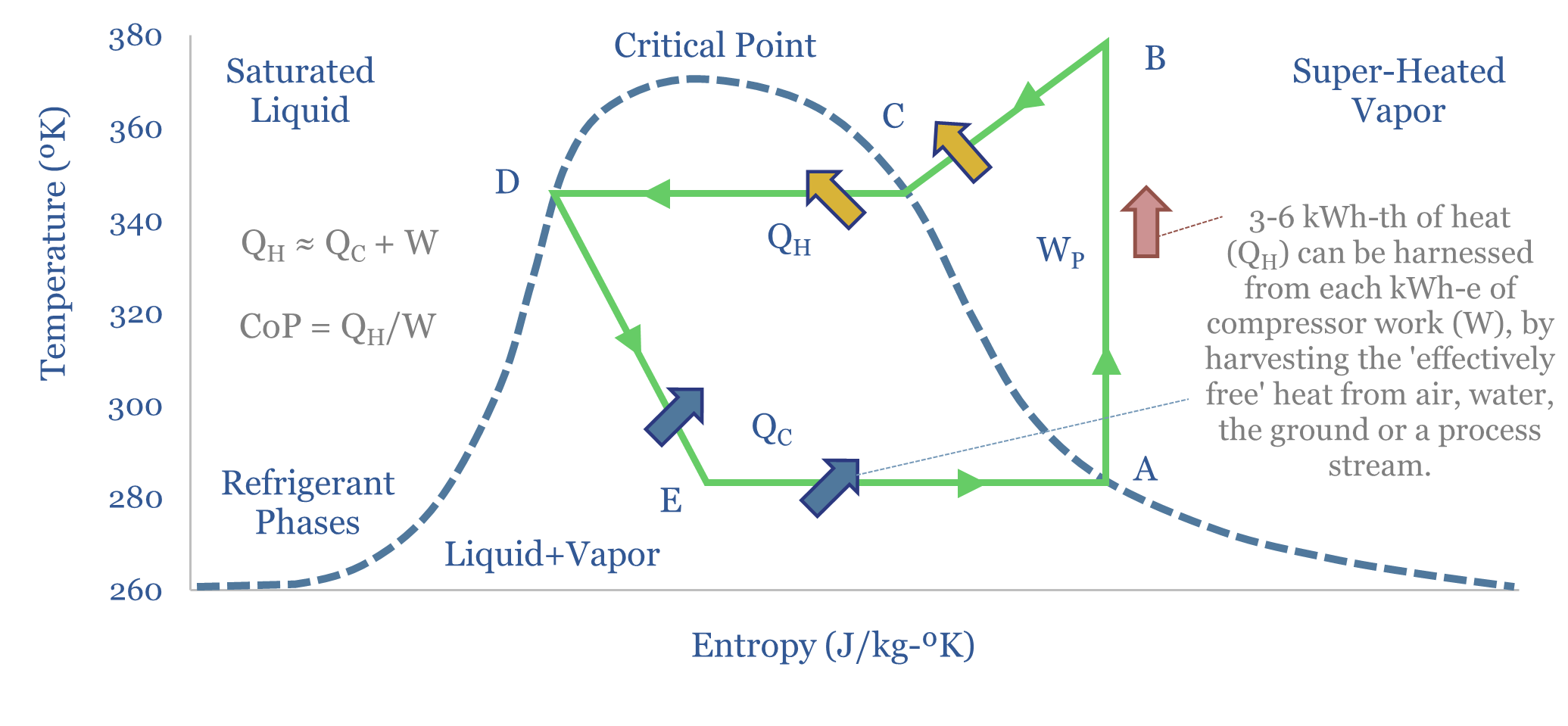
Could industrial heat pumps accelerate, especially due to excess renewables, thereby stoking load growth, and displacing natural gas? This 14-page report finds the economics are more challenging than expected. Heat pumps fare best in specific contexts. Load growth mainly hinges on AI.
-
Gas turbine manufacturing by company by facility?
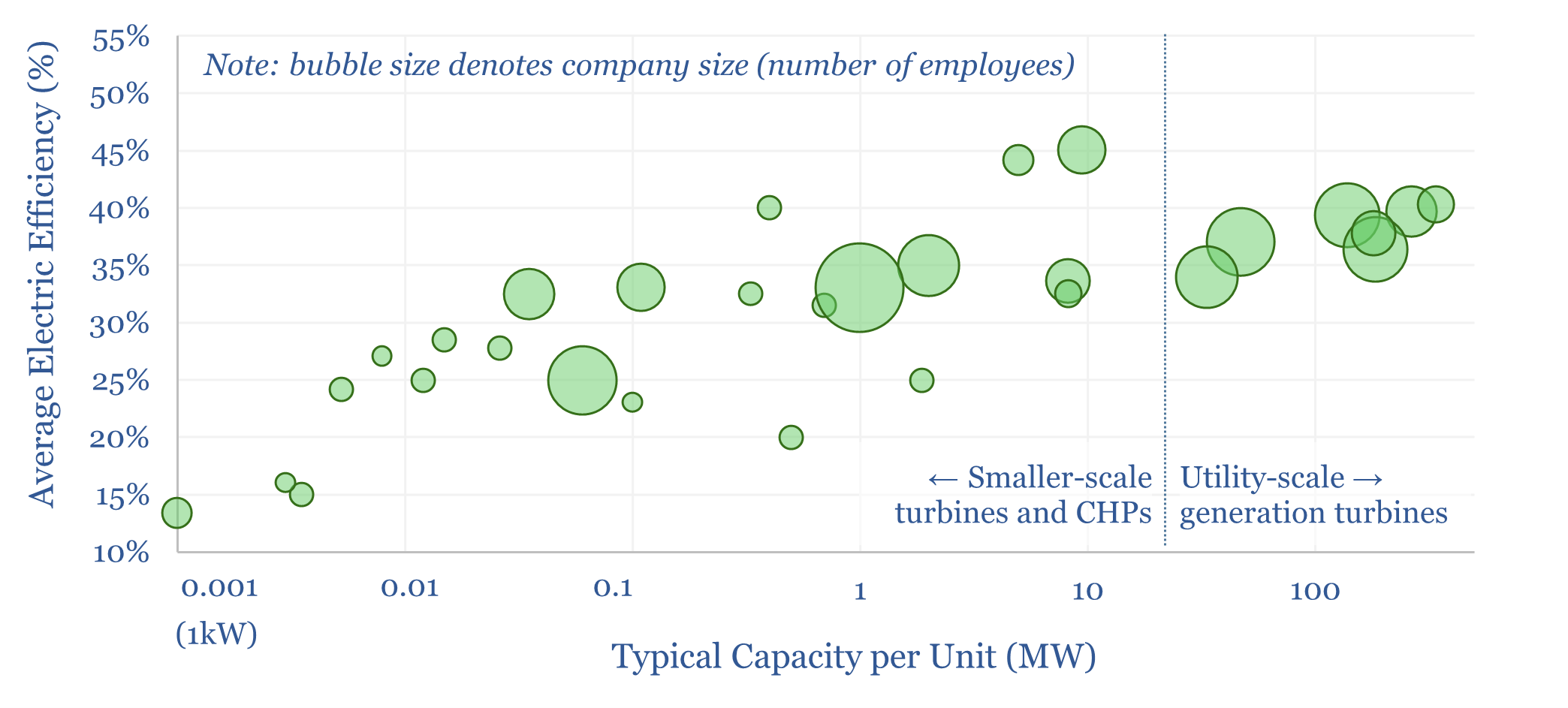
This data-file profiles gas turbines and gas turbine manufacturing capacity by company. 30 companies are profiled, including the ‘big three’ – GE Vernova, Siemens Energy and Mitsubishi Heavy. 100 gas turbines are profiles. And 25 gas turbine manufacturing facilities are also covered, in order to estimate gas turbine manufacturing capacity by region and by company.
-
Global lithium production: by project, by country, by resource?

Global lithium production, by project, by country, by resource type, and over time, are aggregated in this data-file, by tabulating details of each project. There is spare capacity in 2026, especially from Australian mine projects, but the current project pipeline sugggests a 20-30% market deficit in 2030-35.
-
Oil project developments: by region over time?
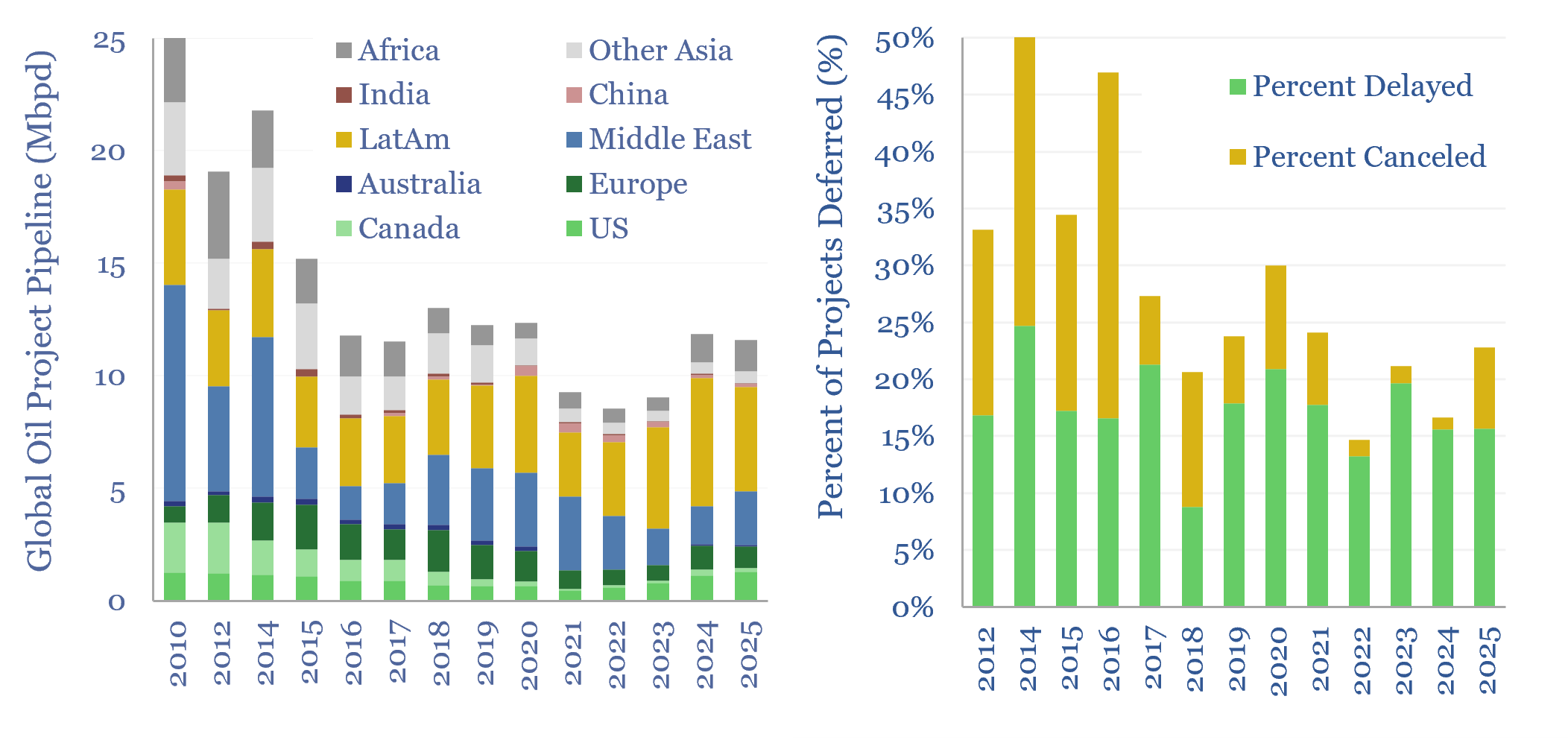
This data-file tracks conventional oil projects, by region, by development type, and over time. Over 10Mbpd of conventional oil projects are currently under development in 2025, representing $500bn of capex. What does this mean for oil markets?
-
Copper: the economics?
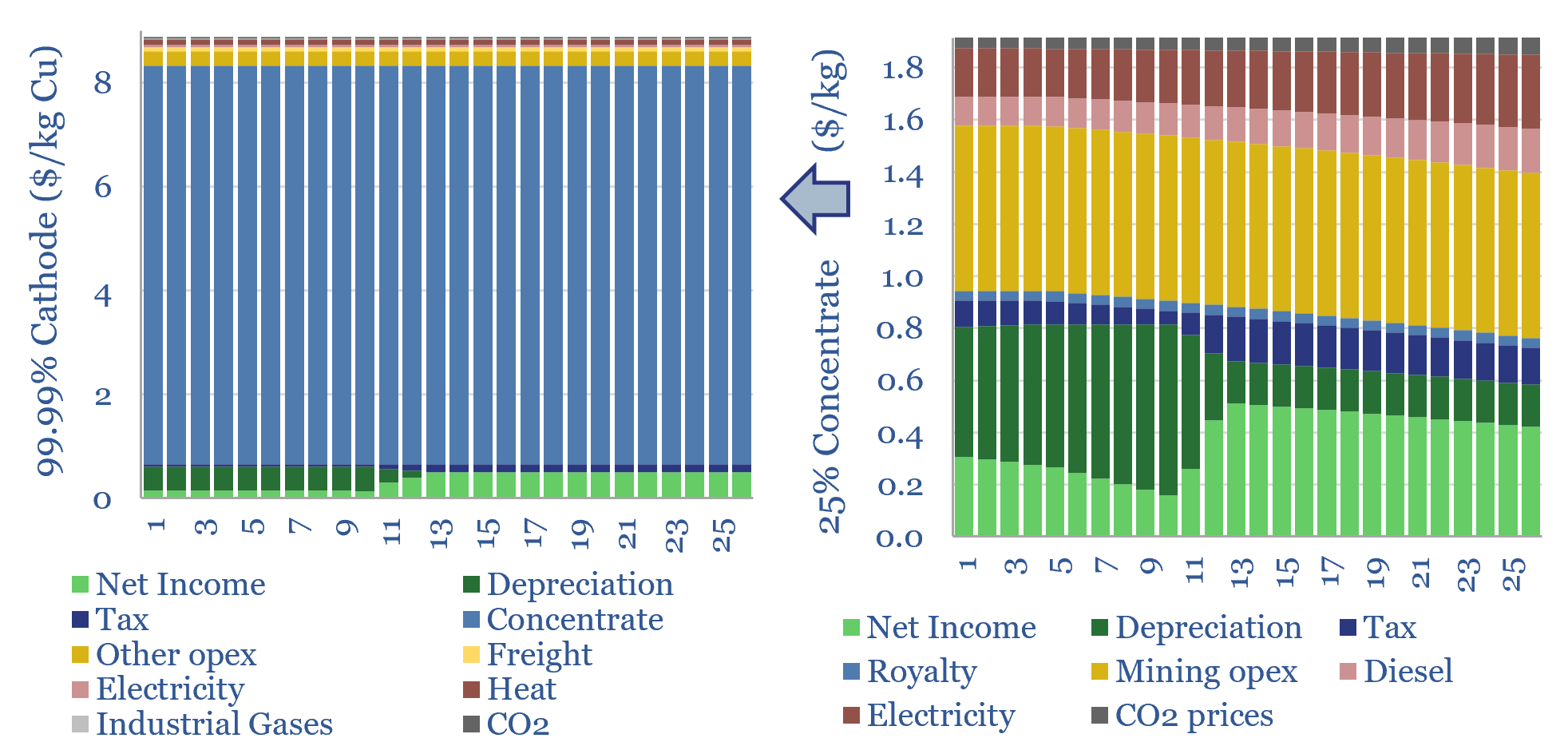
The economic cost of copper production is built up from first principles in this model, from mine, to concentrator, to smelter to 99.99% pure copper cathodes. Our base case is $9/kg copper cathode, for a 10% IRR, with 4 tons/ton CO2 intensity, after starting from an 0.45% ore grade. But higher IRRs may be needed…
-
Australia energy supply-demand model?
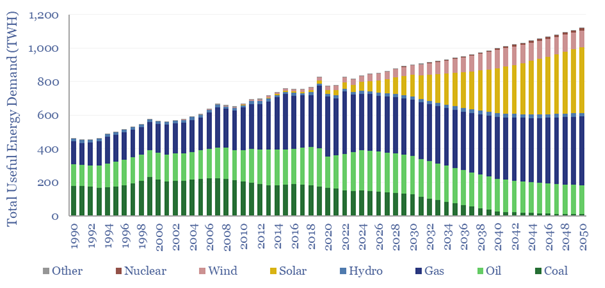
Australia’s useful energy consumption rises from 820TWH pa in 2023, by 1.2% pa 1,100 TWH pa in 2050. As a world-leader in renewables, it makes for an interesting case study. This Australia energy supply-demand model is disaggreated across 215 line items, broken down by source, by use, from 1990 to 2023, and with our forecasts…
-
Power markets: classical economics?

This 15-page report outlines how wholesale power markets work, which helps to understand four emerging controversies. Wholesale power prices are governed by classic microeconomics: day-ahead markets clear at the intersection of downward sloping demand curves and upward sloping supply curves.
-
Electricity pricing: time-of-use tariffs by region?

Time-of-use tariffs mean end customers’ electricity prices are not fixed, but vary across time. ToU tariffs can reduce peak power demand by 10% on average. This data-file tracks the share of customers with time-of-use tariffs, by region, and then focuses in on interesting countries.
-
Power electronic capital goods: margins over time?
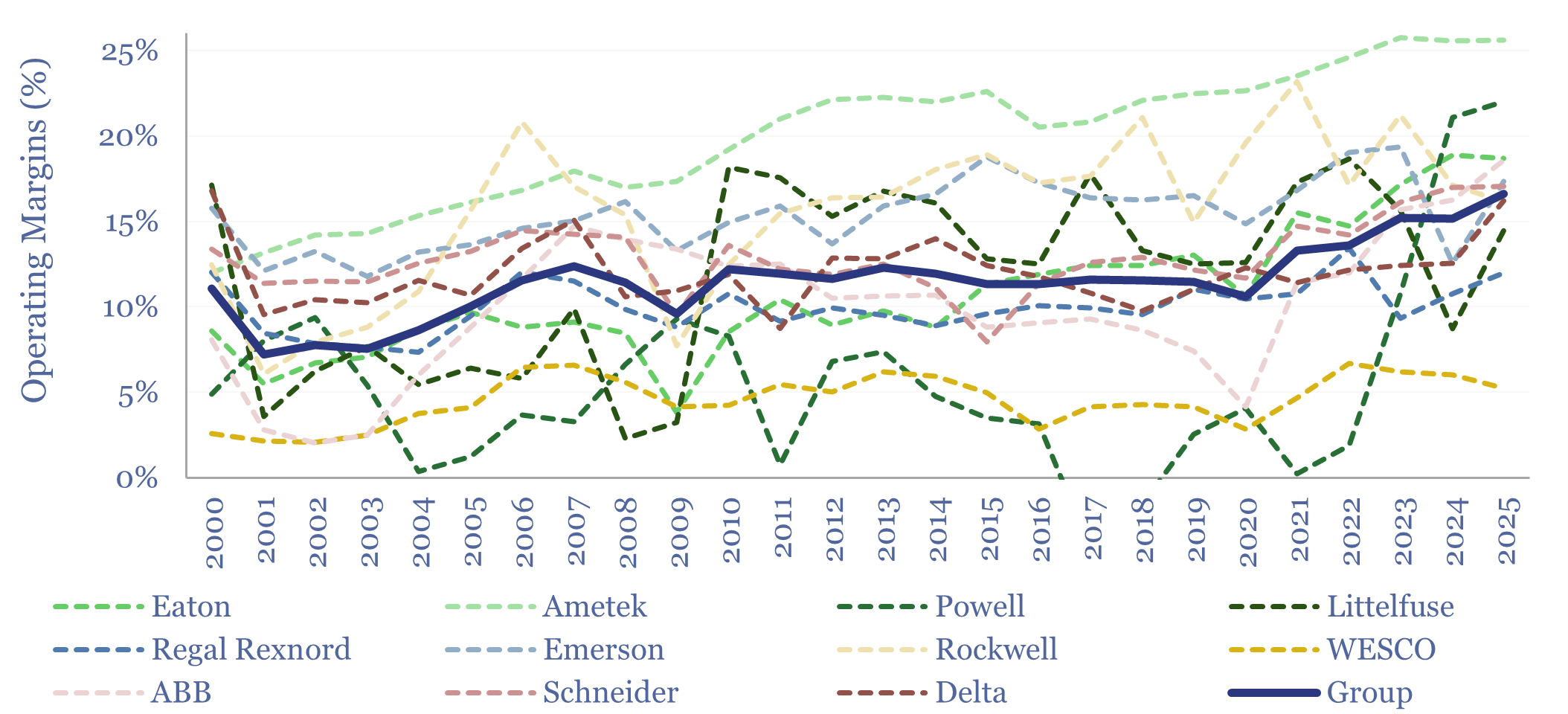
This data-file tracks power electronic capital goods company margins over time, rising from 10% in 2000-2010, to 12% in 2010-20 and then inflecting to a record 16% in 2025. The increase is mostly driven by higher- and medium-voltage categories, linked to re-accelerating load growth in the United States. Details on each company are in the…
-
Seismic costs: 2D, 3D, onshore, offshore and microseismic?
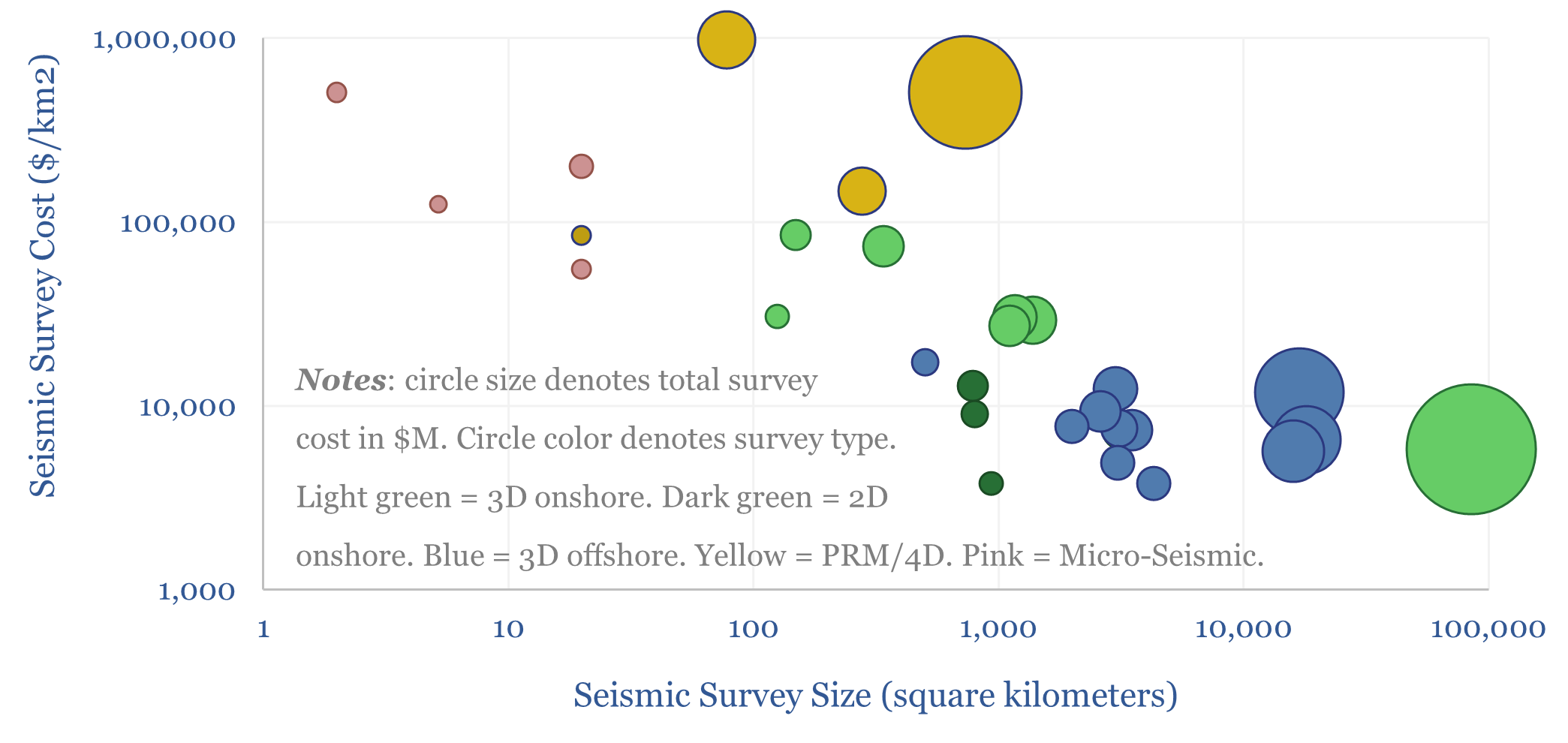
Seismic survey costs are tabulated in this data-file based on public domain disclosures from E&Ps and seismic companies. Seismic costs can range from $4,000 to $1M per square kilometer, depending on the survey size, resolution, timing, and location. Key case studies are in the data-file.
Content by Category
- Batteries (96)
- Biofuels (44)
- Carbon Intensity (48)
- CCS (64)
- CO2 Removals (9)
- Coal (41)
- Commentary (65)
- Company Diligence (105)
- Data Models (925)
- Decarbonization (162)
- Demand (131)
- Digital (89)
- Downstream (47)
- Economic Model (221)
- Energy Efficiency (76)
- Hydrogen (63)
- Industry Data (309)
- LNG (56)
- Materials (86)
- Metals (88)
- Midstream (45)
- Natural Gas (161)
- Nature (76)
- Nuclear (28)
- Oil (176)
- Patents (39)
- Plastics (44)
- Power Grids (156)
- Renewables (153)
- Screen (138)
- Semiconductors (35)
- Shale (58)
- Solar (72)
- Supply-Demand (53)
- Vehicles (94)
- Video (24)
- Wind (46)
- Written Research (408)