-
Explaining US gasoline?
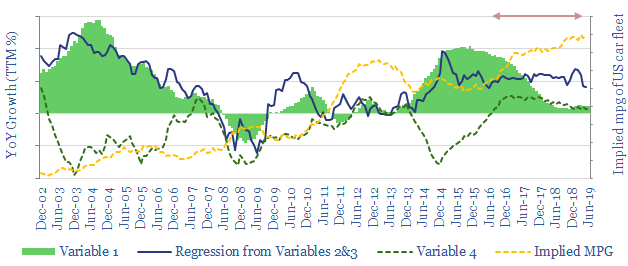
Gasoline demand is stalling in summer-2019, down -0.4% YoY vs a prior 15-year trend for 0.4% pa growth. The cause is urban Vehicle Miles Driven, which has slowed 1.4pp, defying historical correlations with GDP and gasoline prices. Possible structural explanations are explored. The full data-file contains monthly data on the drivers of gasoline, going back…
-
CO2-EOR in Shale: the economics
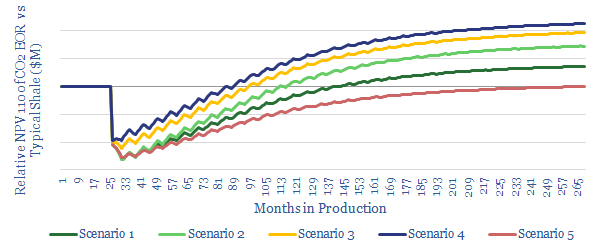
We model the economics for CO2-EOR in shales, after interest in this topic spiked 2.3x YoY in the 2019 technical literature. We see 15% IRRs in our base case, creating $1.6M of incremental value per well, uplifting type curves by 1.75x. Greater upside is readily possible. Most exciting is the prospect for Permian EOR to…
-
Mero Revolutions: countering CO2 in pre-salt Brazil?
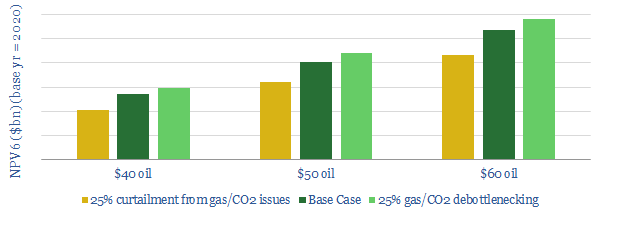
Petrobras, Shell, TOTAL and two Chinese Majors are pushing the boundaries of deep-water technology to develop the Mero oilfield. But the distribution of possible NPV outcomes is very broad, at c$6bn. Challenges remain. The ingenuity required to overcome them should not be under-estimated. Further prizes may be unlocked in the process.
-
Subsea Separation: the elusive history
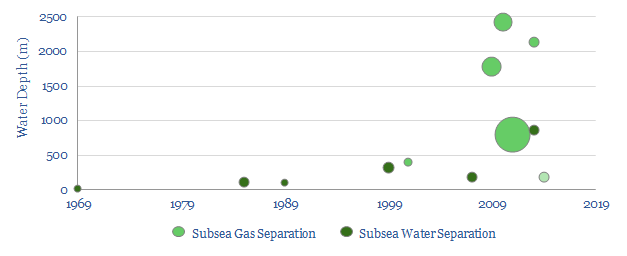
This database covers all 14 subsea separation projects across the history of the oil industry, going back to the “dawn of subsea” in 1969. The technology has been elusive, with just a handful of applications, the largest of which is 2.3MW. This could change, with the pre-salt partners pioneering an unprecedented 6MW facility at Mero.
-
Pre-Salt Brazil: FPSO Tracker
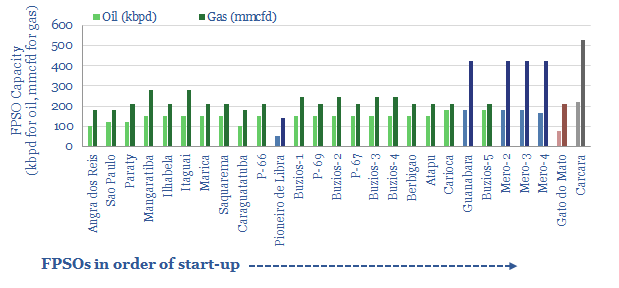
This data-file tracks construction progress of 30 FPSOs being deployed in the Brazilian pre-salt. In each case, we quantify the vessel’s oil and gas handling capacity, development timing and news flow. Pipeline bottlenecks are emerging, and will only be able to export one-third of the pre-salt gas volumes by 2025. The rest must be re-injected.
-
Mero: Economic Model
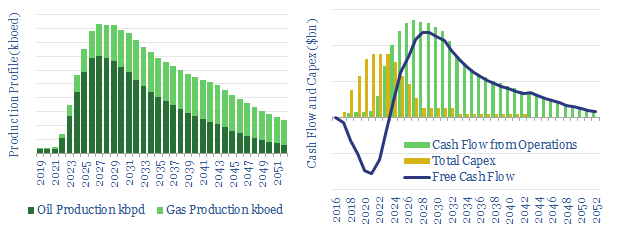
We have modeled the economics of the Mero oilfield (formerly known as Libra), using public disclosures and our own estimates. Our model spans >250 lines of inputs and outputs, so you can flex key assumptions. In particular, we have tested the impact of different gas bottleneck scenarios on the field’s NPV.
-
Does Technology Drive Returns?
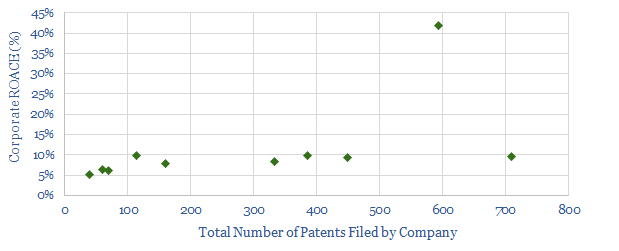
30-60% of Oil Majors’ ROACE is explained by their technologies. This is our finding from correlating 3,000 oil patents versus returns on capital. Technology leaders can generate 2x higher corporate ROACEs. Downstream segments are most sensitive.
-
Lula: how much growth left?
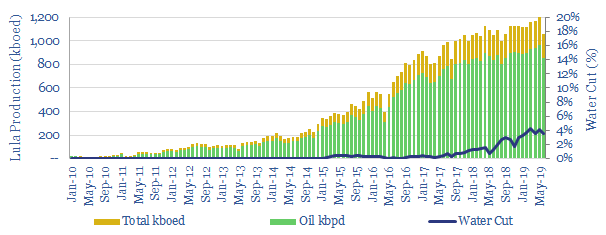
This data-file tracks the Lula oilfield, well-by-well, FPSO-by-FPSO, aggregating data from over 100 sources. The data inform our production forecasts for 2H19 and 1H20, which matter for oil markets; and for pre-salt producers. The data show wne FPSO is now constrained by gas-handling. Six other FPSOs are negotiating water-cuts. So is Lula maturing?
-
TSE Temporary Payment Link
Thank you for remitting a payment through the TSE website. We are looking forward to working with you.
-
Decline Rates: the consensus?
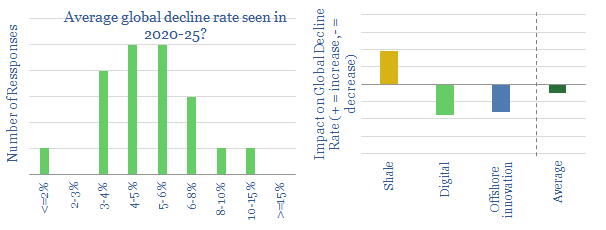
Global decline rates are currently seen at 5.2% pa in 2020-25, according to our survey. This is lower than historical consensus of 5.7%. Although shale is a headwind, it may be offset by the rise of new digital and offshore technologies. Hence modestly more participants see 2020-25 oil markets as over-supplied.
Content by Category
- Batteries (95)
- Biofuels (44)
- Carbon Intensity (48)
- CCS (64)
- CO2 Removals (9)
- Coal (41)
- Commentary (65)
- Company Diligence (104)
- Data Models (920)
- Decarbonization (162)
- Demand (129)
- Digital (86)
- Downstream (47)
- Economic Model (220)
- Energy Efficiency (76)
- Hydrogen (63)
- Industry Data (308)
- LNG (56)
- Materials (86)
- Metals (88)
- Midstream (45)
- Natural Gas (161)
- Nature (76)
- Nuclear (28)
- Oil (175)
- Patents (39)
- Plastics (44)
- Power Grids (155)
- Renewables (153)
- Screen (136)
- Semiconductors (35)
- Shale (58)
- Solar (72)
- Supply-Demand (53)
- Vehicles (95)
- Video (24)
- Wind (47)
- Written Research (405)