-
Global gas prices: by country?

Global gas prices by country are often measured at the world-famous delivery points for liquids futures contracts, such as Henry Hub and the Netherlands’ TTF. This data-file takes a broader approach, aggregating the annual gas prices by country across twenty geographies.
-
Energy intensity by country: how does it change as income increases?
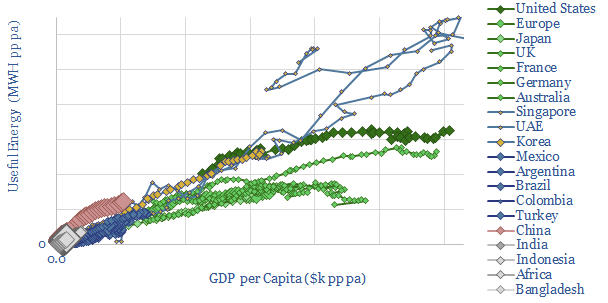
This data-file assesses 25 countries’ and regions’ energy consumption, as those countries developed over the past 50-years. Early industrialization is most energy intensive, rising 1:1 with GDP growth. In developed countries, energy use plateaus at c25MWH pp pa and decarbonization priorities step up sharply.
-
Microgrids: plug-and-play?

Microgrids are accelerating due to perceived power grid bottlenecks and rising reliability requirements, especially at AI data-centers. Hence this 17-page report explores how microgrids work, what they cost, where they make economic sense, and finds microgrid opportunities, especially with an increasingly plug-and-play supply chain.
-
Nuclear equipment manufacturers: company screen?
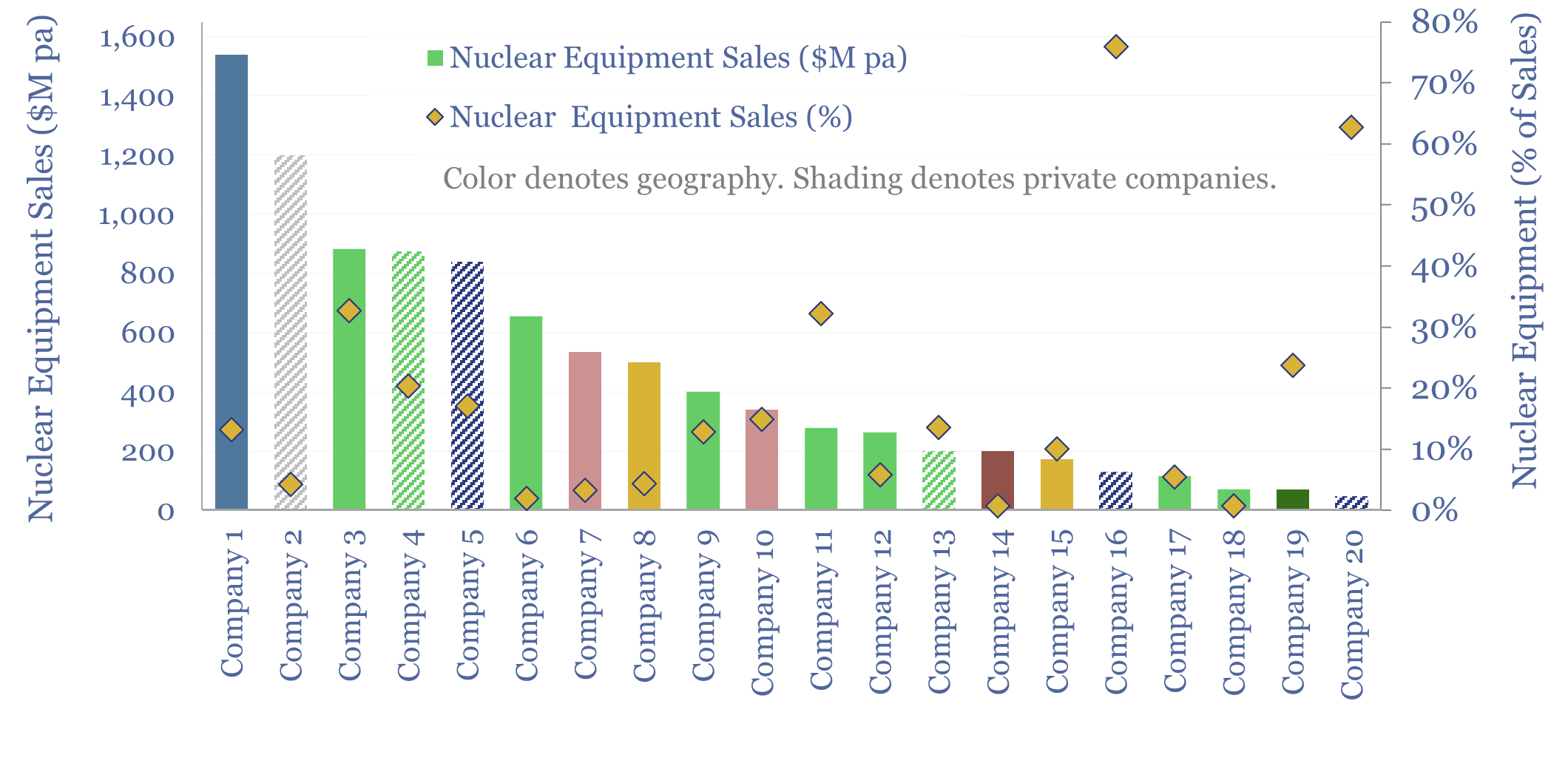
Nuclear equipment manufacturers are captured in this company screen, covering 20 companies, with $10bn pa of revenues, c10% EBIT margins, and a 5% average sales exposure to nuclear components. Our notes also capture key details, equipment specializations, and recent focuses of each company.
-
ELCCs: reliability of power sources?

ELCC denotes the Effective Load Carrying Capacity of power generation, illustrating how reliably that capacity will be available during times when grids are strained. ELCCs are highest for nuclear, gas generation and coal; lower for batteries, hydro and offshore wind; lowest for onshore wind and solar. ELCC by power source varies, however.
-
Going autonomous: Martin Viecha & Rob West podcast

This podcast explores the future of autonomous mobility, via a discussion between Martin Viecha, founder and CEO of MV Motion, and Rob West, founder and lead analyst of Thunder Said Energy. Autonomous mobility is potentially now at a biting point for transforming urban mobility, accelerating urban EVs, and also oil demand for long-distance autonomous ICEs?
-
Global LNG: transformed supply chain?

The global LNG supply chain has been through a major transformation: restructurings, ramifying process technologies, the rise of BAHXs, and for the first time in 2025+, a truly integrated equipment supplier. Are terms of trade improving for project developers? Who wins future order flow? This 16-page report contains our outlook.
-
Building automation: AI, KNX and smart energy savings?
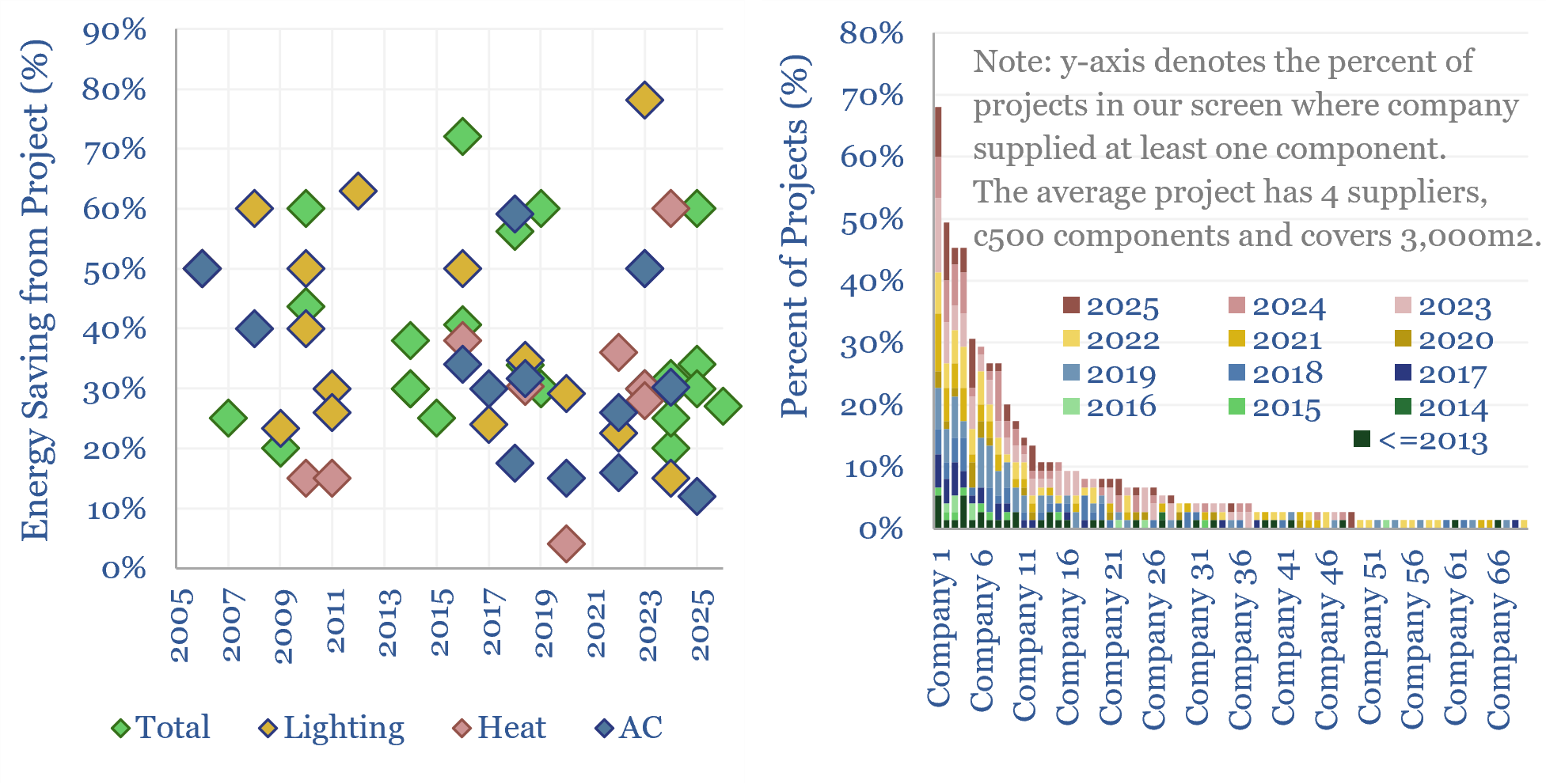
Building automation via smart energy projects are captured in this data-file, using sensors, KNX and/or AI. Optimizing lighting, heating, AC and overall energy use saves 35% energy on average. Leading suppliers of the underlying sensors and drivers are also tabulated across past projects.
-
Microgrids: the economics?
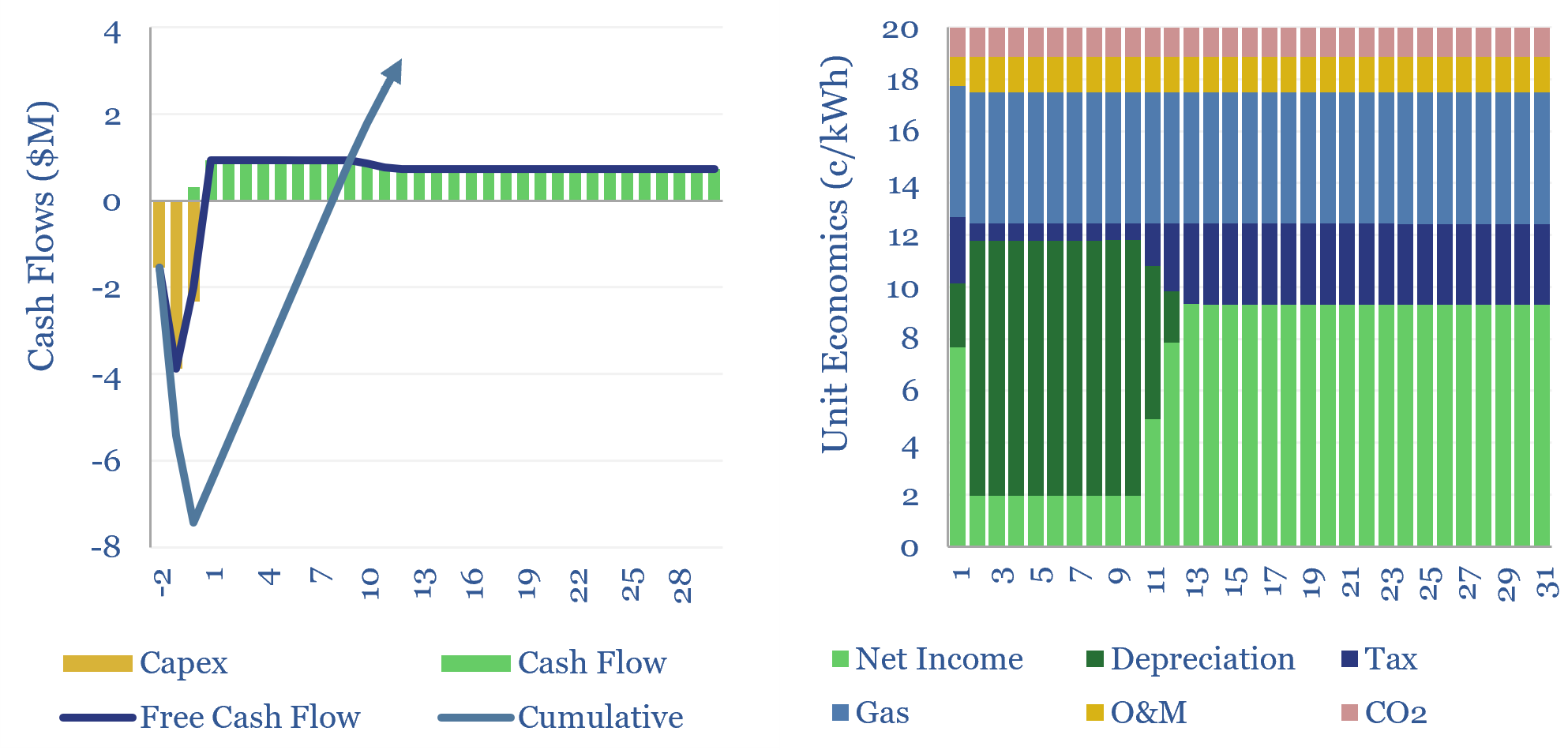
Microgrid economics are captured in this data-file. A 20c/kWh levelized cost of electricity is needed to generate a 10% IRR on a typical $5,000/kW system, sourced by solar, batteries and gas generation, plus controllers, switchgear and instrumentation.
-
Microgrid companies: leading companies in microgrids?
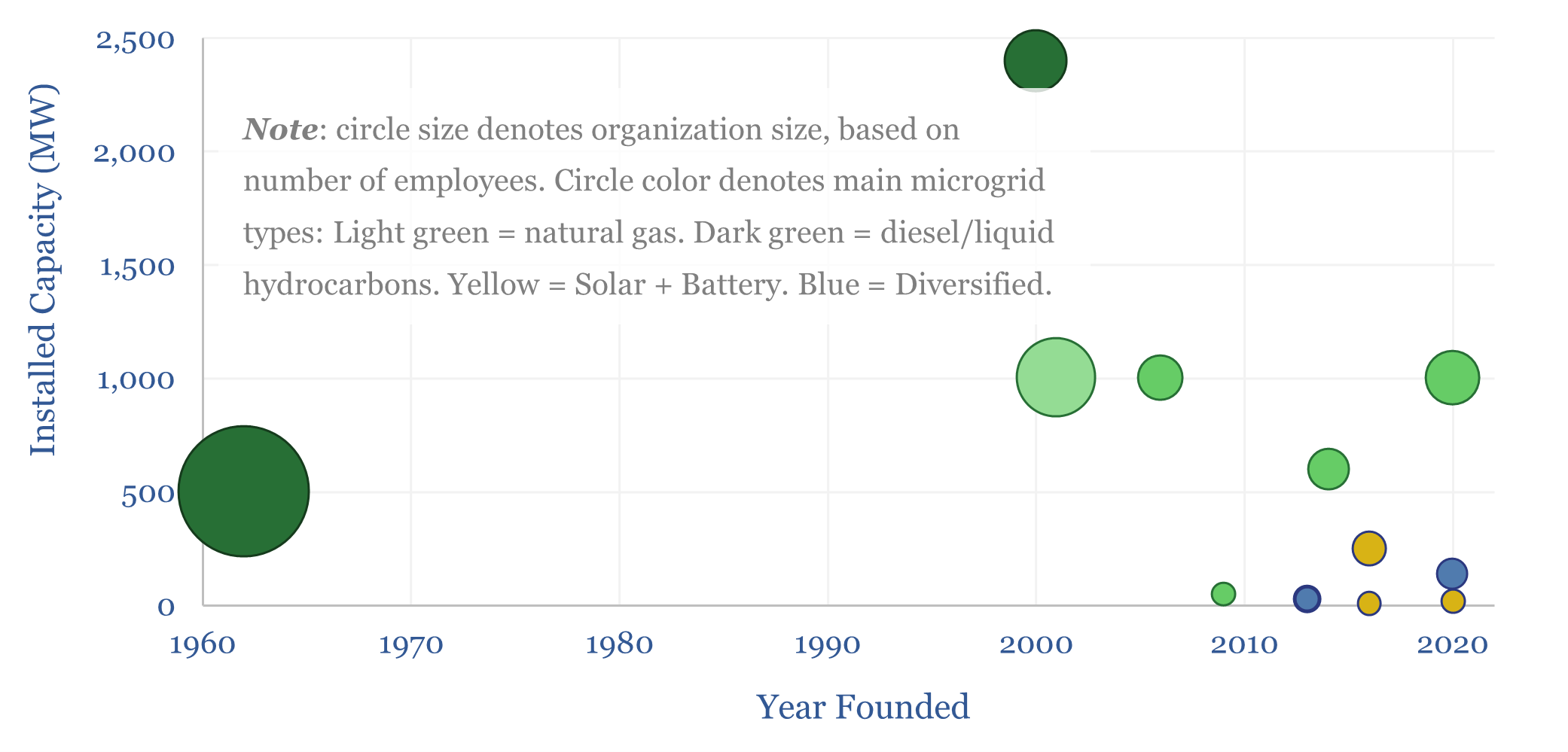
This data-file profiles microgrid companies, which specialize in the engineering, procurement, installation and operation of microgrids. These companies help to provide reliable power; either in locations that are not served by the T&D network, or with the capability of “islanding” from the main grid amidst grid disruptions. A dozen companies stood out.
Content by Category
- Batteries (96)
- Biofuels (44)
- Carbon Intensity (48)
- CCS (64)
- CO2 Removals (9)
- Coal (41)
- Commentary (65)
- Company Diligence (105)
- Data Models (924)
- Decarbonization (162)
- Demand (131)
- Digital (87)
- Downstream (47)
- Economic Model (221)
- Energy Efficiency (76)
- Hydrogen (63)
- Industry Data (308)
- LNG (56)
- Materials (86)
- Metals (88)
- Midstream (45)
- Natural Gas (161)
- Nature (76)
- Nuclear (28)
- Oil (176)
- Patents (39)
- Plastics (44)
- Power Grids (156)
- Renewables (153)
- Screen (138)
- Semiconductors (35)
- Shale (58)
- Solar (72)
- Supply-Demand (53)
- Vehicles (94)
- Video (24)
- Wind (47)
- Written Research (407)