-
Biofuels: better to bury than burn?
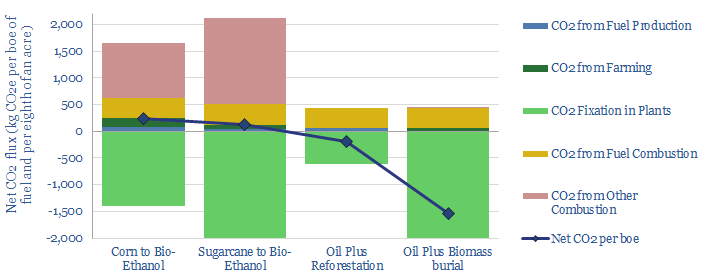
The global bioethanol industry could be disrupted by a carbon price. Somewhere between $15-50/ton, it becomes more economical to bury the biofuel crop, rather than convert it into biofuels. This would remove 8x more CO2 per acre, at a lower total cost. Ethanol mills and blenders would be displaced.
-
Biomass to biofuel, or biomass for burial?
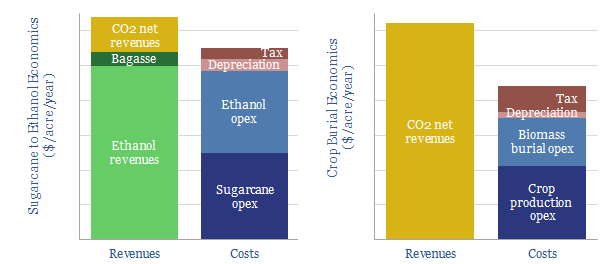
Greater decarbonization at a lower cost is achievable by burying biomass (such as corn or sugarcane) rather than converting it into bio-ethanol. This model captures the economics. Detailed costs and CO2 comparisons are shown under different iterations.
-
US ethanol plants: what CO2 intensity?
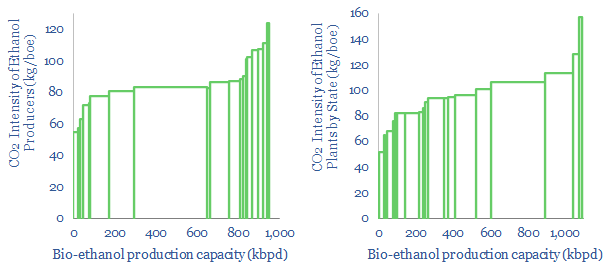
US bioethanol plants produce 1Mbpd of liquid fuels, with an average CO2 intensity of 85kg/boe. Overall, corn-based bioethanol has c40% lower CO2 than oil products. We screened the leaders and laggards by CO2-intensity, covering Poet, Valero, Great Plains, Koch, Marathon and White Energy.
-
US shale: the quick and the dead?
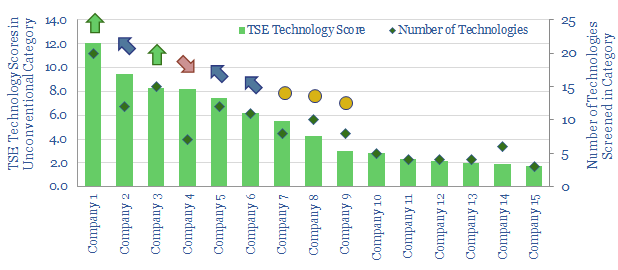
It is no longer possible to compete in the US shale industry without leading digital technologies. This 10-page note outlines best practices, process by process, based on 500 patents and 650 technical papers. Chevron, Conoco and ExxonMobil lead our screens. Falling from the leader-board is EOG, whose long-revered technical edge may have been eclipsed.
-
Solar water heaters: the economics?
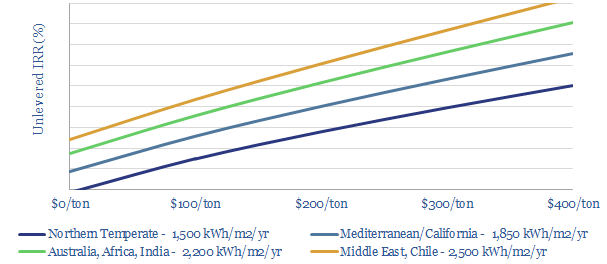
Under our base case estimates, a $130/ton CO2 price is required to achieve passable economics and incentivize rooftop solar heaters. Once installed, solar heaters save around 1T of CO2 per household per year and lower water heating bills by 50-80%. This data-file models the economics.
-
Conservation agriculture: farming carbon into soils?
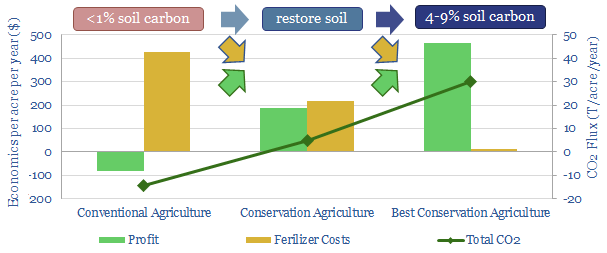
Conservation agriculture builds up carbon in soil. It can sequester 3-15 bn tons of CO2 per year, generating carbon credits, while restoring loss-making farmlands to exceptional profitability. Fertilizer demand would be decimated. This 17-page report outlines the opportunity, costs, CO2-removal, winners and losers.
-
Restoring soil carbon: the economics?
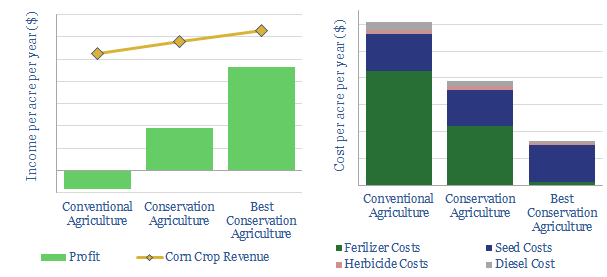
We model the economics for conservation agriculture to restore soil carbon. 5-30T of CO2 can be sequestered per acre per year, while deflating farm costs by 36-73% and raising yields 10-20%. This would transform crop-growing economics from marginal to material.
-
LNG: deep disruptions?
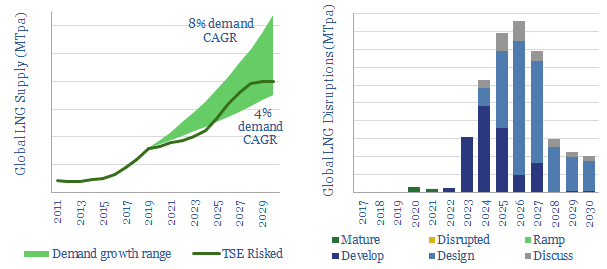
The last oil industry crisis, in 2014-16, slowed down LNG project progress, setting the stage for 20-60MTpa of under-supply in 2021-23. The current COVID-crisis could cause a further 15-45MTpa of supply-disruptions, after looking line-by-line through our database of 120 projects. The result is a potential 100MTpa shortfall in 2024-26. This is negative for energy transition,…
-
Oil markets: the aftermath?
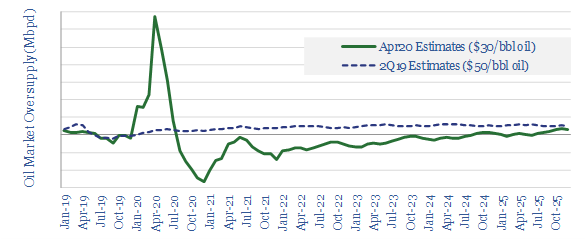
Oil and gas pricing could rebound sharply to the upside after the COVID crisis. Where we have long feared 2-3Mbpd of structural over-supply, continuing out to 2025, our new models suggest an 85% chance of under-supplied markets from mid-2021 onwards, following the loss of 4.5Mbpd of shale growth and c3Mbpd of greenfield growth. This 4-page…
-
Leading Companies Commercialising Heat Pumps?
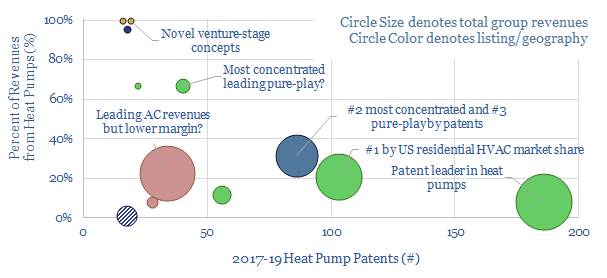
Heat pumps can halve the CO2 intensity of residential heating. Hence we have screened for the leading companies, focusing in upon 4,000 Western-centric patents from 2017-19. The space is competitive. 7 public companies and 4 private companies stand out, with concentrated exposure to the theme.
Content by Category
- Batteries (96)
- Biofuels (44)
- Carbon Intensity (48)
- CCS (64)
- CO2 Removals (9)
- Coal (41)
- Commentary (65)
- Company Diligence (104)
- Data Models (922)
- Decarbonization (162)
- Demand (129)
- Digital (86)
- Downstream (47)
- Economic Model (221)
- Energy Efficiency (76)
- Hydrogen (63)
- Industry Data (308)
- LNG (56)
- Materials (86)
- Metals (88)
- Midstream (45)
- Natural Gas (161)
- Nature (76)
- Nuclear (28)
- Oil (176)
- Patents (39)
- Plastics (44)
- Power Grids (156)
- Renewables (153)
- Screen (137)
- Semiconductors (35)
- Shale (58)
- Solar (72)
- Supply-Demand (53)
- Vehicles (95)
- Video (24)
- Wind (47)
- Written Research (407)