-
Permian CO2 Emissions by Producer
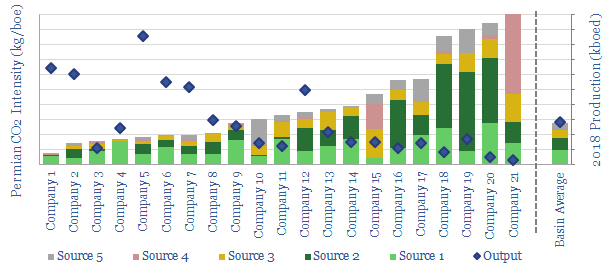
This data-file tabulates Permian CO2 intensity, based on regulatory disclosures from 20 of the leading producers to the EPA. The data are disaggregated by company, across 18 different categories, such as combustion, flaring, venting, pneumatics, storage tanks and methane leaks. There are opportunities to lower emissions.
-
Portfolio Construction for Energy Majors?
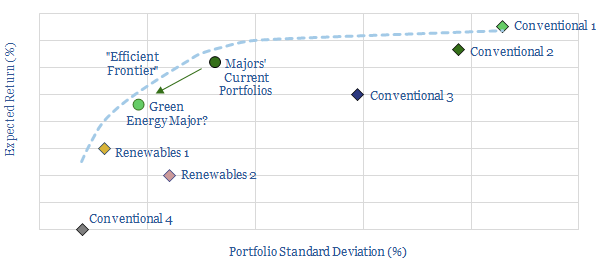
This data-model calculates risk-adjusted returns for different portfolio weightings in the energy sector, as companies diversify across upstream, downstream, chemicals, corporate; and increasingly, renewables and CCS. A set of optimal portfolio allocations are calculated, which maximise Sharpe ratios. You can also stress-test your own inputs.
-
Hybrid horizons: industrial use of batteries?
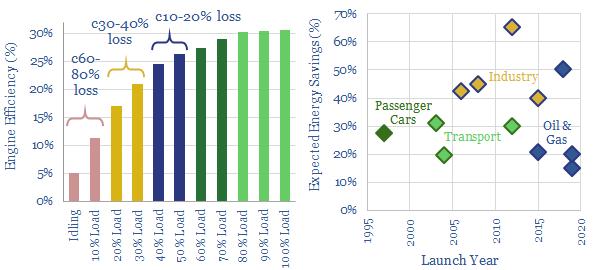
Gas and diesel engines can be 30-80% less efficient when idling, or running at low loads. This is the rationale for hybridizing engines with backup batteries. Industrial applications are increasing, achieving 30-65% efficiency gains, across multiple industries. In 2018-19, the biggest new horizon has been in oil and gas, including hybrid rigs, supply vessels, construction…
-
CO2 Intensity of Drilling Oil Wells?
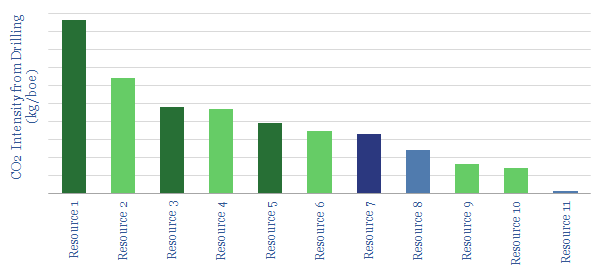
This data-file estimates the CO2 intensity of drilling oil wells, based on the fuel consumption of different rig types. Drilling wells is not the largest portion of the oil industry’s total CO2 intensity. Nevertheless there is a 50x spread between the best barrels at prolific onshore fields and the worst barrels at mature deepwater assets.
-
New Diverter Regimes for Dendritic Frac Geometries?
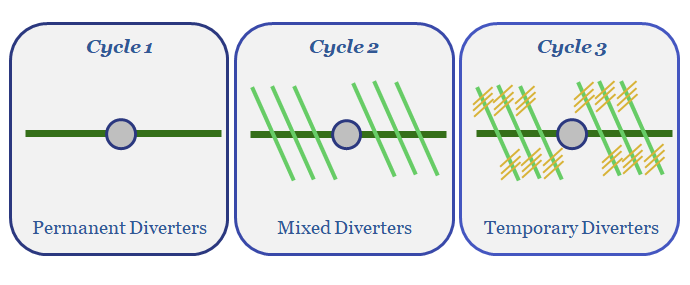
The key challenge for the US shale industry is to continue improving productivity per well. The process is increasingly being driven by Oil Majors and using data. This is illustrated by BP’s latest fracturing fluid patents, which optimise successive diverter compositions to create dendritic fracture geometries, to enhance stimulated rock volumes.
-
Decarbonise Downstream?
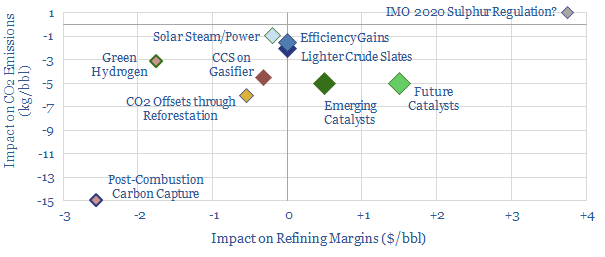
Refining has the highest carbon footprint in global energy. To improve, we find better catalysts are needed. Uniquely, they could cut CO2 by 15-30%, while also uplifting margins. Catalyst science is undergoing a digitally driven transformation. This 25-page note identifies the leaders.
-
Carbon Costs of IMO 2020?
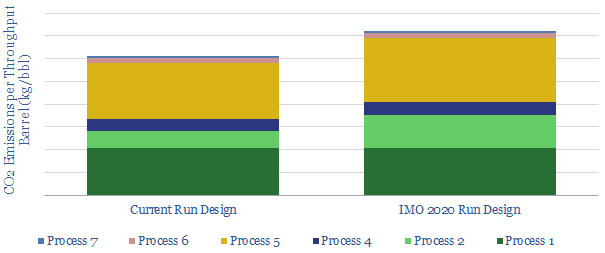
CO2 intensity of oil refineries could rise by 20% due to IMO 2020 sulphur regulations, if all high-sulphur fuel oil is upgraded into low-sulphur diesel, we estimate. The drivers are an extra stage of cracking, plus higher-temperature hydrotreating, which will also increase hydrogen demands. This one change could undo 30-years of efficiency gains.
-
Upgrading Catalysts: lower refinery temperatures and pressures?
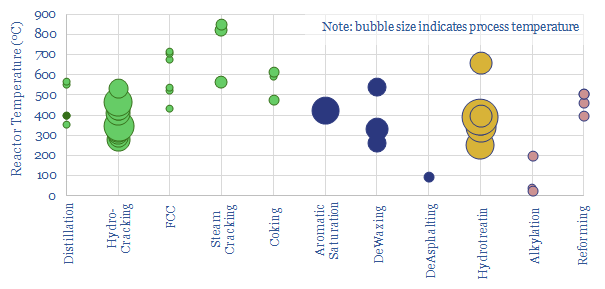
Refineries are CO2-intensive, as their average process takes place at 450C. But improved catalysts can help, based on reviewing over 50 patents from leading energy Majors, and their requisite temperatures and pressures. Combining all the best-in-class new catalysts, we think the average refinery could save 5kg/bbl of CO2 intensity.
-
Super-Computers at Oil Majors?
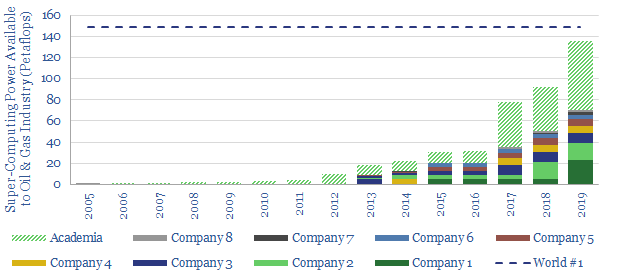
This data-file tabulates super-computing capacity possessed by leading companies in the energy industry. Computing capacity has risen 4x since 2016, and 70x since 2009. Main uses are seismic interpretation, reservoir modelling and for operational decision-making, which all increases efficiency. Leading companies are identified in the data-file.
-
Carbon Capture Costs at Refineries?
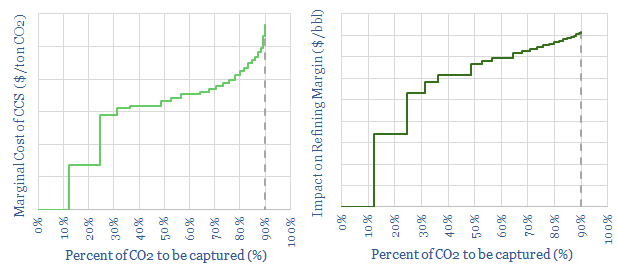
Refineries emit 1bn tons pa of CO2, or around 30kg per bbl of throughputs. Hence this model tests the relative costs of retro-fitting carbon capture and storage (CCS), to test the economic impacts. c10-20% of emissions will be lowest-cost to capture. The middle c50% will cost c3x more. But the final 25% could cost up…
Content by Category
- Batteries (96)
- Biofuels (44)
- Carbon Intensity (48)
- CCS (64)
- CO2 Removals (9)
- Coal (41)
- Commentary (65)
- Company Diligence (104)
- Data Models (922)
- Decarbonization (162)
- Demand (129)
- Digital (86)
- Downstream (47)
- Economic Model (221)
- Energy Efficiency (76)
- Hydrogen (63)
- Industry Data (308)
- LNG (56)
- Materials (86)
- Metals (88)
- Midstream (45)
- Natural Gas (161)
- Nature (76)
- Nuclear (28)
- Oil (176)
- Patents (39)
- Plastics (44)
- Power Grids (156)
- Renewables (153)
- Screen (137)
- Semiconductors (35)
- Shale (58)
- Solar (72)
- Supply-Demand (53)
- Vehicles (95)
- Video (24)
- Wind (47)
- Written Research (407)