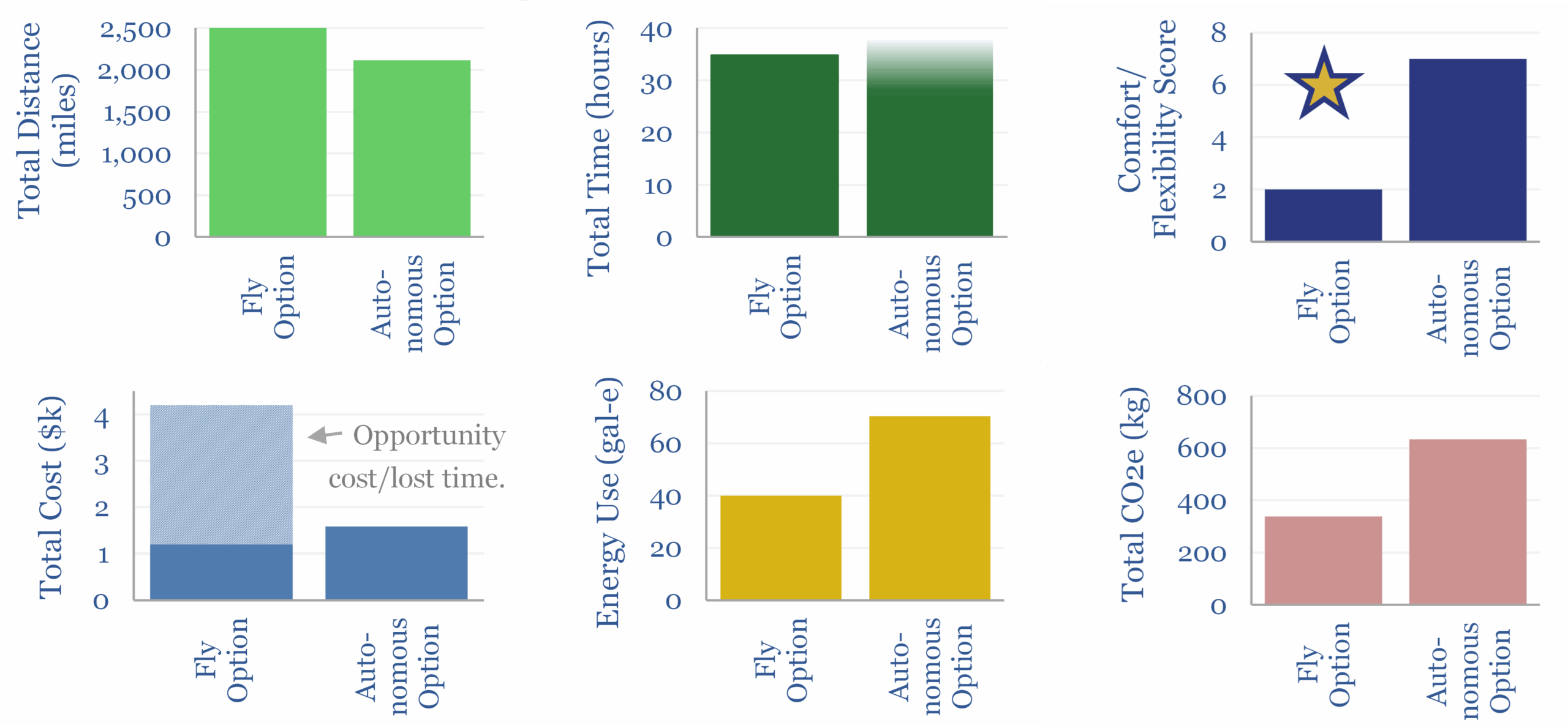
This 13-page report explores the upside in autonomous transport. We were recently invited to a fascinating company event in Leipzig, Germany. But it was too complex to reach by flying. It would have been doable in an autonomous vehicle, albeit using 2x more energy overall. Hence could autonomous vehicles unlock 5Mbpd of upside to global oil demand?
The road taken. Much of the analysis into autonomous vehicles looks at the range of travel trips, taken by consumers today, and how they could be served in the future by autonomous vehicles. This means substitution.
The road not taken. But a more interesting question concerns travel the range of travel trips NOT taken by consumers today, because they are too complex, lengthy, or costly. This means pure upside.
As one specific example, we were invited to attend the launch of the Skeleton SuperFactory, in Leipzig, Germany in November-2025. The trip would have been fascinating, especially as supercaps have featured in our 2025 research into backstopping the rapid load transients at ever-larger AI data centers. Recap on page 2.
However, it turned out to be painfully difficult to get to Leipzig at the right time, without spending c40-hours away from my desk, largely due to the ‘hub and spoke’ nature of today’s commercial aviation, as discussed on pages 3-4.
So what would an autonomous vehicle have to look like, to enable such a seamless, comfortable, door-to-door journey from my home to Leipzig, that I would actually have made the trip? Our answer is on pages 5-6.
Would it be economical? We assessed the economics of autonomous vehicles and concluded they would be competitive, on page 7.
Would it have been energy efficient? Total fuel use would have been 2x higher in an autonomous vehicle than in a plane, which achieves high fuel economy per passenger mile due to its load factor. Upside to long-term oil demand and to electricity demand are discussed on pages 8-9.
So is anyone actually developing the kinds of autonomous vehicles we have envisaged in this note, and particularly, for long-distance, high-comfort, transport? We reviewed fifteen autonomous vehicles concepts, their features, and key conclusions on pages 10-13.