Vehicles
-
Auto manufacturing: the economics?
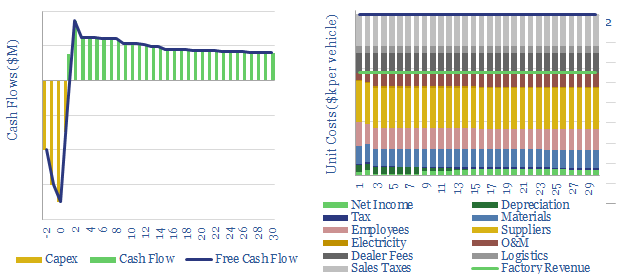
This is a simple model, to break down the $30k sales price of a typical mass-market automobile. c25% accrues to suppliers, c20% is sales taxes, c20% is dealer costs/logistics, c10% employees, c10% material inputs, c10% O&M, 1% electricity and c5% auto-maker margins. Prices may inflate 60% amidst industrial shortages.
-
EV fast charging: opening the electric floodgates?
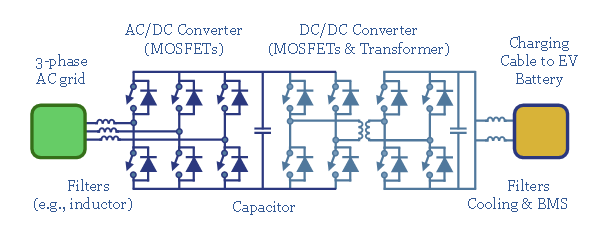
This 14-page note explains the crucial power-electronics in an electric vehicle fast-charging station, running at 150-350kW. Most important are power-MOSFETs, comprising c5-10% of charger costs. The market trebles by the late 2020s.
-
Electric vehicles: chargers of the light brigade?
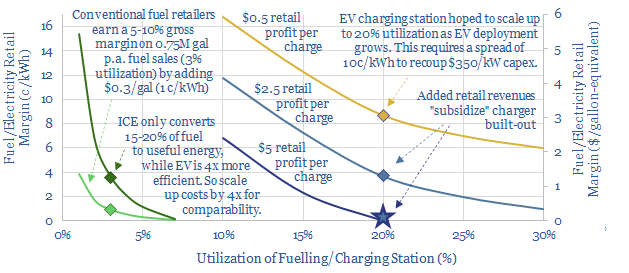
This 14-page note compares the economics of EV charging stations with conventional fuel retail stations. Our main question is whether EV chargers will ultimately get over-built. Hence prospects may be best for charging equipment and component manufacturers.
-
Electric motors: state of flux?
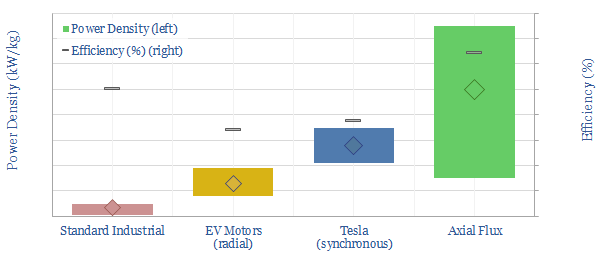
This 15-page note explores whether axial flux motors could come to dominate in the future of transportation. They promise 2-3x higher power densities, even versus Tesla’s world-leading PMSRMs; and 10-15x higher than clunky industrial AC induction units; while also surpassing c96% efficiencies.
-
Axial flux motors: leading companies and products?
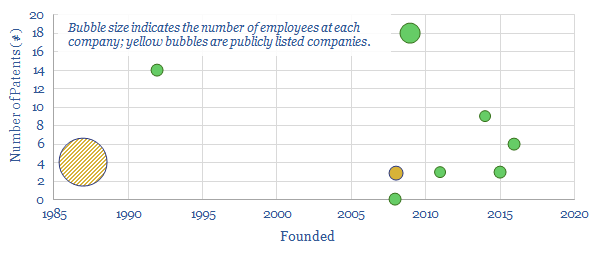
This data-file profiles leading companies and products in the space of axial flux motors, with an average power density of almost 8kW/kg, which is 10x higher than a typical AC induction motor in heavy industry. Leading companies are profiled, based on reviewing over 1,200 patents.
-
Mine trucks: transport economics?
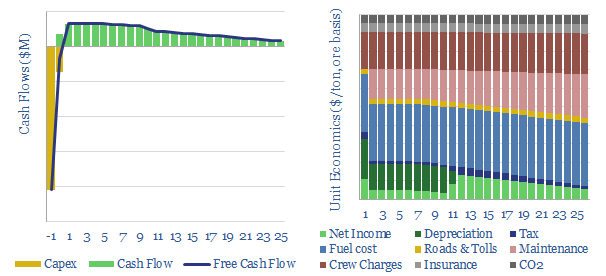
There are around 50,000 giant mining trucks in operation globally. The largest examples are 15m long, 10m wide, 8m high, can carry around 350-450 tons and reach top speeds of 40mph. This data-file captures the economics, costs and inflationary impacts of decarbonization.
-
LNG transport: shipping economics?
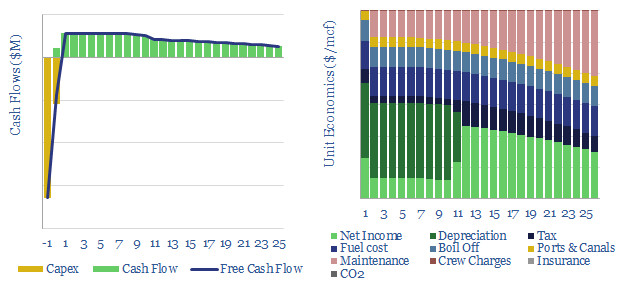
This data-file breaks down the cost of shipping cryogenic cargoes in seaborne tankers. LNG costs $1-3/mcf. The most important input variable is transport distance. Although switching to e-fuels (green hydrogen, ammonia, methanol) can double total cost.
-
ChargePoint: electric vehicle charging edge?
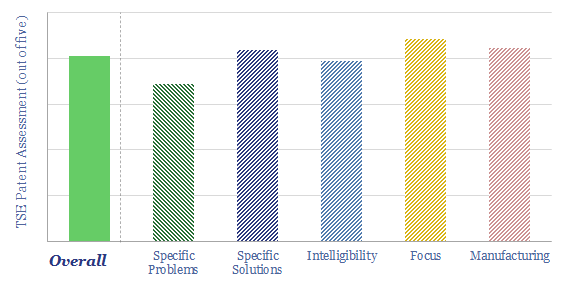
ChargePoint is the leading provider of Level 2 EV charging stations in the US and aims to help electrify mobility and freignt. Our review finds a library of simple, clear, specific and easy-to-understand patents. More debatable are the technology edge and future IP defensability.
-
Vehicle mass: what opportunities to improve fuel economy?
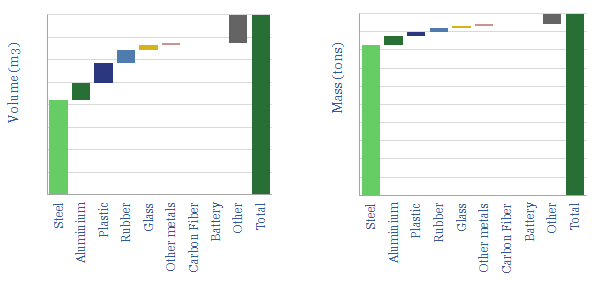
Steel comprises c50% of the volume and c80% of the weight of materials in a vehicle. Each 1% reduction in mass yields a 1% improvement in fuel econome. Carbon fiber repays its extra costs after 30-70k miles, while hybridisation repays its extra costs after 10-30k miles.
-
Battery recycling: long division?
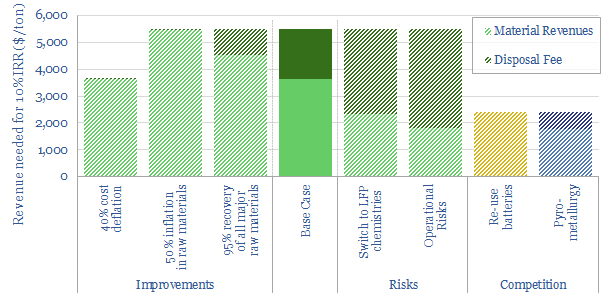
Recycling lithium batteries could be worth $100bn per year by 2040 while supporting electric vehicles’ ascent. Hence new companies are emerging to recapture 95% of spent materials with environmentally sound methods. Our 15-page note explores what it would take for battery-recycling to become both practical and compelling.
Content by Category
- Batteries (96)
- Biofuels (44)
- Carbon Intensity (48)
- CCS (64)
- CO2 Removals (9)
- Coal (41)
- Commentary (65)
- Company Diligence (104)
- Data Models (921)
- Decarbonization (162)
- Demand (129)
- Digital (86)
- Downstream (47)
- Economic Model (220)
- Energy Efficiency (76)
- Hydrogen (63)
- Industry Data (308)
- LNG (56)
- Materials (86)
- Metals (88)
- Midstream (45)
- Natural Gas (161)
- Nature (76)
- Nuclear (28)
- Oil (175)
- Patents (39)
- Plastics (44)
- Power Grids (155)
- Renewables (153)
- Screen (137)
- Semiconductors (35)
- Shale (58)
- Solar (72)
- Supply-Demand (53)
- Vehicles (95)
- Video (24)
- Wind (47)
- Written Research (406)