500,000 AI-related patents were filed in 2025. But electrical appliance manufacturers were particularly active. Hence we used AI ourselves, in this 14-page report, to home in on 50 key patents, which will improve efficiency and flexibility of electrical appliances using AI – in HVAC, lighting, refrigerators, washing machines, TVs, etc. – which make up 50% of the grid.
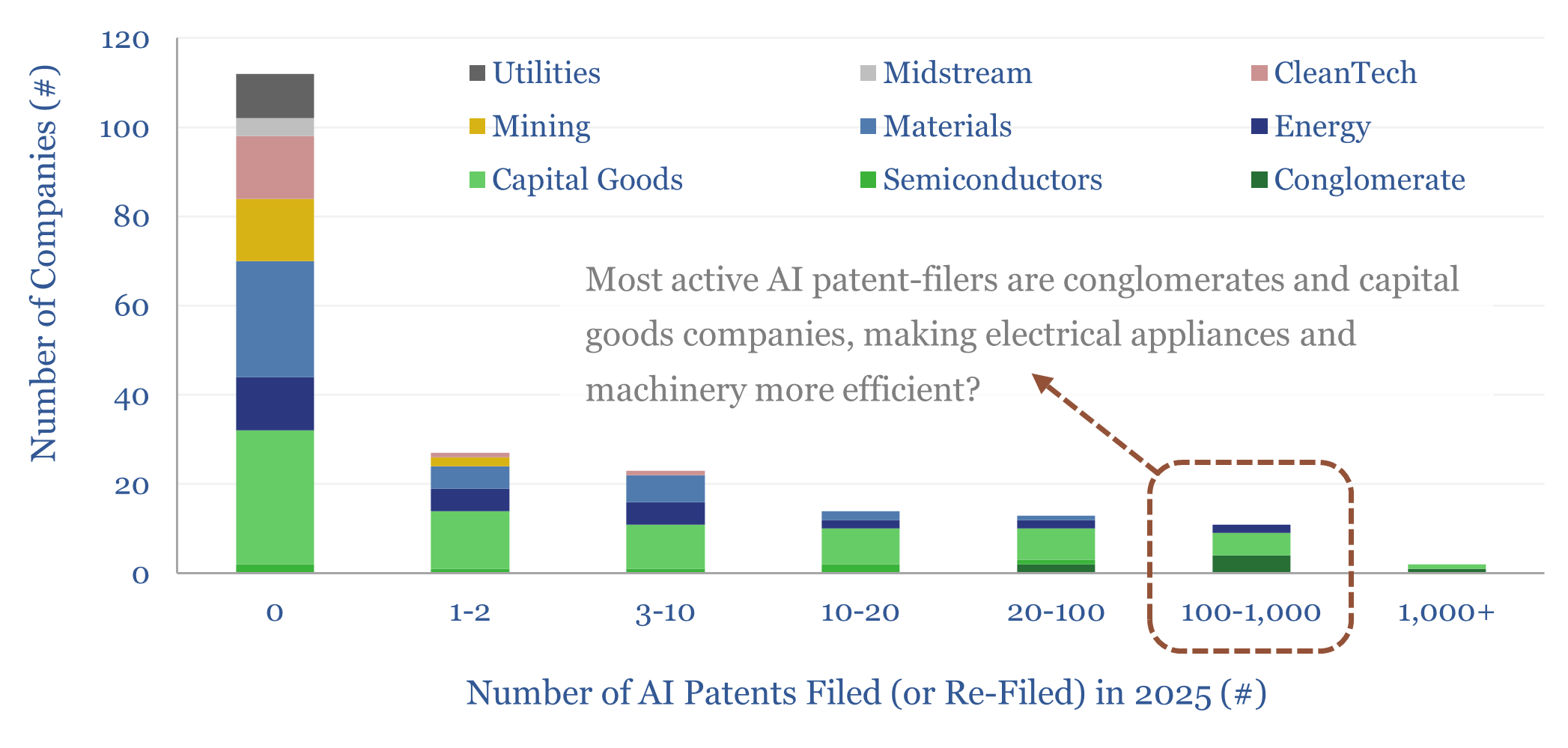
Every company that features in our research gets catalogued in our big database here. 200 companies have been mentioned most frequently in our research since 2019. A score of these companies’ AI-related patent filings from 2025 is shown in the title chart above, and discussed on pages 2-3.
It is interesting to zoom in and look at how individual companies are using AI. As an example, we have done this for Schlumberger’s AI patents, 0n page 4.
Energy efficiency is a recurrent theme when we review industrial digitization and AI, including across digital twins, industrial automation and mobile inspection robots. So key reasons to expect accelerating industrial efficiency are re-capped on page 5.
But what about electrical appliances using AI, in residential and commercial applications, which comprise well over half of the US grid? It turns out that conglomerates making these electrical appliances — think Samsung, LG, Panasonic, Toshiba — are some of the most active AI-related patent filers.
The challenge is that 500,000 AI-related patents were filed in 2025. And 156,000 were filed by large major electrical appliance manufacturers. This is too many to read. Hence we used patent screening criteria, and Claude API, to home in on a refined sample of 50 patents, which were particularly redolent of improving efficiency and flexibility. Our methodology is described on pages 6-7.
Electrical appliances using AI will improve the efficiency and flexibility of over half of the grid, based on our review. Evidence around HVAC and air conditioning is on page 8-9, around lighting and screens is on pages 10-11, around refrigerators on page 12, and around other electrical appliances on page 13-14.
You will all probably make fun of me for writing a research report about AI washing machines. But we do think this topic matters for understanding the future trajectory of US electricity demand and global electricity demand.