-
US vehicle ownership and fuel economy?
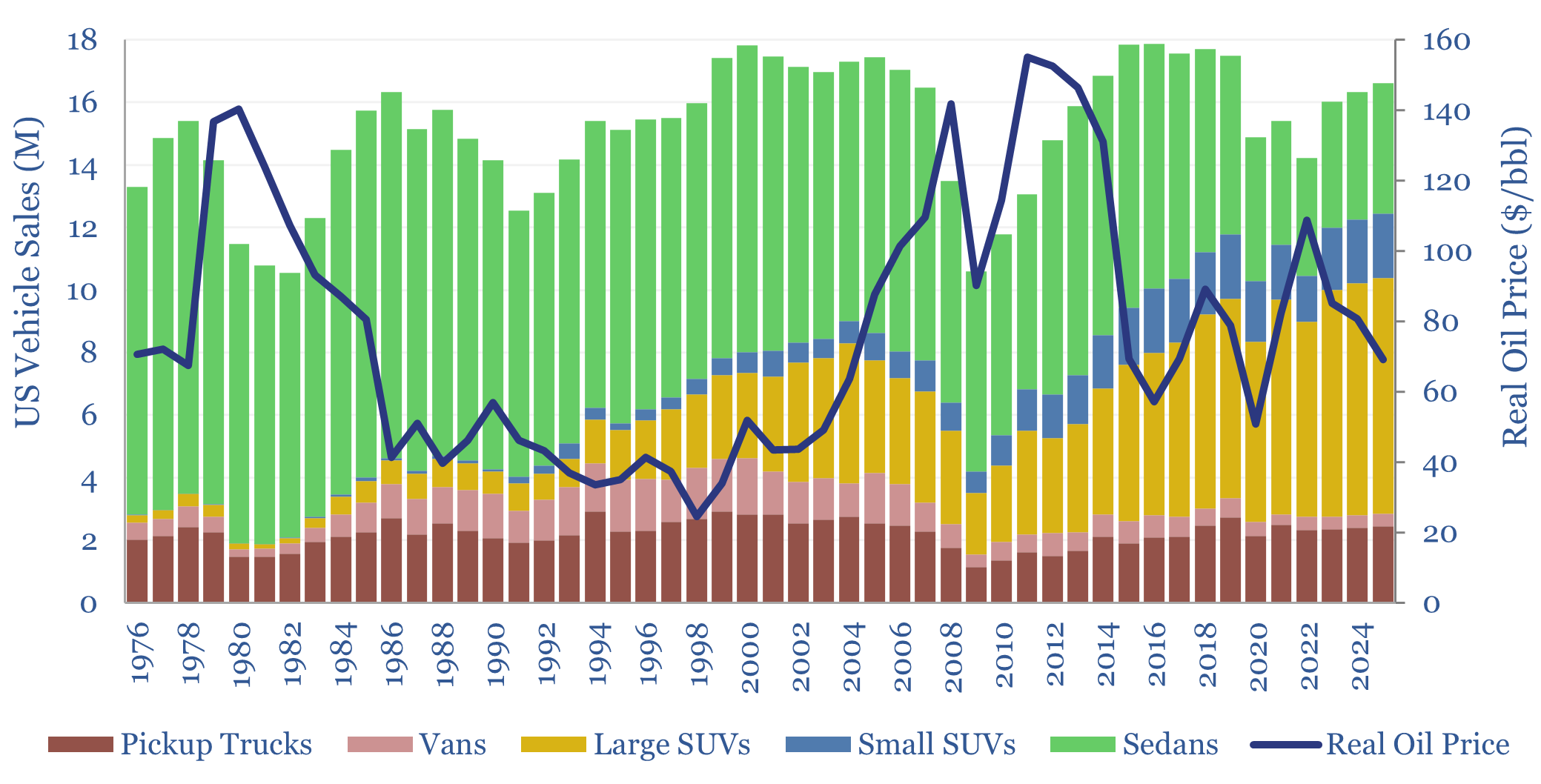
This data file assesses US vehicle ownership over time. Improving fuel economy has been muted by rebound effects, such as greater mobility and larger vehicles. Oil prices influence the types of vehicles being purchased, their masses and their fuel economy. EV ownership has also been rising and is cross-plotted against incomes and other variables.
-
AI training energy: breaking the power laws?
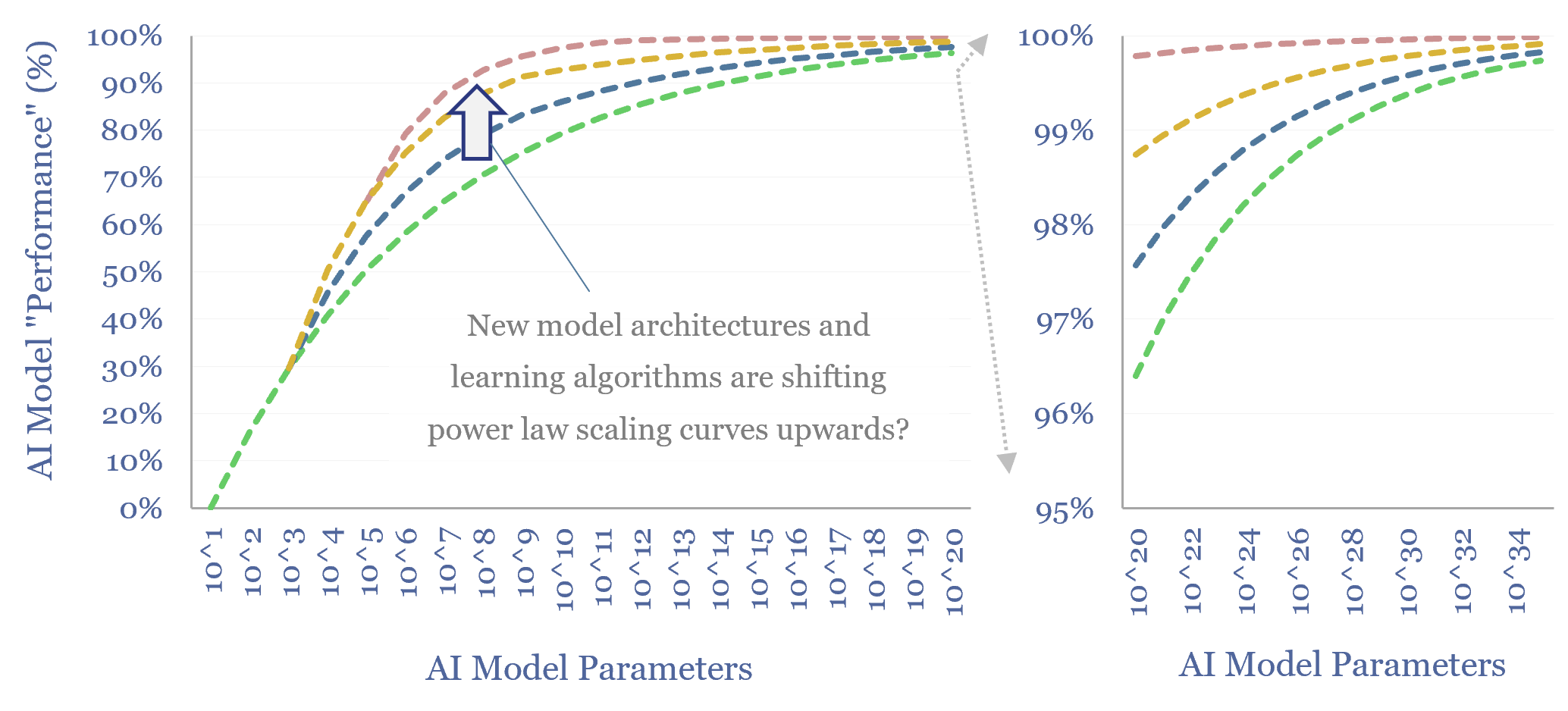
An argument for runaway energy use by AI is that performance follows a power law: incrementally better performance requires exponentially more model parameters, training data and compute. But this 13-page note finds evidence for greater efficiency gains, and considers whether AI scaling laws are set to slow down, meaning less energy consumption?
-
Battery energy storage systems: capacity forecasts?
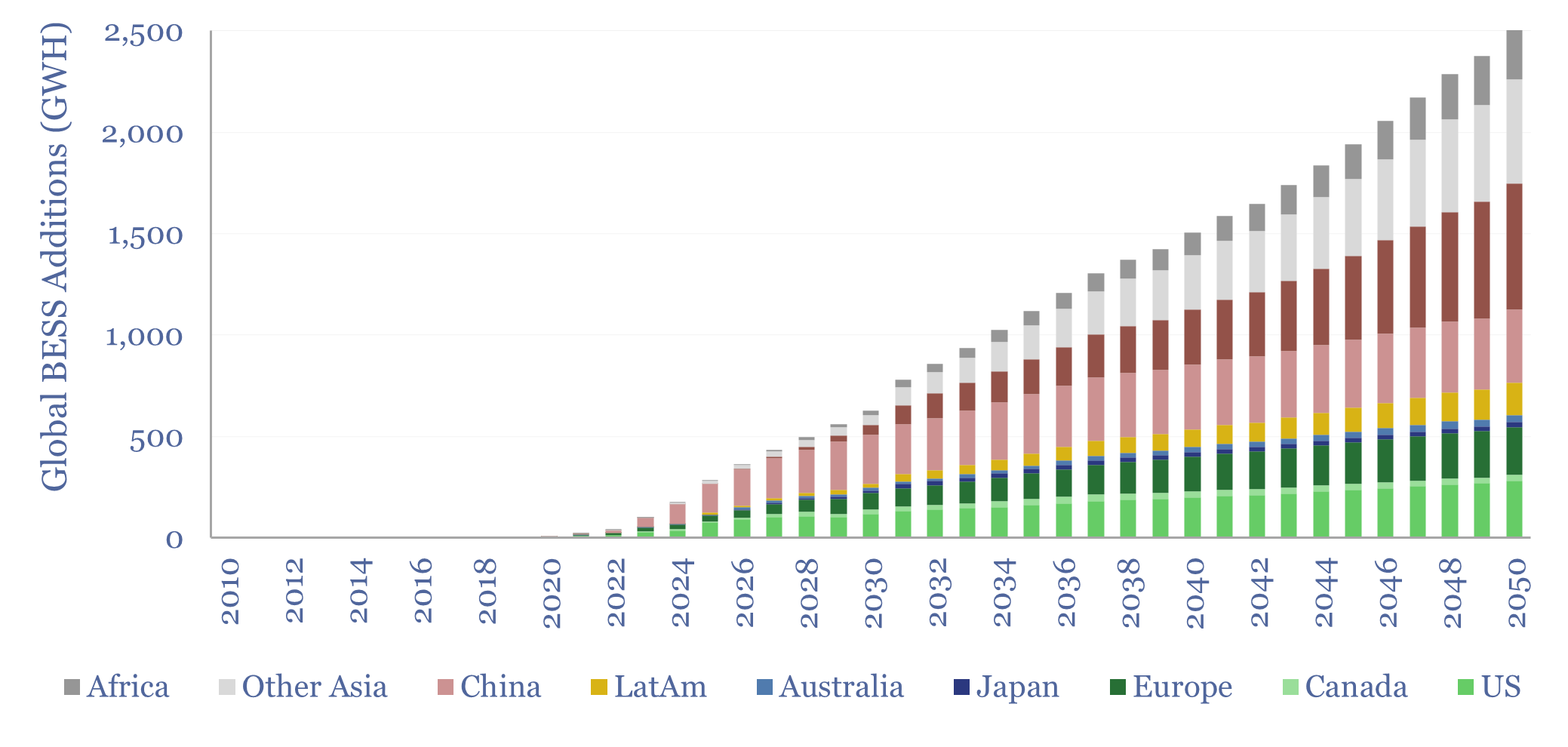
Battery energy storage systems (BESS) encompass grid-scale batteries, and smaller commercial and residential battery storage systems. Both are captured in this 100-line data-file, globally, by region, over time, in annual terms, in cumulative terms, in GWH terms and in GW terms.
-
AI training: gauging importance?

Training an AI chat-bot for the TSE website has been a cool project for us, over the past 2-months. But today’s AIs struggle in gauging which content is most important to decision-makers. Hence, we went through the entire TSE research library, and simply added our own subjective “importance score” to every report and data-file. So you can now search the TSE website and rank the…
-
Solar+battery co-deployments: cost profiles?
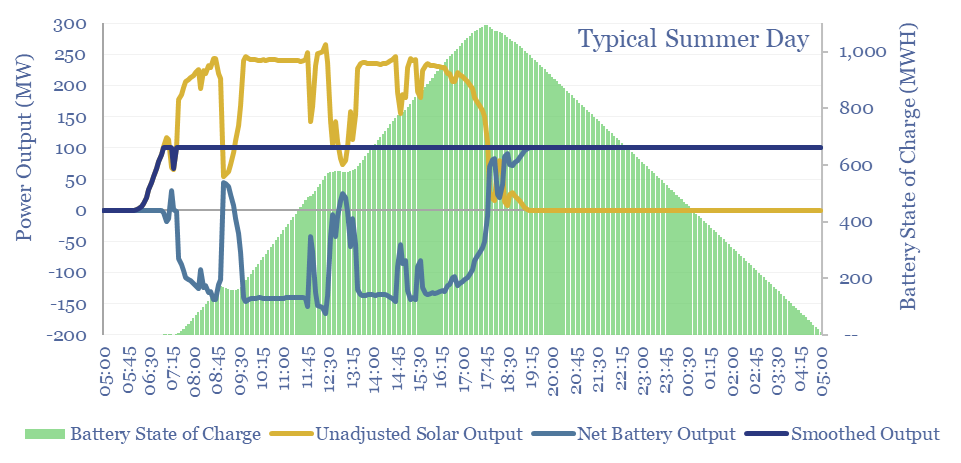
Solar+battery co-deployments allow a large and volatile solar asset to produce a moderate-sized and non-volatile power output, during 40-50% of all the hours throughout a calendar year. The smooth output is easier to integrate with power grids, including with a smaller grid connection. The battery will realistically cycle 100-300 times per year.
-
Autonomous vehicles: concepts and companies?
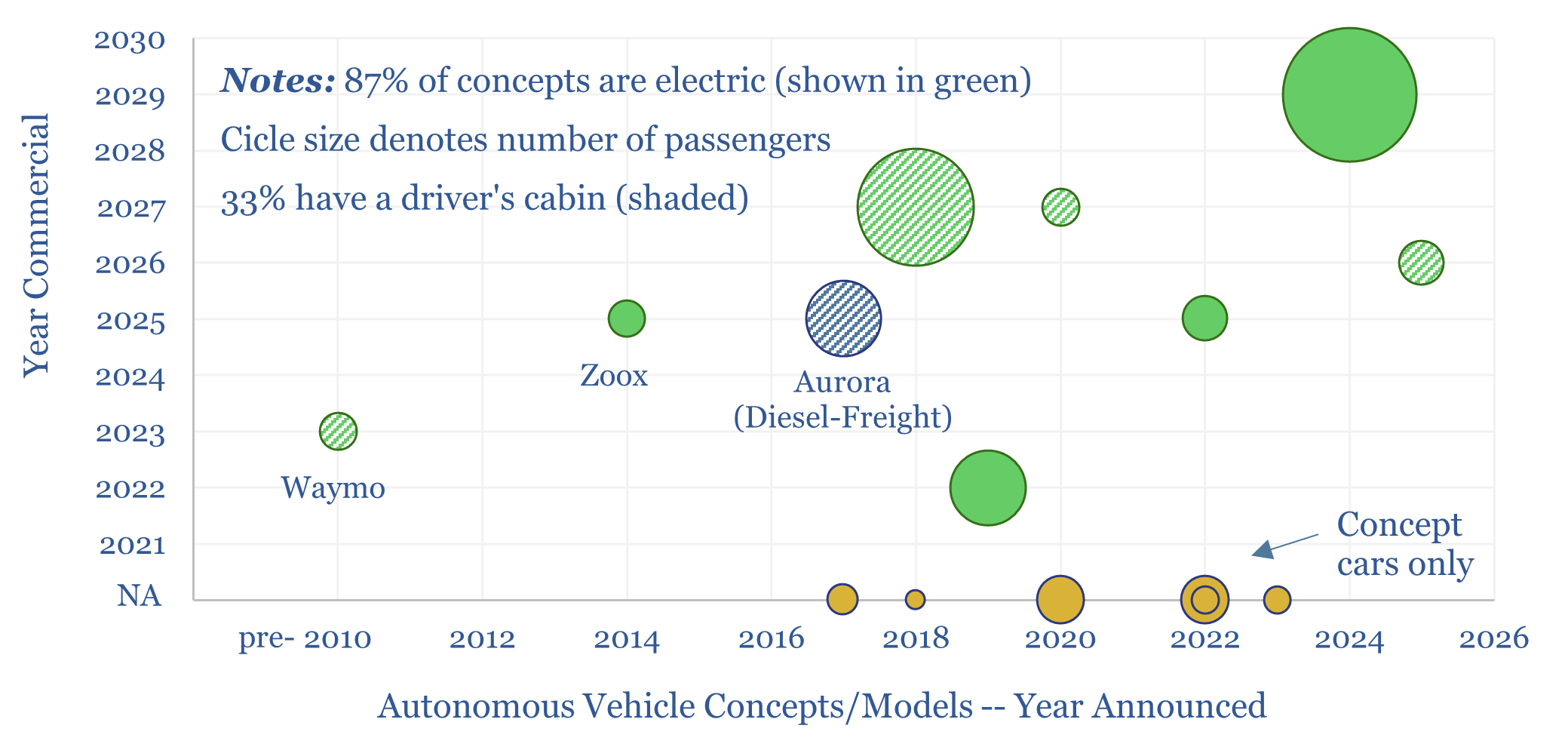
This data-file is a screen of autonomous vehicle concepts and autononomous vehicle companies. Specifically, in 2025, we profiled 15 autonomous vehicle concepts, robotaxis and autonomous trucks. 87% are envisaged to be electric. But the data also point to a broadening range of autonomous vehicle concepts emerging in future.
-
What if the US had never ramped shale?
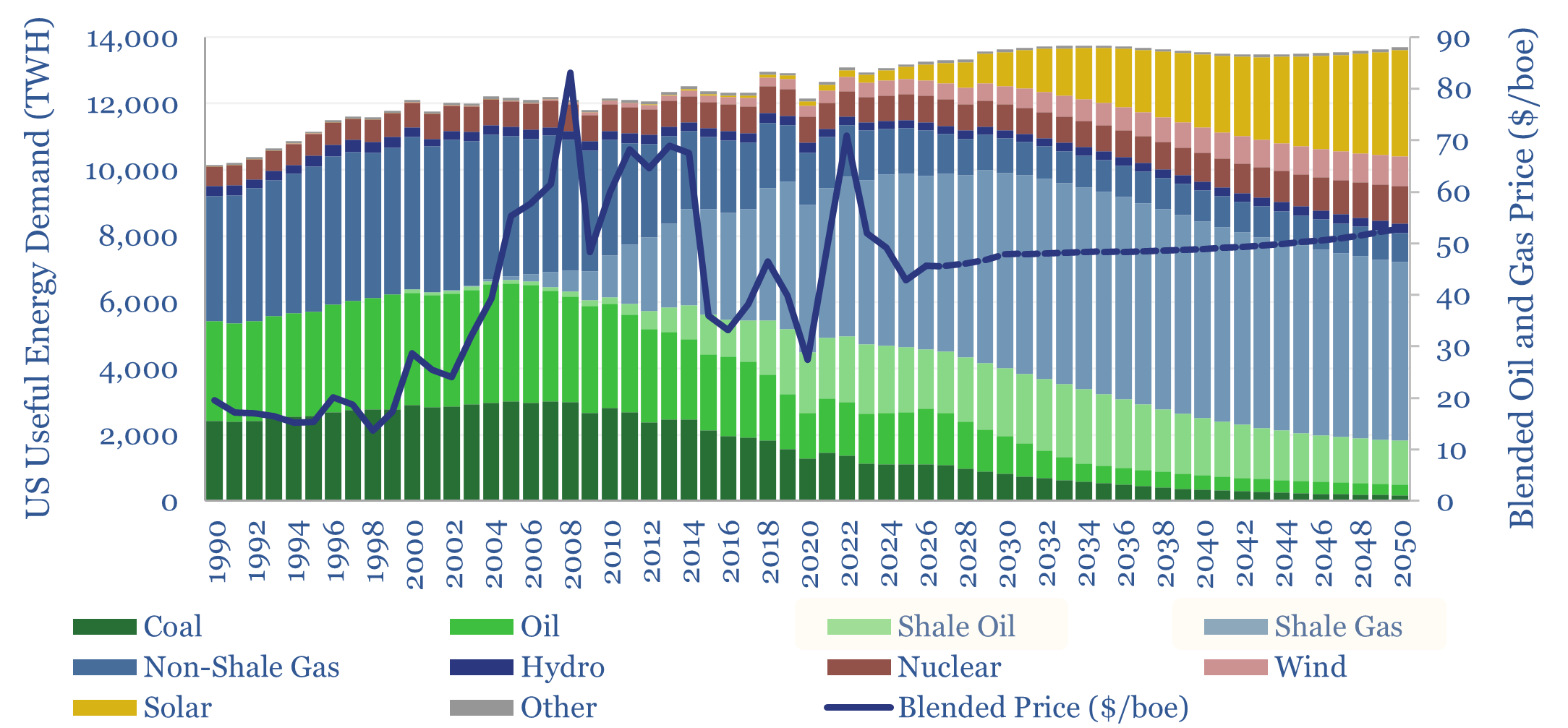
If the US had not ramped 12Mbpd of shale oil and 90bcfd of shale gas, over the past 10-15 years, we estimate US CPI would have run +0.7% pa higher, due to expansionist monetary policy, and other environmental policies. Hence this 13-page report explores whether the end of shale deflation now points to higher US…
-
Industrial robot costs: robotic economics?
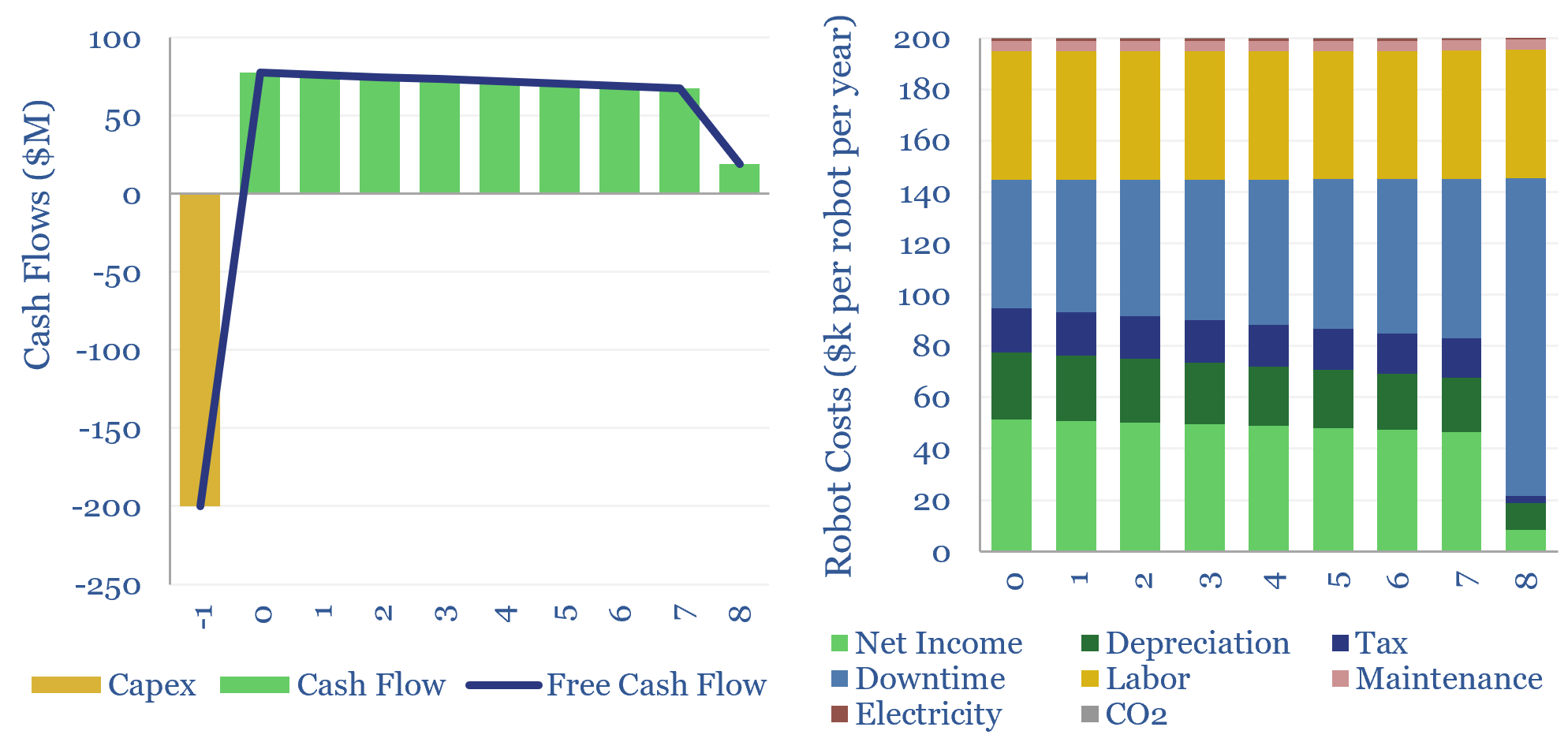
There are 5M industrial robots deployed globally. A typical example costs $130k to install, does incur costs to run, but displaces 1.3 FTE jobs, saves 50% total costs, and thus achieves a payback of 1.5-years and a project-level IRR of 65%. This data-file captures the economics of deploying industrial robots.
-
Rare Earth magnets: building attraction?
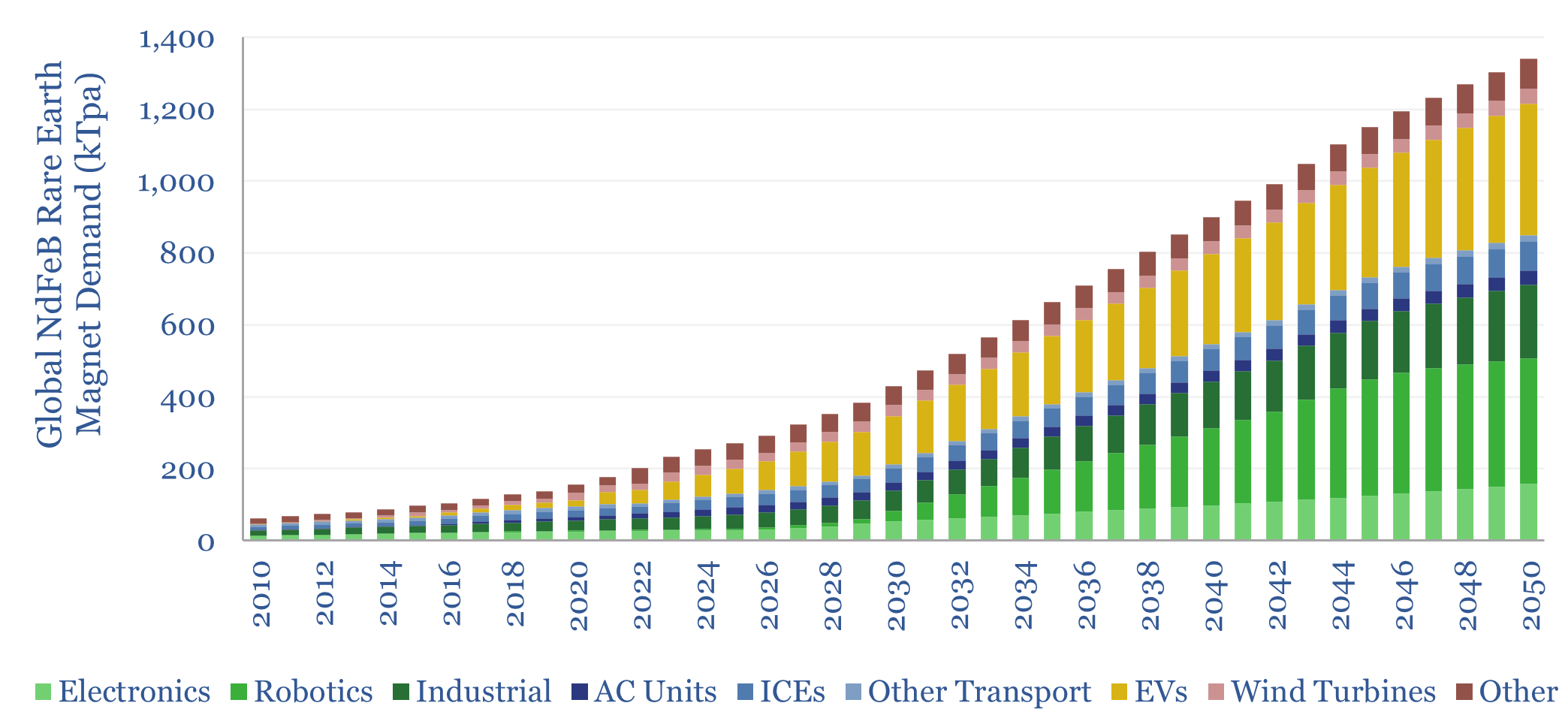
Will Rare Earth magnets shift from being commoditized and mostly Chinese-made, to a higher-value market, sustaining a moat for leading Western companies? Especially as demand inflects in the AI era? Our answers in this 14-page report are based on a site visit to Europe’s first large-scale Rare Earth magnet plant, and subsequent economic modeling.
-
Global Air Conditioning demand by region over time?
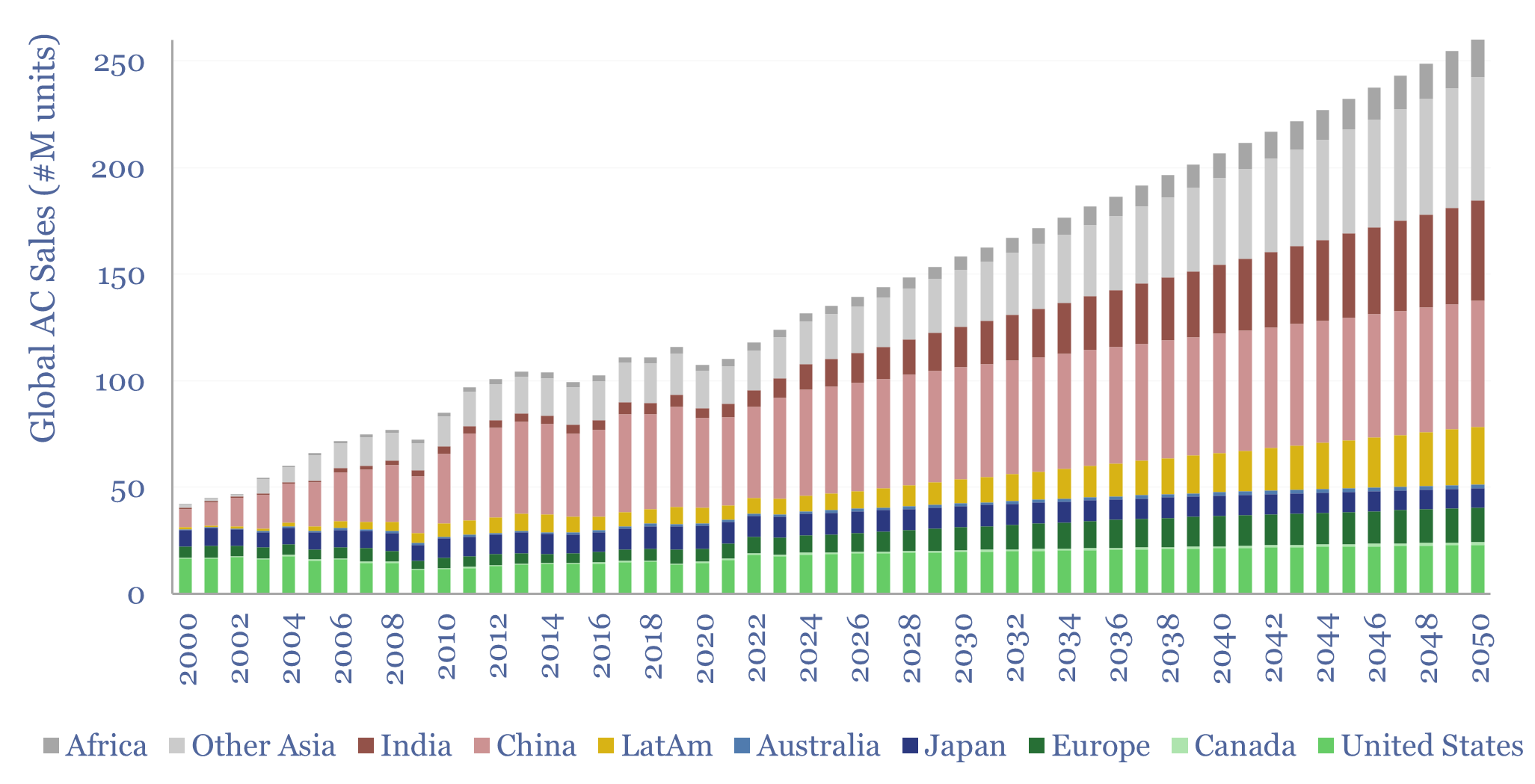
Global air conditioning consumed 2,600 TWH of electricity in 2024, which is 8% of total global electricity demand, and seen rising +3% pa to 6,000 TWH by 2050. This data-file quantifies global AC sales by country, the global AC unit stock by country, and global AC electricity demand by country, to 2050.
Content by Category
- Batteries (96)
- Biofuels (44)
- Carbon Intensity (48)
- CCS (64)
- CO2 Removals (9)
- Coal (41)
- Commentary (65)
- Company Diligence (104)
- Data Models (922)
- Decarbonization (162)
- Demand (129)
- Digital (86)
- Downstream (47)
- Economic Model (221)
- Energy Efficiency (76)
- Hydrogen (63)
- Industry Data (308)
- LNG (56)
- Materials (86)
- Metals (88)
- Midstream (45)
- Natural Gas (161)
- Nature (76)
- Nuclear (28)
- Oil (176)
- Patents (39)
- Plastics (44)
- Power Grids (156)
- Renewables (153)
- Screen (137)
- Semiconductors (35)
- Shale (58)
- Solar (72)
- Supply-Demand (53)
- Vehicles (95)
- Video (24)
- Wind (47)
- Written Research (407)