-
Power electronic capital goods: margins over time?
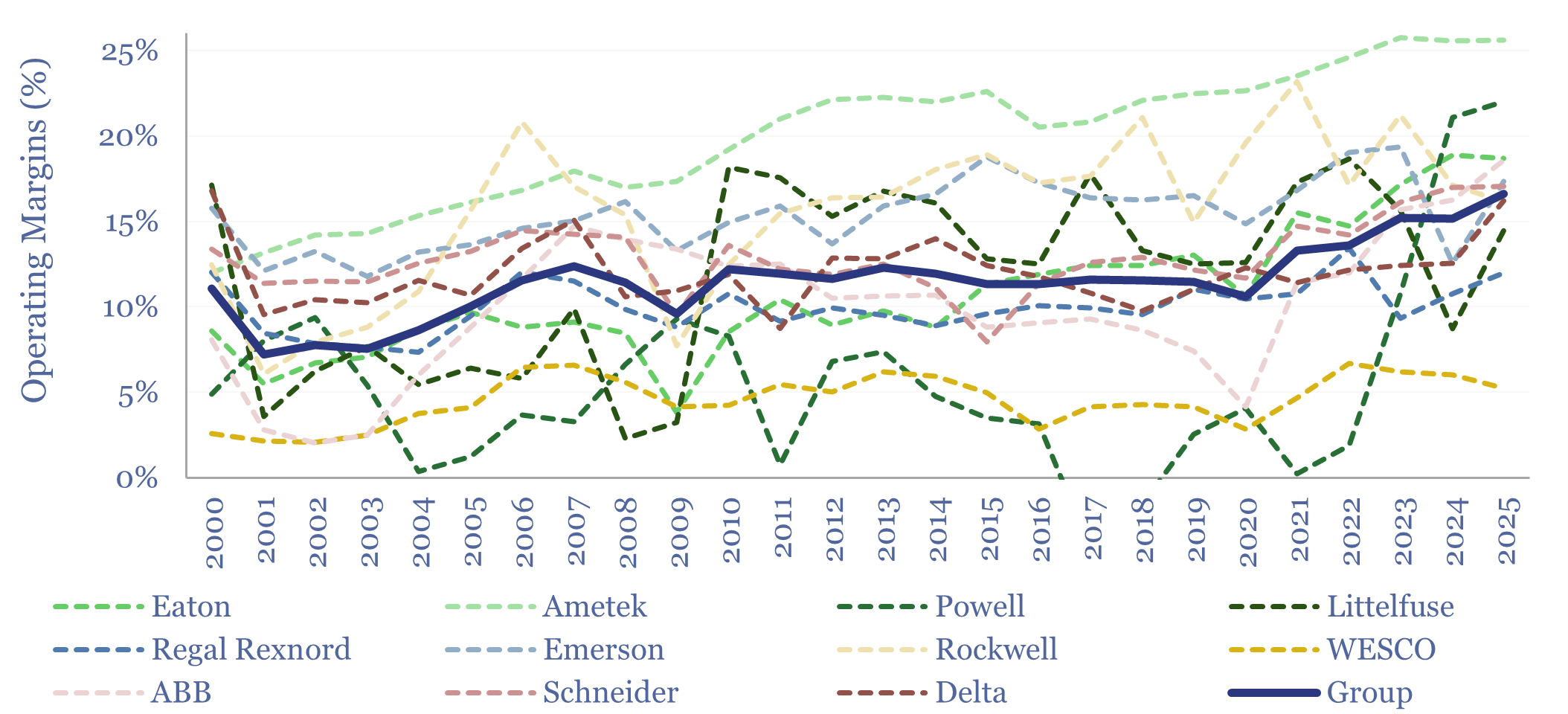
This data-file tracks power electronic capital goods company margins over time, rising from 10% in 2000-2010, to 12% in 2010-20 and then inflecting to a record 16% in 2025. The increase is mostly driven by higher- and medium-voltage categories, linked to re-accelerating load growth in the United States. Details on each company are in the…
-
Seismic costs: 2D, 3D, onshore, offshore and microseismic?
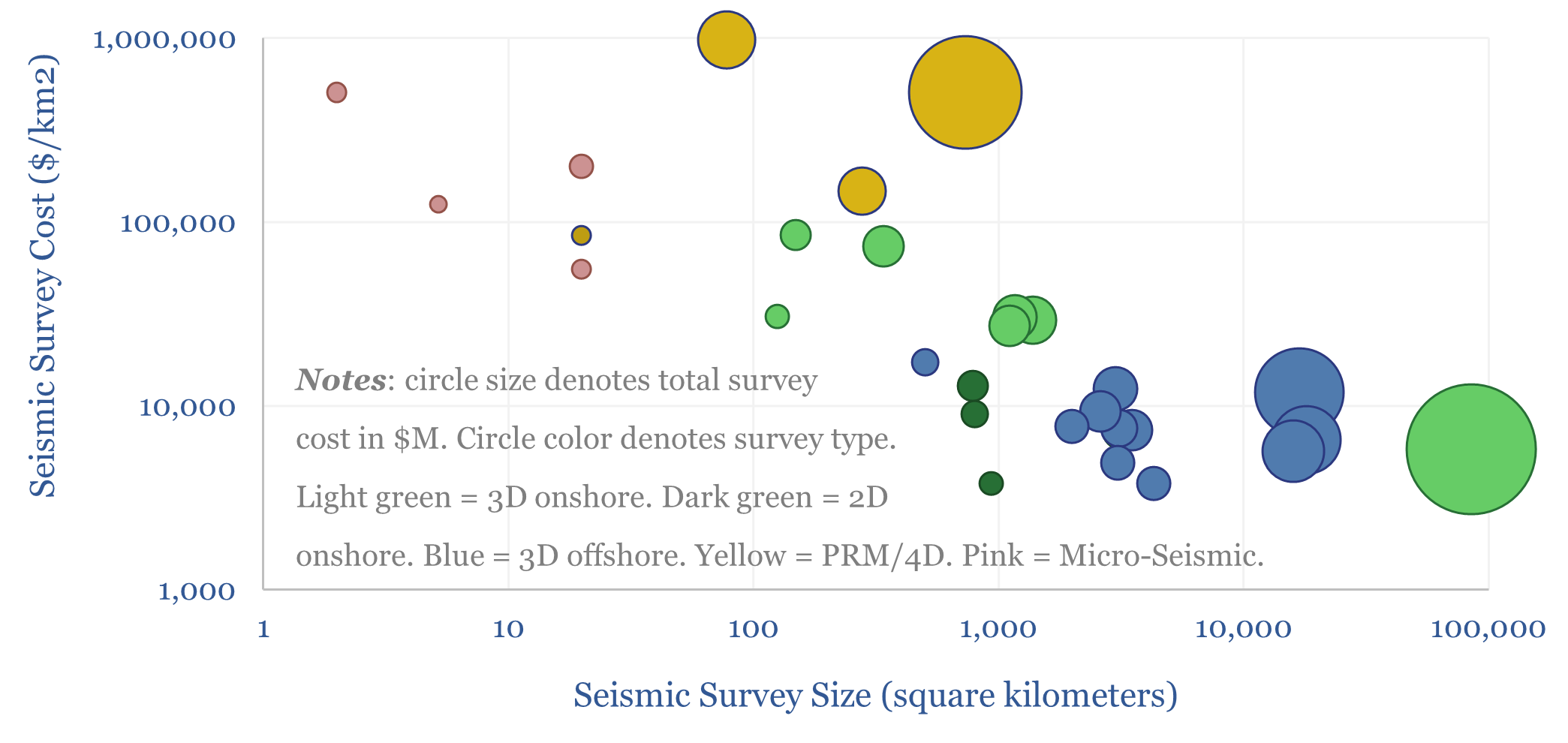
Seismic survey costs are tabulated in this data-file based on public domain disclosures from E&Ps and seismic companies. Seismic costs can range from $4,000 to $1M per square kilometer, depending on the survey size, resolution, timing, and location. Key case studies are in the data-file.
-
Industrial heat pump costs: economic model?
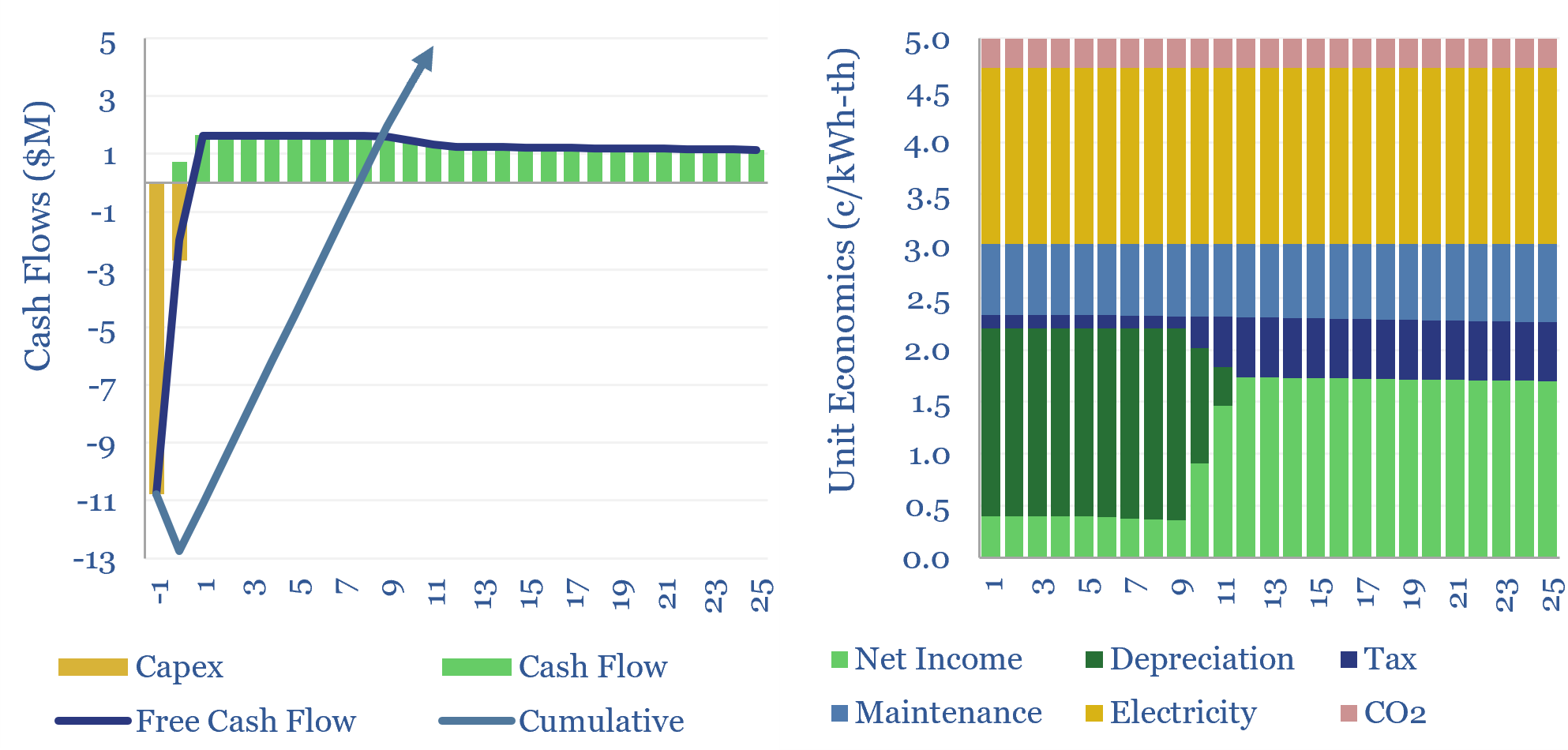
Industrial heat pump costs typically average 5c/kWh-th, when generating round-the-clock heat from 6c/kWh electricity, with a 3.5x Coefficient of Performance, and achieving a 60ºC heat lift. Our models do not yet show heat pumps, energized by excess renewables, outcompeting gas heat, especially for larger or higher-temperature applications. Costs can be stress-tested in this model.
-
Autonomous-ready sensors: the LiDAR debate?
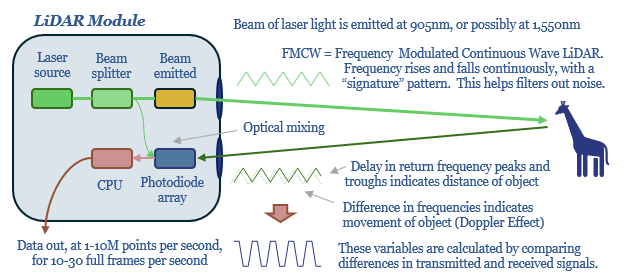
The sensors used for advanced driver assistance systems (ADAS), and increasingly for autonomous vehicles, offer useful lessons for AI, robotics and mining. Hence this 17-page report revisits the debate between LiDAR vs cameras, radar and ultrasound. Hardware must compete on cost and performance. But who benefits from deflation?
-
Can solar provide round-the-clock power for data-centers?

This 15-page report models the costs of powering AI data centers, and other round-the-clock loads, using only solar and batteries, plus a “penalty” of 100-600 c/kWh for unmet demand. In some locations, solar+batteries will out-compete gas in the future? But an ocean of excess power gets thrown out?
-
LiDAR: screen of companies and costs?

This data-file is a screen of leading LiDAR companies. Ten LiDAR companies have 85% share of this market, which was worth $1.7bn in 2024, and will support ADAS/autonomous vehicles, robotics and next-generation mining technologies. Pricing and profitability are compared for Chinese and US suppliers.
-
Lithium: global demand forecasts?

This data-file estimates global lithium demand amidst the ramp of electric vehicles, the rise of AI/robotics, and integrates with our oil market models. The data are disaggregated across electric vehicles, new vehicle types, consumer electronics, grid-scale batteries and conventional material uses.
-
Global CO2 emissions breakdown?
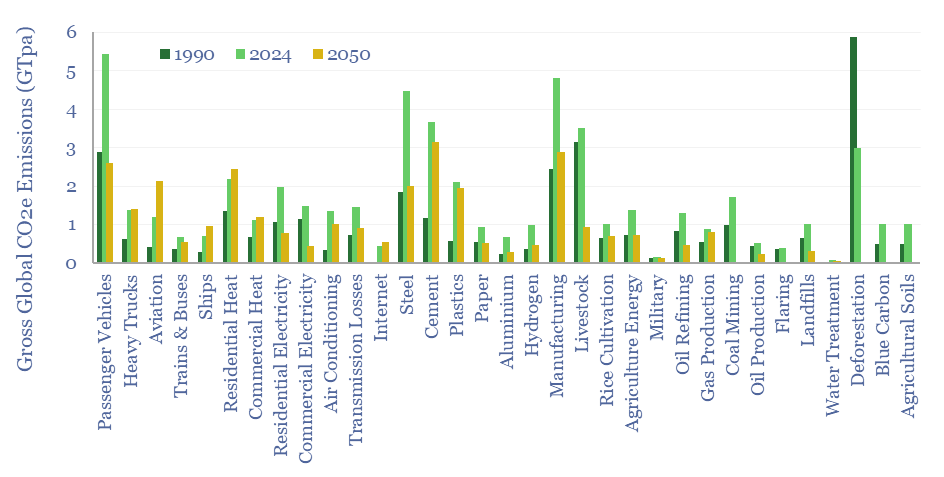
Global CO2 emissions rose from 32GTpa of CO2-equivalents in 1990 to 54GTpa in 2024, and are seen optimistically declining to 30GTpa by 2050, on a gross basis. This global CO2 emisisons breakdown covers 33 sources that each explain over 0.5% of global CO2e emissions, as a way of tracking emissions by source, by year, and…
-
US electricity customers: sales, pricing, metering, load-shifting?
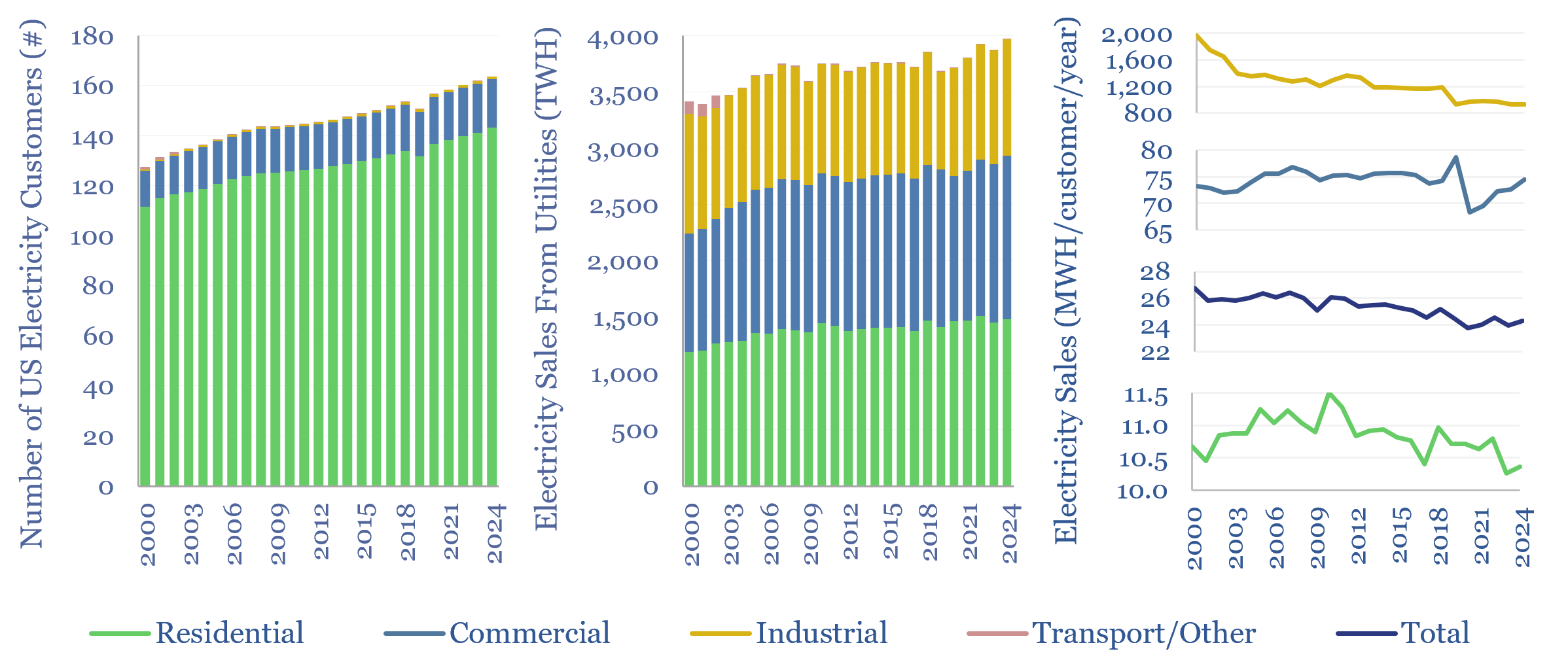
Characteristics of 164M US utility customers, consuming 4,000 TWH pa of electricity, are broken down in this data-file. The data help to explain the recent return to load growth in the US, but also show the pace of deployment of smart meters, demand response, load-shifting and real-time pricing tariffs, amongst residential, commercial and industrial customers.
-
Electric vehicle charging: the economics?
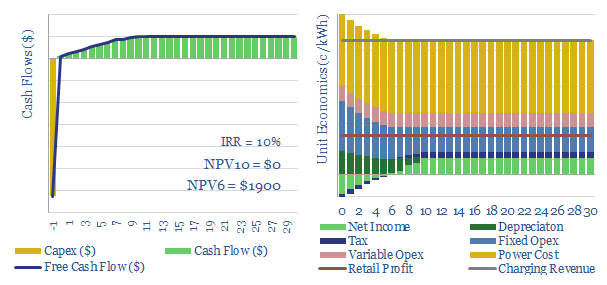
An electric vehicle charging station typically needs to charge 20-25 c/kWh, to earn a 10% return on its up-front capex costs, as it buys power for 10c/kWh and sells it on to electric vehicles with 10-50% utilization rates. Larger, fast-chargers seem most economic. Especially where retail revenues support the economics of EV-charging.
Content by Category
- Batteries (96)
- Biofuels (44)
- Carbon Intensity (48)
- CCS (64)
- CO2 Removals (9)
- Coal (41)
- Commentary (65)
- Company Diligence (104)
- Data Models (922)
- Decarbonization (162)
- Demand (129)
- Digital (86)
- Downstream (47)
- Economic Model (221)
- Energy Efficiency (76)
- Hydrogen (63)
- Industry Data (308)
- LNG (56)
- Materials (86)
- Metals (88)
- Midstream (45)
- Natural Gas (161)
- Nature (76)
- Nuclear (28)
- Oil (176)
- Patents (39)
- Plastics (44)
- Power Grids (156)
- Renewables (153)
- Screen (137)
- Semiconductors (35)
- Shale (58)
- Solar (72)
- Supply-Demand (53)
- Vehicles (95)
- Video (24)
- Wind (47)
- Written Research (407)