Digital
-
Autonomous vehicles: the economics?
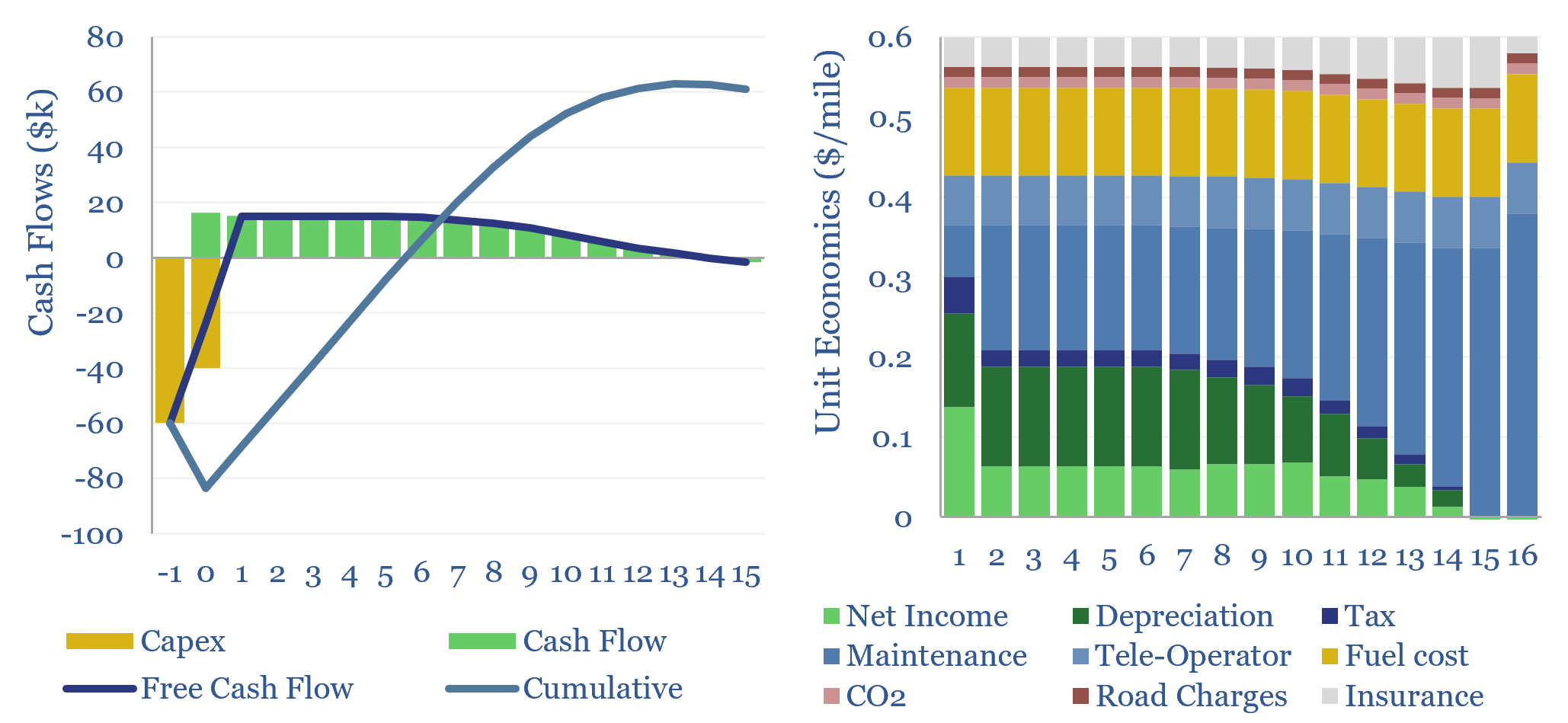
This data-file explores the costs of autonomous vehicles. An autonomous vehicle traveling c100,000 miles per year, at 20% capacity utilization, must charge a fee of $0.6/mile, in order to generate a 10% IRR on c$100k of vehicle acquisition capex.
-
Digital twin case studies: what impacts?

What are the impacts of deploying digital twins, and will their be more deployment in the AI era? This data-file has aggregated 25 digital twin case studies. The average deployment increases output by 7%, reduces costs by 16% and unlocks c20% energy savings. Details, companies and contexts are in the data-file.
-
Lancium: can AI data-centers load shift?

Lancium data center technology is used to develop Clean Campuses, which can separate large compute requirements into critical and flexible clusters. The flexible clusters tackle non-time critical loads, often powered directly by microgrids, and providing a Controllable Load Resource, which can demand shift to smooth the volatility of renewables? Hence we reviewed Lancium’s patents.
-
AI data centers: bit count?
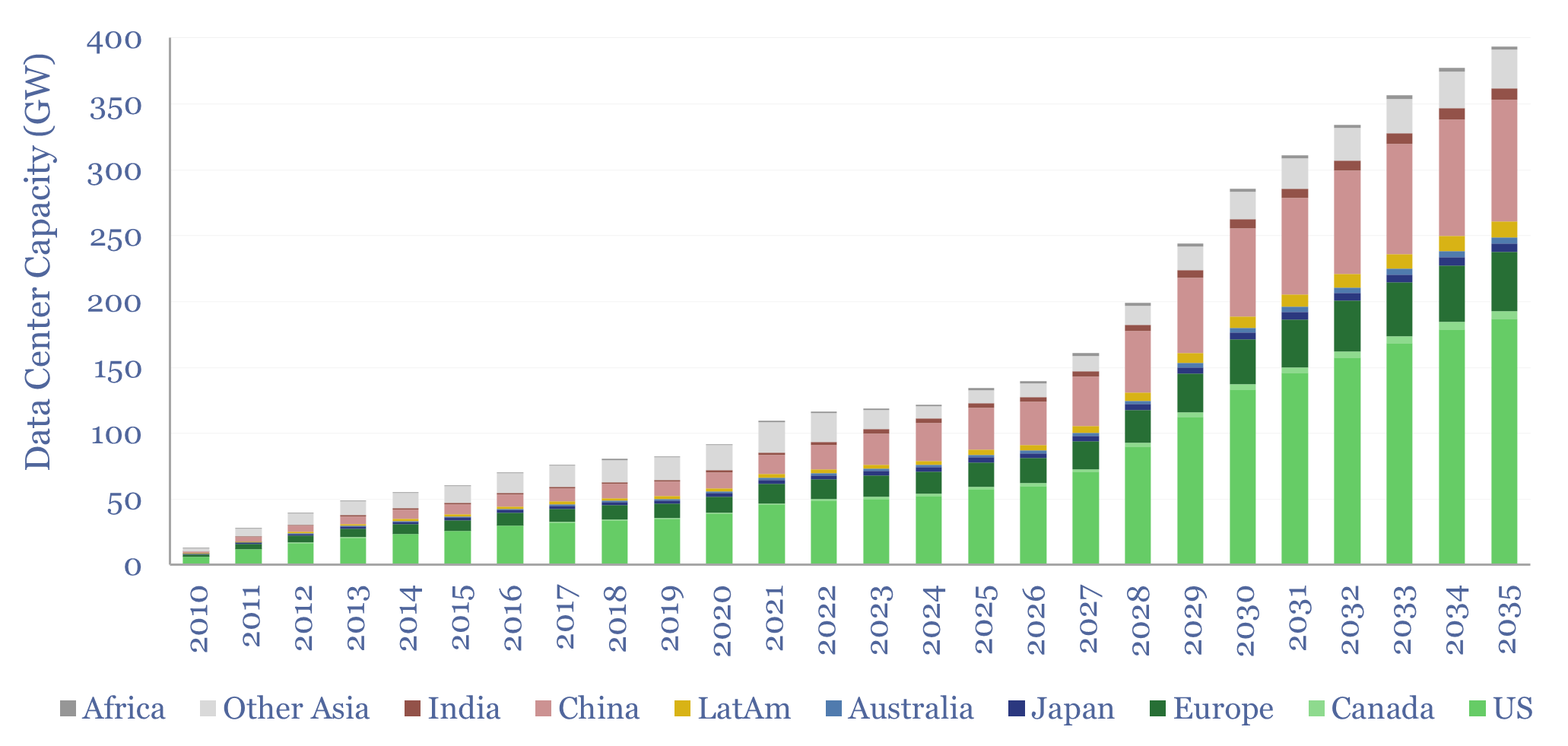
How many data centers will there be? How big will the biggest AI data centers be? Where should they be located? And do recent announcements connote upside or downside risks? This 15-page report forecasts the build-out of AI data centers, using bottom-up data, statistical distributions and economic modeling.
-
Seismic costs: 2D, 3D, onshore, offshore and microseismic?
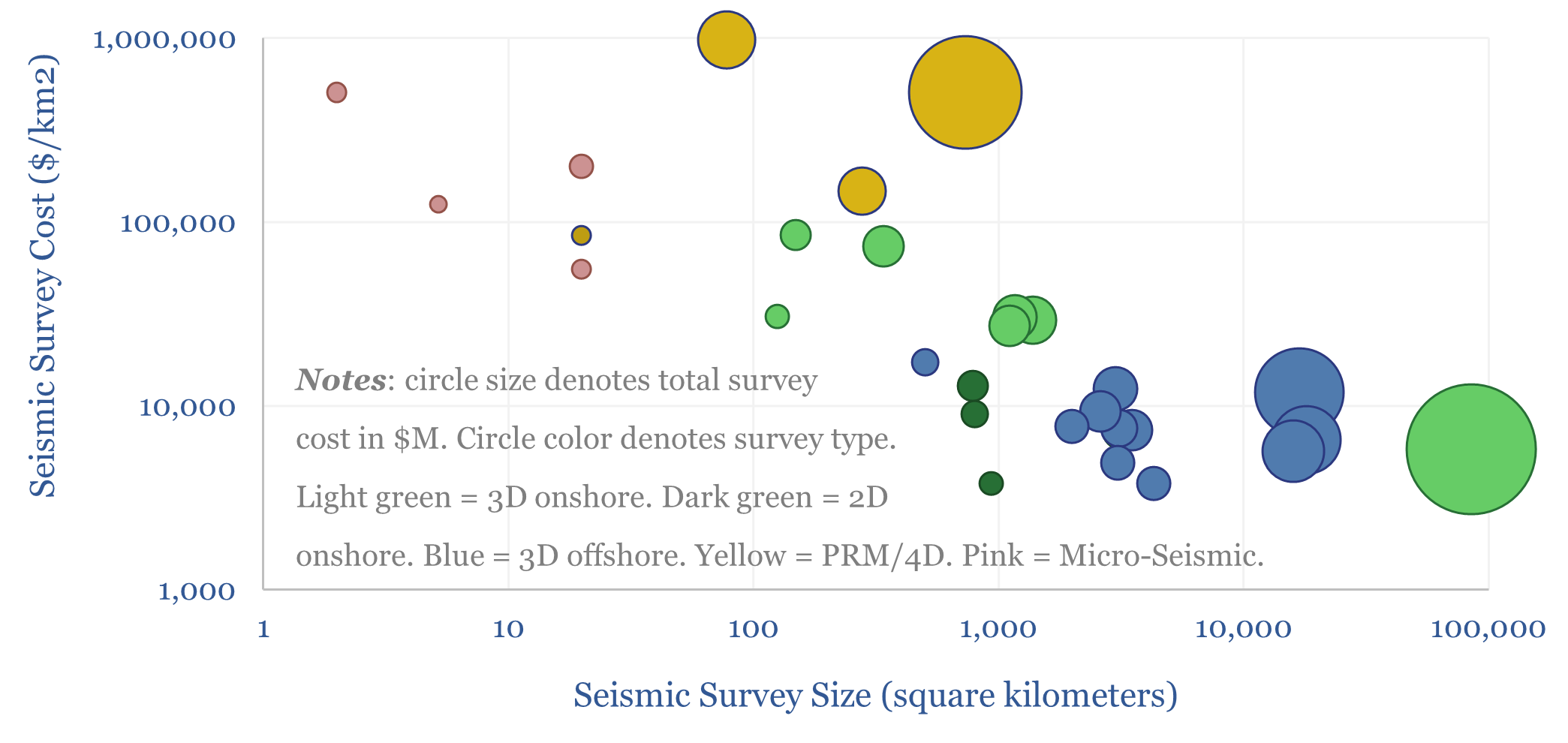
Seismic survey costs are tabulated in this data-file based on public domain disclosures from E&Ps and seismic companies. Seismic costs can range from $4,000 to $1M per square kilometer, depending on the survey size, resolution, timing, and location. Key case studies are in the data-file.
-
Autonomous-ready sensors: the LiDAR debate?
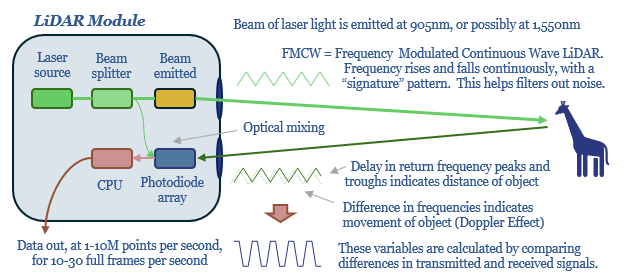
The sensors used for advanced driver assistance systems (ADAS), and increasingly for autonomous vehicles, offer useful lessons for AI, robotics and mining. Hence this 17-page report revisits the debate between LiDAR vs cameras, radar and ultrasound. Hardware must compete on cost and performance. But who benefits from deflation?
-
LiDAR: screen of companies and costs?

This data-file is a screen of leading LiDAR companies. Ten LiDAR companies have 85% share of this market, which was worth $1.7bn in 2024, and will support ADAS/autonomous vehicles, robotics and next-generation mining technologies. Pricing and profitability are compared for Chinese and US suppliers.
-
AI training energy: breaking the power laws?
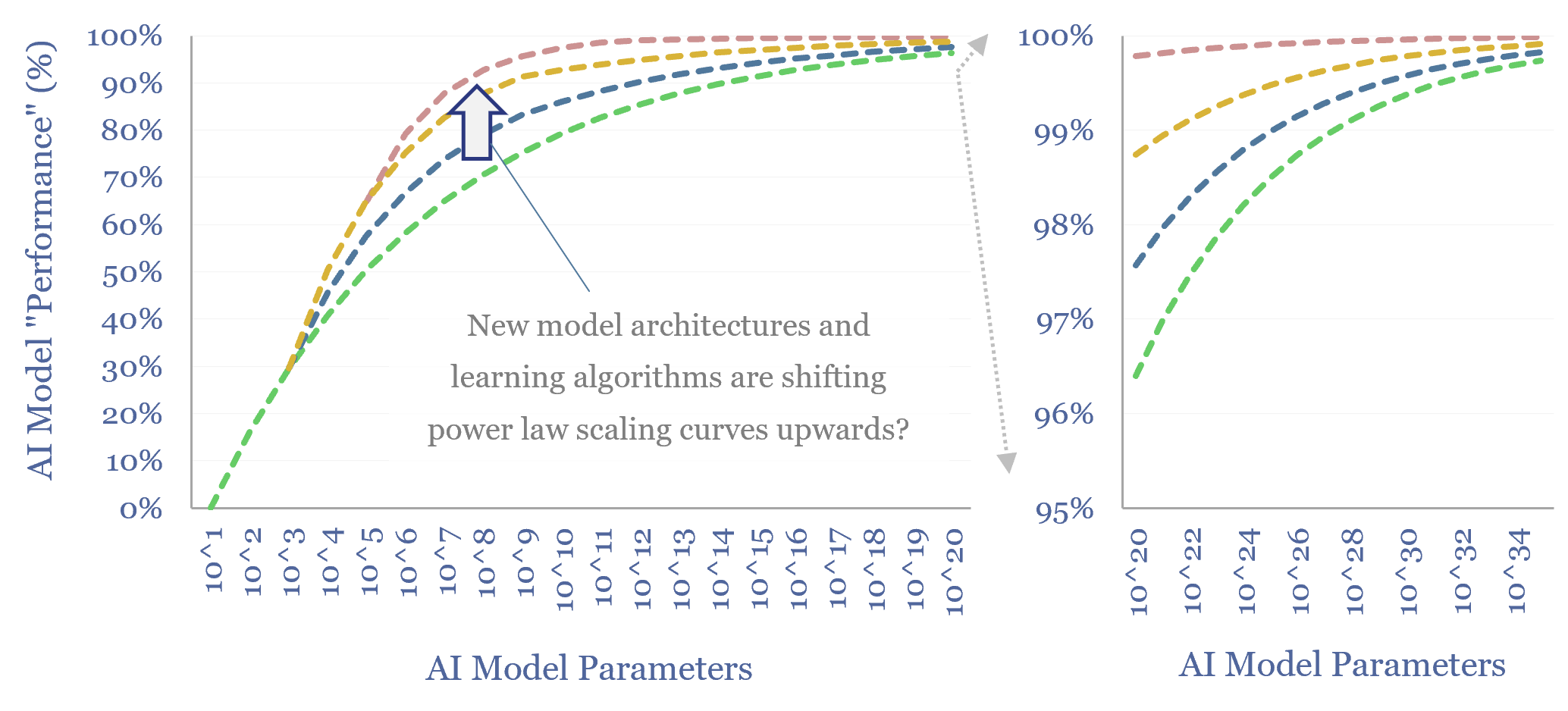
An argument for runaway energy use by AI is that performance follows a power law: incrementally better performance requires exponentially more model parameters, training data and compute. But this 13-page note finds evidence for greater efficiency gains, and considers whether AI scaling laws are set to slow down, meaning less energy consumption?
-
Autonomous vehicles: concepts and companies?
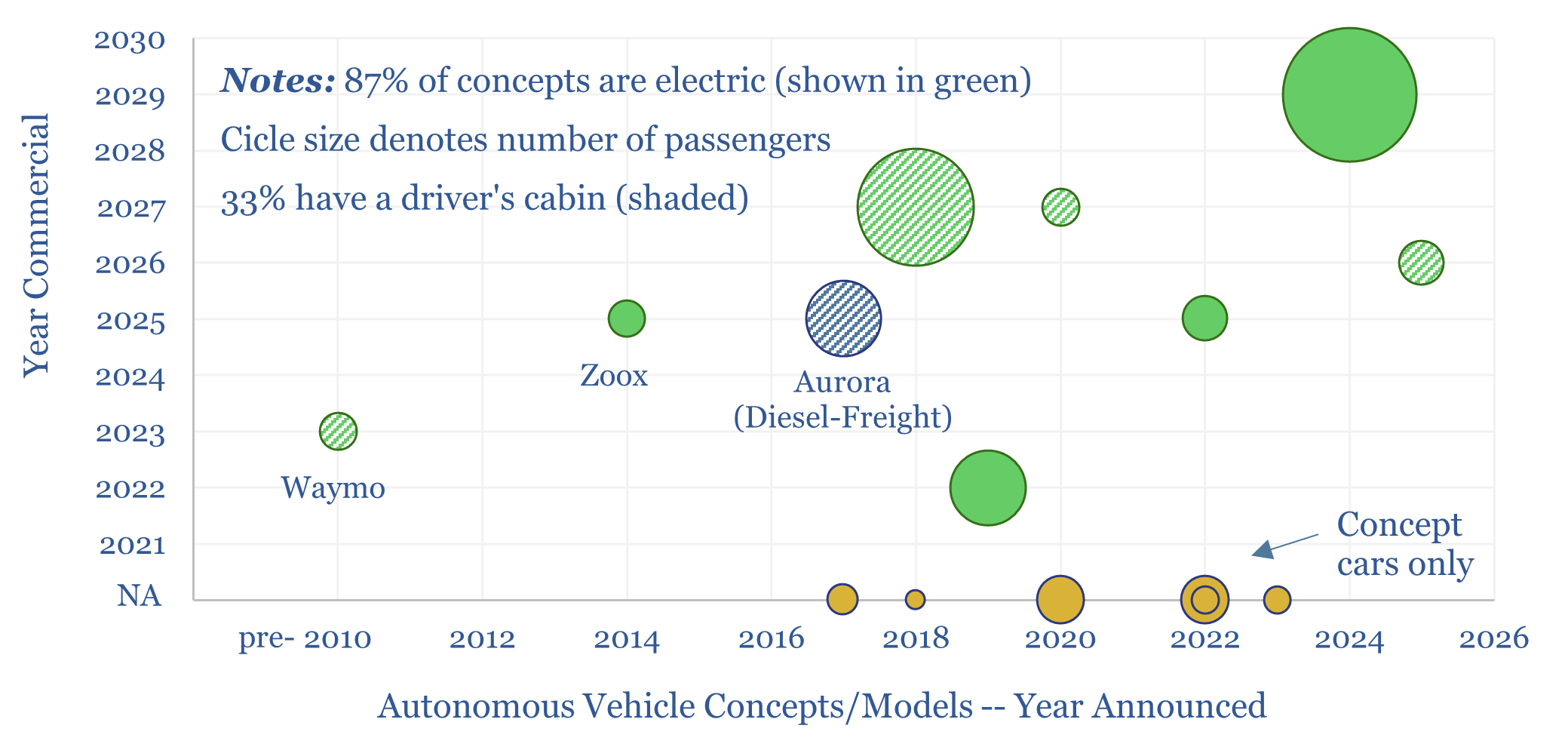
This data-file is a screen of autonomous vehicle concepts and autononomous vehicle companies. Specifically, in 2025, we profiled 15 autonomous vehicle concepts, robotaxis and autonomous trucks. 87% are envisaged to be electric. But the data also point to a broadening range of autonomous vehicle concepts emerging in future.
-
Industrial robot costs: robotic economics?
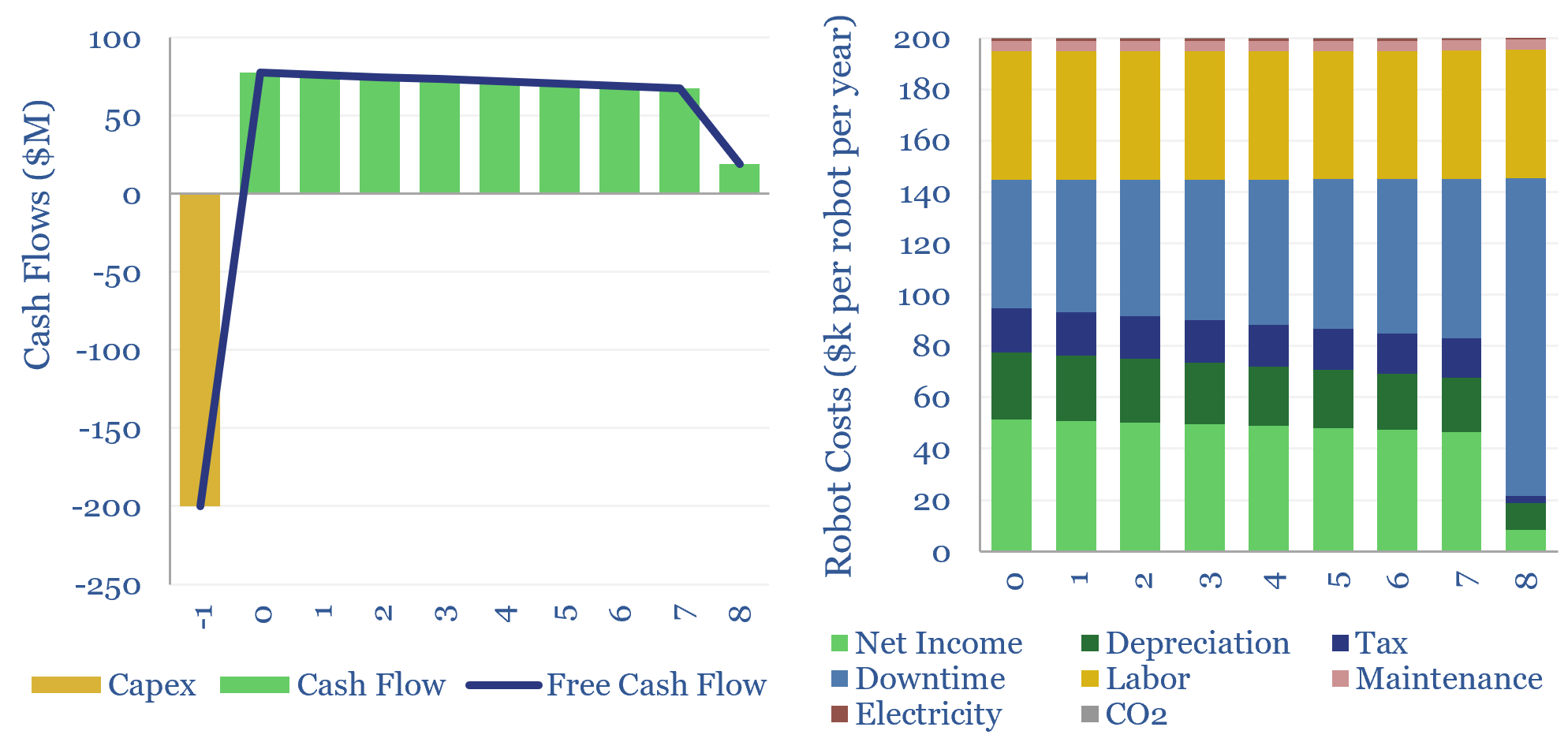
There are 5M industrial robots deployed globally. A typical example costs $130k to install, does incur costs to run, but displaces 1.3 FTE jobs, saves 50% total costs, and thus achieves a payback of 1.5-years and a project-level IRR of 65%. This data-file captures the economics of deploying industrial robots.
Content by Category
- Batteries (96)
- Biofuels (44)
- Carbon Intensity (48)
- CCS (64)
- CO2 Removals (9)
- Coal (41)
- Commentary (65)
- Company Diligence (105)
- Data Models (925)
- Decarbonization (162)
- Demand (131)
- Digital (89)
- Downstream (47)
- Economic Model (221)
- Energy Efficiency (76)
- Hydrogen (63)
- Industry Data (309)
- LNG (56)
- Materials (86)
- Metals (88)
- Midstream (45)
- Natural Gas (161)
- Nature (76)
- Nuclear (28)
- Oil (176)
- Patents (39)
- Plastics (44)
- Power Grids (156)
- Renewables (153)
- Screen (138)
- Semiconductors (35)
- Shale (58)
- Solar (72)
- Supply-Demand (53)
- Vehicles (94)
- Video (24)
- Wind (47)
- Written Research (408)