Renewables
-
Renewables returns: what IRRs for wind and solar?

Core IRRs for 100 renewables projects are calculated in this 15-page report. Past renewables returns have averaged 5% for solar, 6% for wind. But recent solar returns have reached 8-11%, due to cost deflation. Solar growth will therefore continue, even as policy support softens? And could this put pressure on power prices if load growth…
-
Renewable PPAs and strike prices: a database?

This data-file tabulates power purchase agreements, strike prices and contract-for-difference details, across 100 renewables projects (wind and solar) over the past decade. From this, we can also back-calculate project IRRs, using our broader economic models.
-
Green hydrogen: the economics?
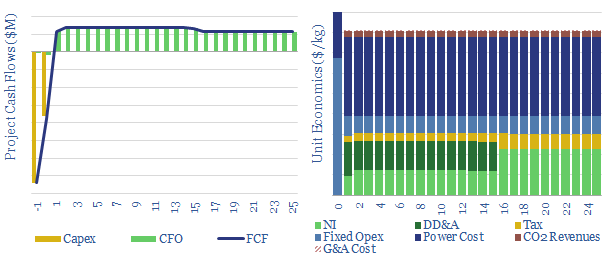
We have modelled the economics of a green hydrogen project, electrolysing water using renewable energy. An H2 price of $8/kg ($60/mcfe) is required to earn a 10% return. Costs data are captured. The most challenging input variable is not capex cost or efficiency, but utilization rate, if the project is to be truly green.
-
Renewables: share of global energy and electricity by country?

This data-file is an Excel visualizer for some of the key headline metrics around renewables’ share of global energy: such as total global energy use, electricity generation by source, wind penetration and solar penetration; broken down country-by-country, and showing how these metrics have changed over time, in an easy-to-compare visual format.
-
Nuclear Power Project Economics
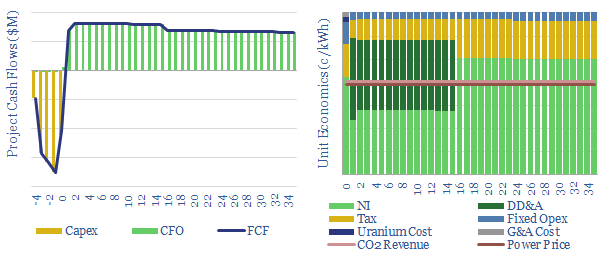
This data-file models the costs of nuclear power project, based on technical papers and past projects around the industry. An up-front capex cost of $6,000/kW might yield a levelized cost of 15c/kWh. But 6-10c/kWh is achievable via a renaissnace in next-generation nuclear.
-
Next-generation nuclear companies: future fission and fusion?

This data-file screens c30 next-generation nuclear companies at the cutting edge of fission and fusion technology. The median one employs 100 people, is developing a 150MWe reactor, and could reach commerciality by 2035. But how has this landscape of companies progressed in the past few years?
-
Renewable-heavy grids: total system costs?

Renewables can have similar LCOEs as conventional generation sources. Yet ramping renewables to c50% of a developed world power grid inflates total system costs by at least 50%. This is because renewables require back-ups, additional T&D and power electronics. This 16-page report aims to quantify the total system costs of renewable-heavy grids, and their implications.
-
Onshore wind: the economics?
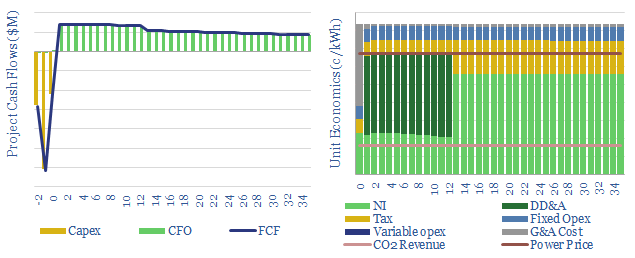
The levelized cost of onshore wind is estimated in this economic model, at 5-7c/kWh to generate 5-10% levered IRRs on new wind projects costing $1,000-3,000/kW. The model also contains a granular breakdown of wind capex costs, operating costs, and other economic assumptions for wind projects.
-
Wind energy: beyond good and evil?
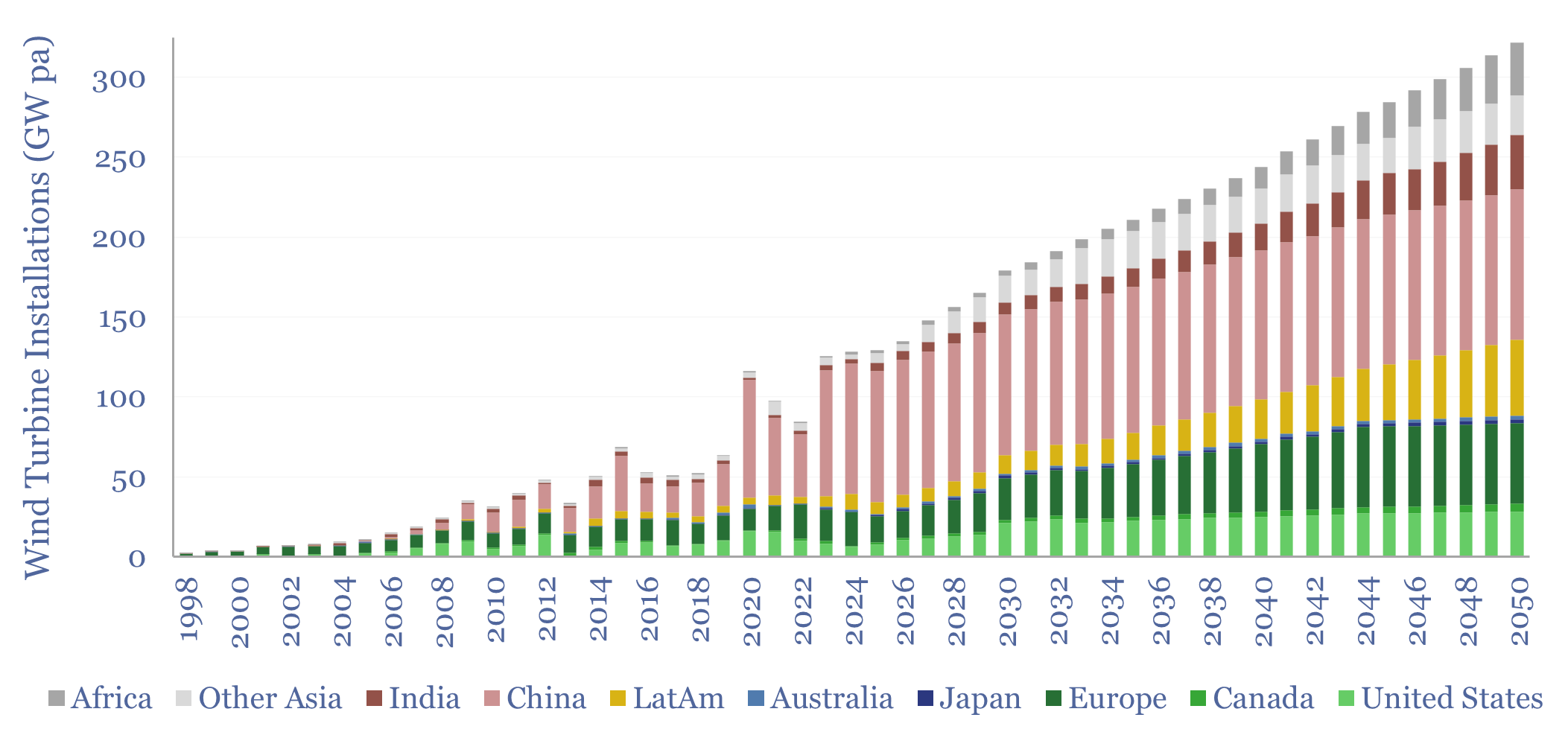
Wind economics are not good or bad in absolute terms. They depend on capacity factors, which average 26% globally, but can range from 10% to 60%. In the best locations, levelized costs are below 4c/kWh. Hence this 16-page note explores global wind capacity factors and updates our wind outlook by region throgh 2050.
-
European energy: the burial of the dead?
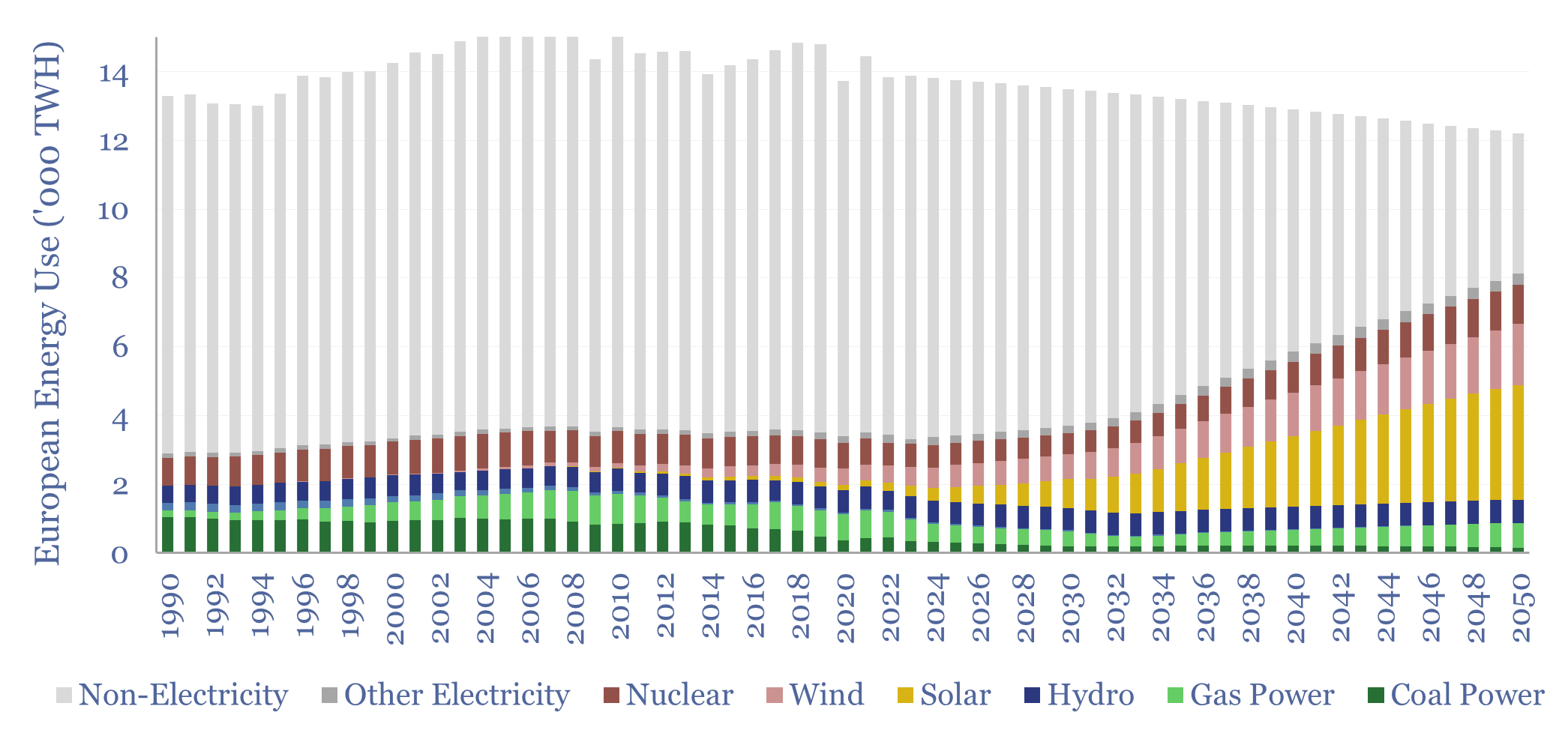
Europe’s energy ambitions are now intractable: It is just not feasible to satisfy former climate goals, new geopolitical realities, and also power future AI data centers. Hence this 18-page report evaluates Europe’s energy options; predicts how policies are going to change; and re-forecasts Europe’s gas and power balances, both to 2030 and to 2050.
Content by Category
- Batteries (95)
- Biofuels (44)
- Carbon Intensity (48)
- CCS (64)
- CO2 Removals (9)
- Coal (41)
- Commentary (65)
- Company Diligence (104)
- Data Models (920)
- Decarbonization (162)
- Demand (129)
- Digital (86)
- Downstream (47)
- Economic Model (220)
- Energy Efficiency (76)
- Hydrogen (63)
- Industry Data (308)
- LNG (56)
- Materials (86)
- Metals (88)
- Midstream (45)
- Natural Gas (161)
- Nature (76)
- Nuclear (28)
- Oil (175)
- Patents (39)
- Plastics (44)
- Power Grids (155)
- Renewables (153)
- Screen (136)
- Semiconductors (35)
- Shale (58)
- Solar (72)
- Supply-Demand (53)
- Vehicles (95)
- Video (24)
- Wind (47)
- Written Research (405)