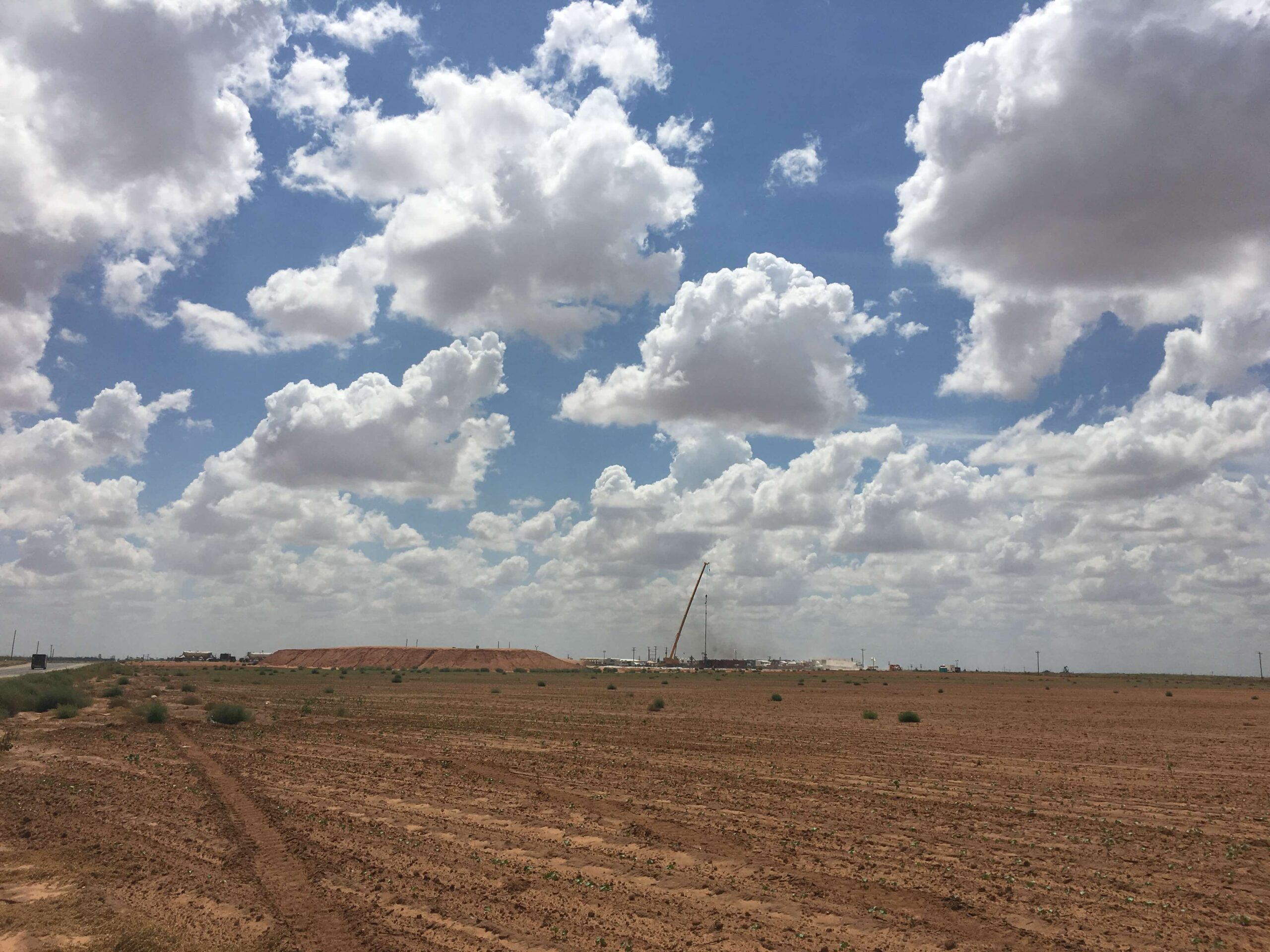
‘What the Thunder Said’ is the final section of T. S. Eliot’s 1922 masterpiece, the Waste Land. The poem describes a bleak and unproductive world. Nothing will grow. We think it is important to avoid the world becoming a Waste Land. Environmentally. Industrially For investors. So we humbly hope that Thunder Said Energy’s research into the energy transition can help.
An Environmental Waste Land?
“What branches grow out of this stony rubbish? Son of man, you cannot say, or guess, for you know only a heap of broken images, where the sun beats, and the dead tree gives no shelter, the cricket no relief, and the dry stone no sound of water. Come in under the shadow of this red rock, and I will show you something different from either your shadow at morning striding behind you or your shadow at evening rising to meet you. I will show you fear in a handful of dust”.
The primary motivation for the energy transition is to avoid Planet Earth becoming a Waste Land due to the destruction of the natural world, rising global temperatures, and a planet that ultimately becomes unhospitable.
Global temperatures have risen by over 1.2C since pre-industrial times (data below), which is primarily due to rising atmospheric CO2 concentrations, rising methane concentrations and other greenhouse gases, and there are pathways looming that will see 3-8C of global warming by the end of the century.
The reasons for rising atmospheric CO2 span across a constellation of over 40 industries, which each explain more than 0.5% of the world’s CO2. These industries have another name — “the entire global economy”. It is tempting to scapegoat one or two industries. But it is unproductive. Ultimately, a credible roadmap to net zero must address every single bar on the chart below. This requires finding constructive solutions.
In our view, the saddest source of CO2 emissions is from the destruction of nature. Each year 10M hectares of primary forest is destroyed, which releases more CO2 than all of the world’s passenger cars. One third of the world’s primary forests have been destroyed in total, releasing an average of 200 tons of CO2-equivalents from 5bn acres of the Earth’s surface. This is 1 trillion tons of CO2-equivalents, and possibly as much as one-third of all anthropogenic emissions to-date. It has negative consequences for 40M species on planet Earth. Hence a large part of our roadmap to net zero specifically focused on restoring nature, forests and high-quality CO2 removals.
“Phlebas the Phoenician, a fortnight dead, forgot the cry of gulls, and the deep sea swell, and the profit and loss. A current under sea picked his bones in whispers”.
Devastating energy shortages have their own problems, which are also detrimental to human civilization. Following $600bn of cumulative under-investment, global energy markets are likely to be 2-10% under-supplied through 2030. As a result, energy prices must rise to the level that “destroys demand”. In turn, higher energy prices are likely to absorb an additional 10% of global GDP, which remarkably, is a 3x higher cost than the energy transition itself.
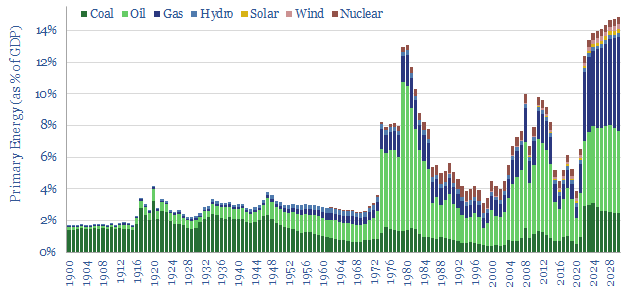
Primary energy has absorbed 4% of global GDP on average, going back to 1900. It spikes to 8% in the first oil shock, 12% in the second oil shock, and could surpass 14% in the late 2020s without sufficient energy investment.
Clearly, categorically, restoring the world’s energy surplus should be an important goal of the ESG movement, as important decarbonization itself. This is not instead of achieving an energy transition. It is so that we can achieve an energy transition. The note below outlines this point, clearly, concisely.
“I sat upon the shore Fishing, with the arid plain behind me, Shall I at least set my lands in order? Hieronymo’s mad againe … These fragments I have shored against my ruins”.
The Waste Land’s narrator seems to descend further into madness, as the poem continues. We can sympathize. In our research into the energy transition, we have reviewed hundreds of technologies, modelled the value chains across over one hundred different industrial processes that all need to be decarbonized, and attempted to educate ourselves on the overwhelming complexities of power grids, metals and materials, energy efficiency technologies, modelled dozens of supply-demand balances, and constructed over 1,000 different data-files.
“The black clouds gathered far distant over Himavant. The jungle crouched in silence. Waiting for rain… Then spoke the Thunder…. Datta, Dayadhvam, Damyata, Shantih, Shantih, Shantih”.
‘What the Thunder Said’ is the title of the Waste Land’s final section. It hints at a resolution, bringing rain to the dry Waste Lands below. Large clouds gather over the Himalayas and the thunder begins to speak a few words. Although they happen to be in Sanskrit, and remain painfully cryptic even once translated into English (thanks Eliot).
As a resolution across all of our research, our roadmap to net zero aims to integrate all of our research into a fully modeled pathway, which can meet the energy needs of the world, while also decarbonizing. We hope it is clear, non-cryptic and it is also backed up with dozens of models that can be be evaluated in more detail.
“Unreal City, Under the brown fog of a winter dawn, A crowd flowed London Bridge, so many, I had not thought the markets had undone so many. Sighs, short and infreuqent were exhaled And each man fixed his eyes before his feet. Flowed up the hill and down King William Street, to where Saint Mary Woolnoth kept the hours; With a dead sound on the final stroke of nine”.
Achieving an energy transition is not going to happen via divestment. Our roadmap to net zero requires primary spending in energy to rise from below $1trn pa today, to $4-5trn per annum. We hope our thematic research into the energy transition helps investors to find opportunities with exciting returns, where the technology “works”, and there are exciting opportunities to support. We have assessed over 1,000 companies to-date in our energy transition research, which is all available via the TSE research portal.
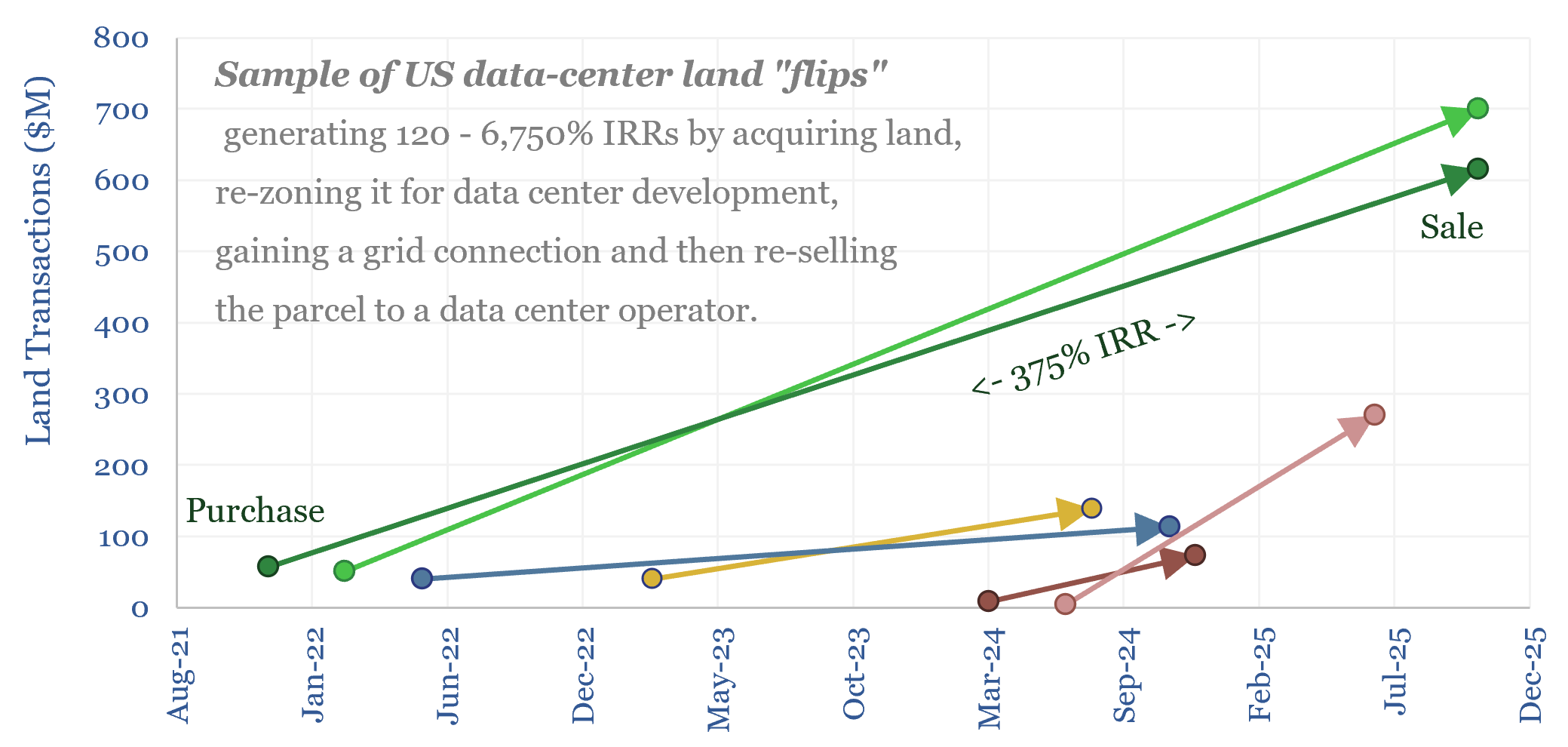
Are speculative data center projects, 80% of which will never get built, inflating future load growth forecasts? This 18-page report reviews evidence from land developer returns, recent PUC deliberations and evolving terms in Electrical Service Agreements (ESAs).
Read the Report?
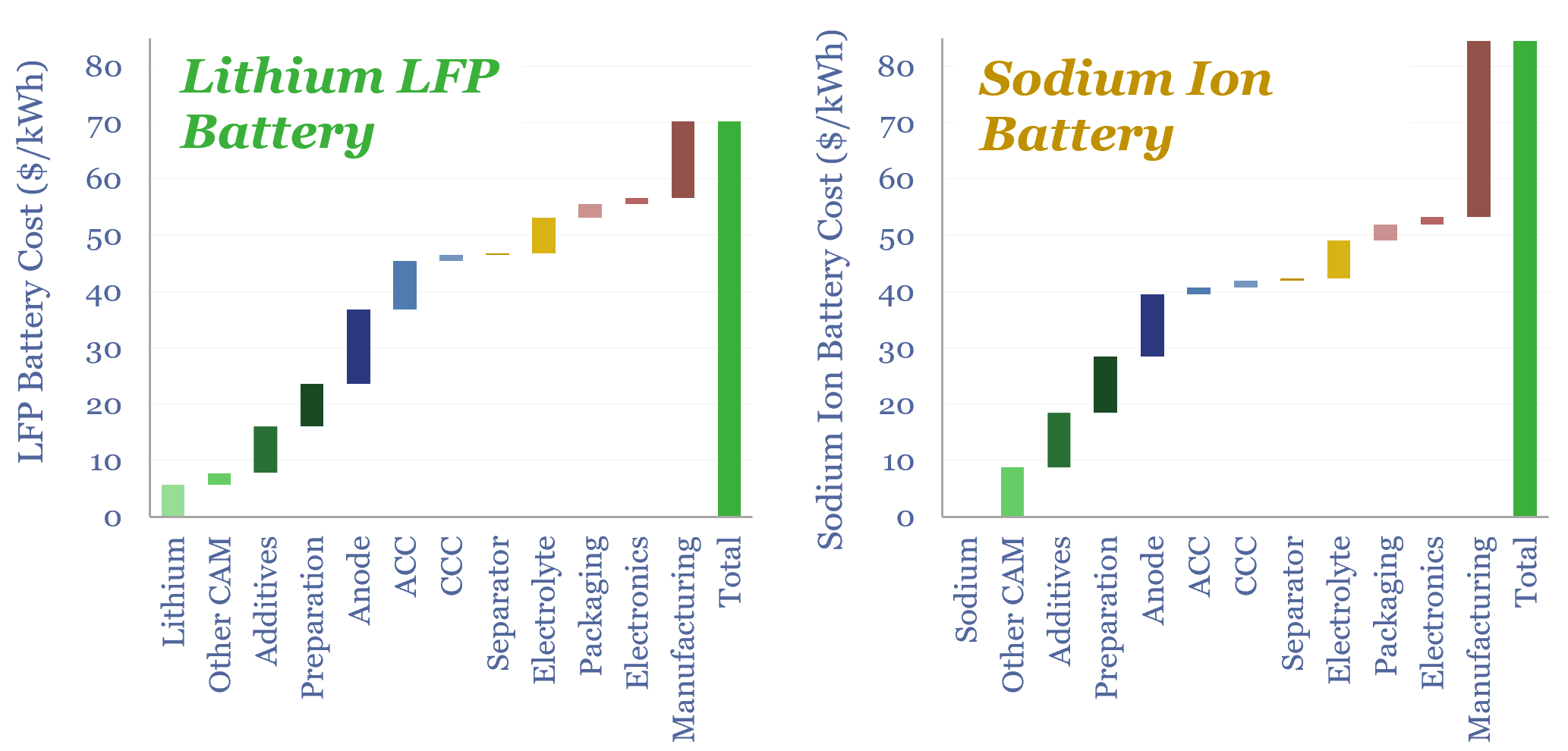
Sodium is 1,000x more abundant than lithium in the Earth’s crust and 99% cheaper. So will sodium ion batteries disrupt lithium ion batteries? Not until lithium carbonate prices treble to $40/kg. Or novel SIB electrode materials emerge. This 16-page SIB deep-dive de-risks our lithium market outlook.
Read the Report?
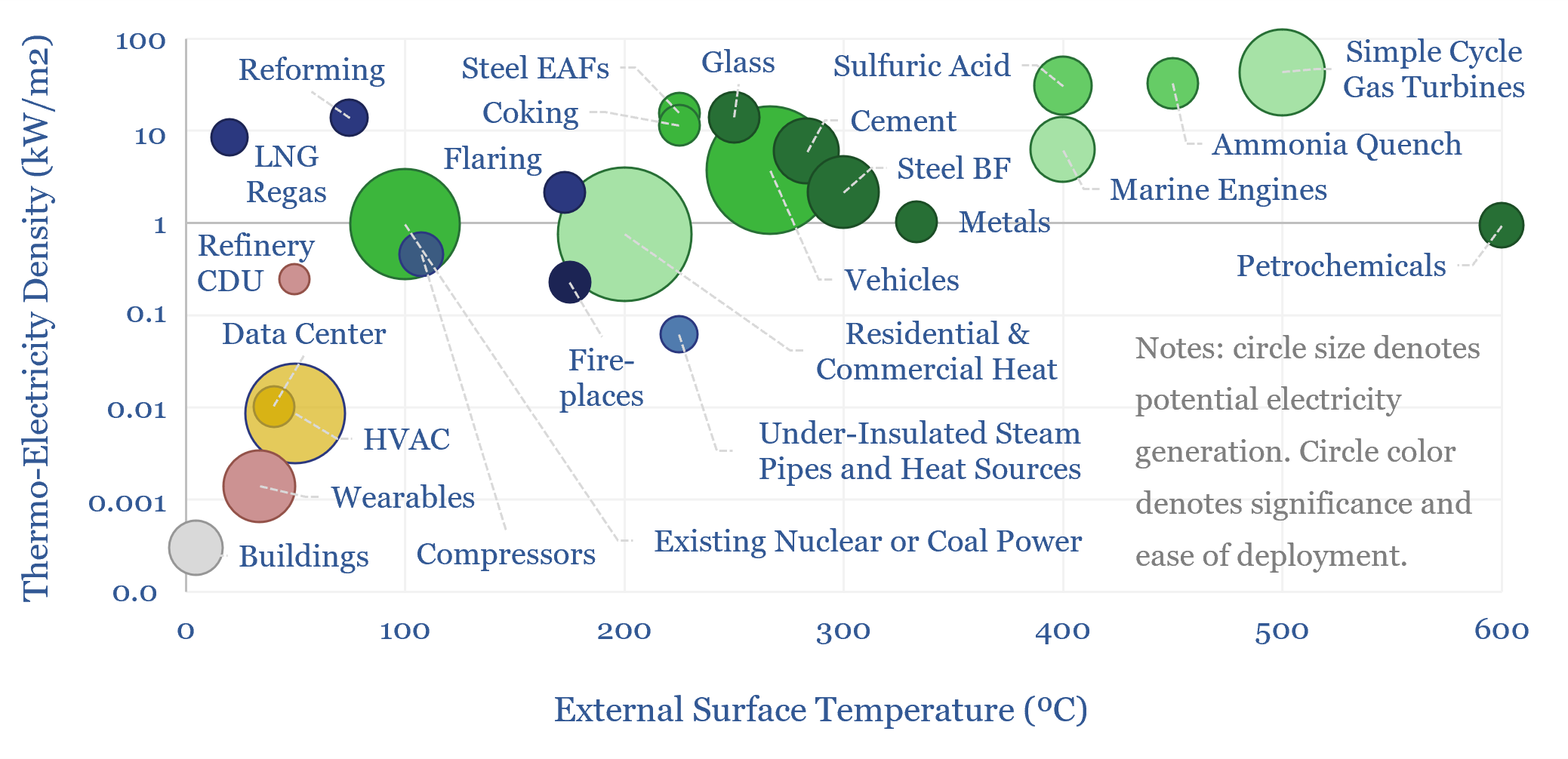
Next-generation thermoelectrics, if discovered by AI, could be a world-changer, converting heat to electricity at 10-50% efficiency, costing $500/kWe. 10,000 TWH of incremental electricity could be generated, worth $500-1,000bn pa. This 17-page report outlines our ‘top ten’ use cases for thermoelectrics.
Read the Report?
Residential heat is 13% of global energy. So what if AI could optimize residential electric heating? This 16-page report finds that load-shifting hot water tanks can unlock 1.5-8.5% additional flexibility in grids and make air source heat pumps the lowest cost option for heat in Europe, eclipsing gas-combi boilers, saving $300 per household per year?
Read the Report?
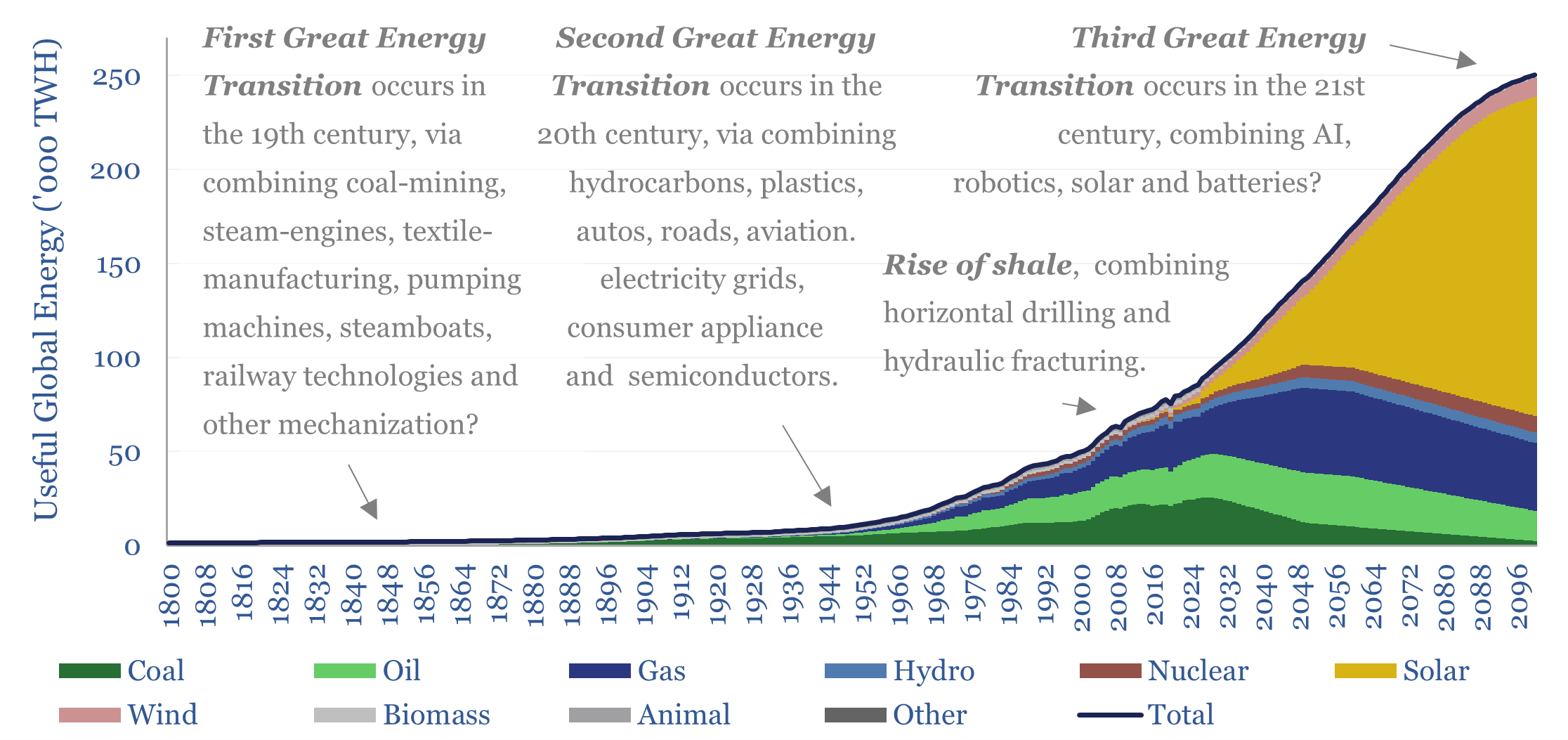
Great industrial leaps often occur when technologies collide. Hence this 20-page report explores how AI, solar, batteries and robotics might all collide together. This is transformative for the world. It represents the next “energy transition”. Hence this also becomes our new roadmap for the evolution of the global energy system.
Read the Report?
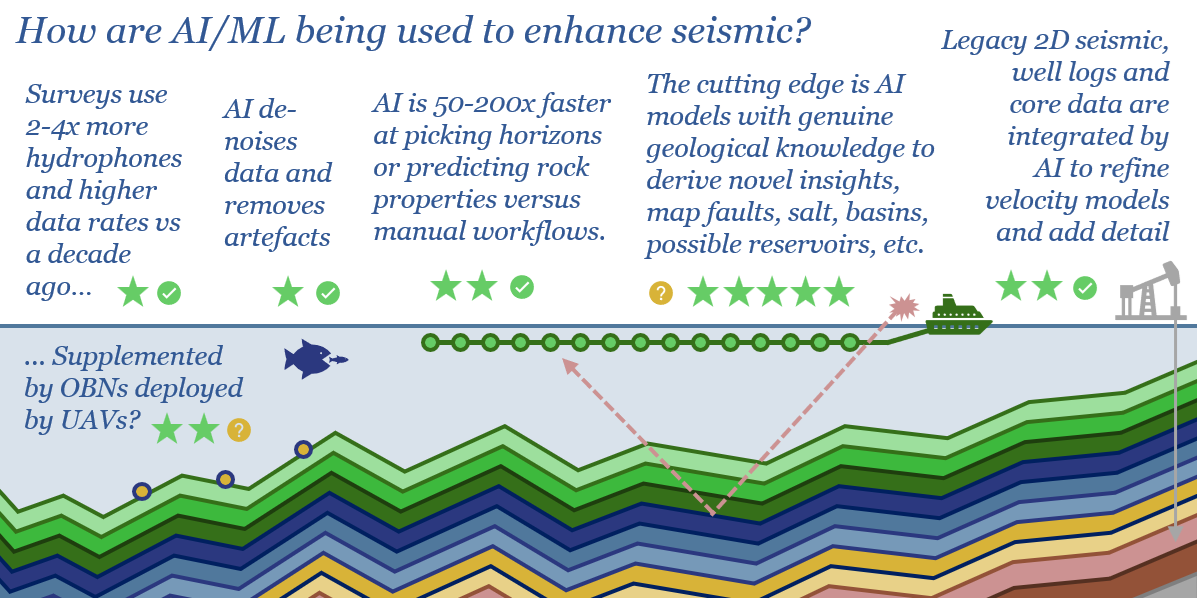
The global seismic industry is worth $10bn pa. But an additional $10bn pa of value could be unlocked by AI. This 19-page report finds promising progress with AI in seismic, uplifting the value of seismic hardware and multi-client libraries. But the theme is still in early innings. Who benefits?
Read the Report?
How long does a geothermal well have to be to avoid thermal depletion? To answer this question, we built our own reservoir model, which is outlined in this 12-page report. Advanced Geothermal would require 10-100km laterals, which is cost prohibitive. Enhanced Geothermal or geothermal for ‘winter heating’ may fare better.
Read the Report?
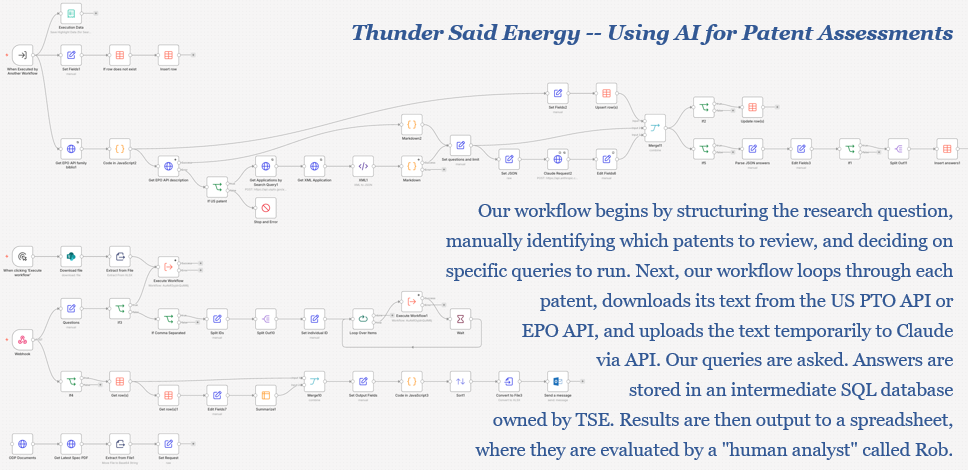
We have developed a new methodology to cover 4x more ground, and create novel data-sets, by using AI to enhance our analysis of patents. So how will this help us appraise energy technologies? This 11-page report covers our approach, data usage rights, energy use, and some of our favorite examples so far.
Read the Report?
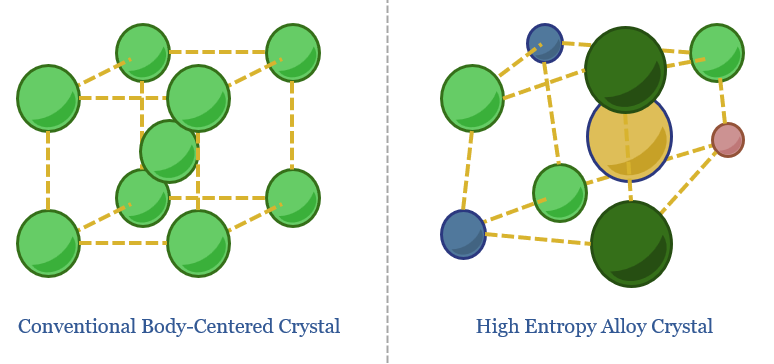
High Entropy Alloys are an emerging class of materials, composed of five or more elements, forming fascinating/novel lattice structures. This 18-page report reviews 100 recent HEA patents, and predicts generative AI will unlock transformational catalysts and materials in the next decade.
Read the Report?
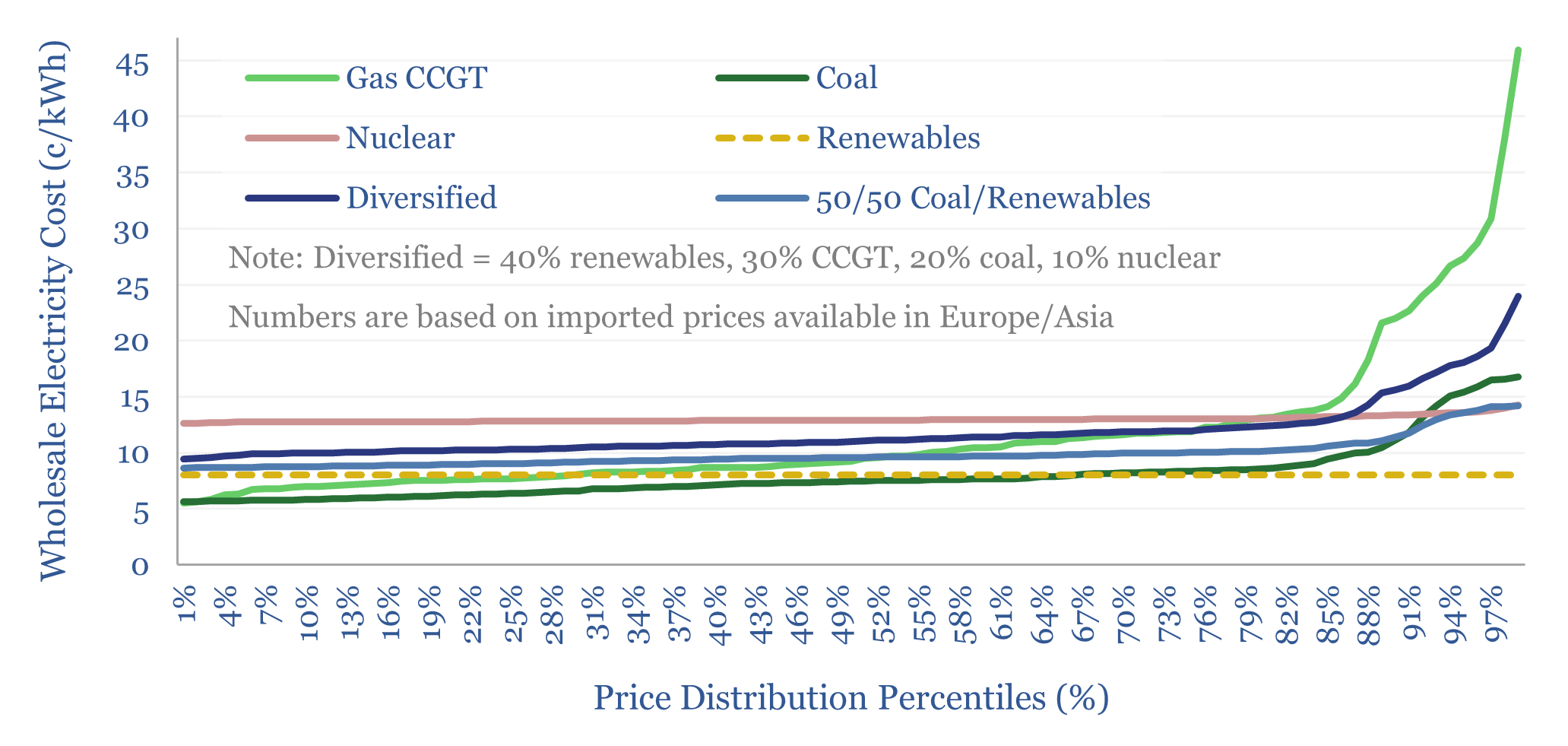
Energy importing countries value stable electricity prices. Hence this 18-page report evaluates the optimal grid mix, after taking stability into account? Recent gas price volatility will encourage further diversification for developed world importers, while coal+solar could dominate emerging world growth. Our forecasts are revised.
Read the Report?
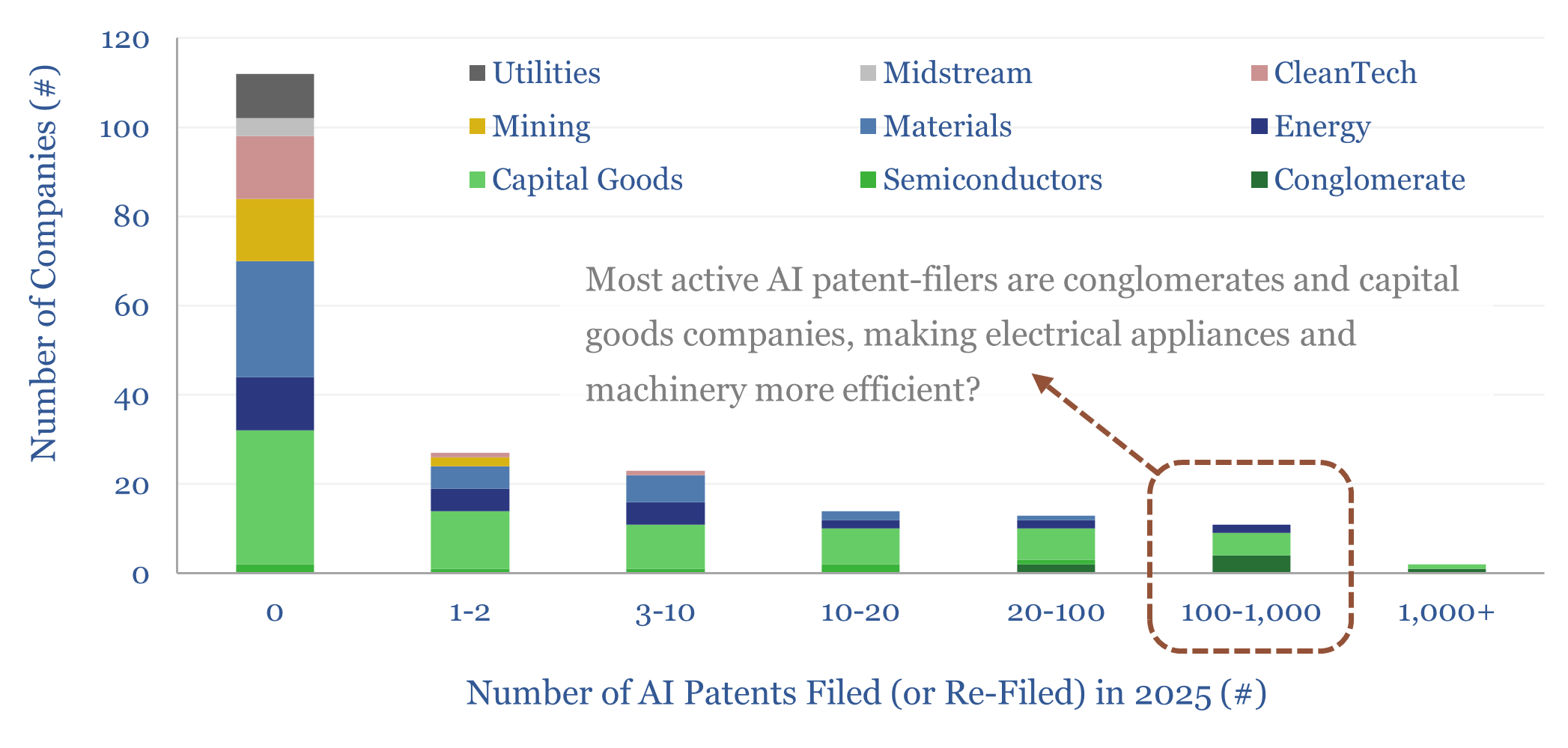
500,000 AI-related patents were filed in 2025. But electrical appliance manufacturers were particularly active. Hence we used AI ourselves, in this 14-page report, to home in on 50 key patents, which will improve efficiency and flexibility of electrical appliances using AI – in HVAC, lighting, refrigerators, TVs, etc. – which make up 50% of the grid.
Read the Report?
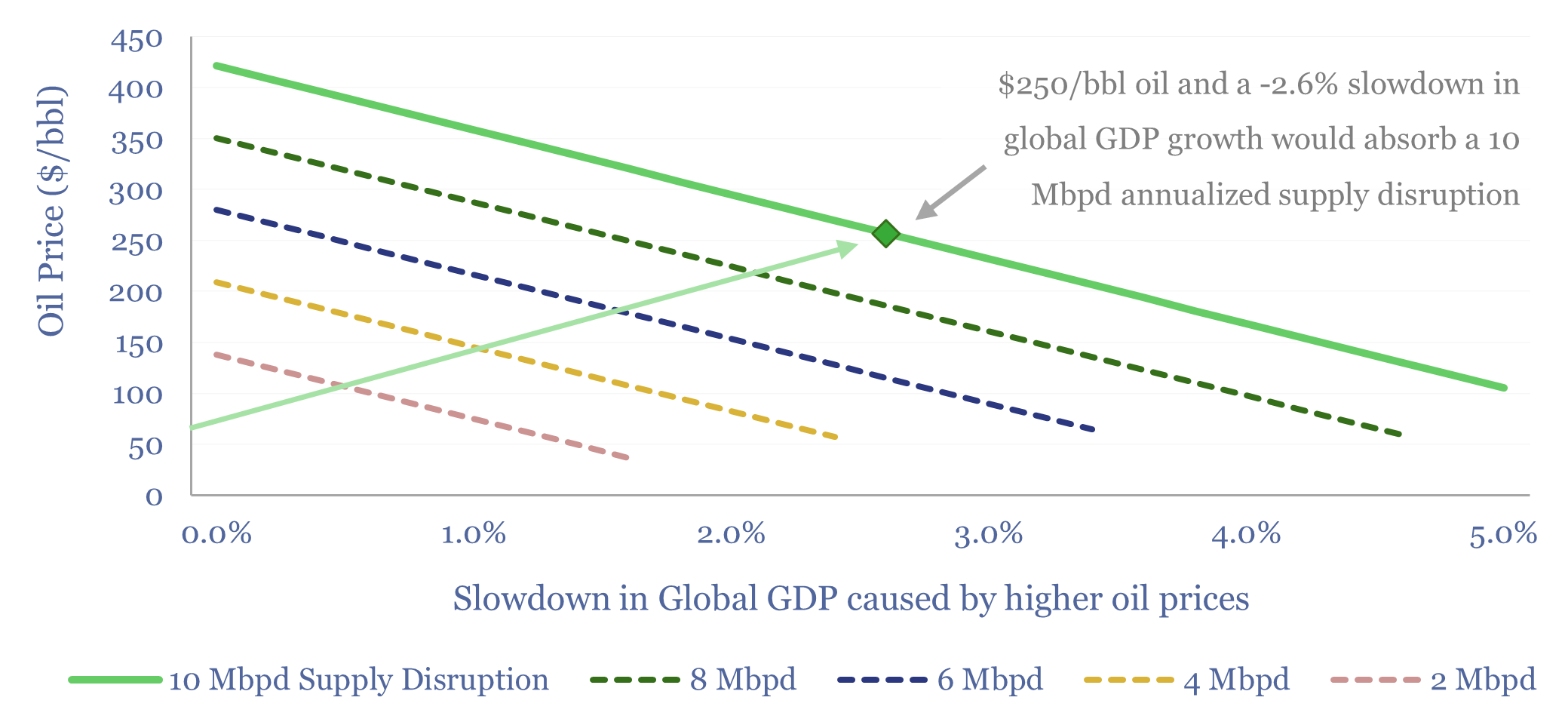
What is the price elasticity of oil demand — globally, by region, and by product? This 11-page report argues that a supply disruption of 10-20Mbpd magnitude, lasting for 6-12 months, pushes oil above $250/bbl, and also zeroes global GDP growth. Rationing and solar/EV substitution may cushion the impact.
Read the Report?
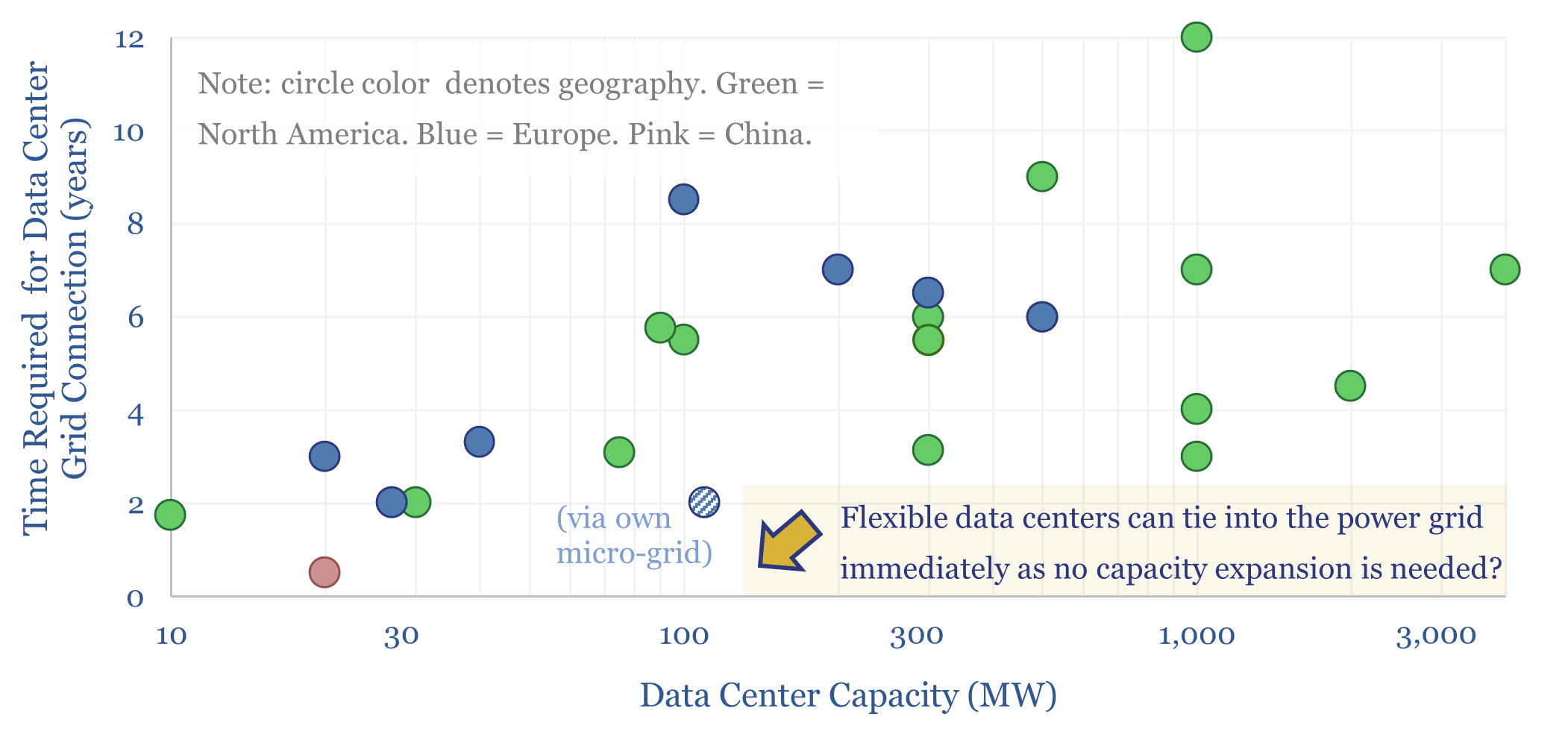
It can take 4-12 years to expand the grid and accommodate large new AI data centers. But what if more flexible data centers could be energized mostly via the pre-existing grid? This 15-page report shows how flexible AI data centers, which engage in demand shifting, are technically feasible, economically justified, and accelerating?
Read the Report?
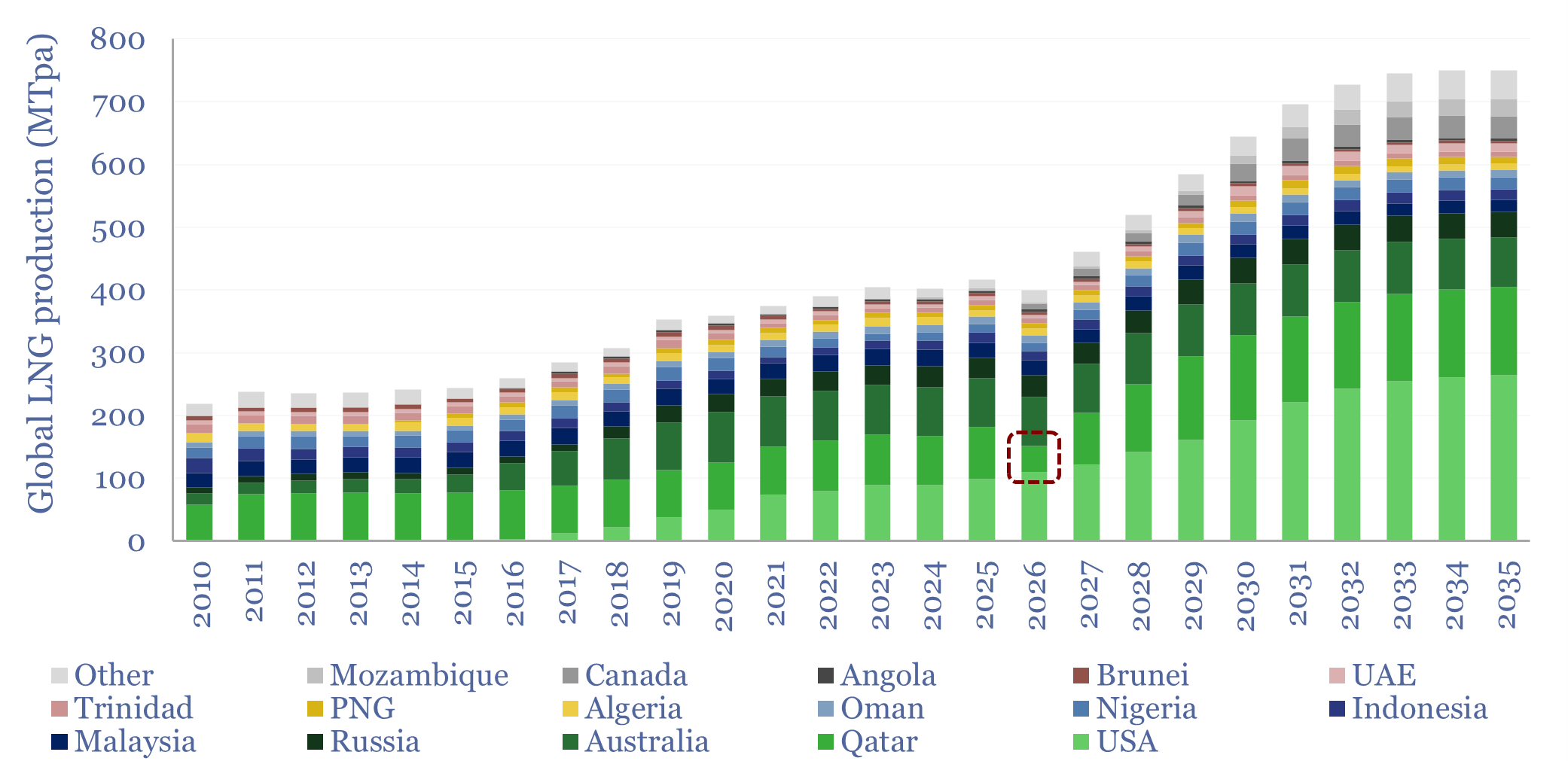
What if Qatar’s LNG output falls by -50% YoY in 2026, i.e., by -40MTpa, which is equivalent to a -0.4% reduction in useful global energy supplies? This 11-page report revisits all of our regional energy models, predicts how each Qatari LNG customer will fill the shortfall, and the implications for global energy markets.
Read the Report?
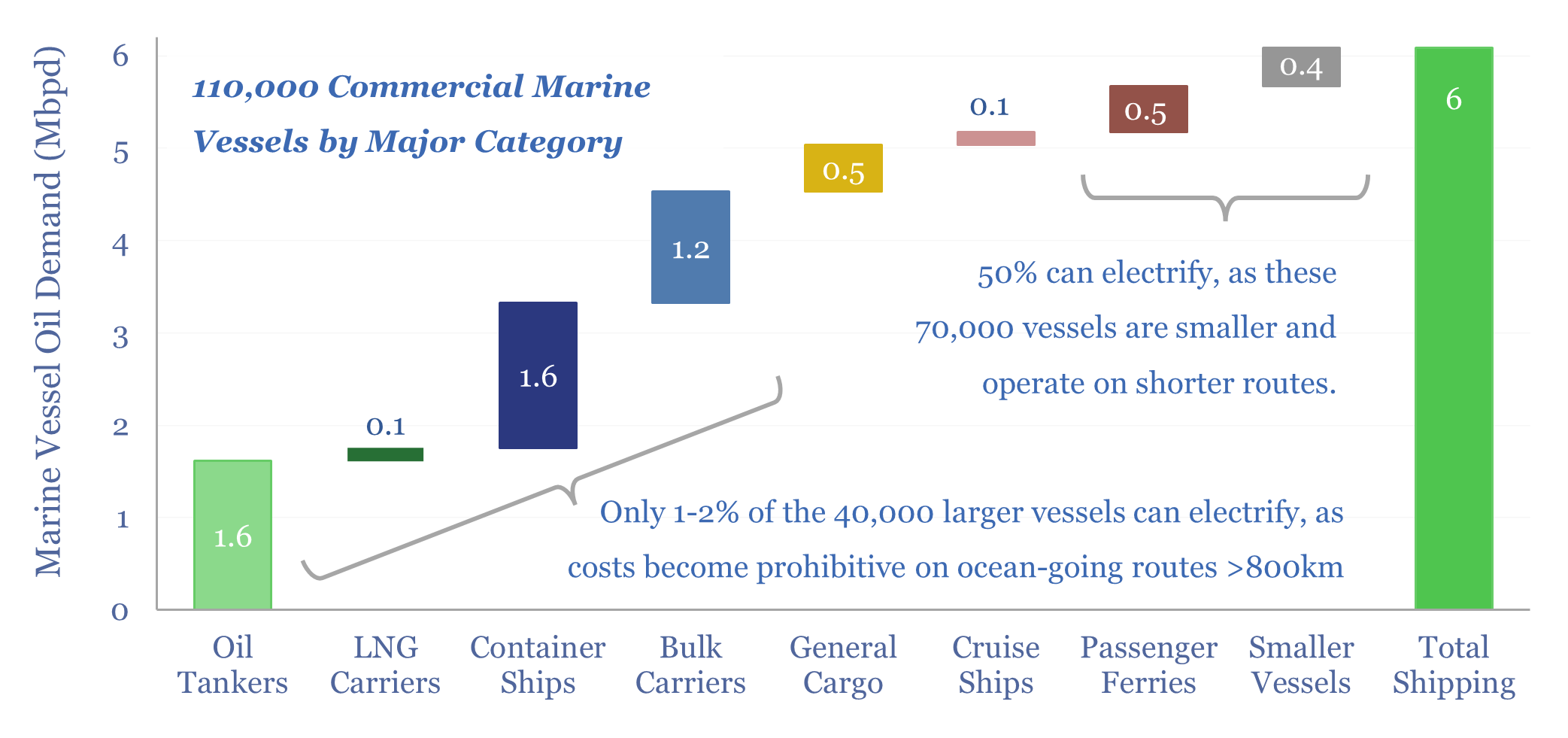
Over 15% of the world’s marine vessels could electrify in the next decade, accelerated by higher oil prices, and as Europe/Asia seek self-sufficiency. This 16-page report explores leading concepts, 30 flagship deployments to-date, the economics, and the implications for companies/commodity markets.
Read the Report?
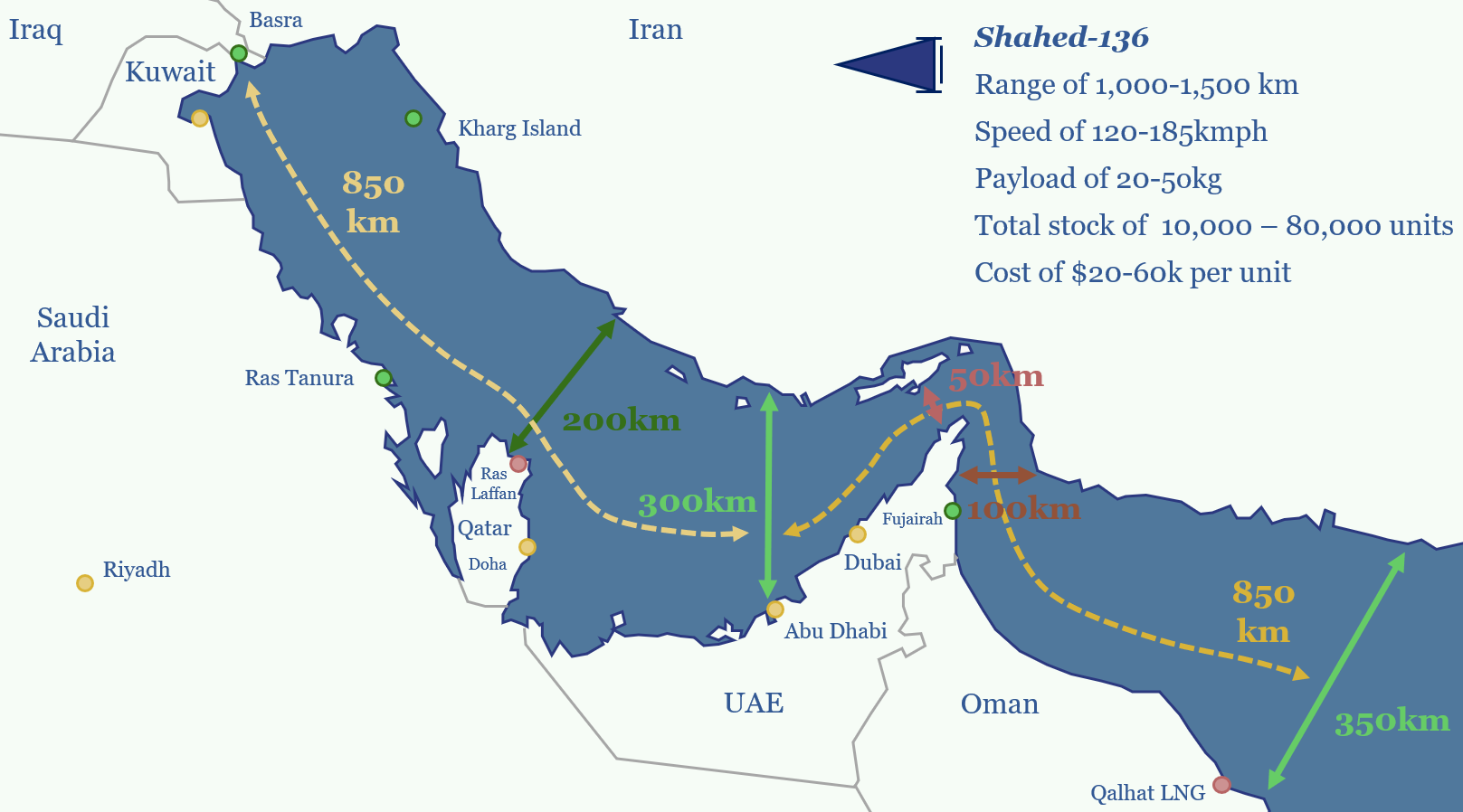
Is it possible to re-open shipping in the Strait of Hormuz, and protect broader Persian Gulf energy infrastructure, from thousands of Iranian Shahed drones? Today’s 9-page report reviews Shahed drones, counter-Unmanned Aerial Systems (cUAS), and implications across global energy markets.
Read the Report?
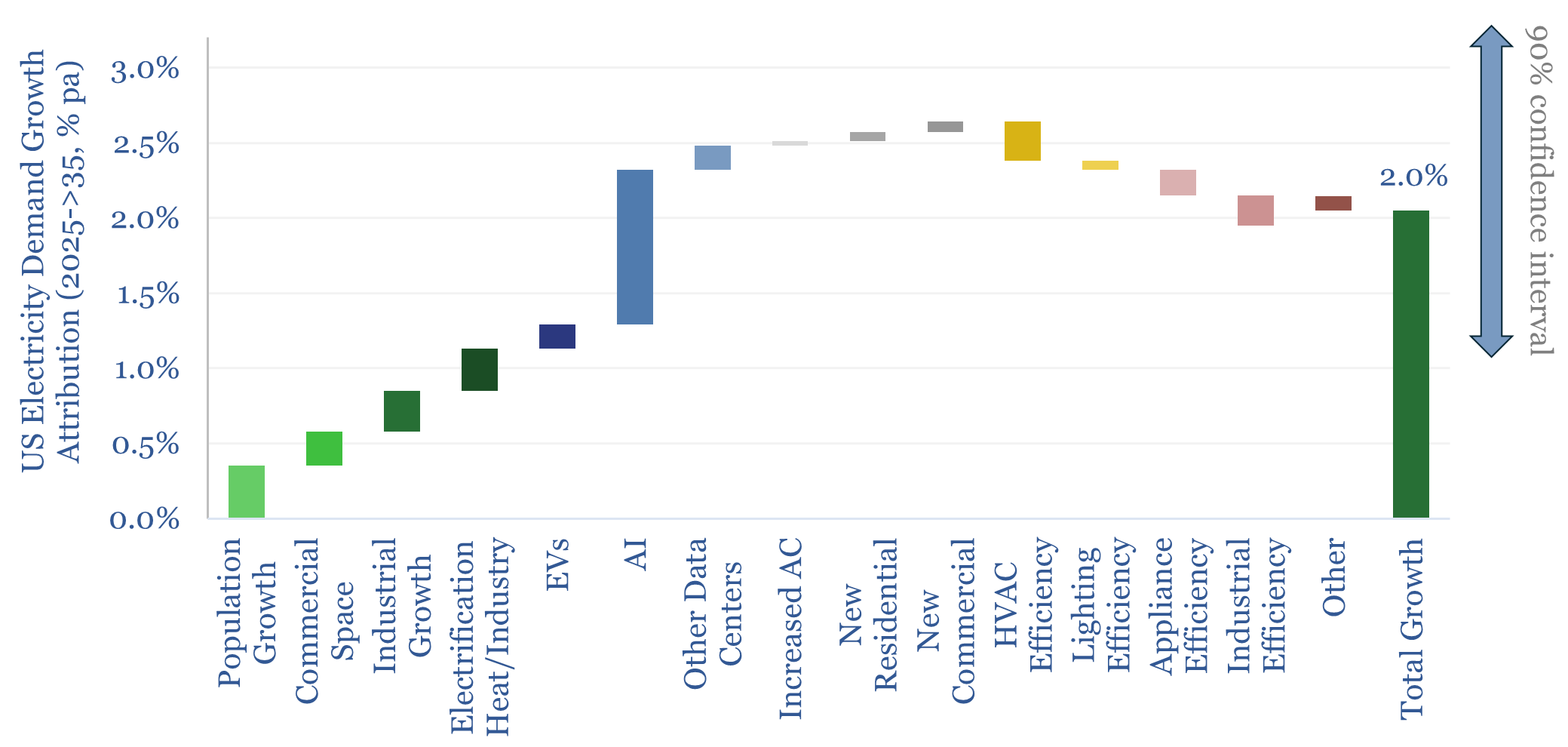
US electricity demand growth is a crucial debate. It affects everything. To bound the uncertainty, we assessed twenty input variables, and ran a Monte Carlo, in this 16-page report. Our new base case sees +2.0% pa demand growth to 2035. Our 90% confidence interval is 1-3% pa. What implications for gas and power?
Read the Report?
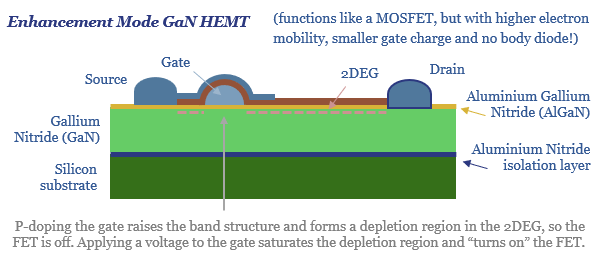
Gallium Nitride (GaN) is a remarkable semiconductor. GaN forms a 2-Dimension Electron Gas (2DEG), with exceptional electron mobility, which supports high switching frequency, improved power quality, 50-70% lower losses and 50-70% smaller devices. It is thus a crucial enabler for large AI racks. This 13-page report reviews the technology, device costs, and future market drivers.
Read the Report?
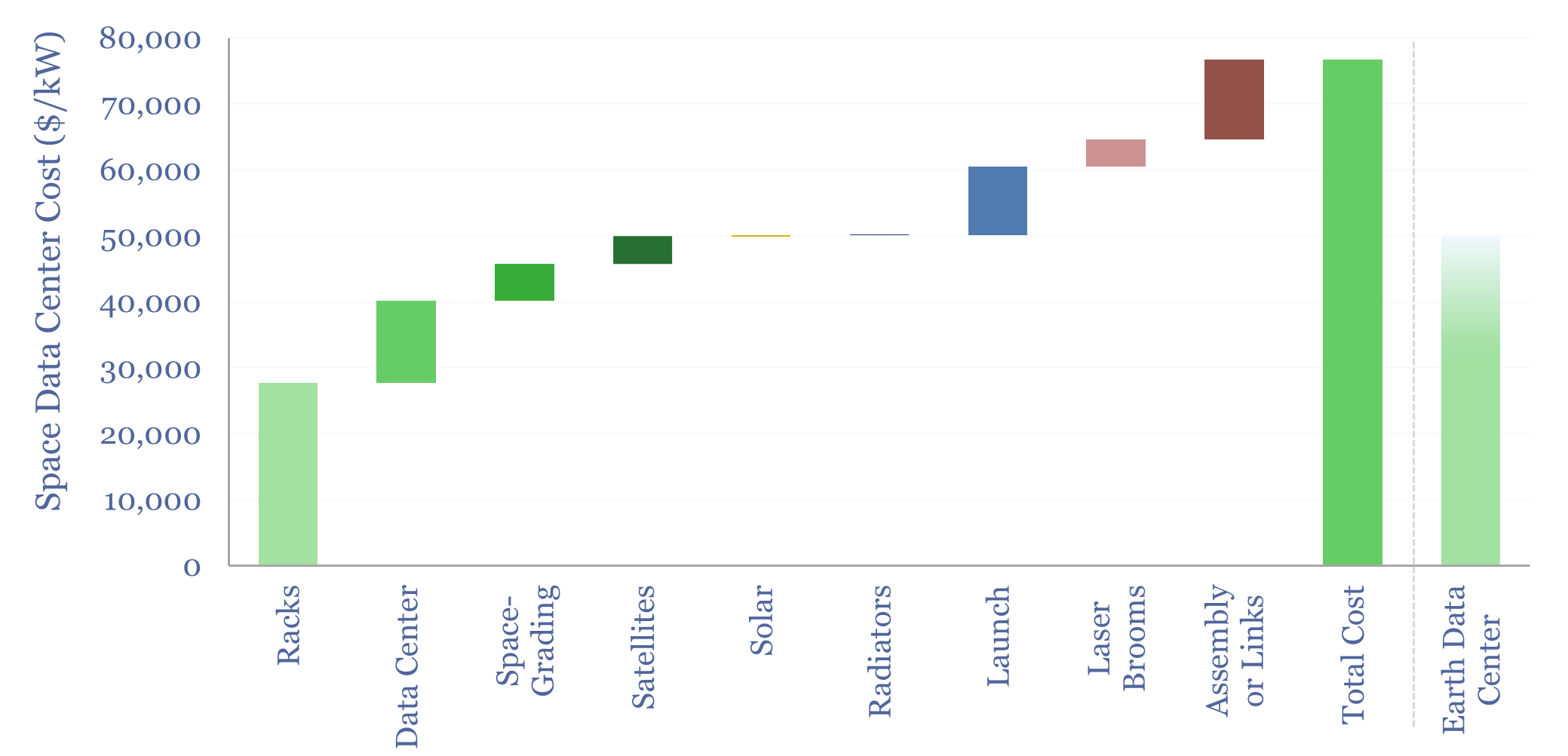
Data centers in space are a cool science fiction concept. This 17-page report explores how they would work. We think the costs will be 2x higher than Earth-based AI data centers. Amidst many logistical challenges, the biggest potential show-stopper is space debris, given the size of the structures, especially their solar arrays.
Read the Report?
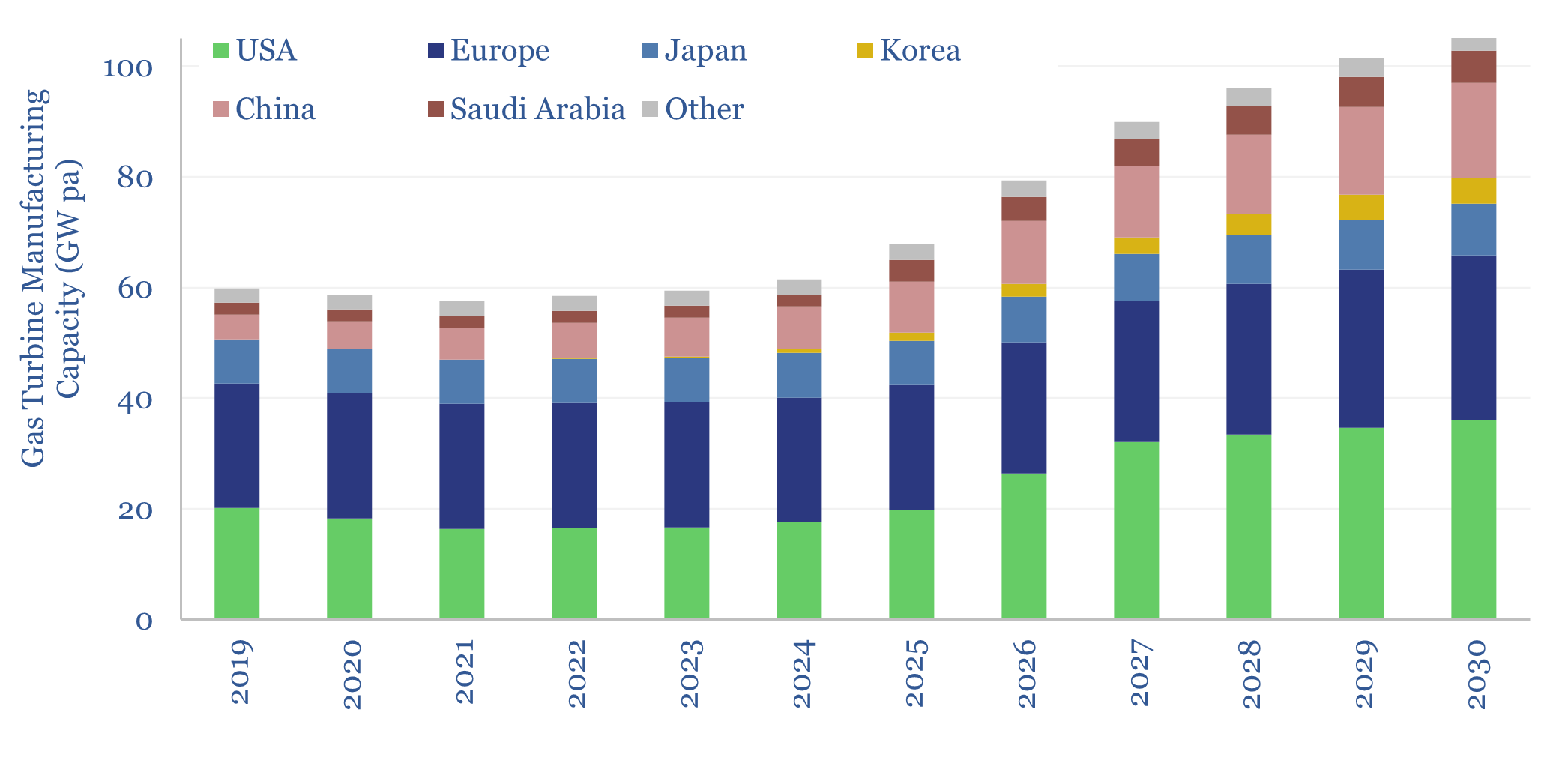
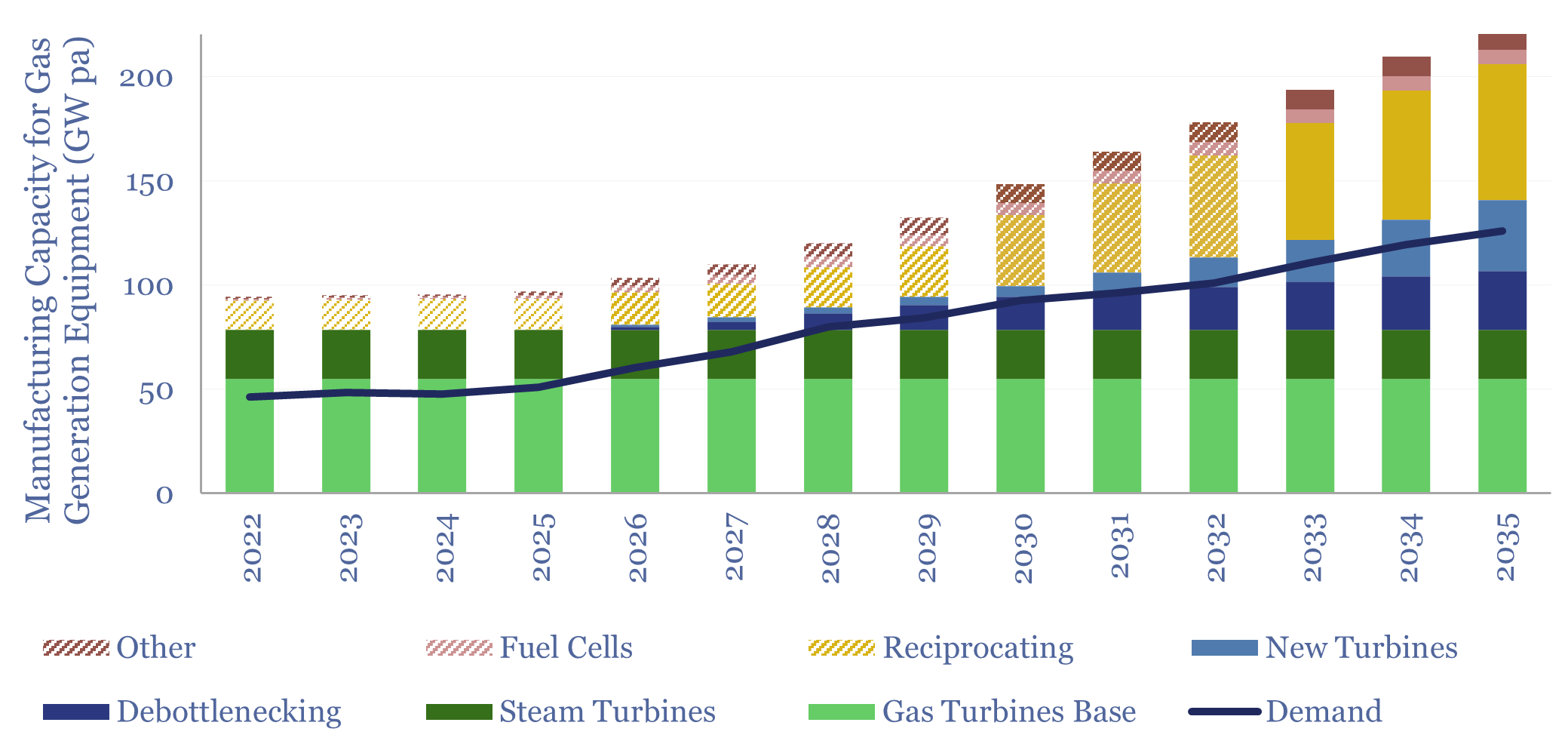
Can we model the supply and demand for gas turbines? This 21-page report presents our attempt. We ultimately see gas turbine manufacturing expansions outpacing demand growth. AI is also helping to expand. However, ‘accelerated orders’ may have distorted order books in 2025.
Read the Report?
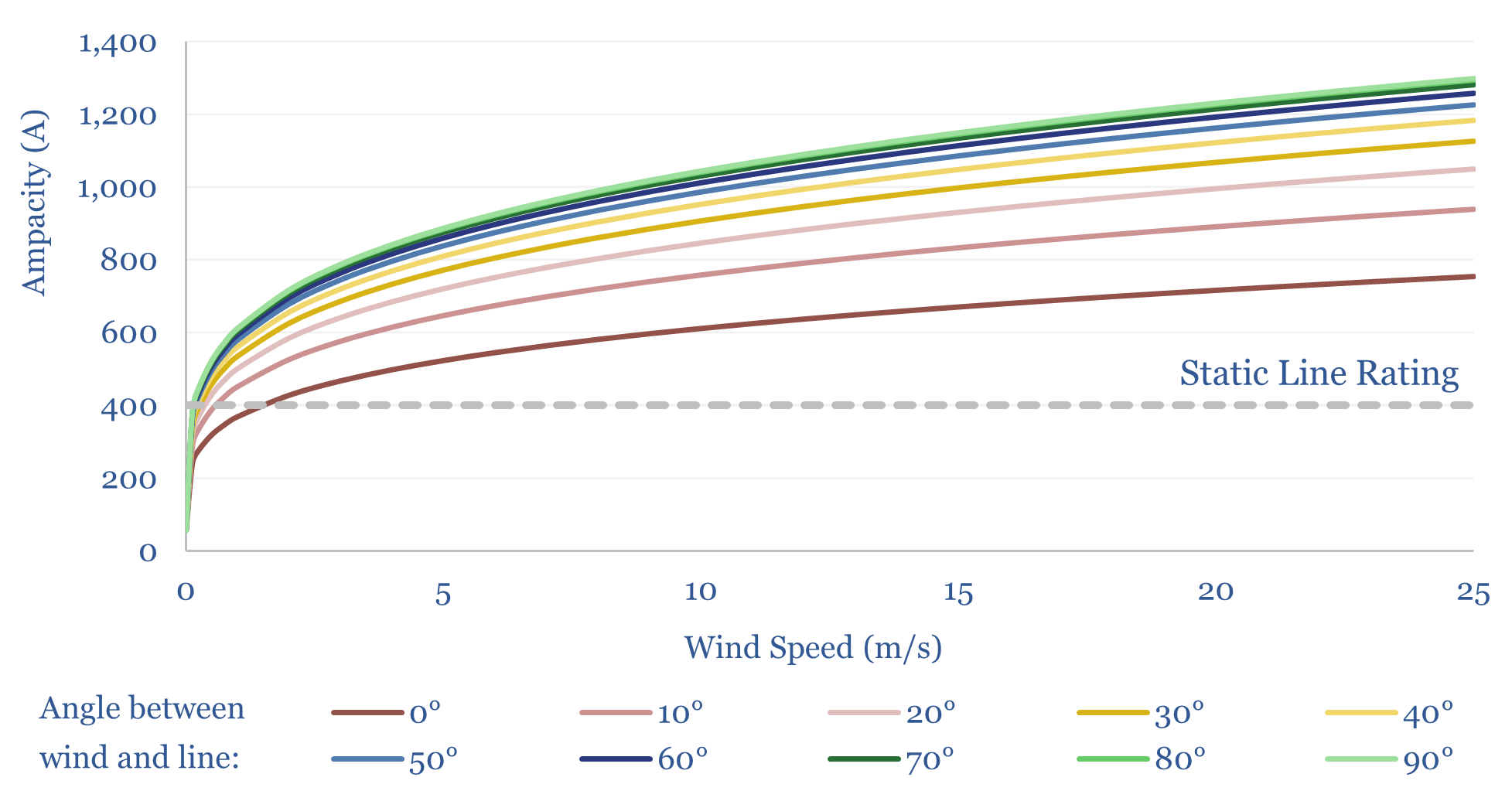
The carrying capacity of the power grid is not fixed, but varies with wind speeds and ambient temperatures. AI is now helping to enable Dynamic Line Ratings, unlocking 10-100%+ more capacity on some lines, effectively for free. This 18-page report explores the implications. Could DLRs avoid $100-300bn pa in future global grid capex, and thus debottleneck the rise of AI itself?
Read the Report?
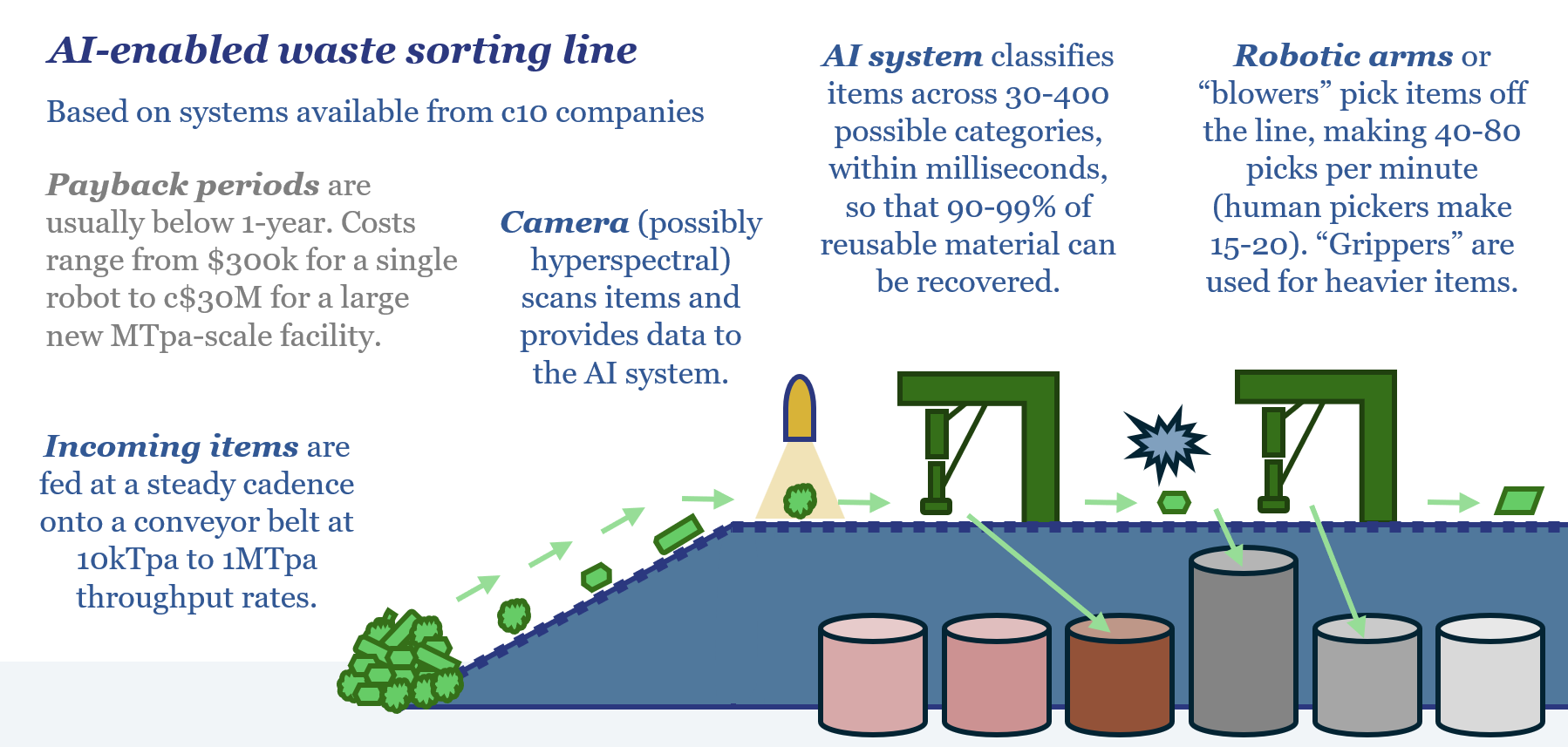
10 companies have recently launched AI-enabled robotics to recover value from the world’s 2.3GTpa of solid waste. Picking rates are 4x faster than humans. c1-year paybacks are quoted. Hence today’s 17-page report explores the implications for gas, power, metals, materials and oil markets, amidst a step-change in the circular economy.
Read the Report?
Gas-fired power generating capacity is in a classic capital cycle. This 16-page report evaluates when the cycle will peak. Gas power demand wants to rise at 3.8% pa through 2050. But high CCGT prices may delay EM growth, bring in new entrants, and substitution towards reciprocating engines.
Read the Report?
Further upscaling of AI is only possible via improved power electronics. Hence this 17-page report explores solid state circuit breakers, which offer 1,000x faster fault protection and greater controllability. How do SSCBs work? What do they cost? Who benefits? And who is displaced?
Read the Report?
The internet/AI era is pushing people out of dense urban centers into suburbs and exurbs, whose residents use 2-5x more oil and energy. This 15-page report reviews population density data from 3,150 US counties. Suburbification and exurbification have already been adding 0.2-0.8% pa to oil demand, which is seen accelerating further.
Read the Report?
Providing power to AI data centers was a key theme in 2025. But distributing power within them may be just as important for 2026+. More power-dense AI chips require upgrading in-rack buses from 54V to 800V. This 14-page report explores the challenges and opportunities of future AI power delivery architectures.
Read the Report?
2026 will be a year of recalibration. Long-standing theses/trends will break down: including for oil, LNG, geopolitics, EVs, solar, power markets and decarbonization. Energy markets swing from 1% oversupply in 2025, to undersupply in 2027. So which materials and strategies will fare best?
Read the Report?
Global oil demand was once meant to peak out in 2024-30. But 2025 saw almost 1Mbpd of growth, to 104Mbpd. 2026 should see over 1Mbpd of growth, amplified by a YoY pullback in EV sales. Hence this 15-page report revisits peak global oil demand and sees global refinery utilization tightening by 3-5%.
Read the Report?
The idea for this report was to dream up interesting uses for autonomous mobile robotics in the future, including in energy and mining. But to our amazement, many of these ideas are already being piloted. We reviewed the pilots in this 18-page report. They suggest transformational economic impacts and moderate energy/materials upside.
Read the Report?
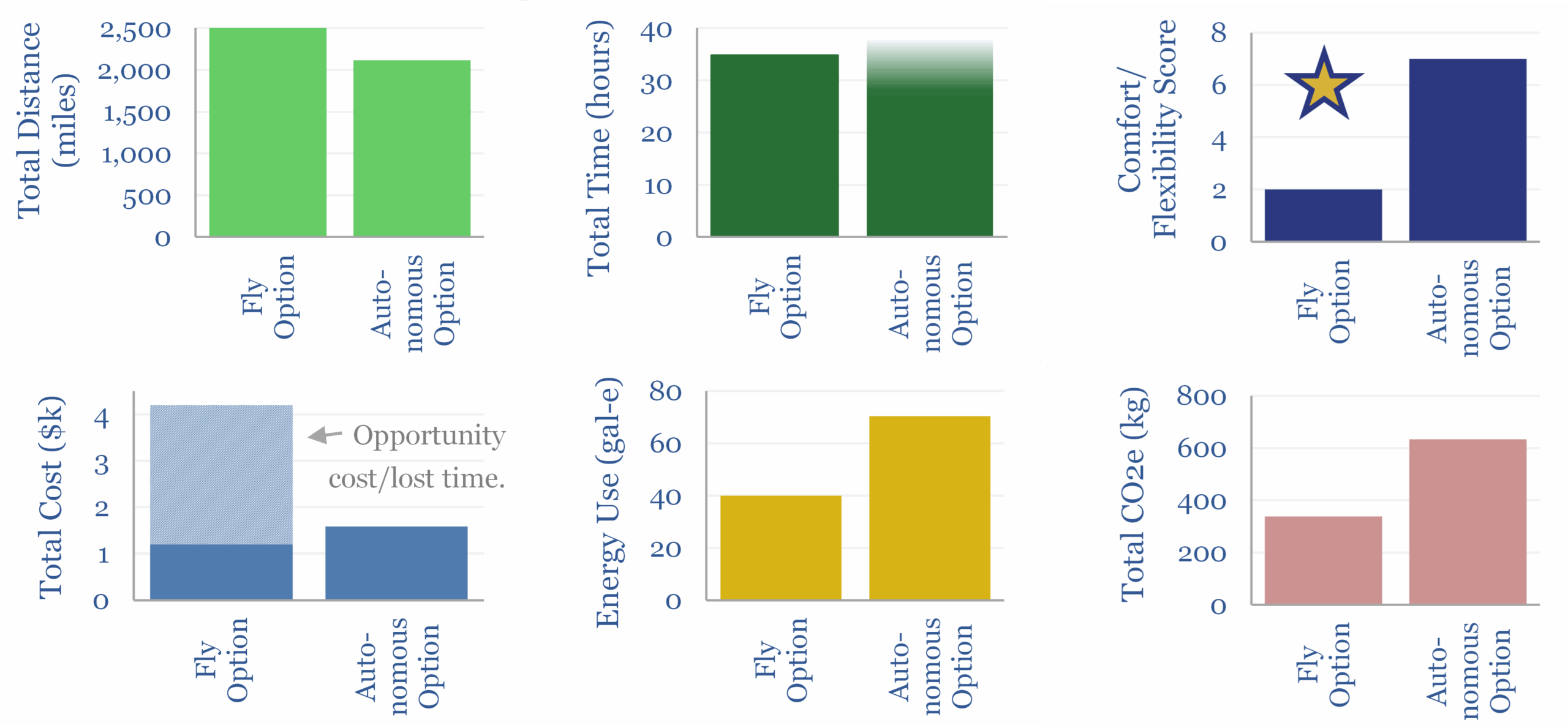
This 13-page report explores the upside in autonomous transport. We were recently invited to a fascinating company event in Leipzig, Germany. But it was too complex to reach by flying. It would have been doable in an autonomous vehicle, albeit using 2x more energy overall. So could autonomous vehicles unlock 5Mbpd of global oil demand upside?
Read the Report?
This 19-page report explores the world’s progress towards net zero, amidst the harsh economic reality of 2025+. Which decarbonization technologies are still progressing, which are scaling back, and why? What if the current trajectory is ultimately seen to be enough?
Read the Report?
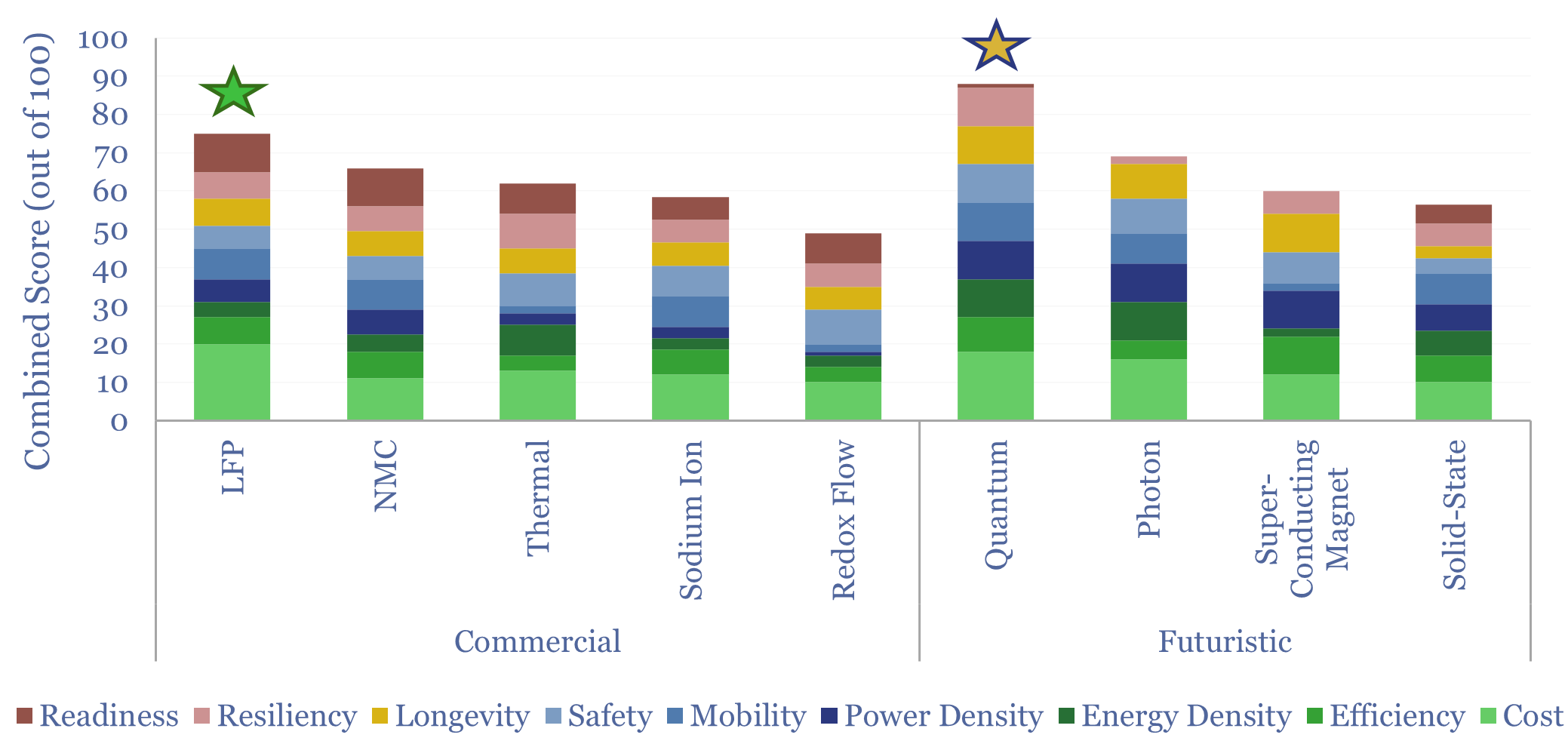
Lithium ion batteries are now so deeply entrenched that we doubt any new electrochemistry can supplant them. This 23-page report asks where are the opportunities now in batteries? Could any futuristic batteries with quasi-infinite capacity, such as quantum batteries, power inter-seasonal storage or long-distance aviation?
Read the Report?
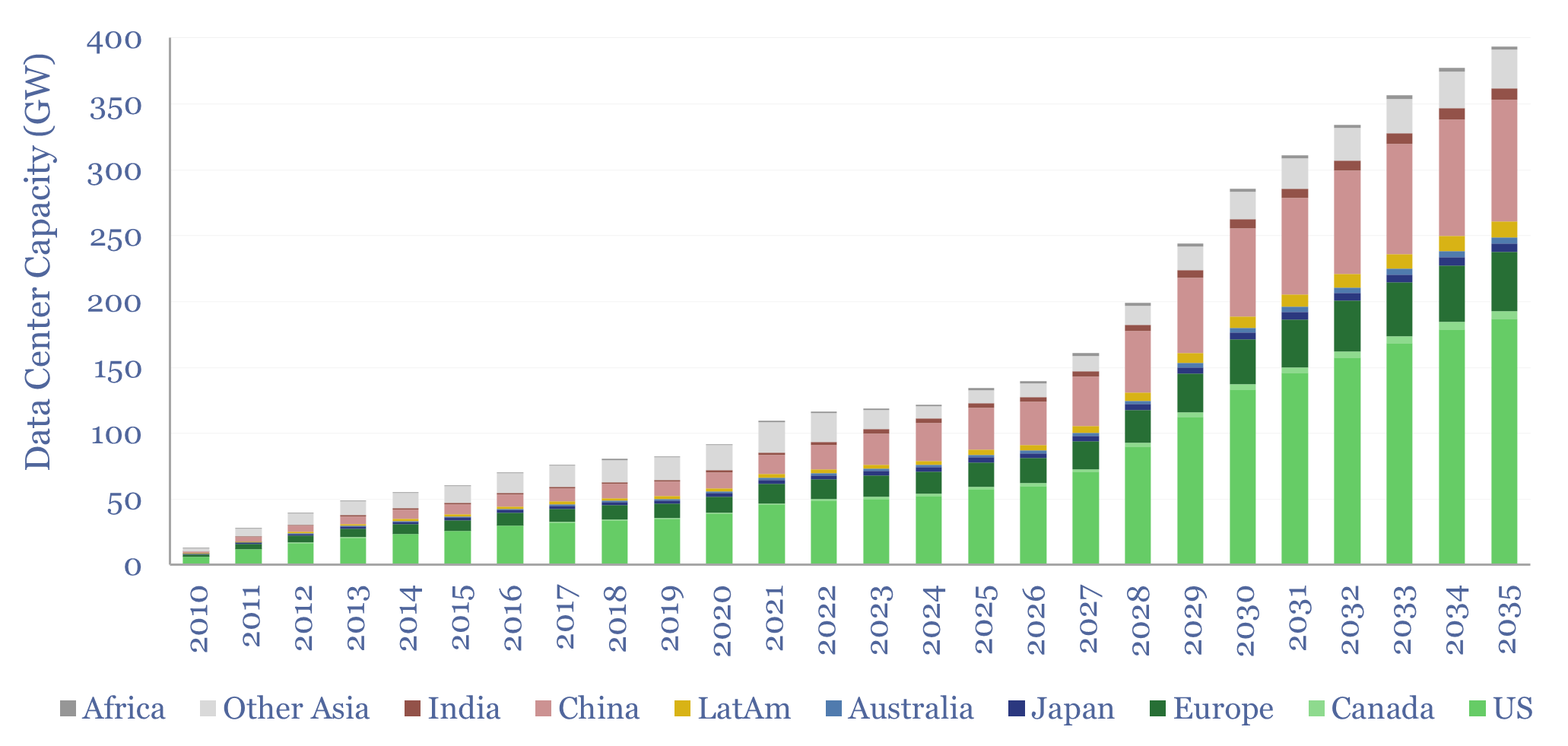
How many data centers will there be? How big will the biggest AI data centers be? Where should they be located? And do recent announcements connote upside or downside risks? This 15-page report forecasts the build-out of AI data centers, using bottom-up data, statistical distributions and economic modeling.
Read the Report?
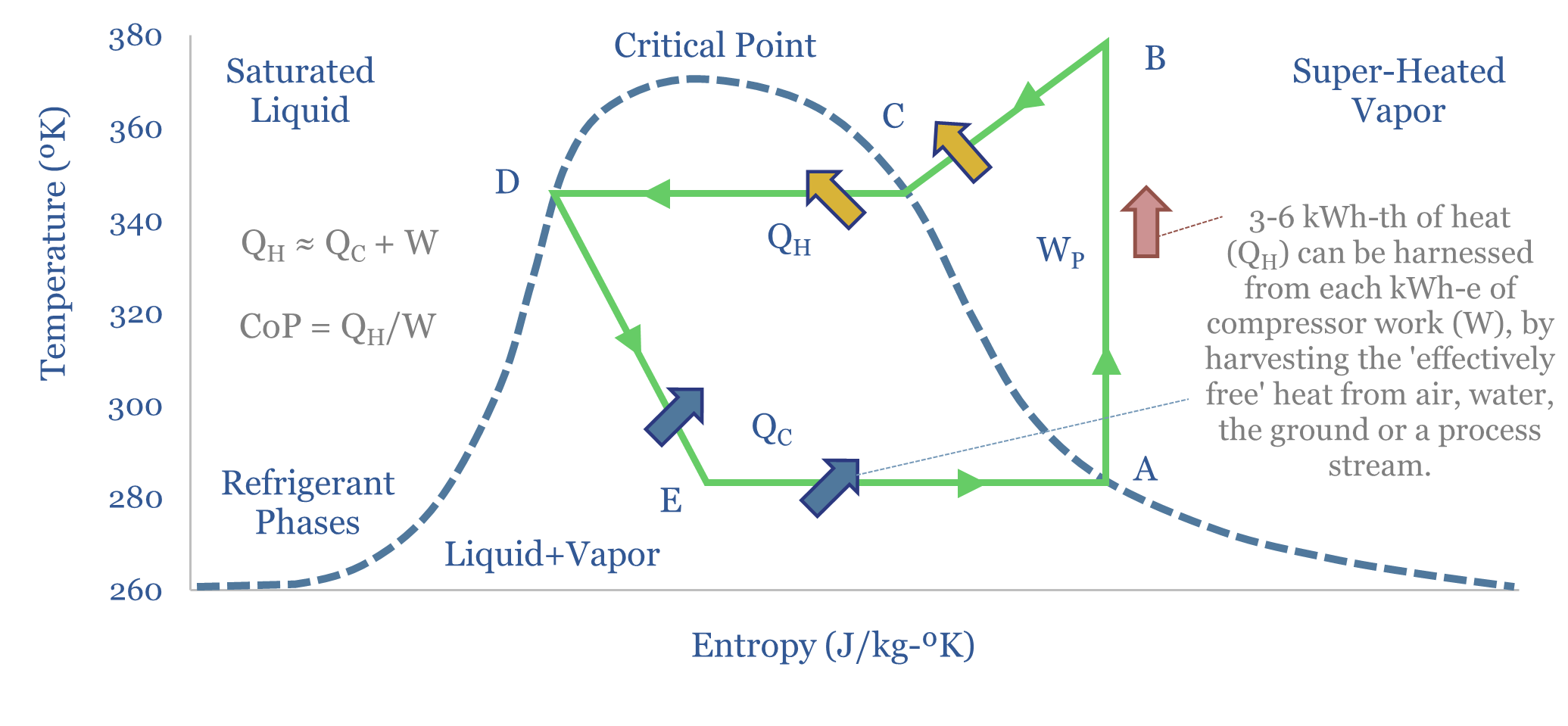
Could industrial heat pumps accelerate, especially due to excess renewables, thereby stoking load growth, and displacing natural gas? This 14-page report finds the economics are more challenging than expected. Heat pumps fare best in specific contexts. Load growth mainly hinges on AI.
Read the Report?
This 15-page report outlines how wholesale power markets work, which helps to understand four emerging controversies. Wholesale power prices are governed by classic microeconomics: day-ahead markets clear at the intersection of downward sloping demand curves and upward sloping supply curves.
Read the Report?
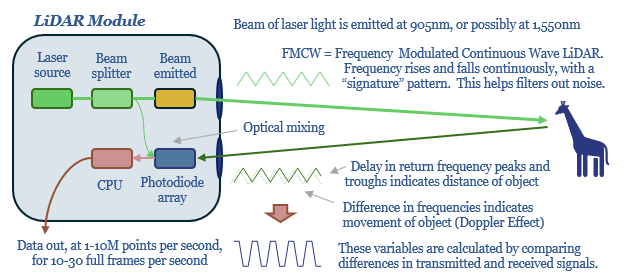
The sensors used for advanced driver assistance systems (ADAS), and increasingly for autonomous vehicles, offer useful lessons for AI, robotics and mining. Hence this 17-page report revisits the debate between LiDAR vs cameras, radar and ultrasound. Hardware must compete on cost and performance. But who benefits from deflation?
Read the Report?
This 15-page report models the costs of powering AI data centers, and other round-the-clock loads, using only solar and batteries, plus a “penalty” of 100-600 c/kWh for unmet demand. In some locations, solar+batteries will out-compete gas in the future? But an ocean of excess power gets thrown out?
Read the Report?
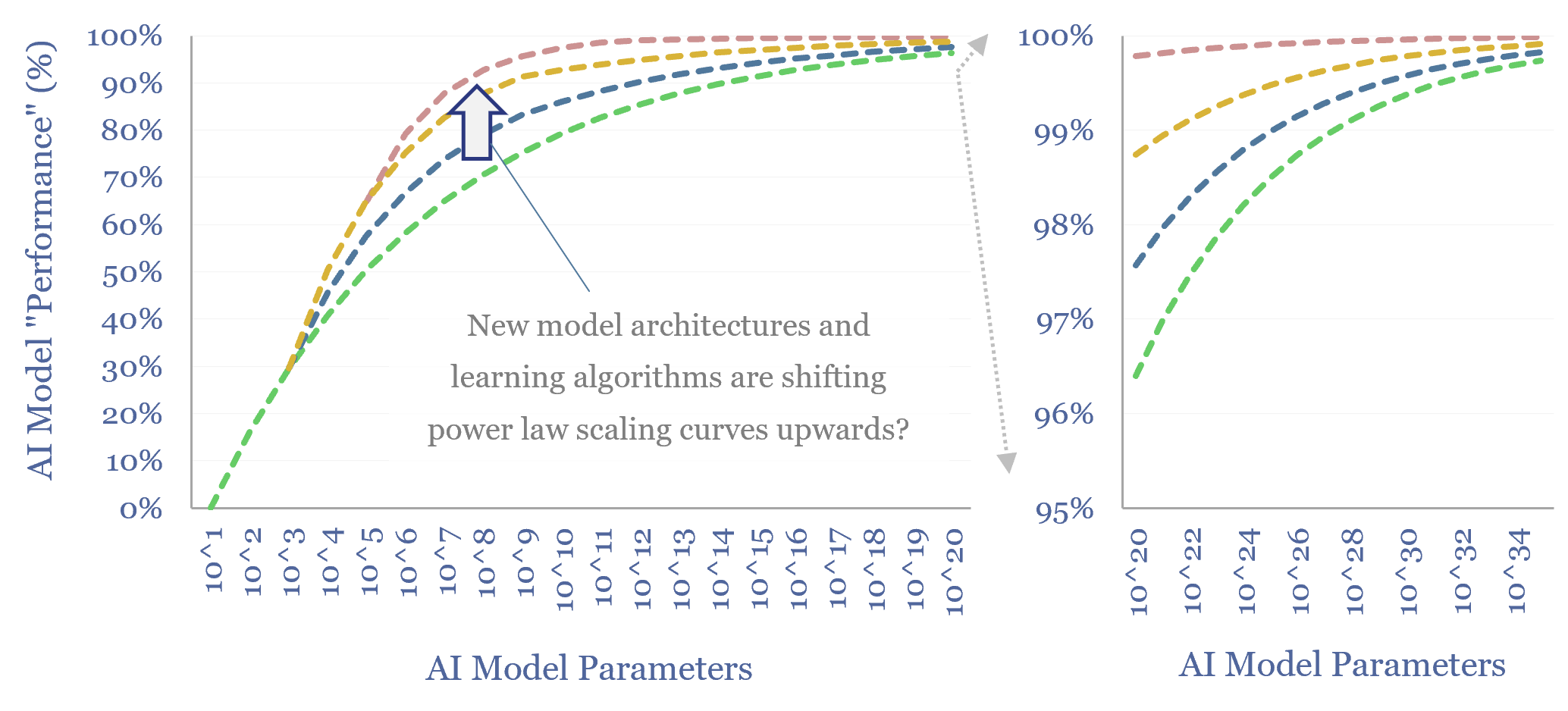
An argument for runaway energy use by AI is that performance follows a power law: incrementally better performance requires exponentially more model parameters, training data and compute. But this 13-page note finds evidence for greater efficiency gains, and considers whether AI scaling laws are set to slow down, meaning less energy consumption?
Read the Report?
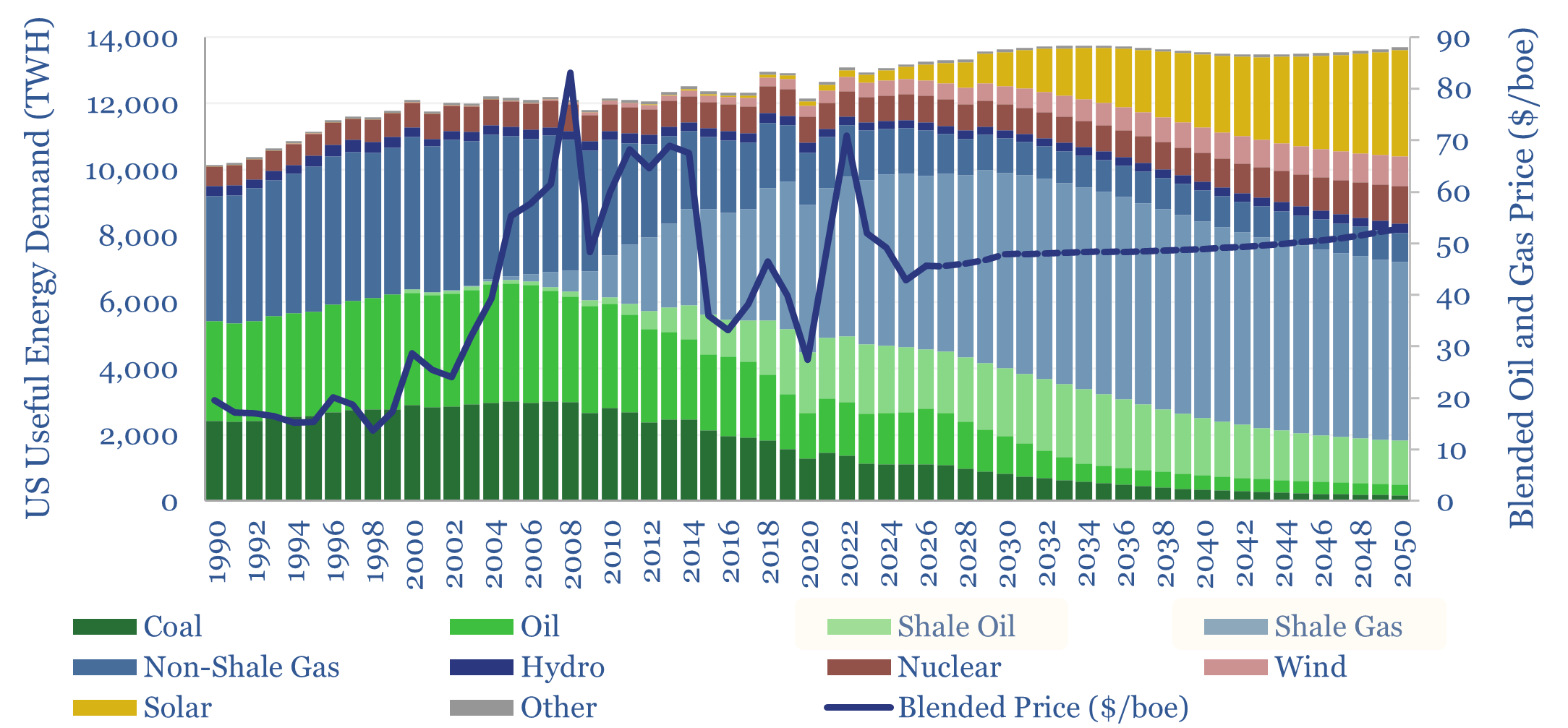
If the US had not ramped 12Mbpd of shale oil and 90bcfd of shale gas, over the past 10-15 years, we estimate US CPI would have run +0.7% pa higher, due to expansionist monetary policy, and other environmental policies. Hence this 13-page report explores whether the end of shale deflation now points to higher US inflation ahead?
Read the Report?
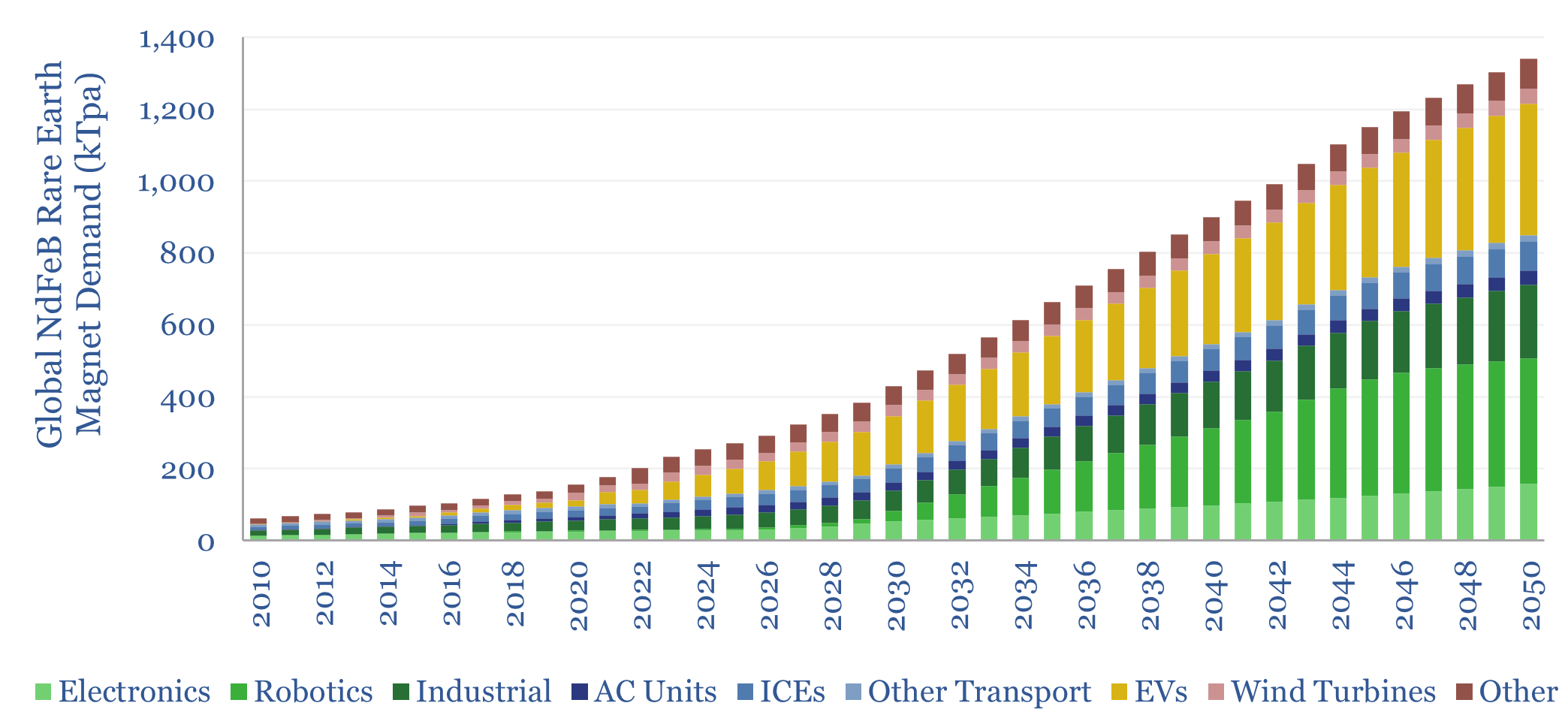
Will Rare Earth magnets shift from being commoditized and mostly Chinese-made, to a higher-value market, sustaining a moat for leading Western companies? Especially as demand inflects in the AI era? Our answers in this 14-page report are based on a site visit to Europe’s first large-scale Rare Earth magnet plant, and subsequent economic modeling.
Read the Report?
Details of Zipline drone delivery technology are derived in this data-file, based on reviewing over 15 highly detailed patent families from the company. We see a moat around specific hardware innovations, a low cost sensor suite, inherent safety from seven layers of safety protections, and a sophisticated fleet management system.
Download the Patent Screen?
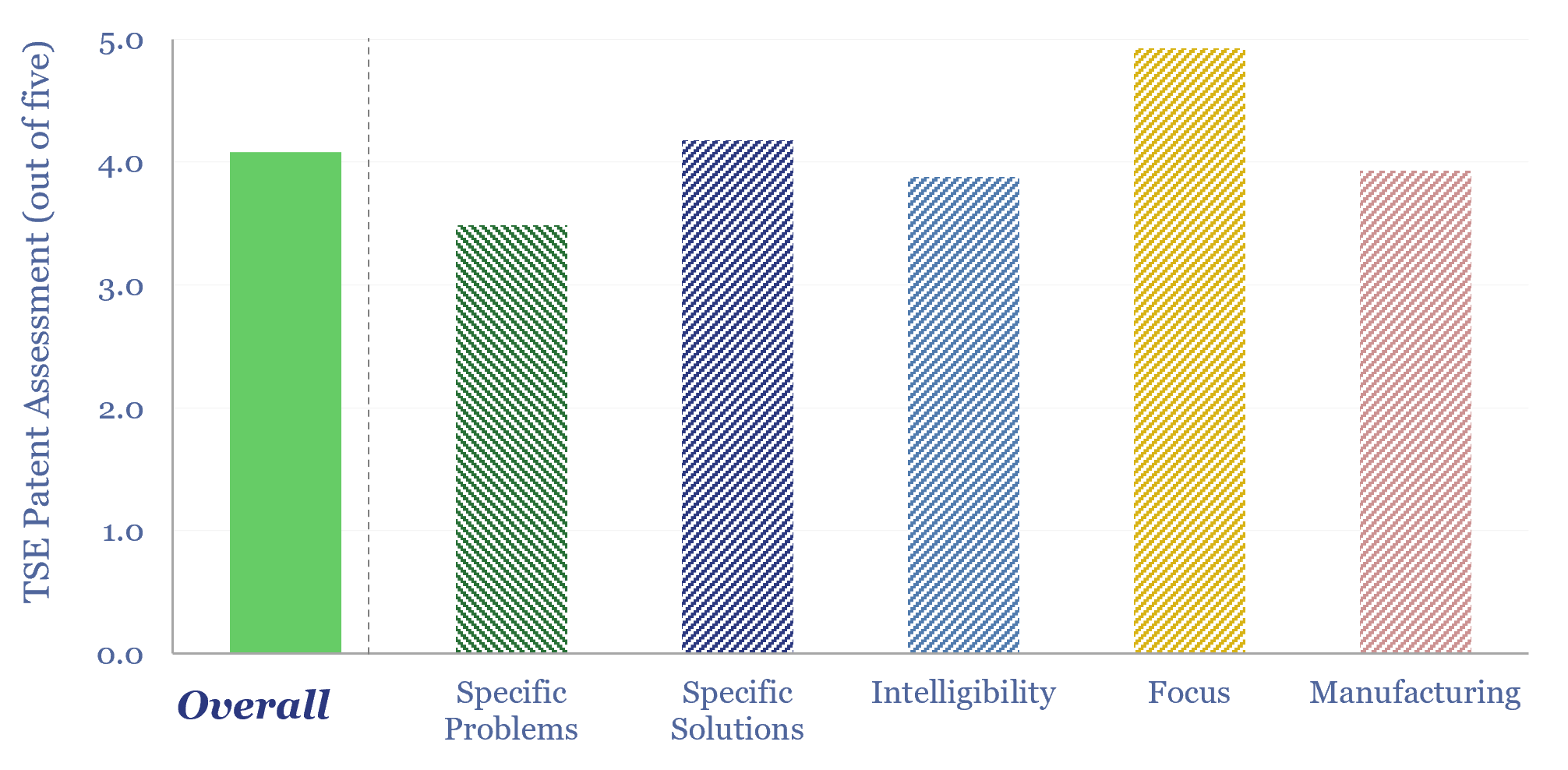
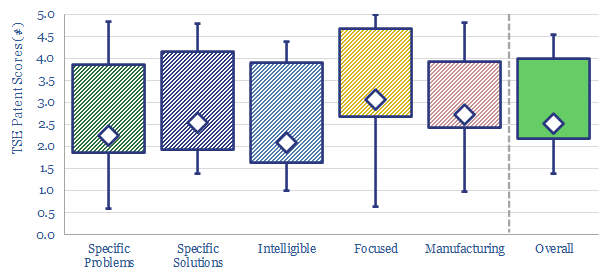
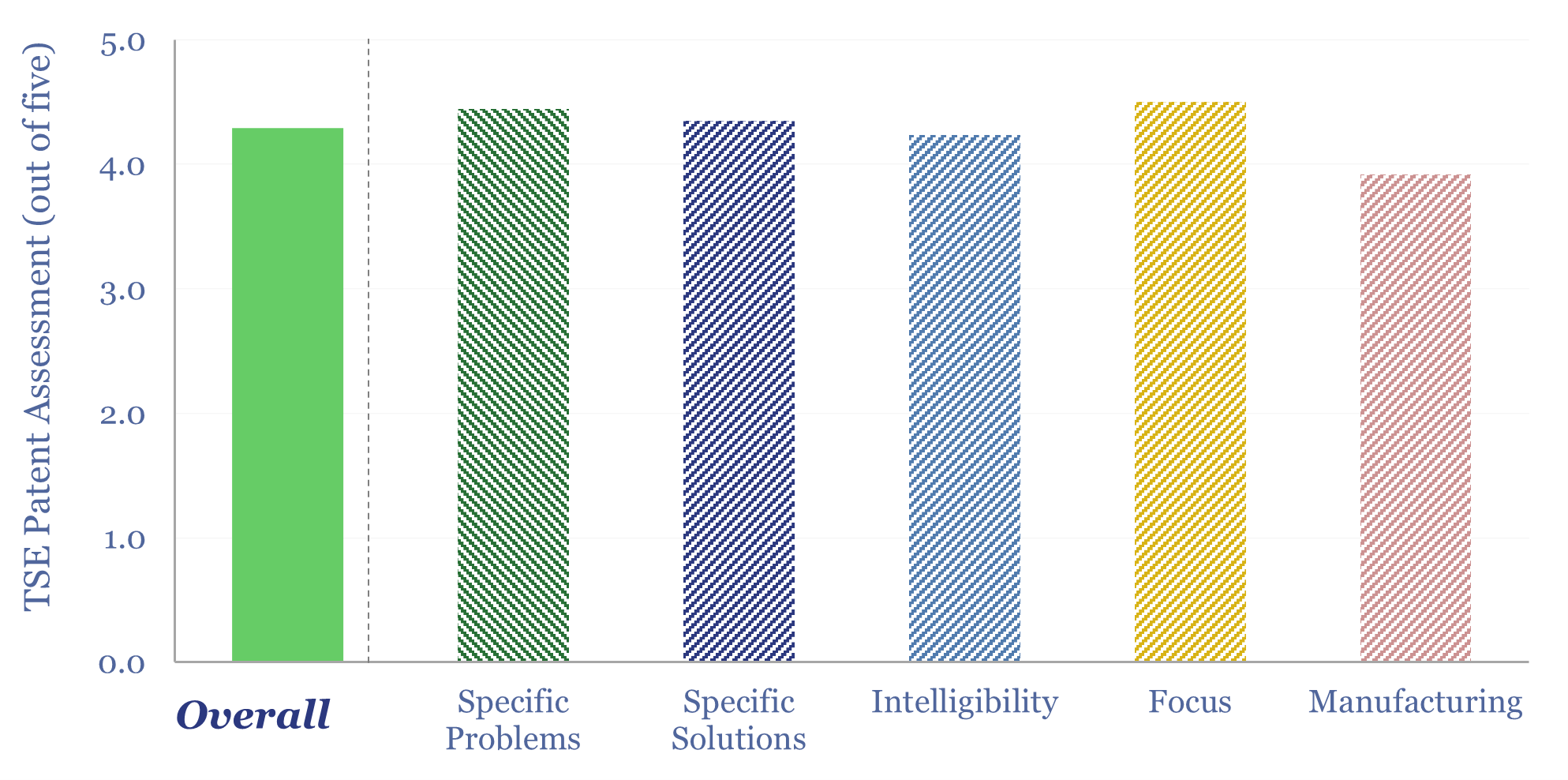
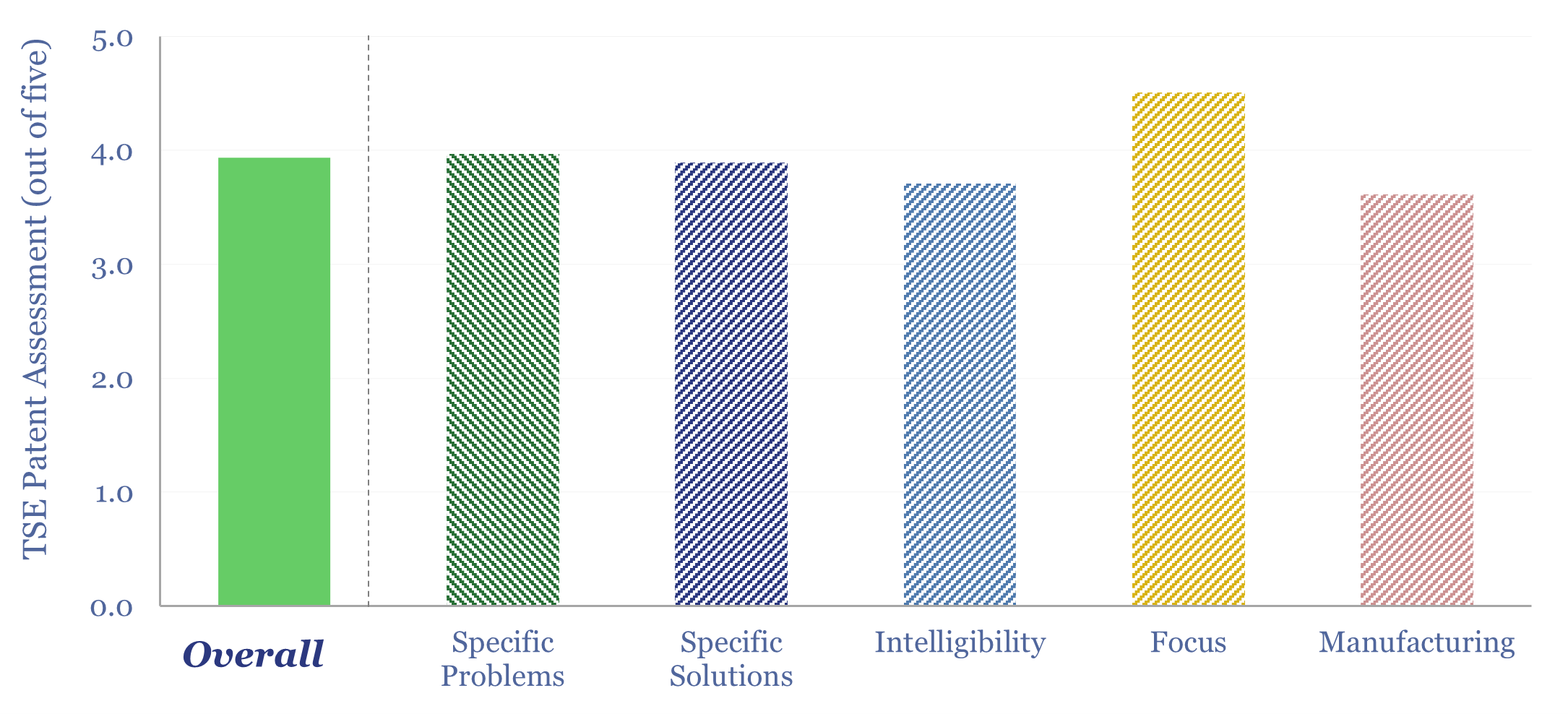
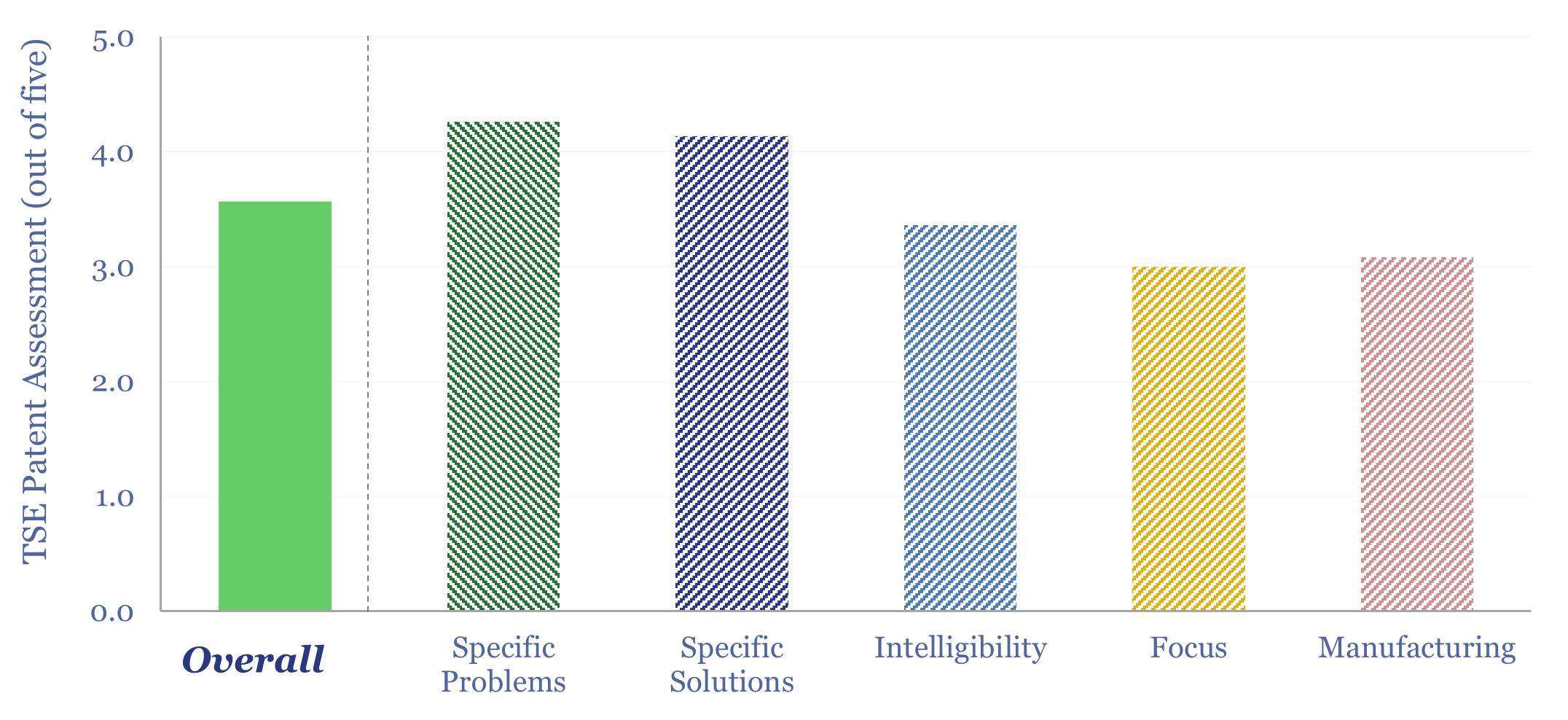
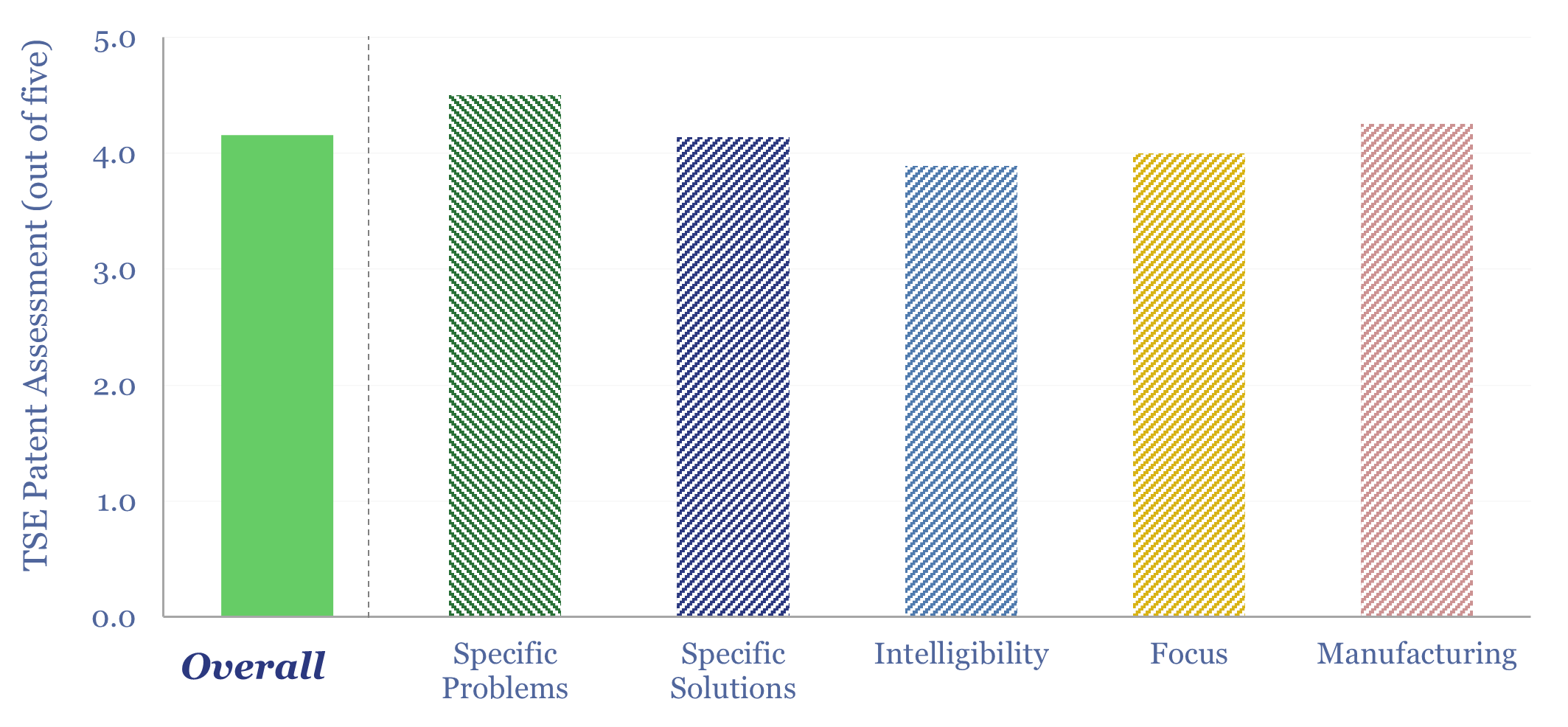
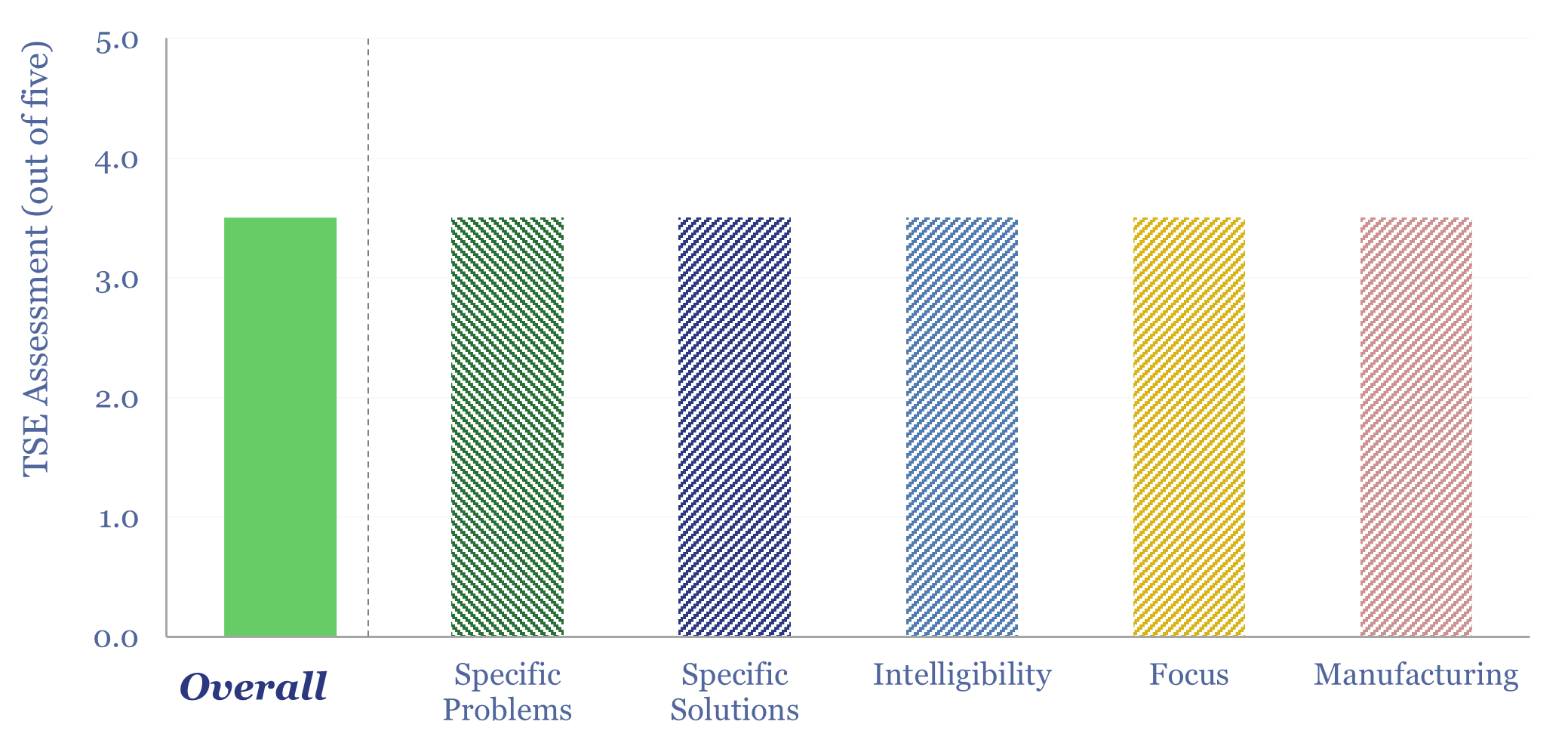
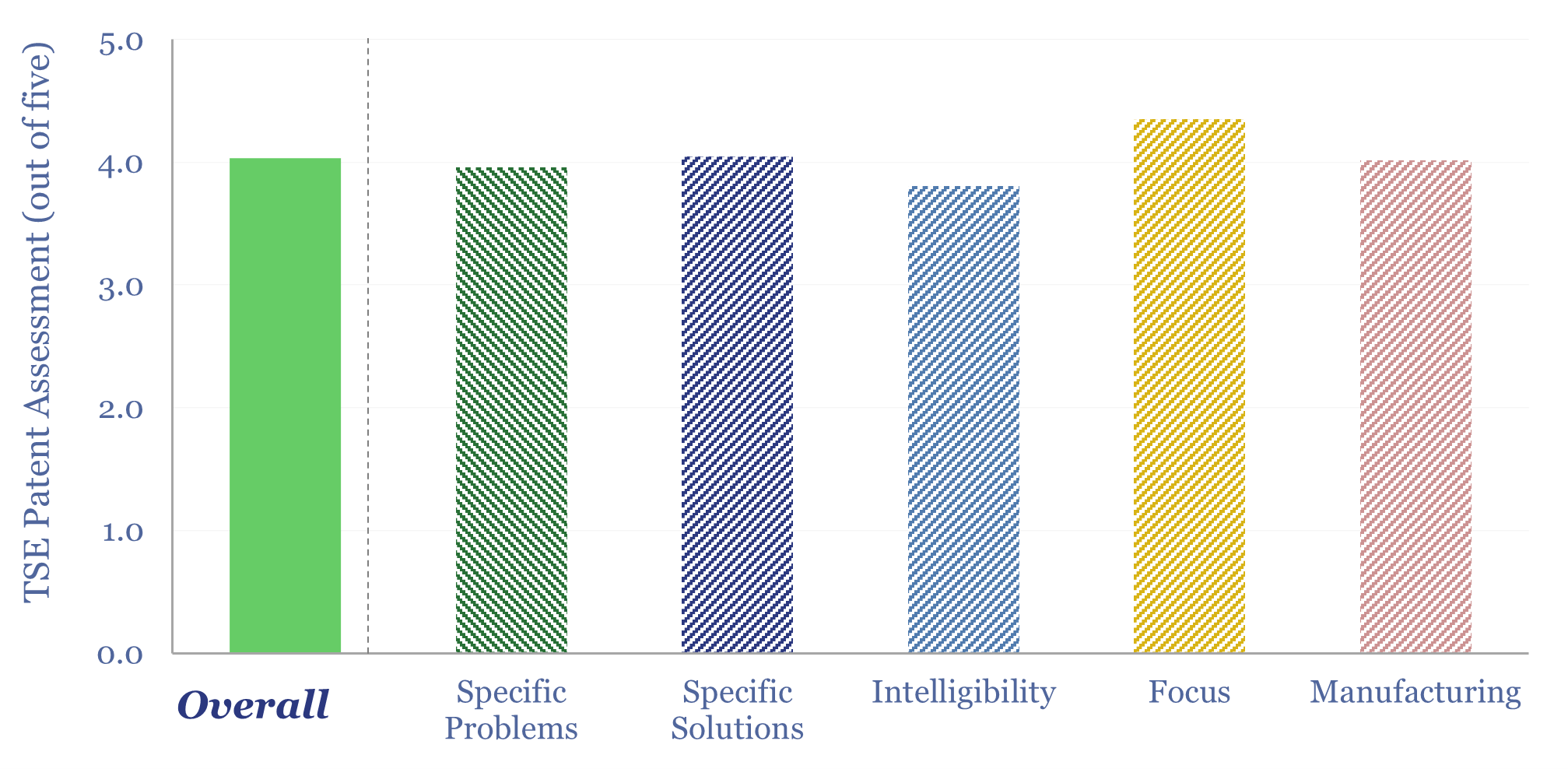
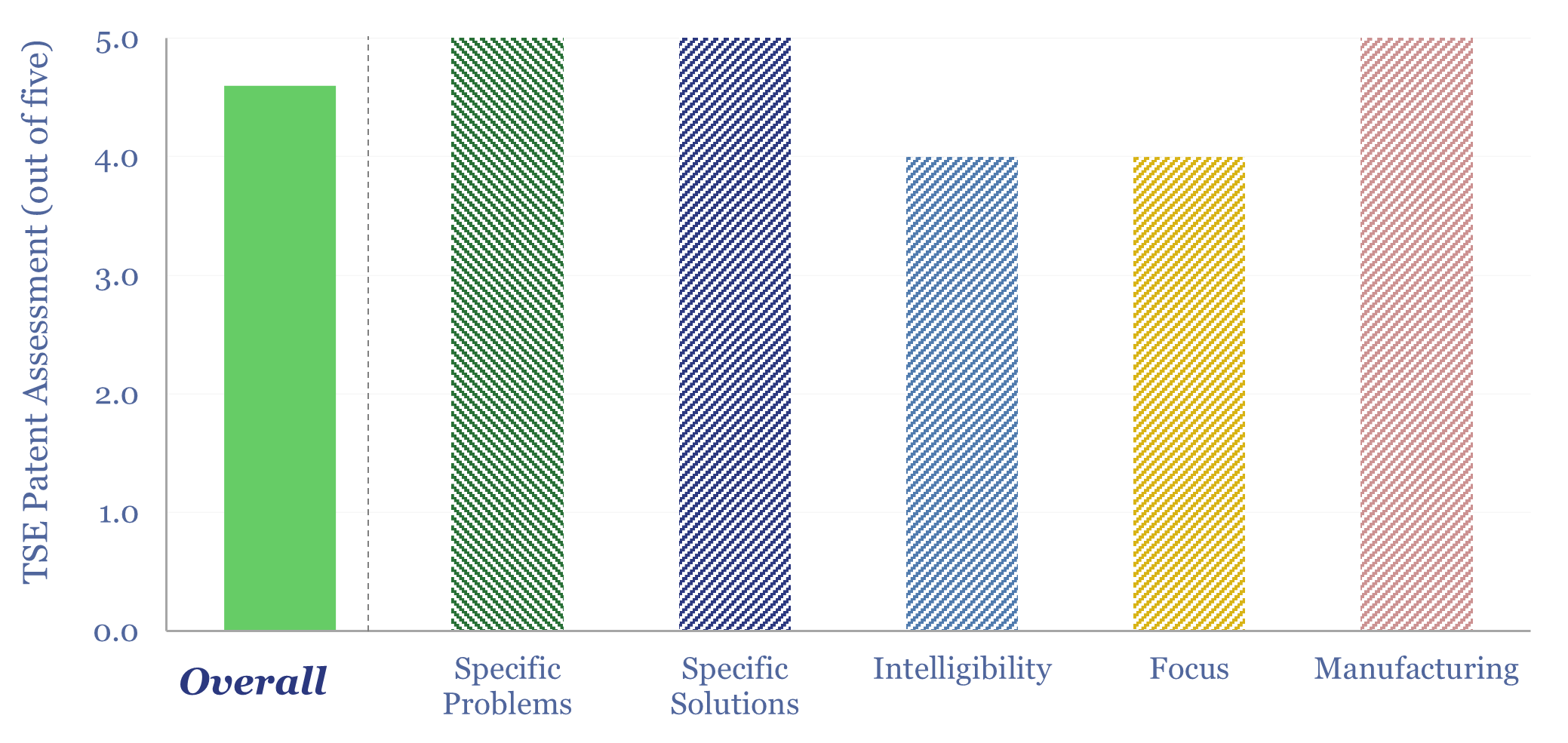
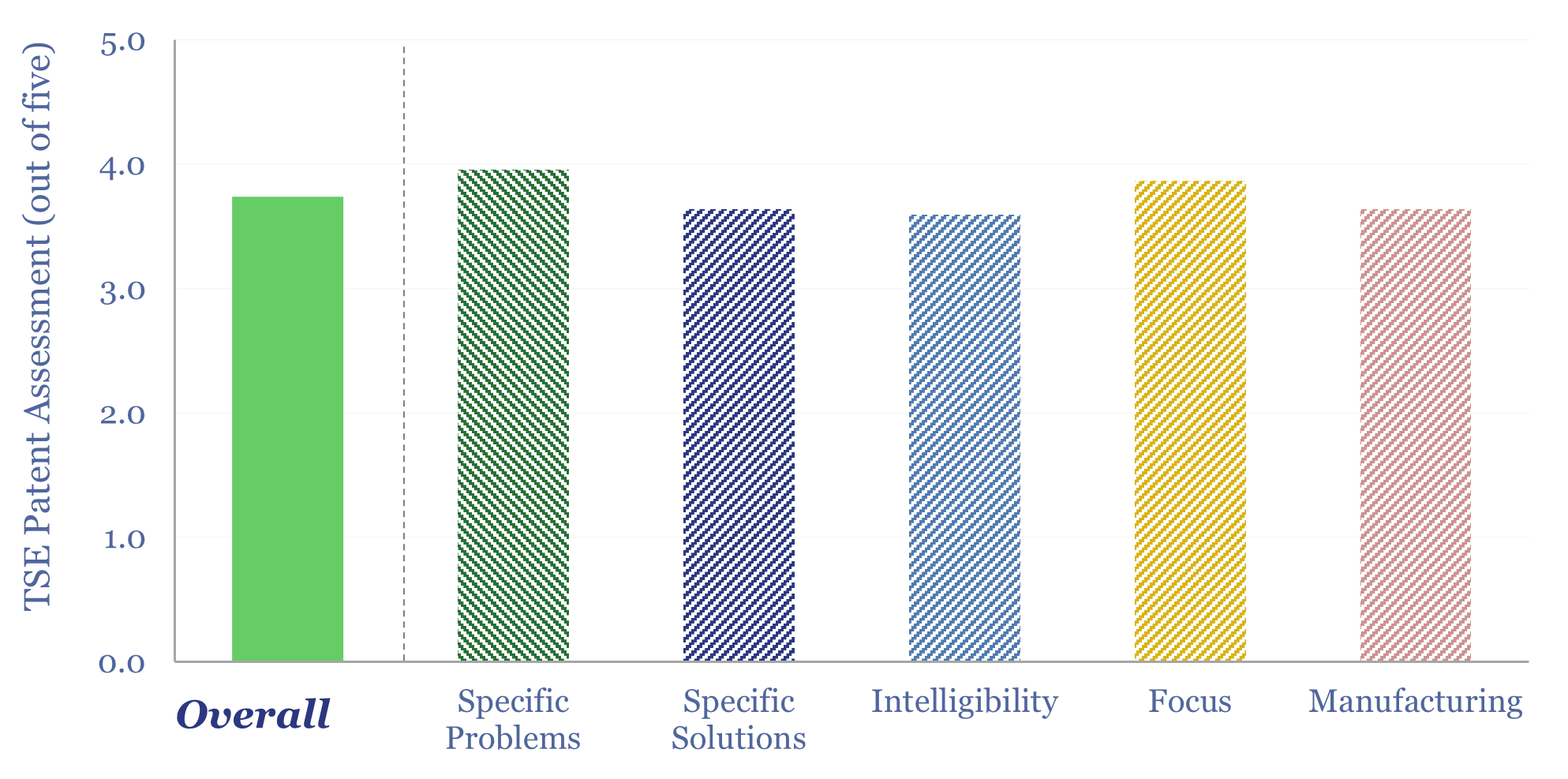
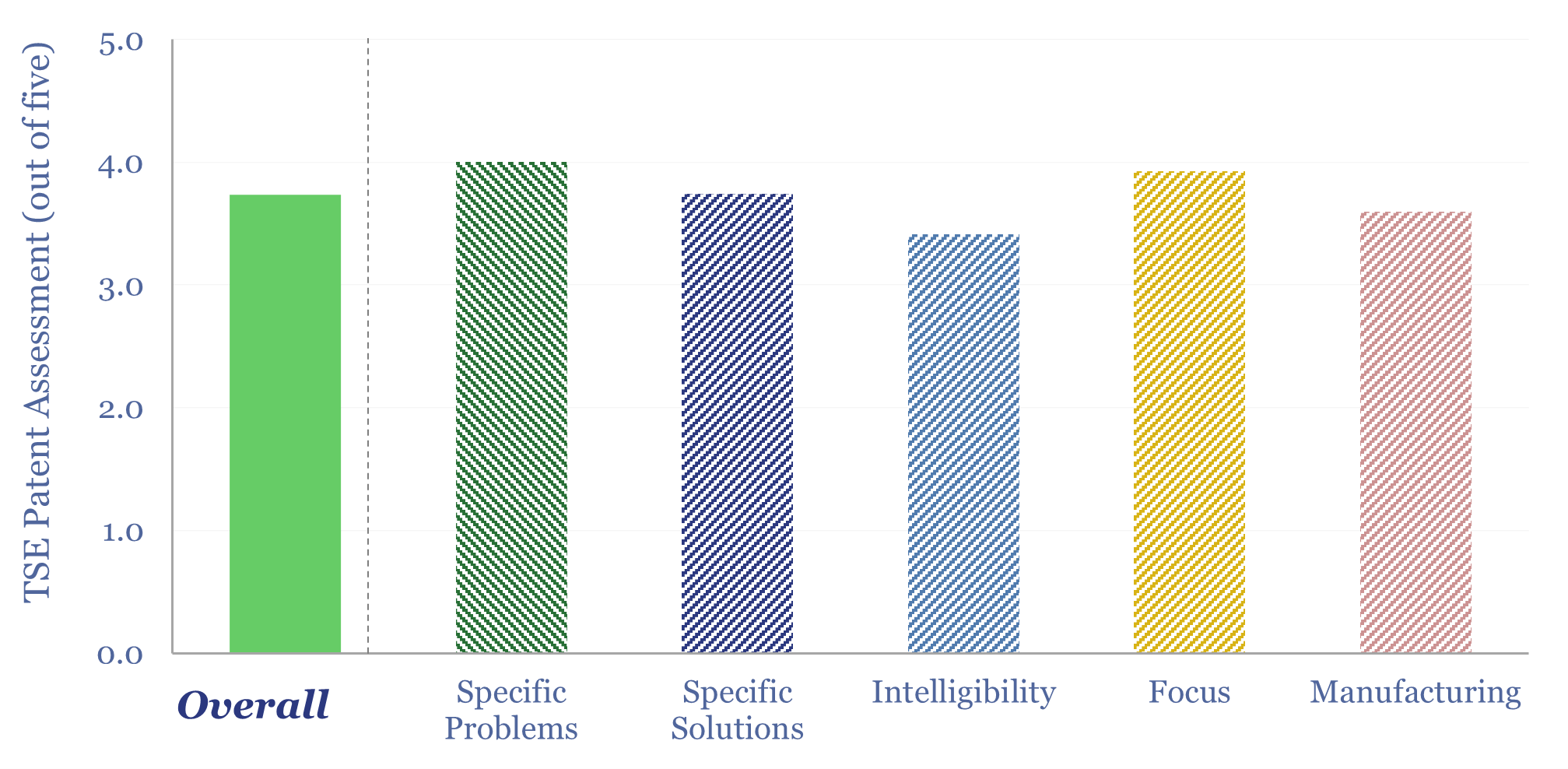
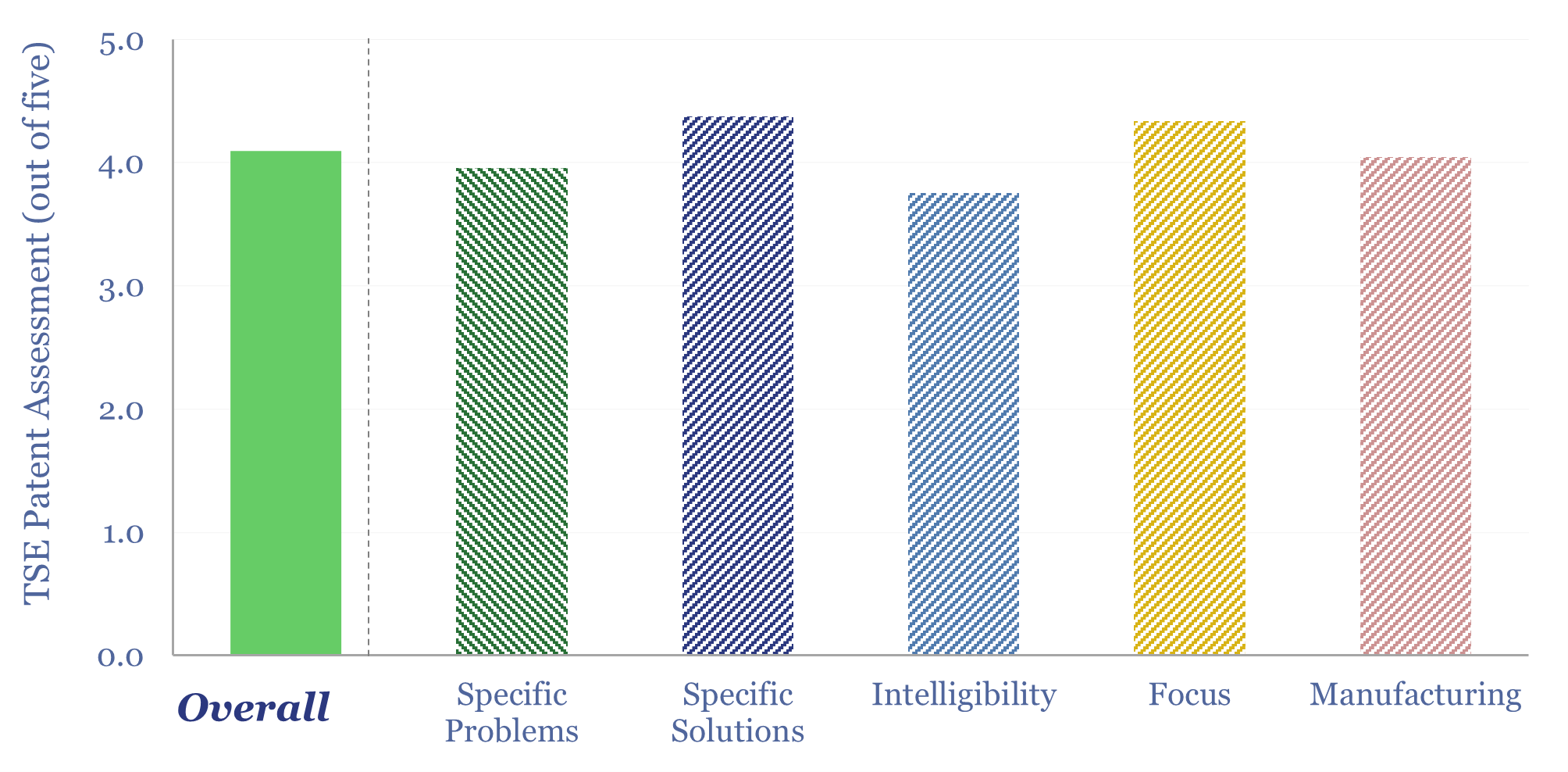
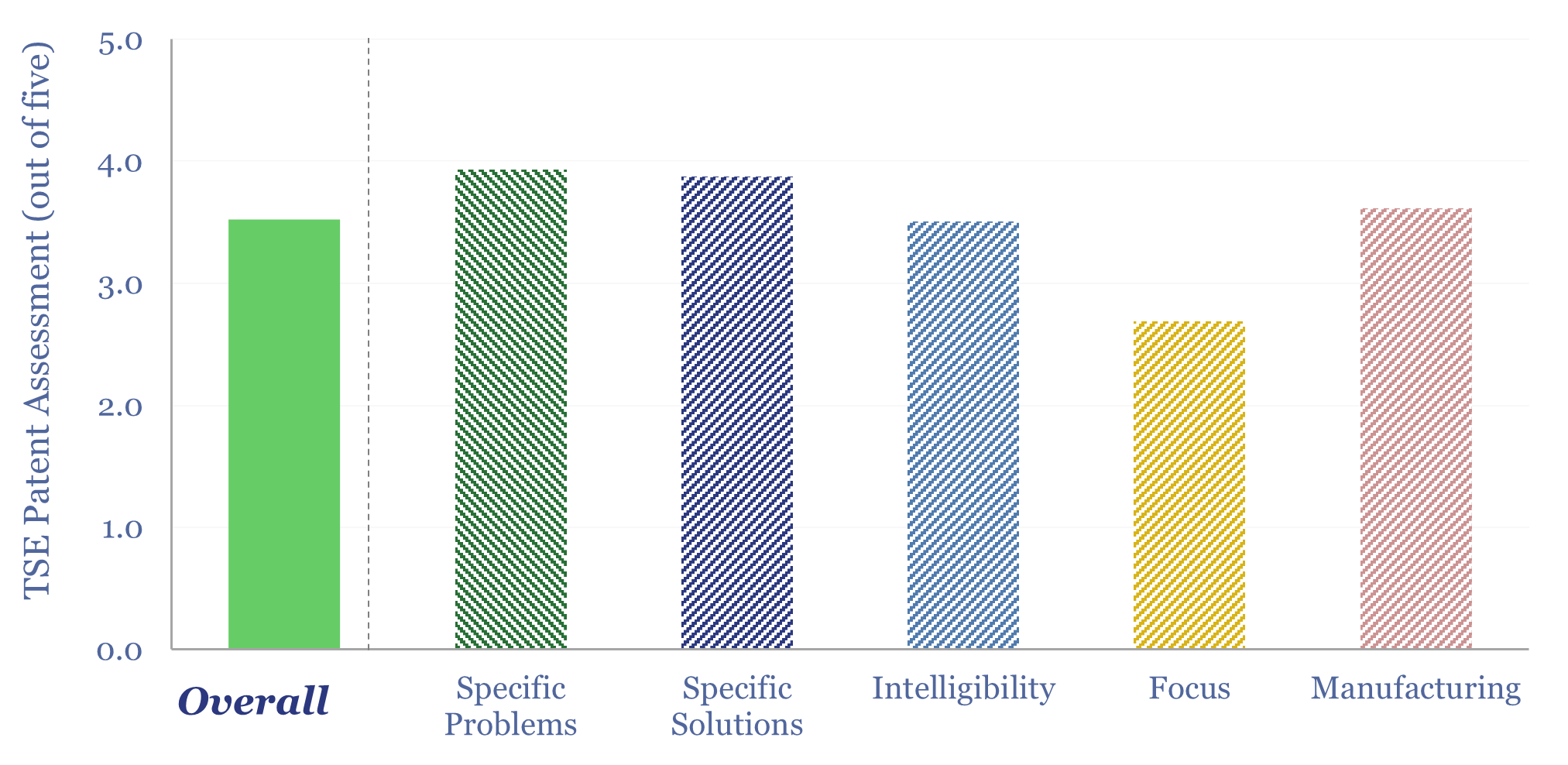
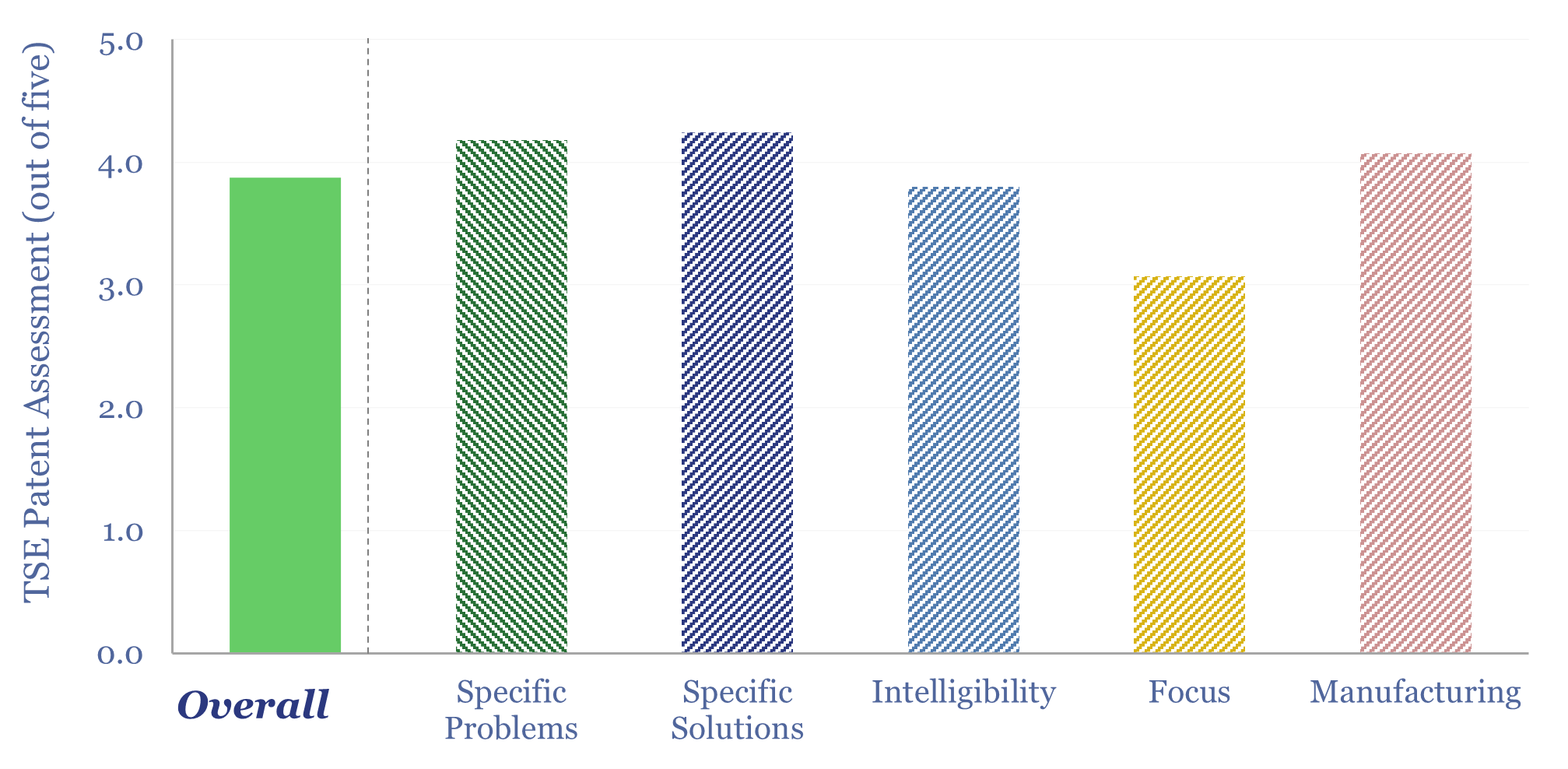
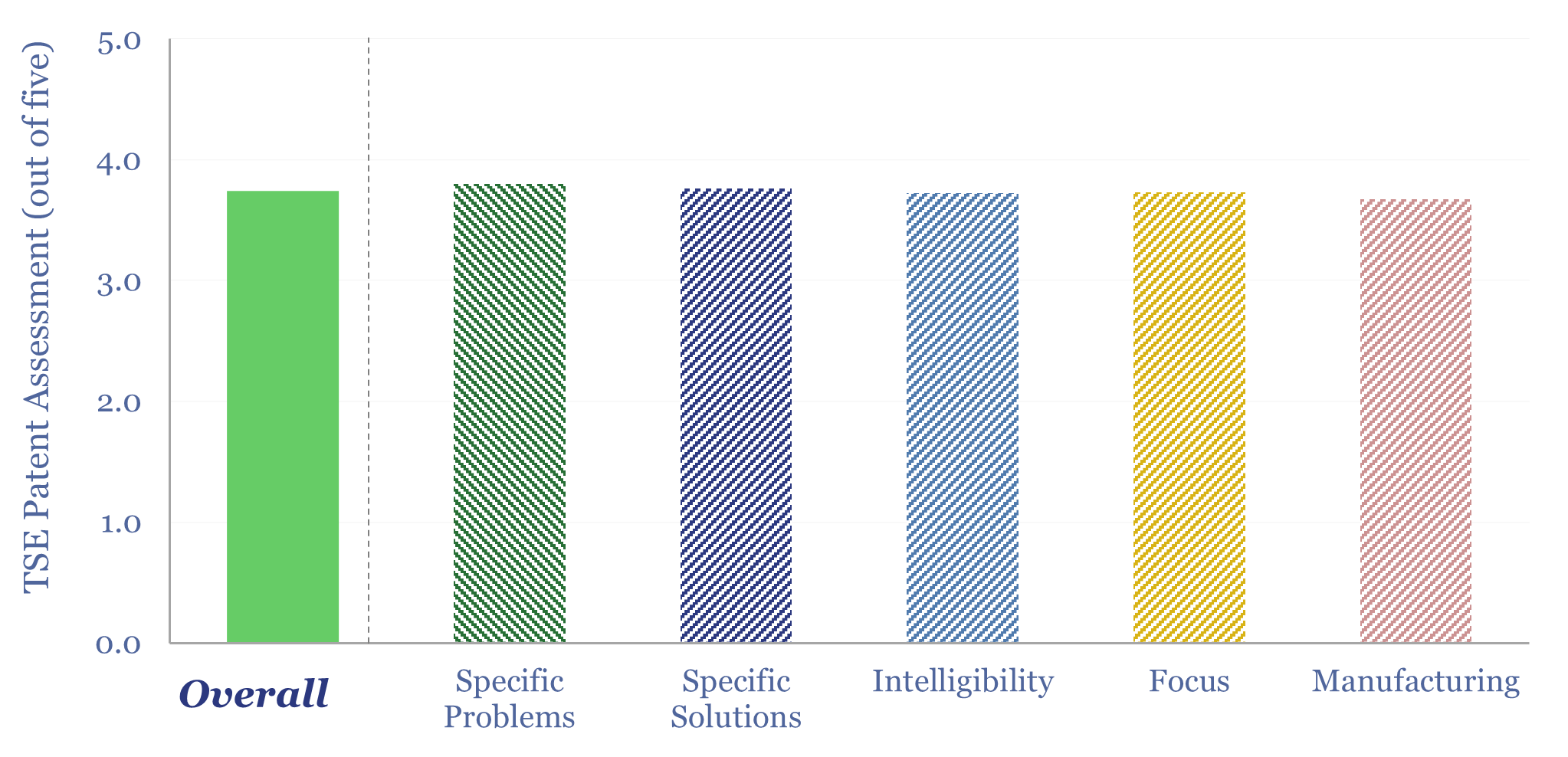
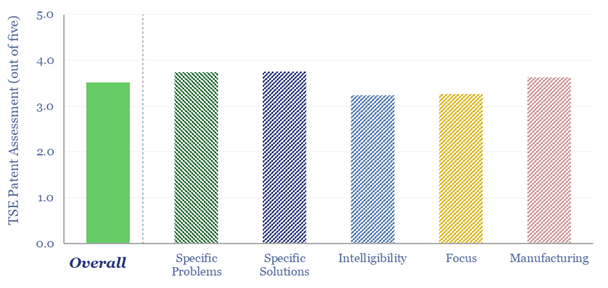
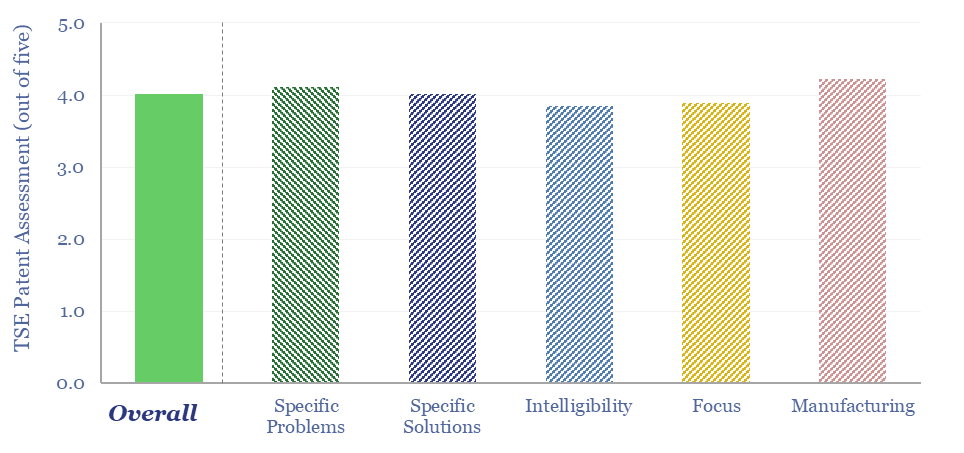
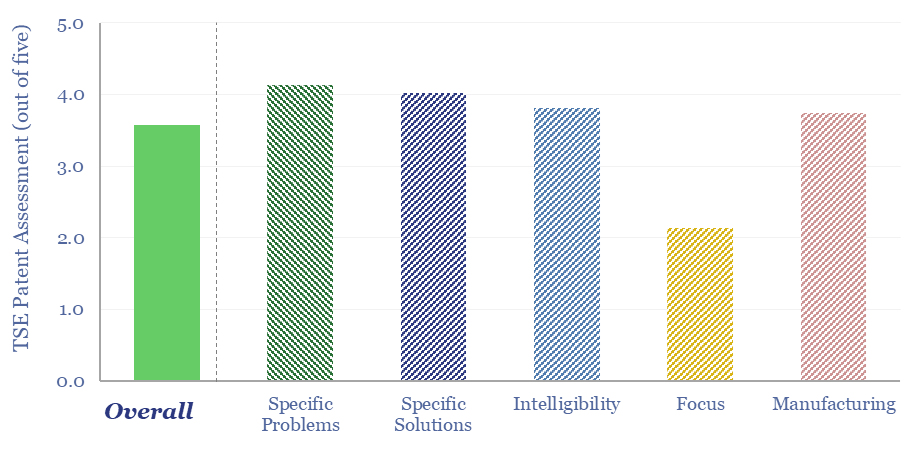
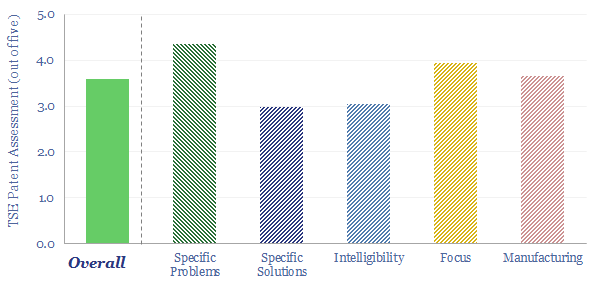
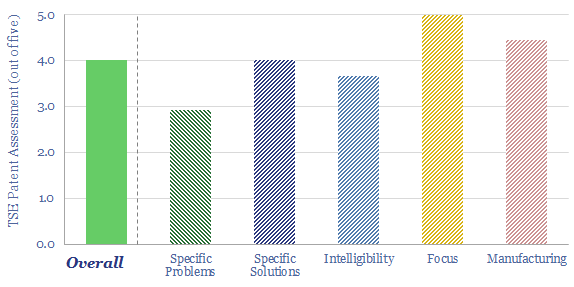
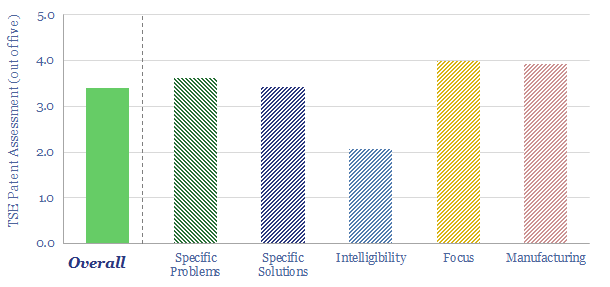
This data-file aggregates all of our patent assessments into a single reference file, so different companies’ scores can be compared and contrasted. Our average score is 3.5 out of 5.0. Skew is to the downside. Intelligibility is the biggest challenge. Scores correlate with TRL and revenues.
Download the Patent Screen?
Contemporary Amperex Technology Co. Limited (CATL) is a Chinese battery manufacturer, HQ’d in Fusian, founded in 2011, with >30,000 employees. It may produce as many as one-third of all the lithium ion batteries in the world. This data-file assesses whether it has made a breakthrough in sodium ion batteries.
Download the Patent Screen?
Fervo Energy is a leader in enhanced geothermal systems, harvesting 400°F+ heat from hot, deep rock formations, as fluids flow from fracced horizontal injectors to fracced horizontal producers. This Fervo Energy technology review is based on reviewing a dozen patent families. Fervo draws on fiber optic sensing data to optimize the well completion process and maximize heat rates.
Download the Patent Screen?
We have screened 65 Schlumberger AI and machine learning patents, filed in 2024-25. This is more than any other energy company. We expect AI to improve shale well productivity, entrench the reliance on Schlumberger tools and services, while also reducing costs, labor, time and net energy use in oil and gas.
Download the Patent Screen?
Aixtron has a market leading position in GaN MOCVD technology, which is increasingly used in the power electronics of data centers, solar and EVs. This data-file assesses 20 patents from Aixtron and Veeco, to unpack how GaN MOCVD works, what are the key challenges, and to quantify Aixtron’s potential moat.
Download the Patent Screen?
Enphase is a global leader in microinverters. In 2026, it released its first GaN-based microinverter, reducing weight by 25% and volume by 35%. Specific innovations come out in the patents and suggest more radical changes lie ahead, for even more power dense microinverters based on cycloconverter topologies. But does this confer any kind of edge in developing the down-converters for larger future AI racks?
Download the Patent Screen?
ANYbotics’ quadrupedal inspection robot, ANYmal, has been ruggedized for industrial inspections. We reviewed ANYbotics’ patents and case studies, which suggest growing applications, a moat around the technology, and great upside for robots across energy, mining and manufacturing. Details and conclusions are in this data-file.
Download the Patent Screen?
Lancium data center technology is used to develop Clean Campuses, which can separate large compute requirements into critical and flexible clusters. The flexible clusters tackle non-time critical loads, often powered directly by microgrids, and providing a Controllable Load Resource, which can demand shift to smooth the volatility of renewables? Hence we reviewed Lancium’s patents.
Download the Patent Screen?
Rockwell Automation is the largest pure-play automation company in the world. It integrates real-time data and controls thousands of components across typical industrial facilities, often saving energy, costs and raising throughputs. This data-file reviews its product offering, case studies and IoT and automation acronyms.
Download the Patent Screen?
What do the instrumentation and controls, deployed by companies like Emerson, actually do? And will the rise of AI accelerate their deployment? We have tried to answer these questions by reviewing 30 case studies from Emerson’s product suite. This highlights an end-to-end offering to gather vast quantities of data from, and then optimize industrial assets.
Download the Patent Screen?
Deep Fission is designing a next-generation nuclear reactor, placing small modular reactors in 1-mile-deep boreholes, which provide exceptional containment, and may eliminate up to 80% of the surface costs of large nuclear plants. We find strong inherent safety features and can de-risk c50% lower costs than large fission reactors via the Deep Fission technology.
Download the Patent Screen?
Gecko Robotics is a leader in AI+Robotics (AIR), which can save tens of millions of dollars per year, when autonomous asset inspections are used to eliminate down-time and optimize maintenance operations. The company has already reached $1.25bn of valuation. The value hinges on the marriage of specialized hardware with an AI platform. This holds lessons for the future of robotics and across the industrial world?
Download the Patent Screen?
Rare Earth recycling may recover Rare Earths at 50% lower costs and with over 90% less energy and CO2 than primary production, as long as the recycling process is simple, and only requires a small quantity of readily available commodity chemicals. This is exemplified by patents from REEcycle, which can recover over 90% of the Rare Earths in scrap magnets with over 99% purity.
Download the Patent Screen?
VoltaGrid has become the largest provider of mobile, natural gas reciprocating engines in the US, reaching GW-scale in 2025, in order to rapidly energize data centers, e-frac operations in shale, and other micro-grids in mining and industry amidst power grid bottlenecks. This data-file reviewed VoltaGrid’s mobile micro-grid technology and patents.
Download the Patent Screen?
Itron is a US-leader in smart energy meters and smart energy networks. Once you have these smart meters widely deployed across the electricity network, you can start to do really interesting things. This data-file gathers concrete examples of Itron’s smart energy network technology, based on reviewing 15 patents.
Download the Patent Screen?
Cognex machine vision technology is used to ID products, inspect products, guide robotics and gauge sizes. This data-file reviews 20 case studies, with payback periods typically below 1-year. Increasing capabilities of AI are already extending use cases for these systems. We conclude this trend will continue, and also unlock more demand for industrial robots.
Download the Patent Screen?
Water is used in heat exchangers, in data-center cooling and power plant cooling. These are interesting areas, which have featured in our research. But what opportunities to raise performance and lower water use? Ecolab water management technology monitors the composition of industrial water and then optimizes additives against scaling, fouling and corrosion. Recent patents will support the rise of AI.
Download the Patent Screen?
Exail Technologies is listed in Paris and focuses on navigational and maritime robotics. It has a range of maritime drones, with applications from mine-sweeping to assisting with offshore wind, offshore oil and gas and civil infrastructure projects in coastal waters. A key to these drones is incorporating Exail’s Inertial Navigation Systems. We have reviewed the technology.
Download the Patent Screen?
Doosan Enerbility is a power plant manufacturer, headquartered in Korea, specializing in nuclear plant construction, gas plant construction, offshore wind, civil engineering and parts manuacturing. In this patent review, we assessed Doosan Enerbility gas turbine technology. We can de-risk its claims for a 43%-efficient simple-cycle turbine, 60%+ efficient CCGT, and 1,600ºC turbine inlet temperatures.
Download the Patent Screen?
Microwave Chemical is a small-cap company, developing microwave-based heating solutions, across over a dozen use cases, from acrylic recyling, to producing food/cosmetic compounds, to carbon fiber (particularly interesting!). We reviewed a dozen of the company’s patents in this data-file, which is a Microwave Chemical technology review and finds a moat in efficient microwave heating.
Download the Patent Screen?
This data-file explores Leilac low-carbon cement technology, which separates the calcination stage, within an indirectly heated reactor, so that 98% pure CO2 can be gathered and sequestered, with requiring post-combustion CCS (amines). Patents from parent company, Calix, lock up the technology, with clear and intelligible details, although this also shows where the challenges are.
Download the Patent Screen?
This Smart Wires technology review finds that Static Synchronous Series Compensators (SmartValve) and dynamic line rating software (SUMO) can increase throughput along existing transmission lines by 20-100%+. The patents confer a visible moat around SmartValve and focus on improving electrical performance reducing deployment costs.
Download the Patent Screen?
Shanghai Electric gas turbine technology is contrasted against the Western gas turbine leaders in this data-file, based on reviewing 20 patents from 2021-24. Shanghai Electric is clearly trying to compete in this space, and the patent review uncovered interesting details into turbine temperatures, efficiencies, reliability, AI+sensing and manufacturing costs.
Download the Patent Screen?
Howmet is an engineered metals company, and the world’s #1 supplier of blades and vanes for jet engines and gas turbines. It has claimed an edge in direct-casting cooling channels (rather than drilling them) and bond coats that improve the adherence of Thermal Barrier Coatings. Our Howmet gas turbine technology review found support for these claims, via reviewing a dozen patents.
Download the Patent Screen?
Kraken Technologies is an operating system, harnessing big data across the power value chain, from asset optimization, to grid balancing, to utility customer services. We reviewed ten patents, which all harness big data, of which 65% optimize aspects of the grid, and 40% are using AI. This supports the deployment of distributed energy, renewables and EVs.
Download the Patent Screen?
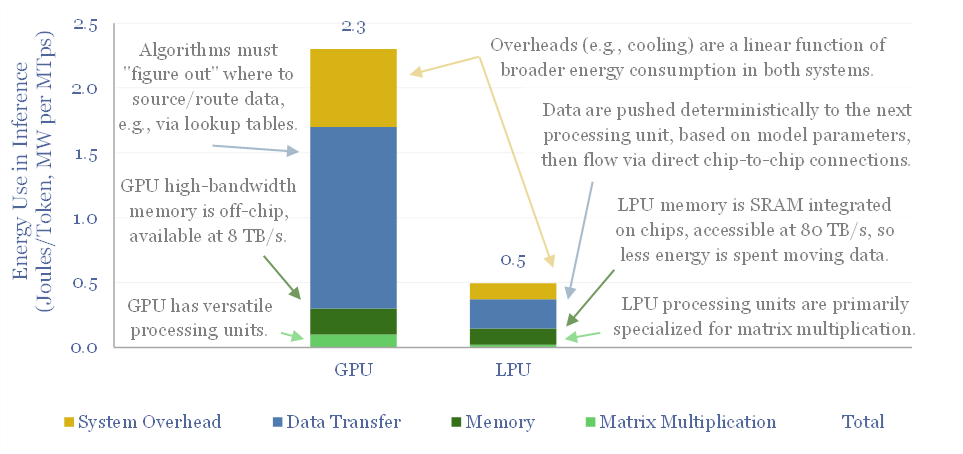
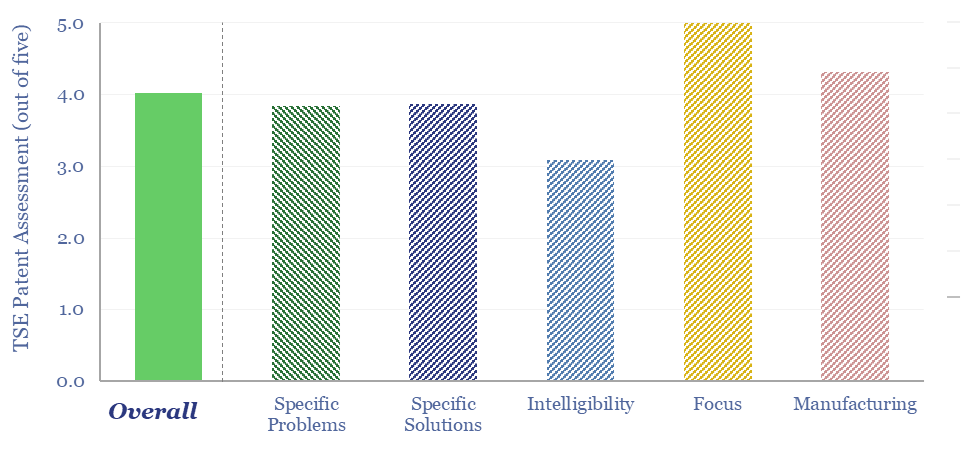
Groq has developed LPUs for AI inference, which are up to 10x faster and 80-90% more energy efficient than today’s GPUs. This 8-page Groq technology review assesses its patent moat, LPU costs, implications for our AI energy models, and whether Groq could ever dethrone NVIDIA’s GPUs?
Download the Patent Screen?
Bi-Directional Bipolar Junction Transistors are an emerging category of semiconductor-based switching device, that can achieve lower on-state voltage drops than MOSFETs and softer, faster switching than IGBTs, to improve efficiency and lower component count in bi-directional power converters. This data-file screens B-TRAN patents from Ideal Power.
Download the Patent Screen?
Can we de-risk Air Products’s ammonia cracking technology in our roadmaps to net zero, which is crucial to recovering green hydrogen in regions that import green ammonia from projects such as Saudi Arabia’s NEOM. We find strong IP in Air Products’s patents. However, we still see 15-35% energy penalties and $2-3/kg of costs in ammonia cracking.
Download the Patent Screen?
This patent screen reviews Eastman’s molecular recycling technology. Specifically, Eastman is spending over $2bn, to construct 3 plants, with 380kTpa of capacity, to break down hard-to-recycle polyesters back into component monomers, with 20-80% lower CO2 intensity than virgin product. We find evidence for 30-years of fine-tuning, and can bridge to 10% IRRs if buyers pay sufficient premia for the recycled outputs.
Download the Patent Screen?
Prysmian E3X technology is a ceramic coating that can be added onto new and pre-existing power transmission cables, improving their thermal emissivity,so they heat up 30% less, have 25% lower resistive losses, and/or can carry 25% increased currents. This data-file locates the patents underpinning E3X technology, identifies the materials used, and finds a strong moat.
Download the Patent Screen?
Cemvita is a private biotech company, based in Houston, founded in 2017. It has isolated and/or engineered more than 150 microbial strains, aiming to valorize waste, convert CO2 to useful feedstocks, mine scarce metals (e.g., direct lithium extraction) and “brew” a variant of gold hydrogen from depleted hydrocarbon reservoirs. This data-file is our Cemvita Factory technology review, based on exploring its patents.
Download the Patent Screen?
Oklo is a next-generation nuclear company, based in California, recently going public via SPAC at a $850M valuation, backed by Sam Altman, of Y-Combinator and OpenAI fame. Oklo’s fast reactor technology absorbs high energy neutrons in liquid metal and targets ultimate costs of 4c/kWh. What details can we infer from assessing Oklo’s patents, and can we de-risk the technology in our roadmap to net zero?
Download the Patent Screen?
Cummins is a power technology company, listed in the US, specializing in diesel engines, underlying components, exhaust gas after-treatment, diesel power generation and pivoting towards hydrogen. We reviewed 80 patents from 2023-24. What outlook for Cummins technology and verticals in the energy transition?
Download the Patent Screen?
Is Babcock and Wilcox’s BrightLoop technology a game-changer for producing low-carbon hydrogen from solid fuels, while also releasing a pure stream of CO2 for CCS? Conclusions and deep-dive details are covered in this data-file, allowing us to guess at BrightLoop’s energy efficiency and a moat around Babcock’s reactor designs?
Download the Patent Screen?
This data-file is our LONGi technology review, based on recent patent filings. The work helps us to de-risk increasingly efficient solar modules, a growing focus on perovskite-tandem cells, and low-cost solar modules, with simple manufacturing techniques that may ultimately displace bottlenecked silver from electrical contacts. Key conclusions in the data-file.
Download the Patent Screen?
Origen Carbon Solutions is developing a novel DAC technology, producing CaO sorbent via the oxy-fuelled calcining of limestone with no net CO2 emissions. It is similar to the NET Power cycle, but adapted for a limestone kiln. The concept is very interesting. Our base case costs are $200-300/ton of CO2. This data-file contains our Origen DAC technology review.
Download the Patent Screen?
Solar encapsulants are 300-500μm thick films, protecting solar cells from moisture, dirt and degradation; electrically insulating them at 4 x 10^15 Ωcm resistivity; and yet allowing 90% light transmittance. The industry is moving away from commoditized EVA towards specialized blends of co-polymers and additives. Is there a growing moat around Mitsui Chemicals’ solar encapsulants?
Download the Patent Screen?
This data-file reviews Verdox DAC technology, optimizing polyanthraquinones and polynaphthoquinones, then depositing them on porous carbon nano-tube scaffolds. These quinones are shown to selectively adsorb CO2 when a voltage is applied, then desorb them when a reverse voltage is applied, unlocking 70% lower energy penalties than incumbent DAC?
Download the Patent Screen?
Solvay is a chemicals company with growing exposure to battery materials, especially the PVDF binders that hold together active materials in the electrodes. But also increasingly in electrolyte solvents, salts and additives. Interestingly, our patent review finds optimizations of this overall system can improve the longevity and energy density of batteries, which may also lead to consolidation across the battery supply chain?
Download the Patent Screen?
This website uses necessary cookies. Our cookies are simply to improve your experience. We do not undertake any advertising or targeting via our cookies. By clicking 'accept' or continuing to use the website, you consent to our use of cookies.AcceptTerms & Conditions
Privacy & Cookies Policy
Privacy Overview
This website uses cookies to improve your experience while you navigate through the website. Out of these, the cookies that are categorized as necessary are stored on your browser as they are essential for the working of basic functionalities of the website. We also use third-party cookies that help us analyze and understand how you use this website. These cookies will be stored in your browser only with your consent. You also have the option to opt-out of these cookies. But opting out of some of these cookies may affect your browsing experience.
Necessary cookies are absolutely essential for the website to function properly. This category only includes cookies that ensures basic functionalities and security features of the website. These cookies do not store any personal information.
Any cookies that may not be particularly necessary for the website to function and is used specifically to collect user personal data via analytics, ads, other embedded contents are termed as non-necessary cookies. It is mandatory to procure user consent prior to running these cookies on your website.