-
Vechile miles traveled by region over time?
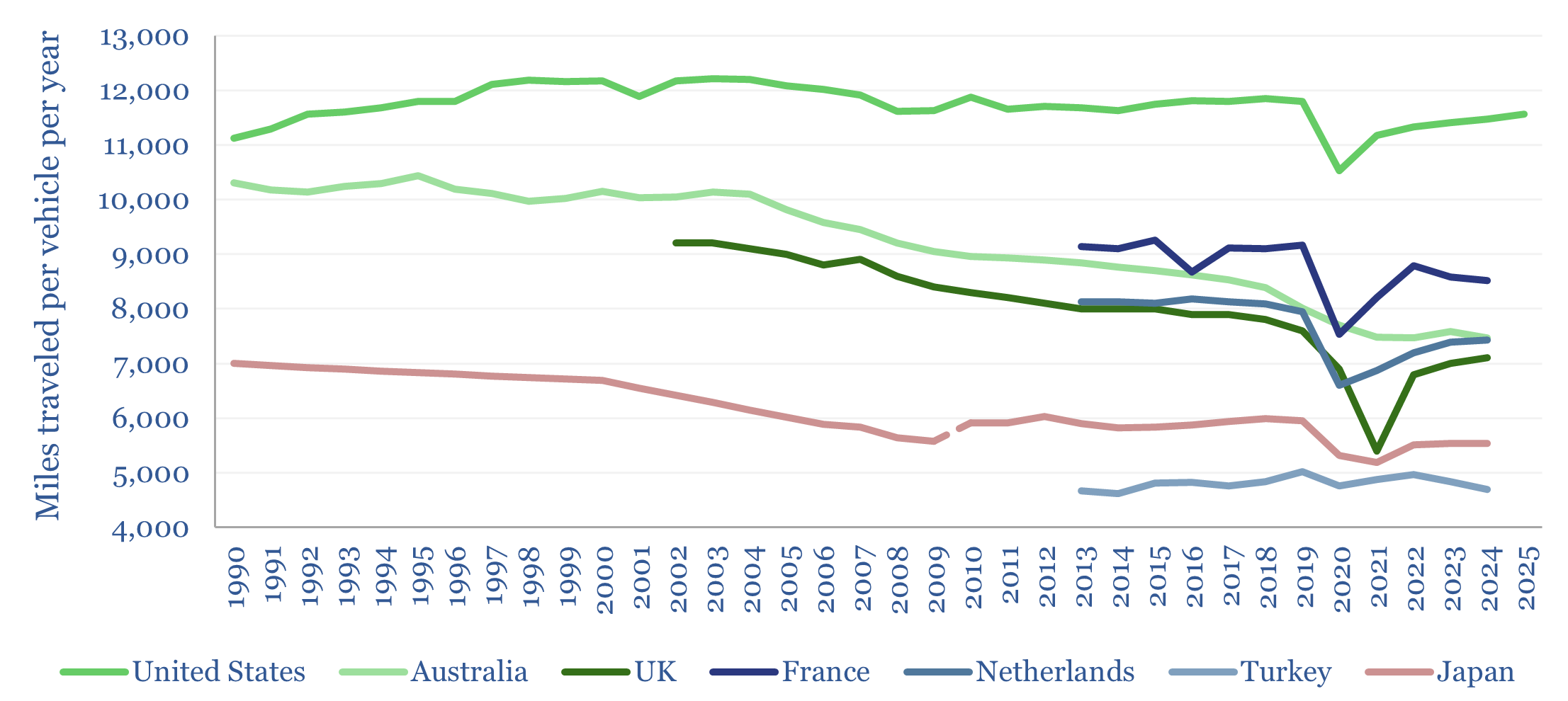
Vehicle miles traveled are a crucial measure of mobility and an input variable for predicting global oil demand, averaging 8,600 miles per global vehicle in 2024. This data-file tracks vehicle miles traveled by region, over time, and how it co-varies with urbanization, population density, income, and by travel trip purpose.
-
Copper: global demand forecasts?
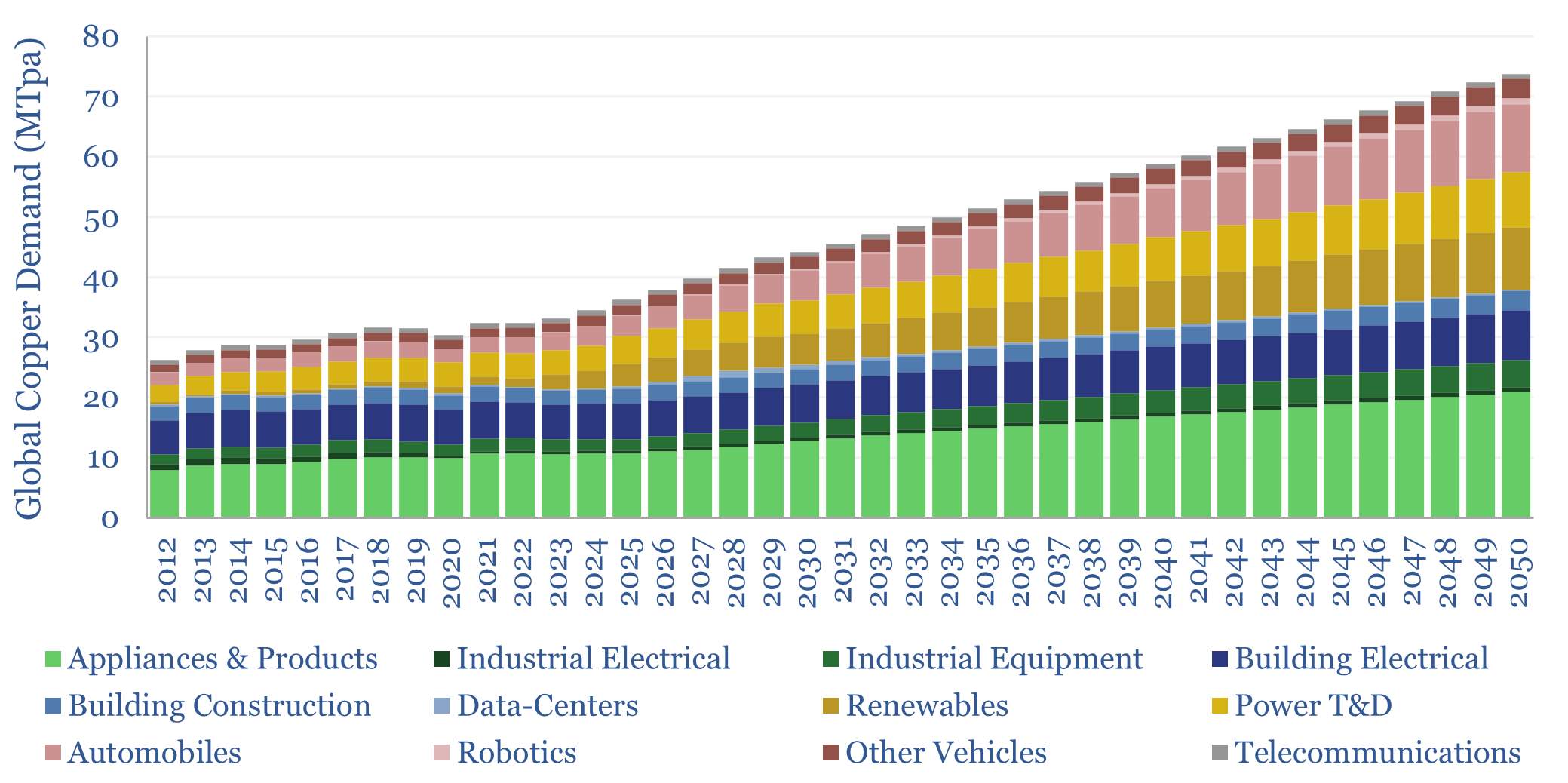
This data-file estimates global copper demand as part of the energy transition, rising from 33MTpa in 2023 to 44MTpa in 2030 and 80MTpa by 2050. Key demand drivers are solar, EVs, greater AC adoption and possibly drones and robotics. You can stress test half-a-dozen key input variables in the model.
-
Mobile robotics: the genie and the bottle?

The idea for this report was to dream up interesting uses for autonomous mobile robotics in the future, including in energy and mining. But to our amazement, many of these ideas are already being piloted. We reviewed the pilots in this 18-page report. They suggest transformational economic impacts and moderate energy/materials upside.
-
2025 reflections: reasons for excitement?

This video captures our top five reflections on energy, materials and industrials in 2025, which are also reasons for excitement in 2026. New technologies are unlocking new opportunities, re-shaping cost curves, “uncommoditizing commodities”, unlocking more energy and demand-side flexibility, and we are building high-conviction conclusions to create value amidst this transition.
-
Autonomous transport: the Leipzig test?
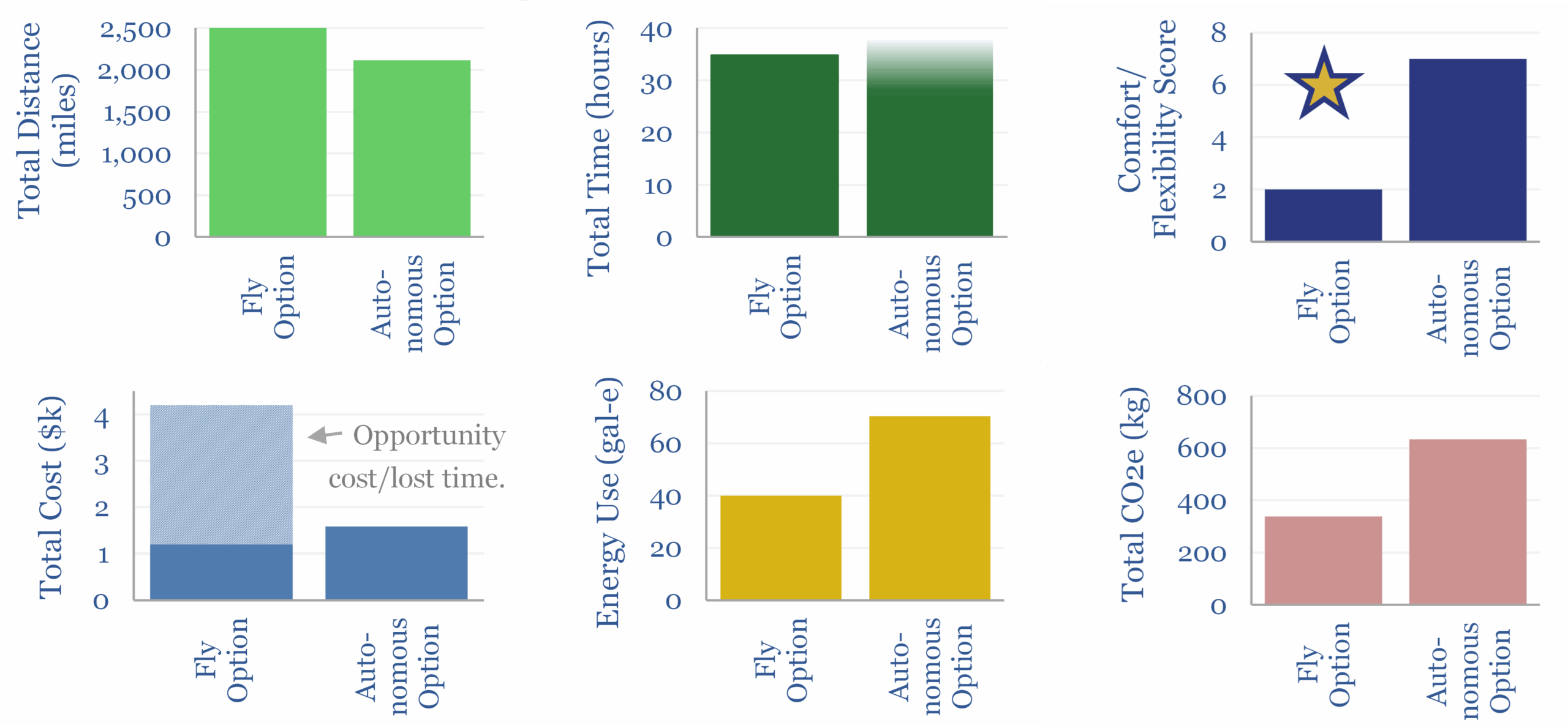
This 13-page report explores the upside in autonomous transport. We were recently invited to a fascinating company event in Leipzig, Germany. But it was too complex to reach by flying. It would have been doable in an autonomous vehicle, albeit using 2x more energy overall. So could autonomous vehicles unlock 5Mbpd of global oil demand…
-
Global refinery project pipeline over time?
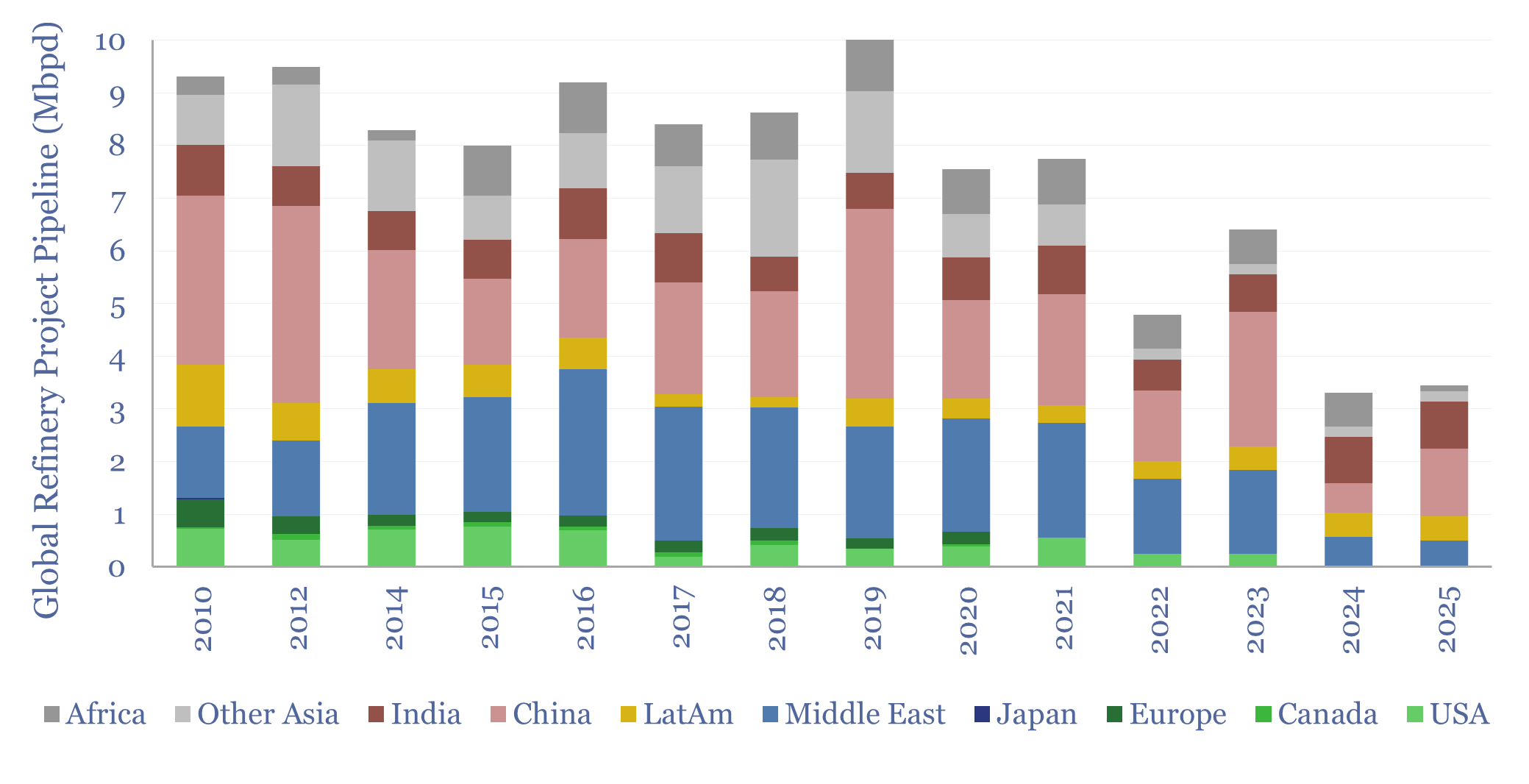
This data-file captures the pipeline of global refining projects in progress, by region, over time. The pipeline has thinned from 9Mbpd in 2010-19 to 3Mbpd today. At the same time 600kbpd/year of refineries have closed down. Could this portend higher refining margins?
-
Oil refining: the economics?
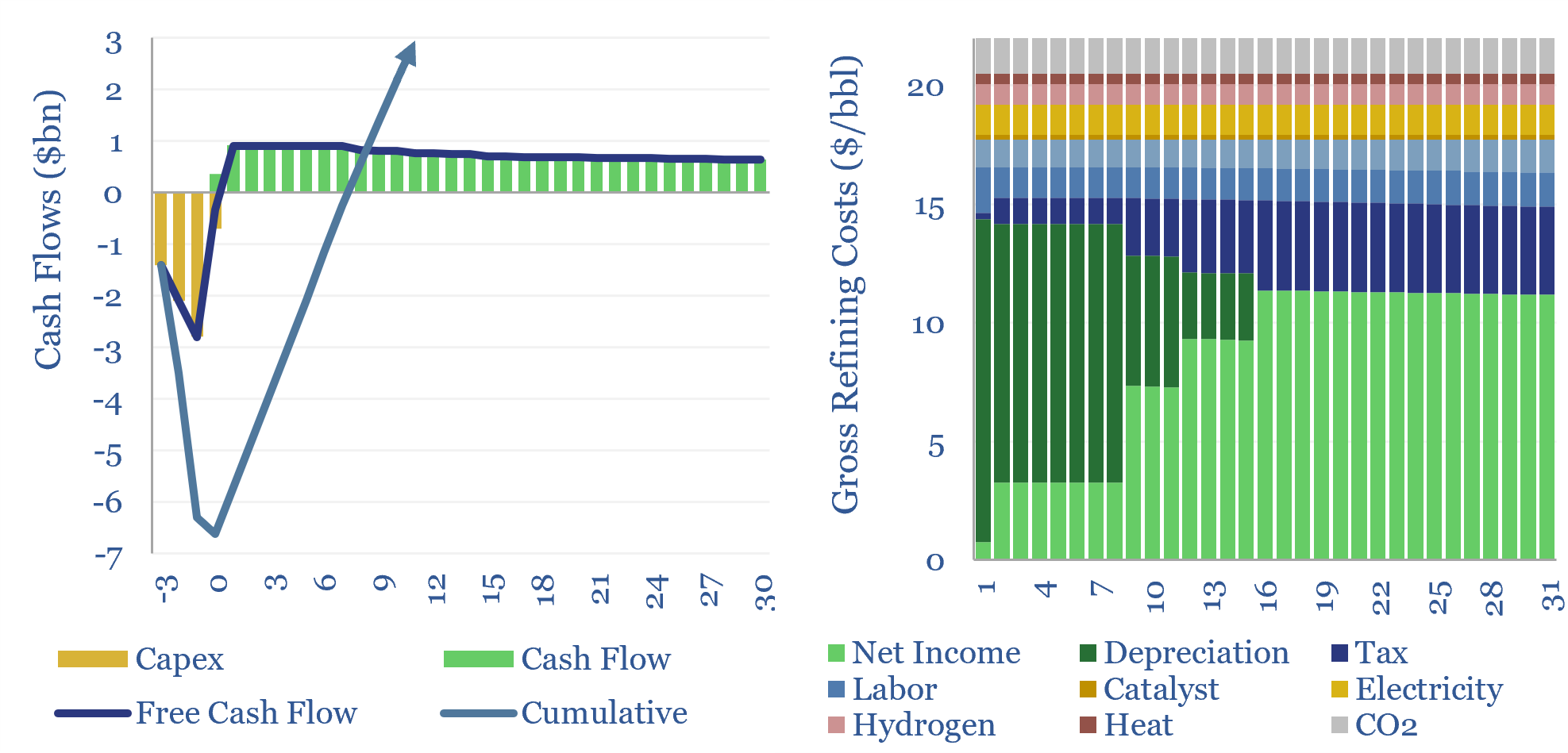
The economics of oil refining are captured in this data-file, requiring a crack spread above $20/bbl to generate a 10% IRR on a new, greenfield oil refinery in the developed world, with $35M/kbpd in capex costs. Crack spreads have run at $11/bbl in the past decade, hence capacity utilization is tightening.
-
The route to net zero: an energy-climate model for 2-degrees
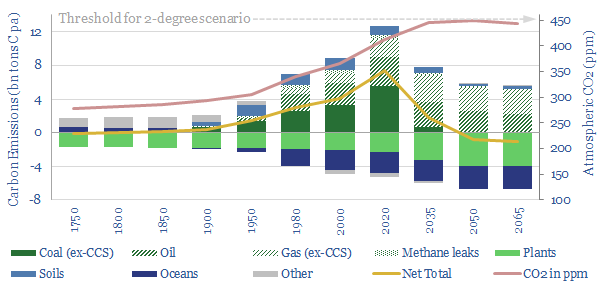
We have modeled the global climate system from 1750-2065, to simplify the science of energy transition. ‘Net zero’ is achievable by 2050. Atmospheric CO2 remains below 450ppm, consistent with 2-degrees warming. Fossil fuel usage is 10% higher than today, but the fossil fuel industry is transformed.
-
Roadmap to net zero: 2025 and beyond?

This 19-page report explores the world’s progress towards net zero, amidst the harsh economic reality of 2025+. Which decarbonization technologies are still progressing, which are scaling back, and why? What if the current trajectory is ultimately seen to be enough?
-
Autonomous vehicles: the economics?
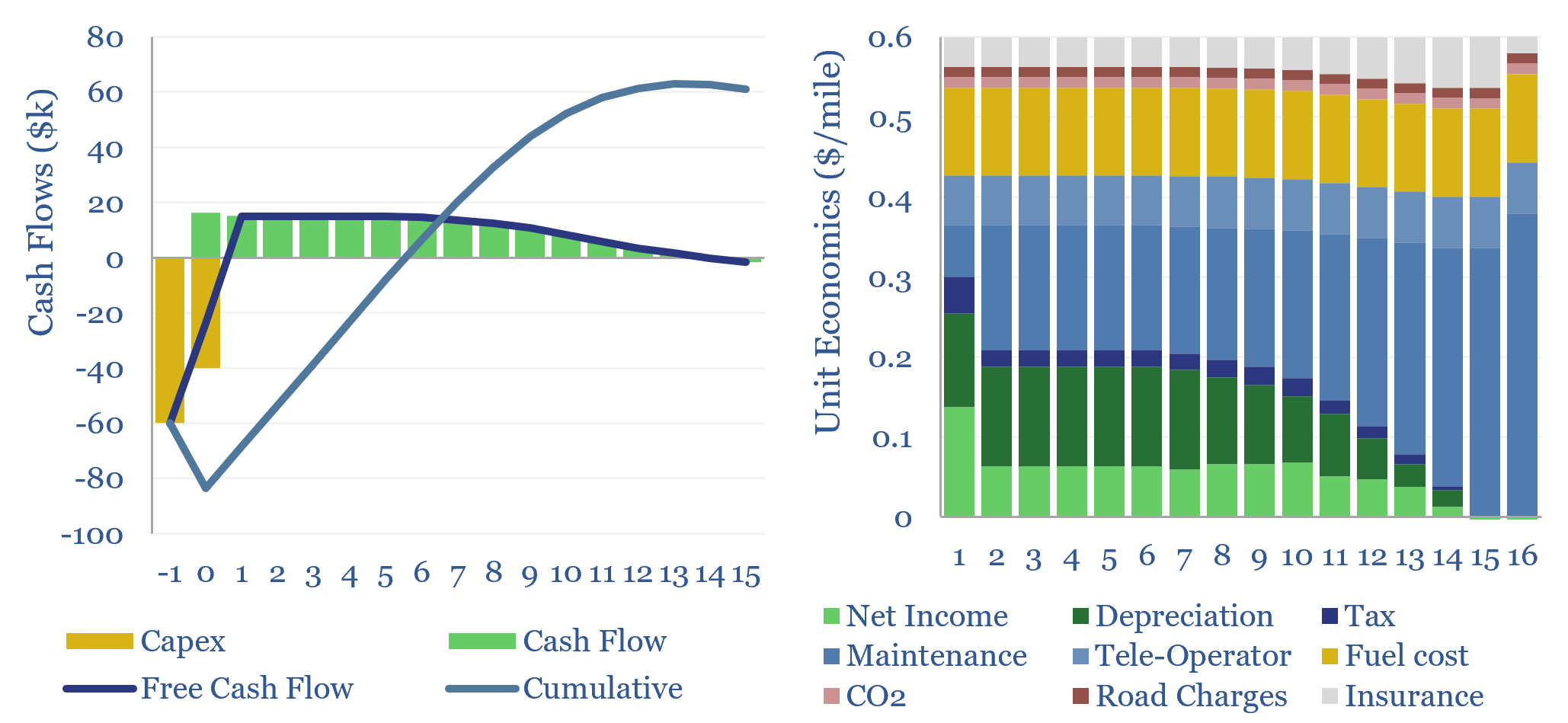
This data-file explores the costs of autonomous vehicles. An autonomous vehicle traveling c100,000 miles per year, at 20% capacity utilization, must charge a fee of $0.6/mile, in order to generate a 10% IRR on c$100k of vehicle acquisition capex.
Content by Category
- Batteries (96)
- Biofuels (44)
- Carbon Intensity (48)
- CCS (64)
- CO2 Removals (9)
- Coal (41)
- Commentary (65)
- Company Diligence (105)
- Data Models (925)
- Decarbonization (162)
- Demand (131)
- Digital (89)
- Downstream (47)
- Economic Model (221)
- Energy Efficiency (76)
- Hydrogen (63)
- Industry Data (309)
- LNG (56)
- Materials (86)
- Metals (88)
- Midstream (45)
- Natural Gas (161)
- Nature (76)
- Nuclear (28)
- Oil (176)
- Patents (39)
- Plastics (44)
- Power Grids (156)
- Renewables (153)
- Screen (138)
- Semiconductors (35)
- Shale (58)
- Solar (72)
- Supply-Demand (53)
- Vehicles (94)
- Video (24)
- Wind (46)
- Written Research (408)