-
Qatari LNG: the worst supply disruption in LNG history?
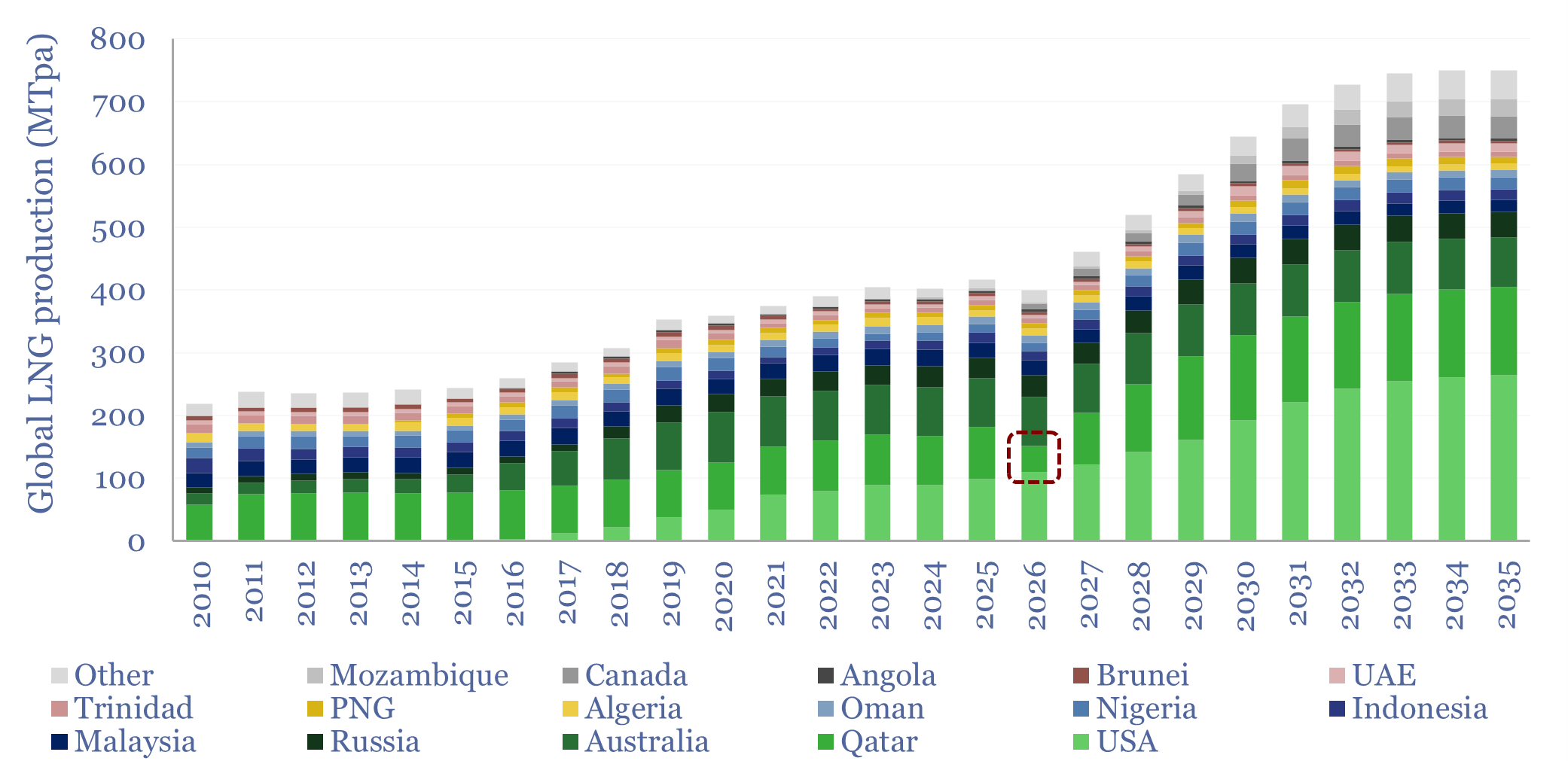
What if Qatar’s LNG output falls by -50% YoY in 2026, i.e., by -40MTpa, which is equivalent to a -0.4% reduction in useful global energy supplies? This 11-page report revisits all of our regional energy models, predicts how each Qatari LNG customer will fill the shortfall, and the implications for global energy markets.
-
Global LNG supply model: by project and by country?
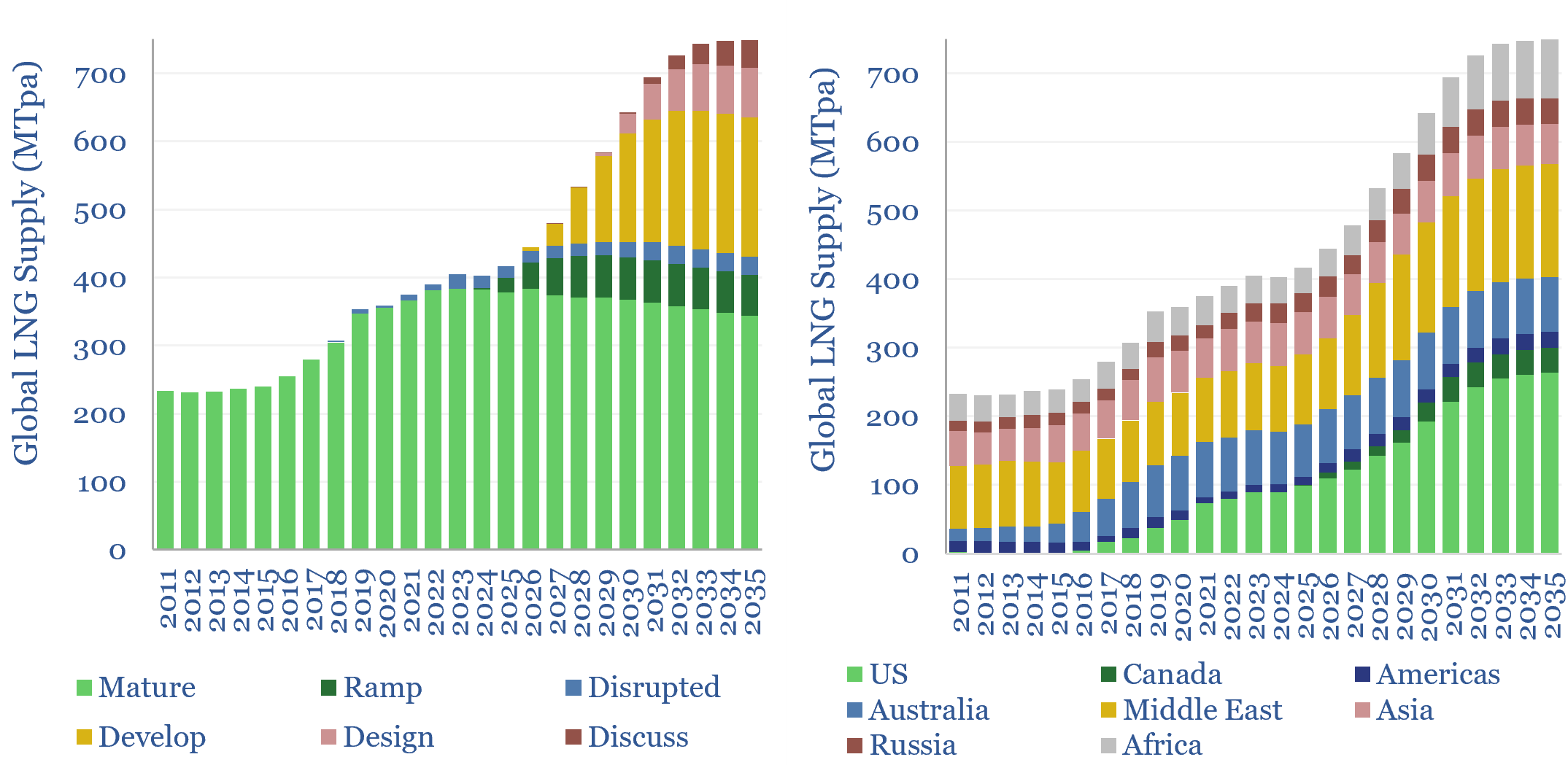
Global LNG output ran at 417MTpa in 2025. This model estimates global LNG production by facility across 150 LNG facilities. Our latest forecasts are that global LNG demand will rise at a 6% CAGR, to reach 750MTpa by 2035, for an absolute growth rate of +30MTpa per year. But there is a construction boom underway.
-
Electric ships: worse things have happened at sea?
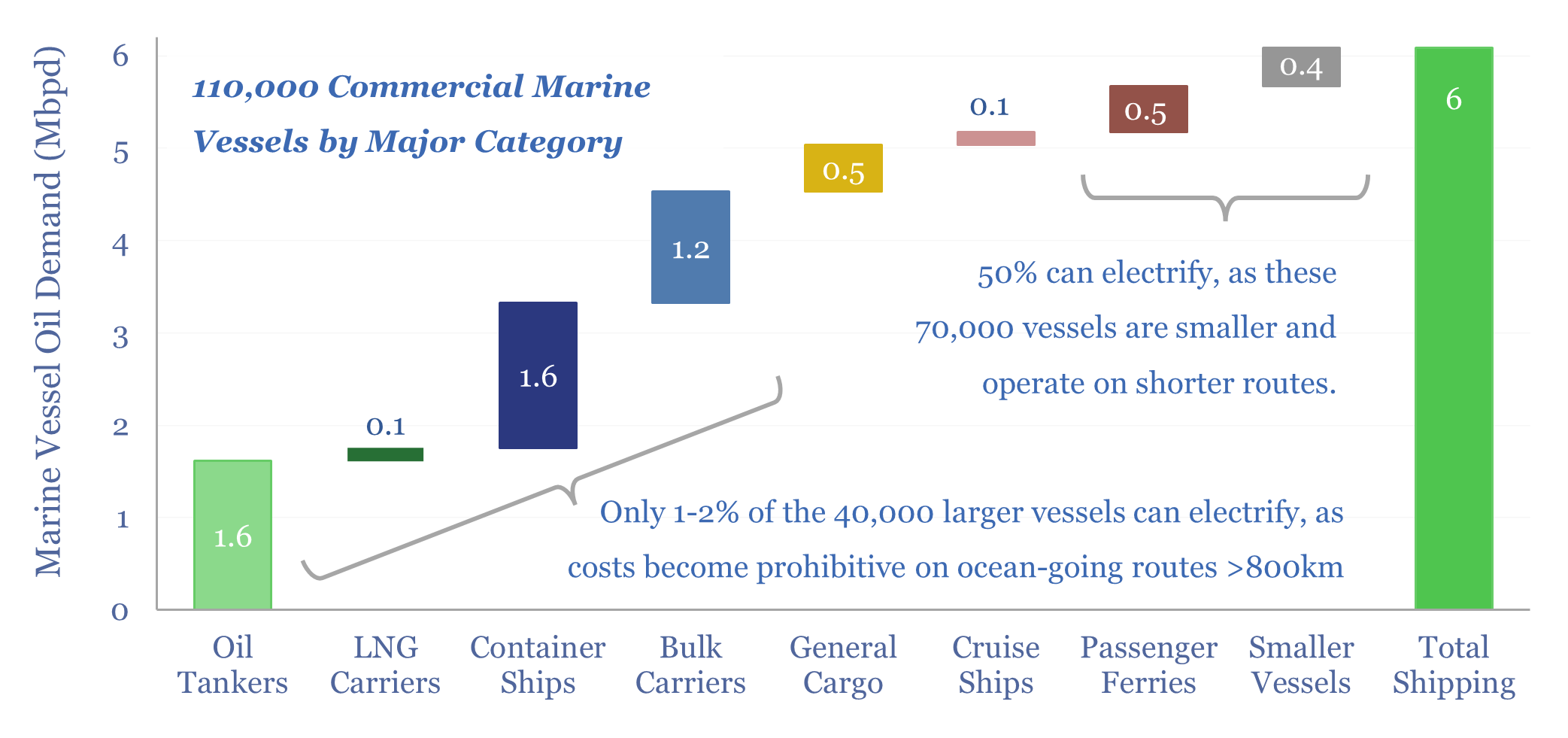
Over 15% of the world’s marine vessels could electrify in the next decade, accelerated by higher oil prices, and as Europe/Asia seek self-sufficiency. This 16-page report explores leading concepts, 30 flagship deployments to-date, the economics, and the implications for companies/commodity markets.
-
Electric ships: costs and case studies?
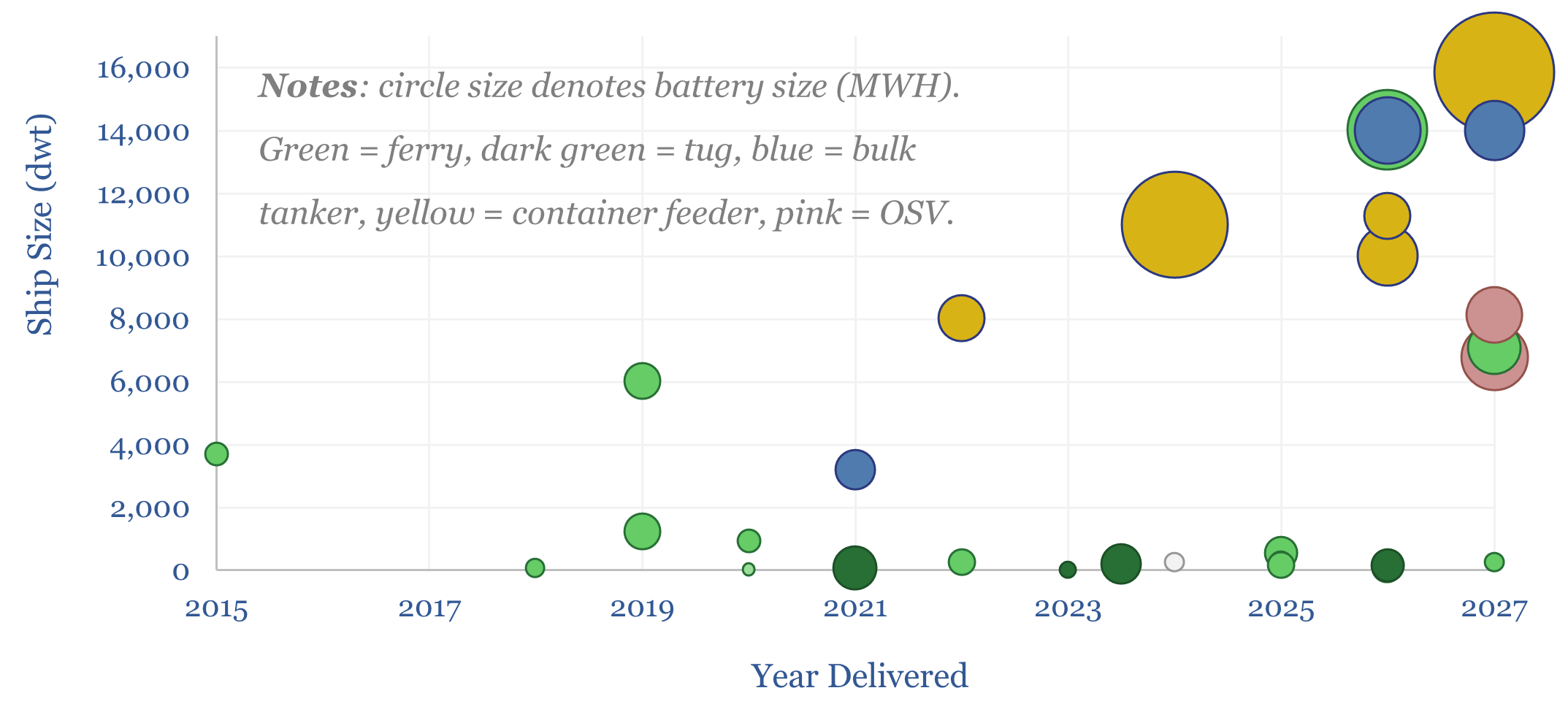
Over 1,000 electric ships have now been deployed globally. Mostly small-scale. This data-file profiles 30 case studies of electric ships (on the examples tab) and compares the costs of large electric ships against 20,000 TEU container vessels that would otherwise be fueled by marine diesel.
-
Fiber optic data transmission costs?
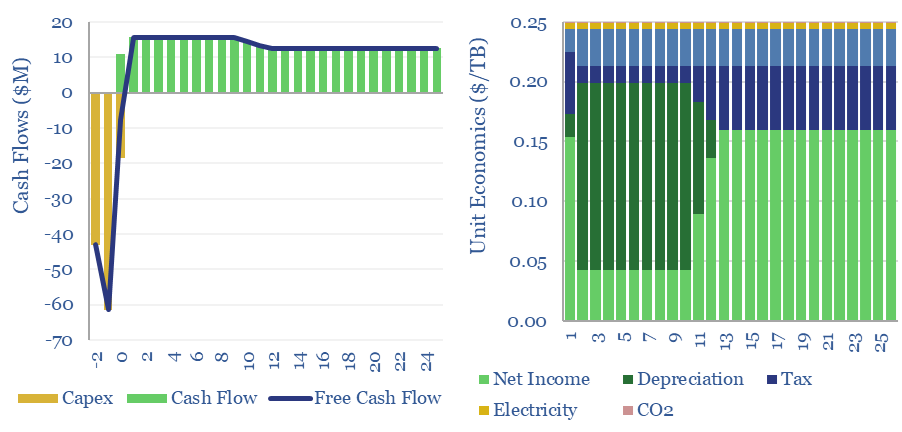
The costs of fiber optic data transmission run at $0.25/TB per 1,000km in order to earn a 10% IRR on constructing a link with $120 per meter capex costs. Capex is 85% of the total cost. This data fiber breaks down the costs of fiber optic data transmission from first principles, across capex, utilization, electricity…
-
Counter-drone: can the Strait of Hormuz be re-opened?
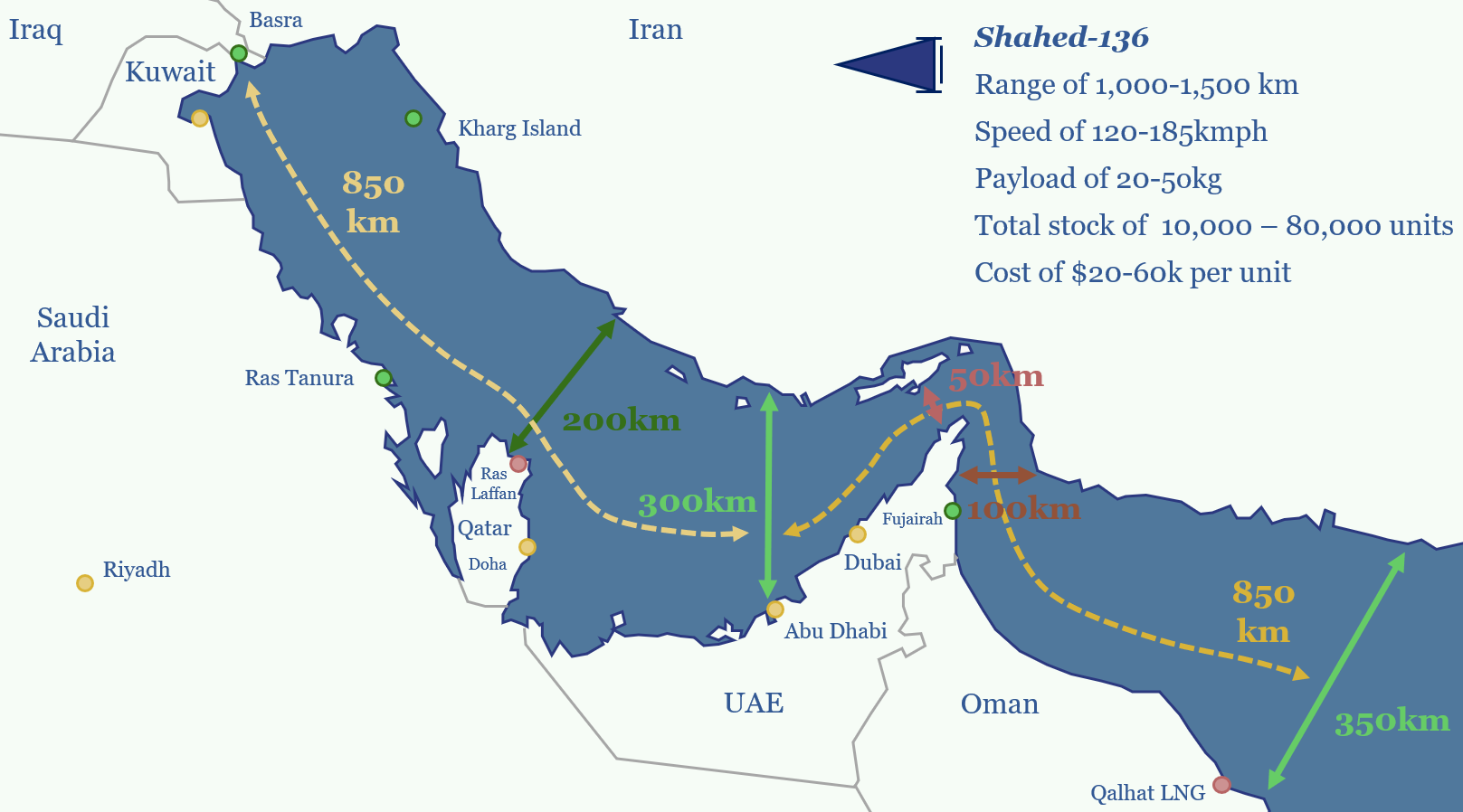
Is it possible to re-open shipping in the Strait of Hormuz, and protect broader Persian Gulf energy infrastructure, from thousands of Iranian Shahed drones? Today’s 9-page report reviews Shahed drones, counter-Unmanned Aerial Systems (cUAS), and implications across global energy markets.
-
Wind and solar: curtailments over time?

Wind and solar curtailments now average 8% across different grids that we have evaluated in this data-file, and have generally been rising over time, especially in 2024-25. The key reason is grid bottlenecks. Grid expansions are crucial for wind and solar to continue expanding.
-
Reserve margins: by ISO and over time?
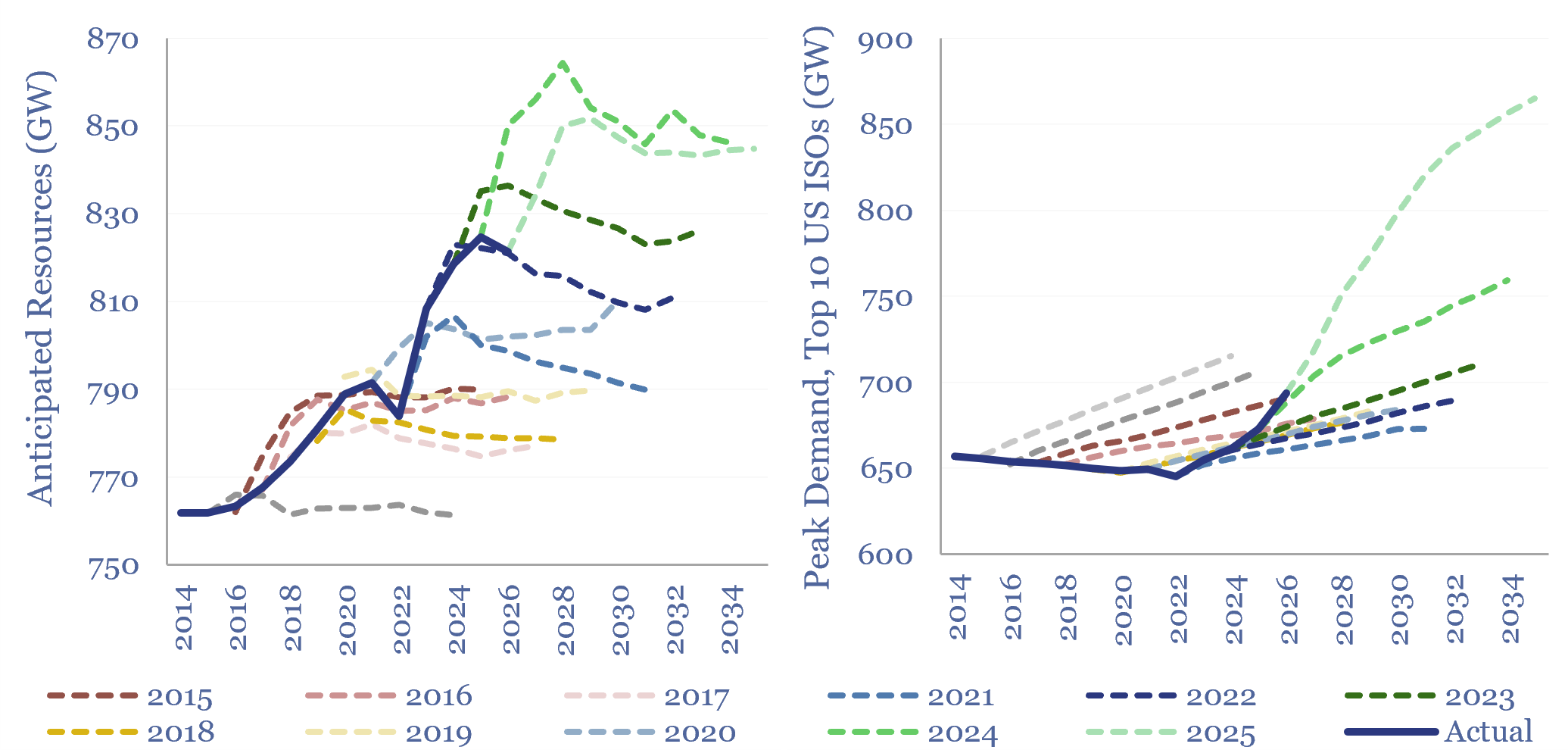
Reserve margins across major ISOs in the US power grid average 26% in 2026, are seen declining to 10% in the next decade by NERC, and turning negative in regions such as PJM and MISO. Surging power demand and resource retirements are the culprits, although may not unfold as feared. This data-file tabulates reserve margin…
-
US electricity demand growth: anywhere from 1-3%?
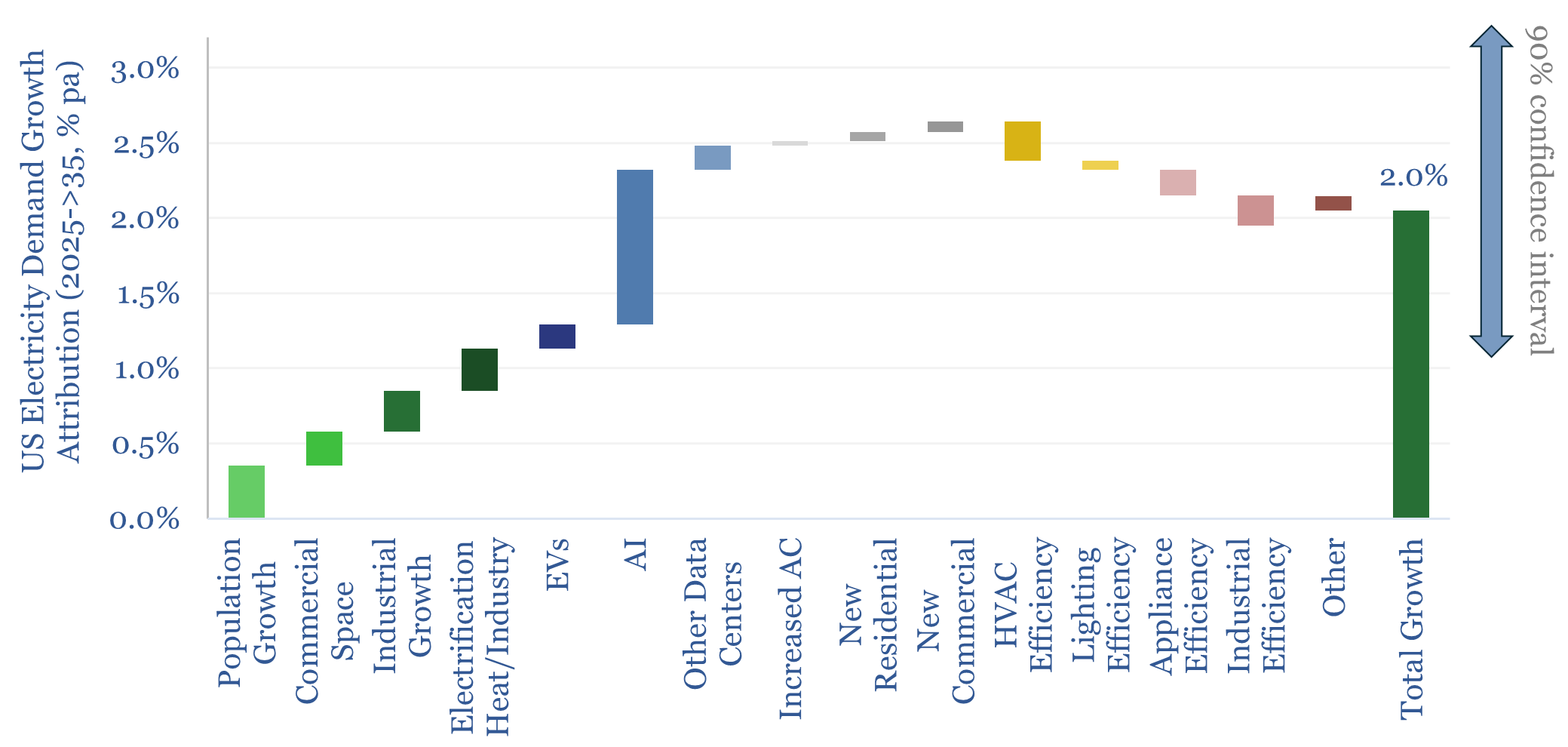
US electricity demand growth is a crucial debate. It affects everything. To bound the uncertainty, we assessed twenty input variables, and ran a Monte Carlo, in this 16-page report. Our new base case sees +2.0% pa demand growth to 2035. Our 90% confidence interval is 1-3% pa. What implications for gas and power?
-
Geothermal energy: costs and economics?
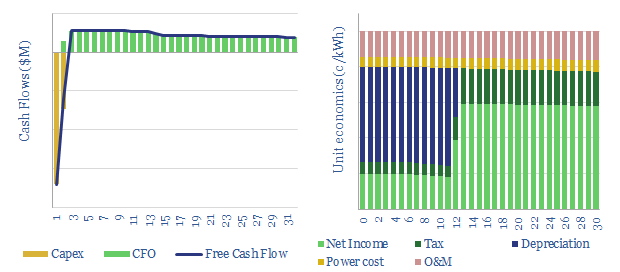
Geothermal energy costs are modelled from first principles in this data-file. LCOEs of 6c/kWh are available in geothermal hotspots. Outside of the hotspots, enhanced geothermal heat can cost 2-14c/kWh-th for a 10% IRR on $500-5,000/kW-th capex, while a rule of thumb is that geothermal electricity costs 5x geothermal heat.
Content by Category
- Batteries (95)
- Biofuels (44)
- Carbon Intensity (48)
- CCS (64)
- CO2 Removals (9)
- Coal (41)
- Commentary (65)
- Company Diligence (104)
- Data Models (920)
- Decarbonization (162)
- Demand (129)
- Digital (86)
- Downstream (47)
- Economic Model (220)
- Energy Efficiency (76)
- Hydrogen (63)
- Industry Data (308)
- LNG (56)
- Materials (86)
- Metals (88)
- Midstream (45)
- Natural Gas (161)
- Nature (76)
- Nuclear (28)
- Oil (175)
- Patents (39)
- Plastics (44)
- Power Grids (155)
- Renewables (153)
- Screen (136)
- Semiconductors (35)
- Shale (58)
- Solar (72)
- Supply-Demand (53)
- Vehicles (95)
- Video (24)
- Wind (47)
- Written Research (405)