-
Patent progress: how are we using AI in our research?
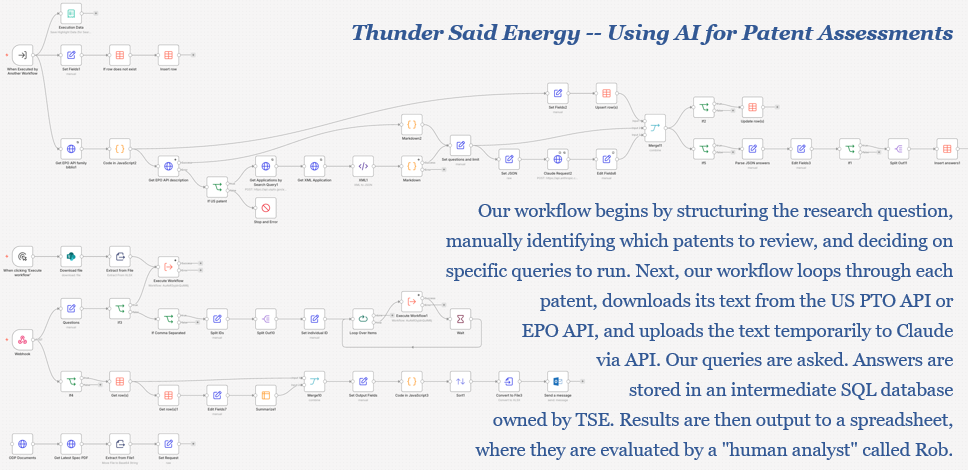
We have developed a new methodology to cover 4x more ground, and create novel data-sets, by using AI to enhance our analysis of patents. So how will this help us appraise energy technologies? This 11-page report covers our approach, data usage rights, energy use, and some of our favorite examples so far.
-
Bakken oil production by well: 2015 to 2026?
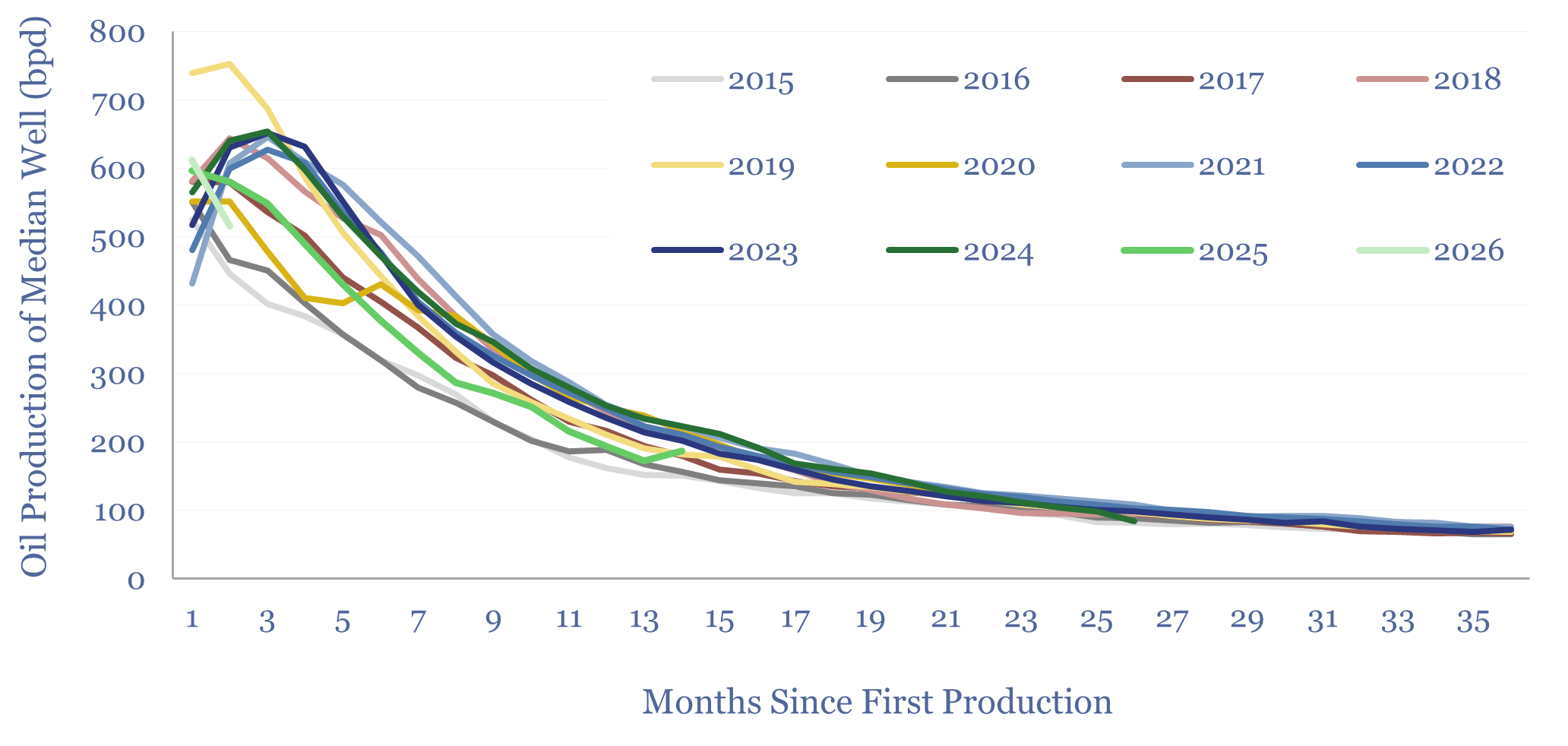
This data-file aggregates the monthly production data from 10,000 wells in the Bakken, which were drilled and completed over the past decade from 2015 to early 2026. Average Year 1 oil production quadrupled from 2006 to reach 360bpd in 2015-16, continued rising to a peak of 460bpd in 2021, flatlined at 440bpd in 2022-24 and…
-
Capital goods: using AI/ML to optimize maintenance?
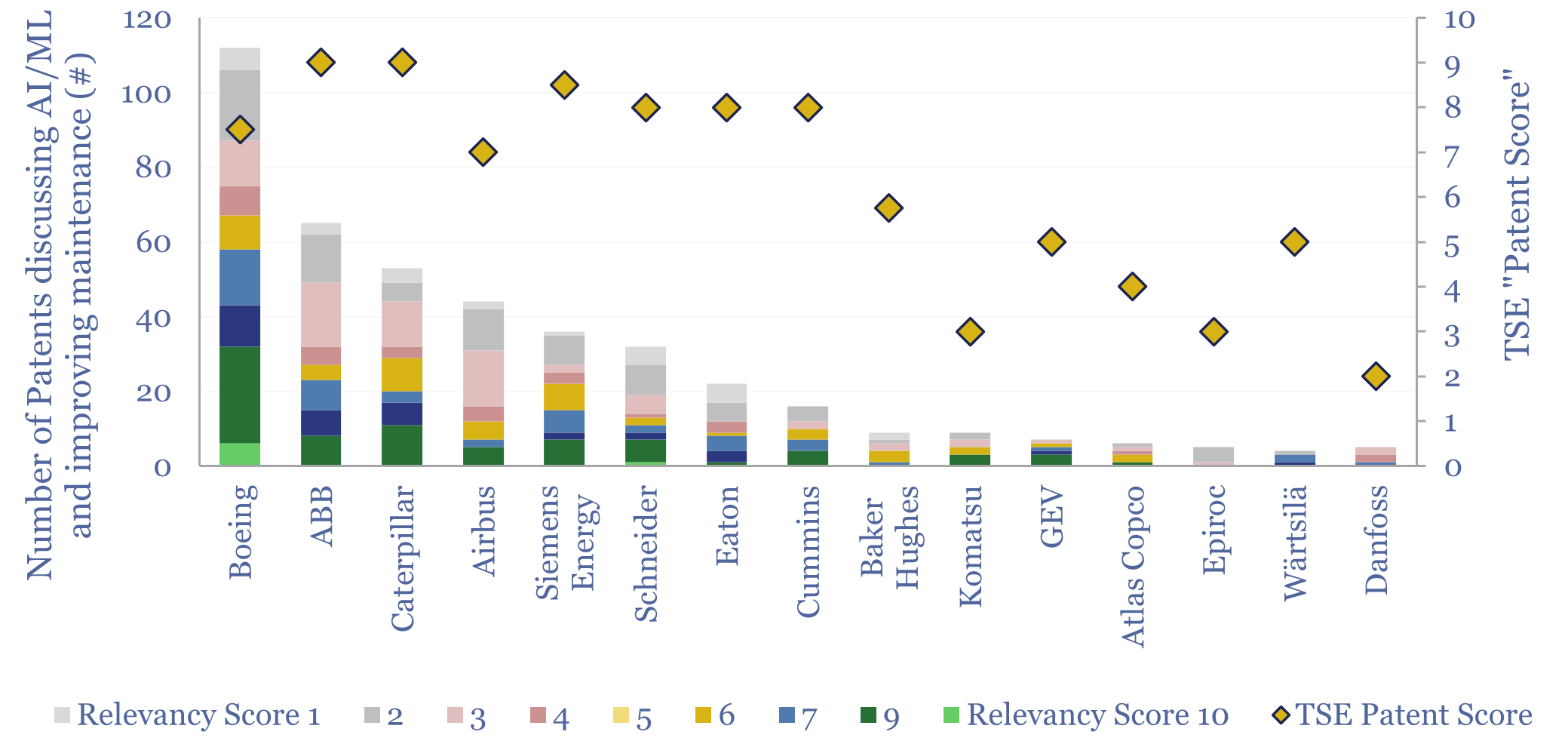
Leading capital goods companies using AI and machine learning to predict outages and optimize maintenance schedules across their product portfolios are summarized in this data-file. Using AI for predictive maintenance is an improvement on inexact prior schedules. AI also helps to improve energy efficiency during operation and the maintenance process itself.
-
Storage costs: economics of warehouses?
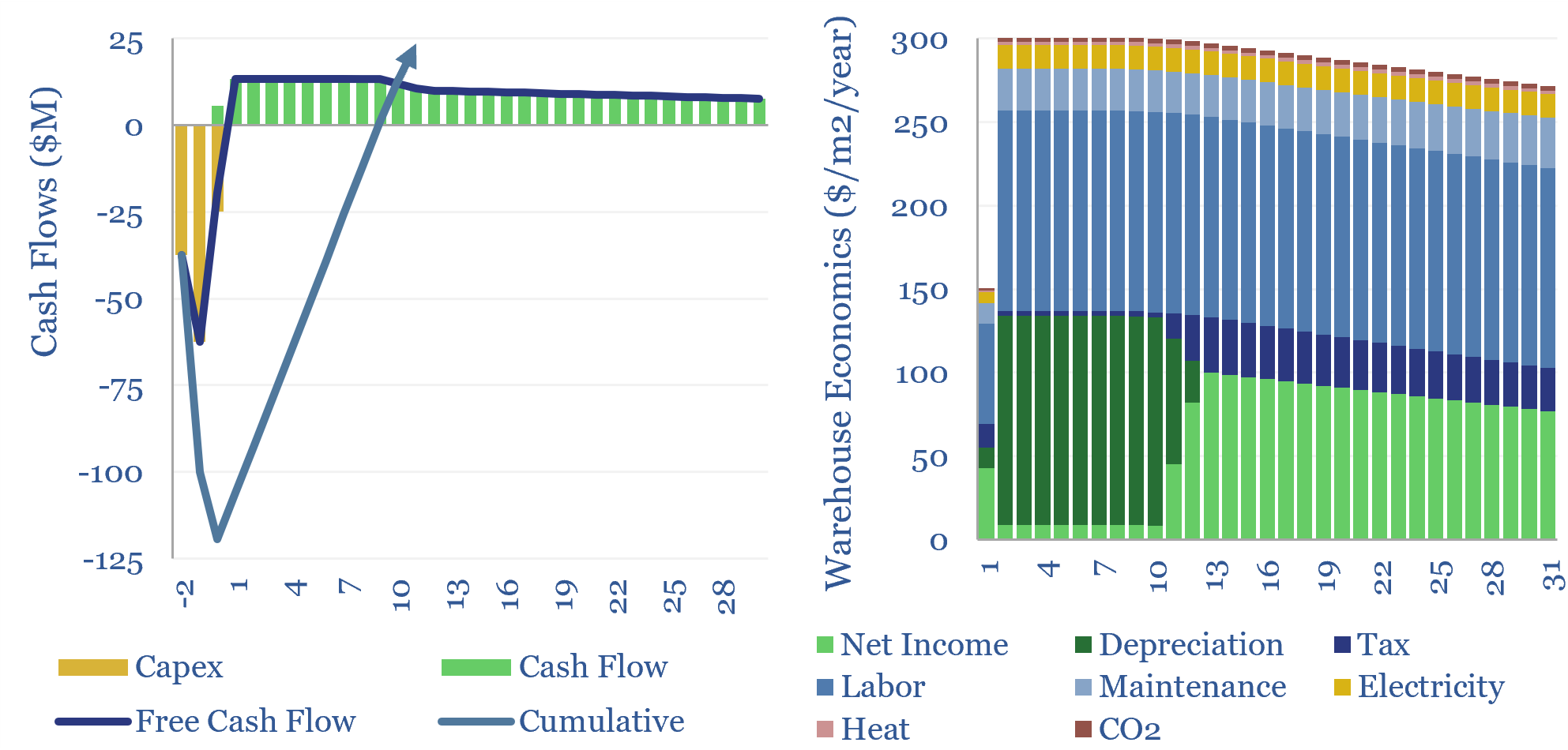
This data-file captures the economics of warehouses. A typical warehousing facility needs to charge $350 per m2 per year of storage, to earn an 8% unlevered return, on $1,250/m2 of construction capex, net of labor, electricity, heating and maintenance costs.
-
High entropy alloys: new metal?
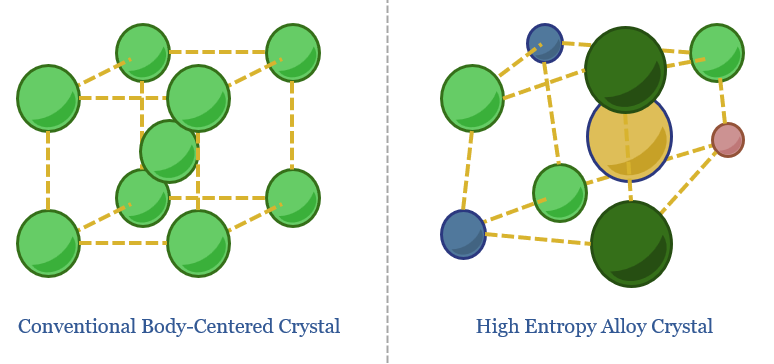
High Entropy Alloys are an emerging class of materials, composed of five or more elements, forming fascinating/novel lattice structures. This 18-page report reviews 100 recent HEA patents, and predicts generative AI will unlock transformational catalysts and materials in the next decade.
-
Compressor costs: a simple overview?
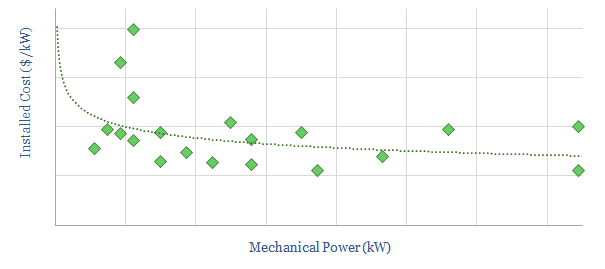
This data-file aims to give a helpful, basic overview of the $40bn pa compressor market, between centrifugal, reciprocating and screw compressors. A typical industrial unit is 50kW and costs $850/kW on an installed basis. Companies and efficiency calculations are also given.
-
Global power: what grid mix is most stable?
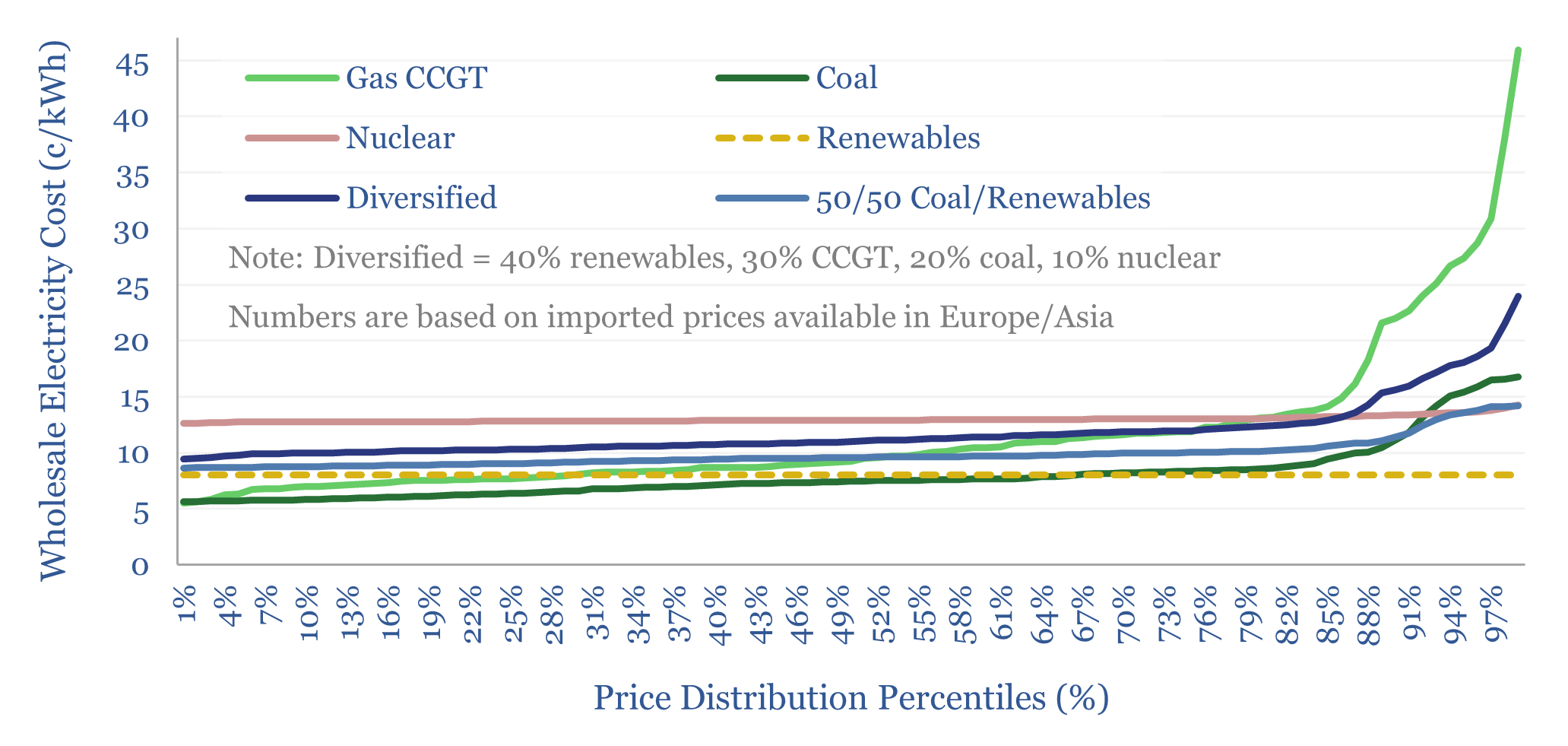
Energy importing countries value stable electricity prices. Hence this 18-page report evaluates the optimal grid mix, after taking stability into account? Recent gas price volatility will encourage further diversification for developed world importers, while coal+solar could dominate emerging world growth. Our forecasts are revised.
-
Leading companies in high entropy alloys?
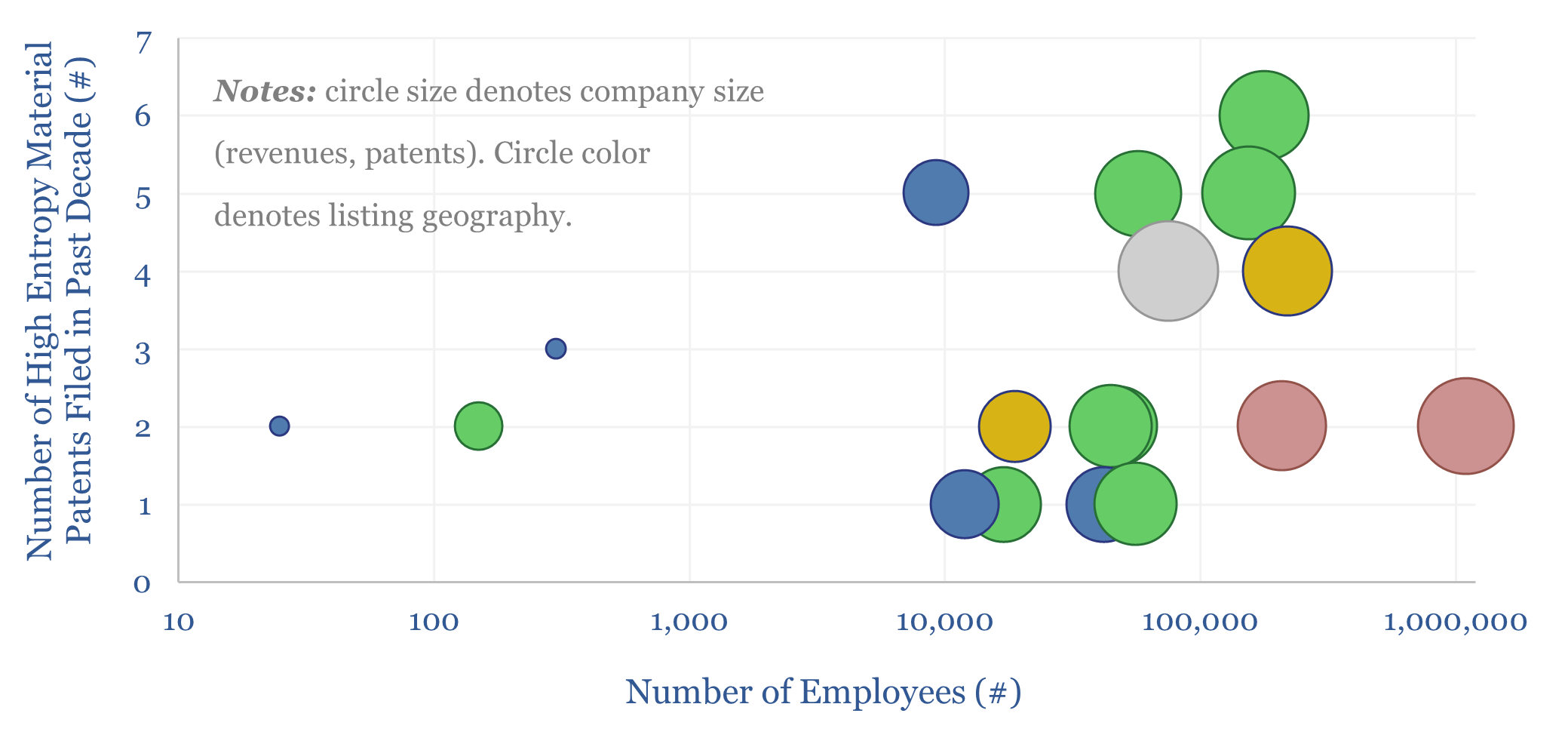
This data-file evaluates 100 patents, filed over the past decade, by leading companies in high entropy alloys, and by academic institutions. 20 companies stood out, developing harder and more resistant tools for machining/drilling, alloys that can withstand extreme temperatures, and novel surface coatings.
-
Heavy truck costs: diesel, gas, electric or hydrogen?
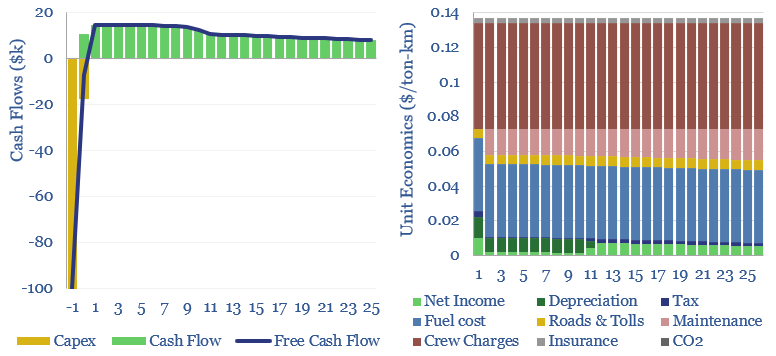
Heavy truck costs are estimated at $0.14 per ton-kilometer, for a truck typically carrying 15 tons of load and traversing over 150,000 miles per annum. Today these trucks consume 10Mbpd of diesel and their costs absorb 4% of post-tax incomes. Hydrogen trucks would be 45-75% more costly, but from 2026, we are starting to see…
-
Marcellus shale: well completion parameters?

This data-file tracks a sample of Marcellus shale well completion parameters, such as lateral length, stage count, proppant and water use and shut-in pressure. Together, these variables explain 40-50% of the variance in shale well productivity, implying the other 50-60% is down to skill and technology, from operators and service providers?
Content by Category
- Batteries (96)
- Biofuels (44)
- Carbon Intensity (48)
- CCS (64)
- CO2 Removals (9)
- Coal (41)
- Commentary (65)
- Company Diligence (104)
- Data Models (921)
- Decarbonization (162)
- Demand (129)
- Digital (86)
- Downstream (47)
- Economic Model (220)
- Energy Efficiency (76)
- Hydrogen (63)
- Industry Data (308)
- LNG (56)
- Materials (86)
- Metals (88)
- Midstream (45)
- Natural Gas (161)
- Nature (76)
- Nuclear (28)
- Oil (175)
- Patents (39)
- Plastics (44)
- Power Grids (155)
- Renewables (153)
- Screen (137)
- Semiconductors (35)
- Shale (58)
- Solar (72)
- Supply-Demand (53)
- Vehicles (95)
- Video (24)
- Wind (47)
- Written Research (406)