Oil
-
Global commodity demand: sensitivity to GDP?
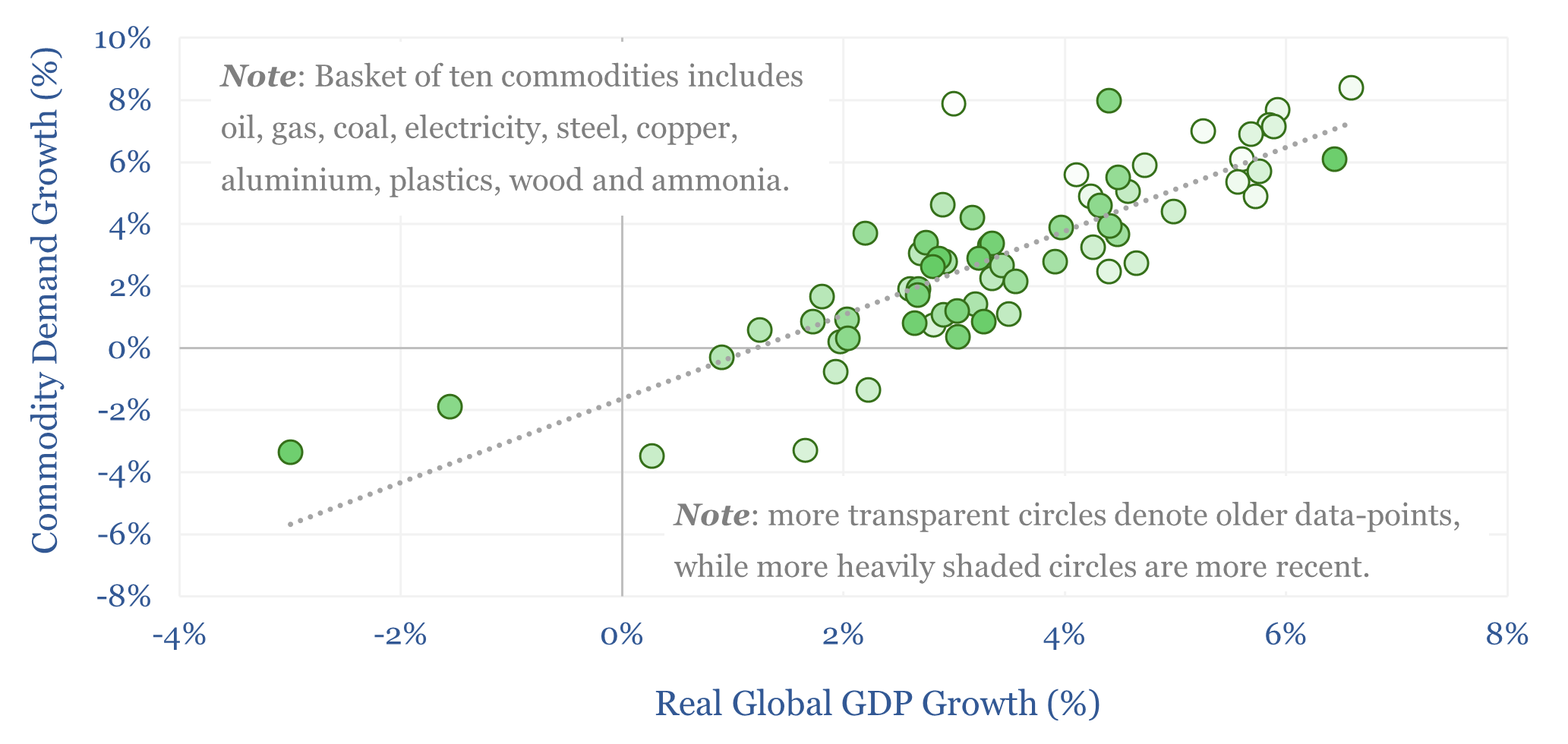
Global commodity demand is levered to GDP. Specifically, for each +/- 1% acceleration or deceleration in global GDP, commodity demand tends to accelerate or decelerate by +/- 1.4%, with a 70% R-squared, across 25 examples that are indexed in this data-file. Oil demand sensitivity to GDP is particularly interesting.
-
Oil tankers: the economics?
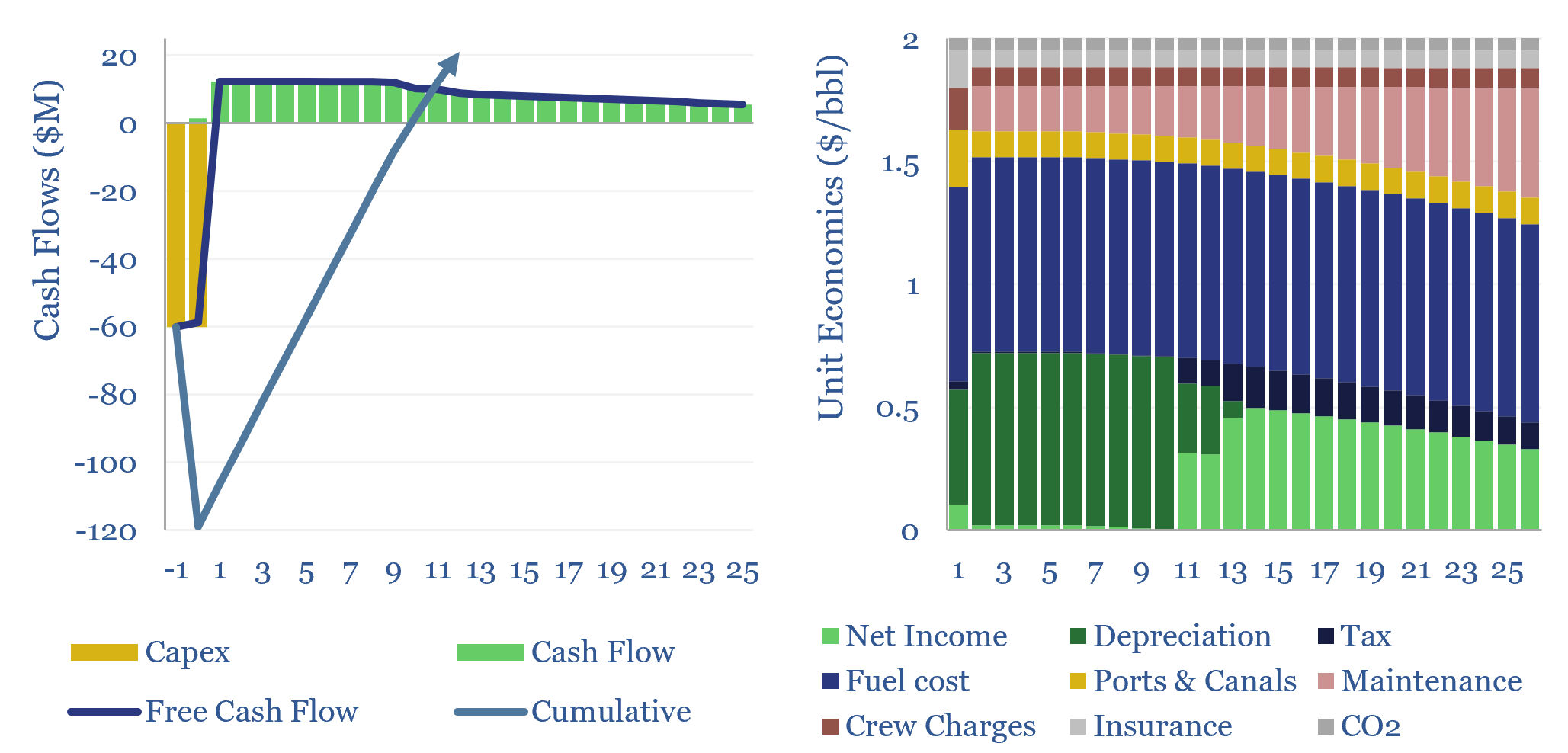
Oil tanker economics are captured in this model. A VLCC that carries 2.2Mbbls requiring a day rate of $100k/day to earn a 7-10% IRR, which equates to $2/bbl on cargoes moving from the Persian Gulf to China. Capex costs, fuel uses, engine sizes and other costs correlate with vessel size. The costs of oil tankers…
-
Electric ships: worse things have happened at sea?
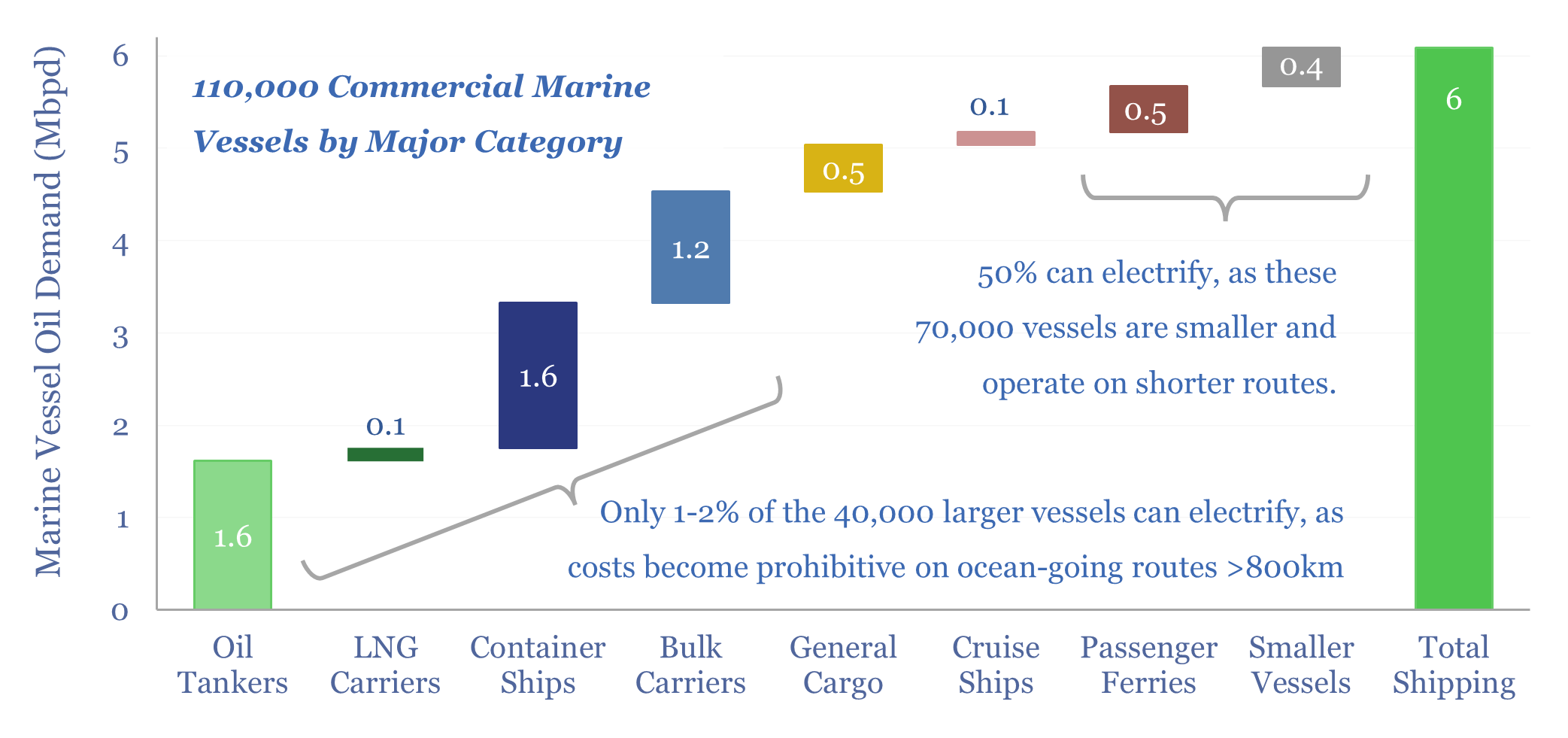
Over 15% of the world’s marine vessels could electrify in the next decade, accelerated by higher oil prices, and as Europe/Asia seek self-sufficiency. This 16-page report explores leading concepts, 30 flagship deployments to-date, the economics, and the implications for companies/commodity markets.
-
Counter-drone: can the Strait of Hormuz be re-opened?
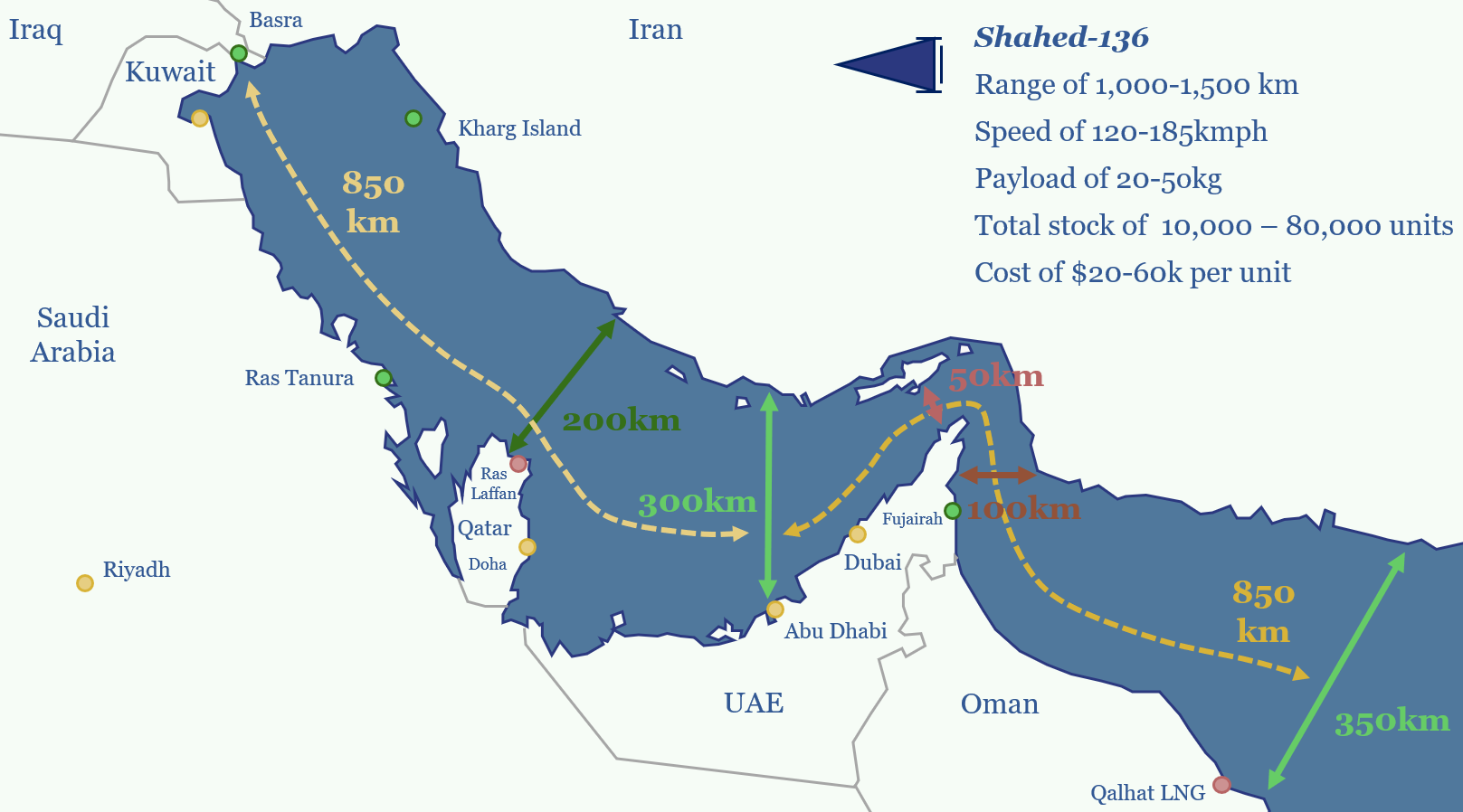
Is it possible to re-open shipping in the Strait of Hormuz, and protect broader Persian Gulf energy infrastructure, from thousands of Iranian Shahed drones? Today’s 9-page report reviews Shahed drones, counter-Unmanned Aerial Systems (cUAS), and implications across global energy markets.
-
Renewable diesel: the economics?
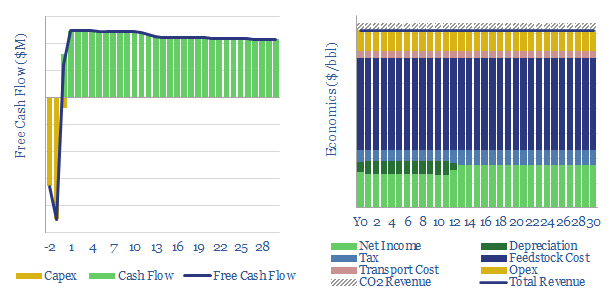
Renewable diesel economics are captured in this data-file, requiring a price of $4.5-5/gallon (about $200/bbl), for a green diesel plant costing $35M/kbpd to generate a 10% IRR while hydroprocessing $1,000/ton feedstocks. Please download the data-file to stress-test renewable diesel economics, biodiesel economics and input costs.
-
AI in the oil industry: 40 case studies?

How is AI being deployed in the oilfield? Is it unlocking more production, or deflating cost-curves? And who benefits? Answers to all of these questions are evidenced by reviewing 40 case studies of AI in the oil industry, from the past year, as described in technical papers from the Society of Petroleum Engineers.
-
Suburbification: energy upside?

The internet/AI era is pushing people out of dense urban centers into suburbs and exurbs, whose residents use 2-5x more oil and energy. This 15-page report reviews population density data from 3,150 US counties. Suburbification and exurbification have already been adding 0.2-0.8% pa to oil demand, which is seen accelerating further.
-
Global oil demand: no peaking?

Global oil demand was once meant to peak out in 2024-30. But 2025 saw almost 1Mbpd of growth, to 104Mbpd. 2026 should see over 1Mbpd of growth, amplified by a YoY pullback in EV sales. Hence this 15-page report revisits peak global oil demand and sees global refinery utilization tightening by 3-5%.
-
Global oil demand forecasts: by end use, by product, by region?
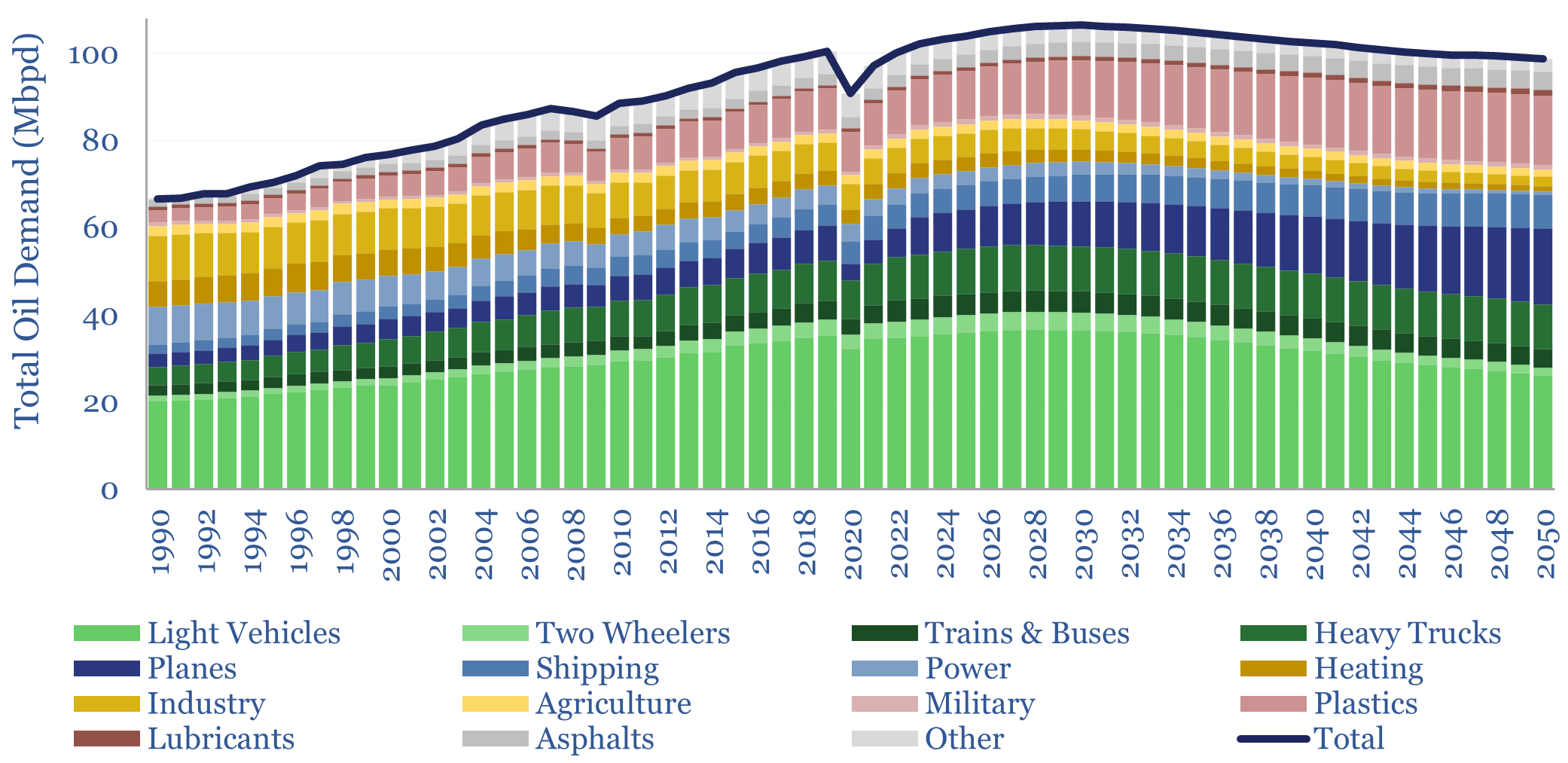
This model forecasts long-run global oil demand to 2050, by end use, by year, and by region; across the US, the OECD and the non-OECD. We see demand rising from 104Mbpd in 2024 to a plateau of 107Mbpd in 2030, then easing back to 100Mbpd by 2050.
-
Vechile miles traveled by region over time?
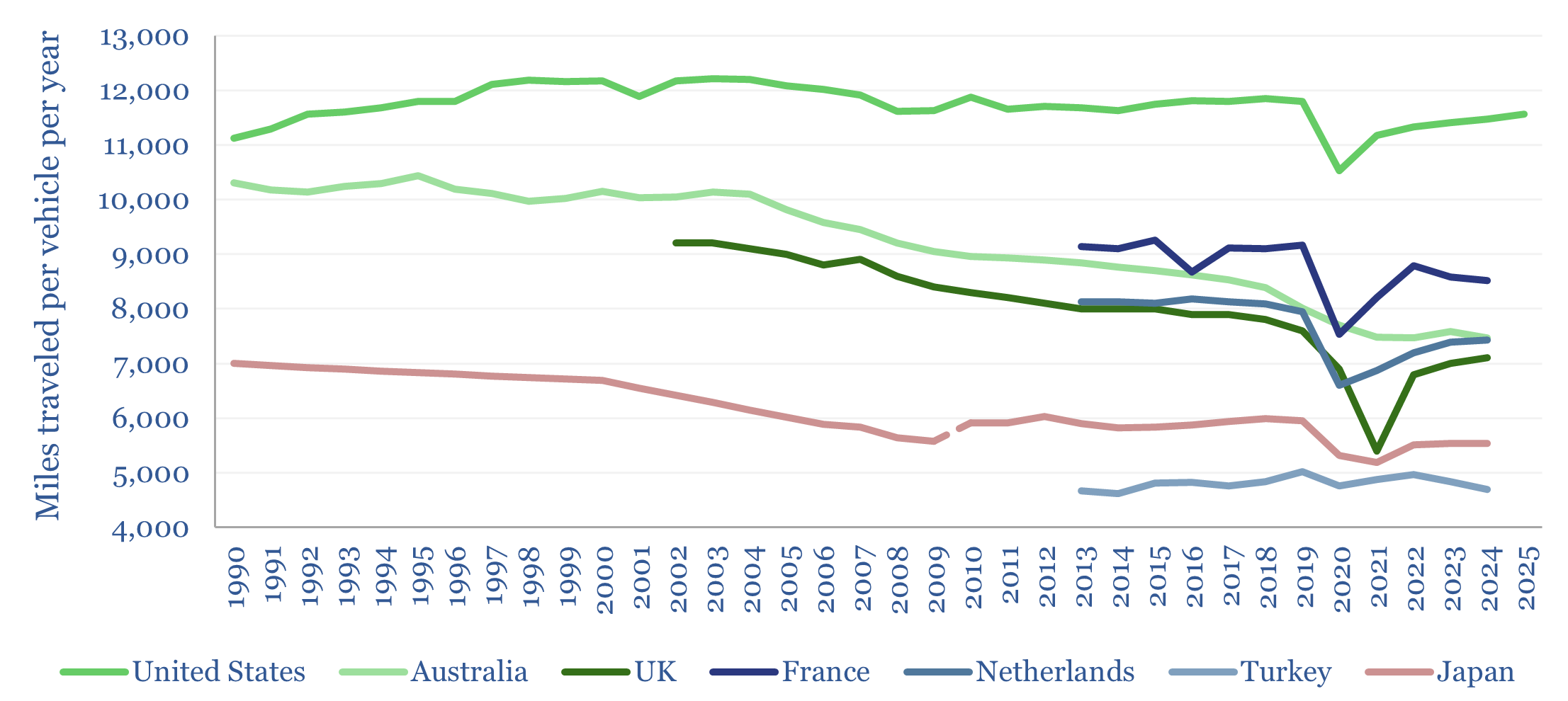
Vehicle miles traveled are a crucial measure of mobility and an input variable for predicting global oil demand, averaging 8,600 miles per global vehicle in 2024. This data-file tracks vehicle miles traveled by region, over time, and how it co-varies with urbanization, population density, income, and by travel trip purpose.
Content by Category
- Batteries (95)
- Biofuels (44)
- Carbon Intensity (48)
- CCS (64)
- CO2 Removals (9)
- Coal (41)
- Commentary (65)
- Company Diligence (104)
- Data Models (920)
- Decarbonization (162)
- Demand (129)
- Digital (86)
- Downstream (47)
- Economic Model (220)
- Energy Efficiency (76)
- Hydrogen (63)
- Industry Data (308)
- LNG (56)
- Materials (86)
- Metals (88)
- Midstream (45)
- Natural Gas (161)
- Nature (76)
- Nuclear (28)
- Oil (175)
- Patents (39)
- Plastics (44)
- Power Grids (155)
- Renewables (153)
- Screen (136)
- Semiconductors (35)
- Shale (58)
- Solar (72)
- Supply-Demand (53)
- Vehicles (95)
- Video (24)
- Wind (47)
- Written Research (405)